
The Interconnections Between Feudal Japan and Southeast Asian Trade Routes

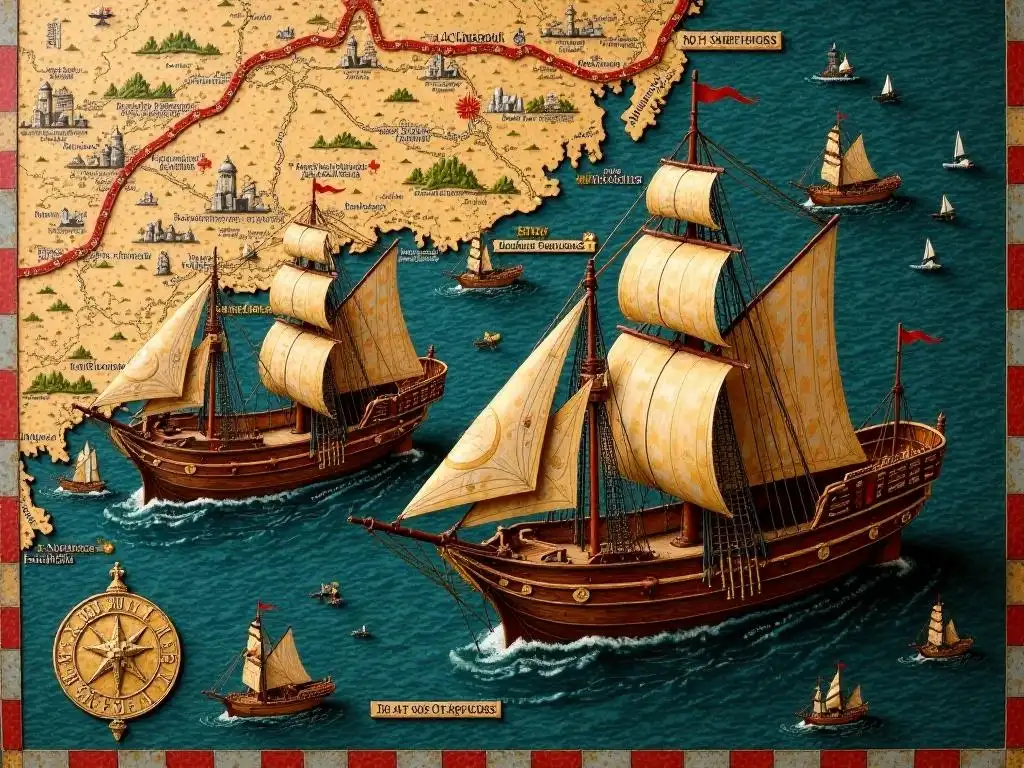
Welcome to Feudal Japan History, where we invite you to embark on an intriguing journey through time. Delve into the captivating world of Feudal Japan and uncover the hidden connections between its rich history and the vibrant trade routes of Southeast Asia. Our featured article, "The Interconnections Between Feudal Japan and Southeast Asian Trade Routes," promises to illuminate how these interactions shaped not only the economy but also the cultural landscape of the era.
Are you ready to explore the fascinating dynamics of trade that influenced feudal society? Your adventure awaits—dive in and discover the untold stories that shaped a nation!
Introduction to Feudal Japan and Southeast Asian Trade
The feudal era in Japan, spanning from the 12th to the 19th centuries, is a fascinating period characterized by military governance, social stratification, and a unique economic framework. During this time, Japan's economy was not isolated; it was significantly influenced by trade, particularly with Southeast Asia.
The interconnections between Feudal Japan and Southeast Asian trade routes reveal a complex web of cultural exchanges, economic interactions, and mutual influences that shaped both regions. By examining these trade dynamics, we can better understand how the flow of goods and ideas contributed to Japan's development and its place within the broader Asian trading network.
Overview of Feudal Japan’s Economic Structure
Feudal Japan operated under a decentralized system where local lords, or daimyōs, held power over their domains while the emperor's influence waned. The economy was fundamentally agrarian, with rice as the staple currency and a measure of wealth. However, trade was essential for supplementing local resources and diversifying the economy.
- Key Features of Feudal Japan's Economy:
- Agriculture: The backbone of the economy, providing sustenance and wealth.
- Craftsmanship: Artisans produced textiles, pottery, and metalwork, which were highly valued in trade.
- Trade Networks: The rise of merchant classes facilitated the exchange of goods both domestically and internationally.
As Japan engaged in trade with Southeast Asia, this led to the introduction of foreign commodities, which influenced local production and consumption patterns.
Historical Context of Southeast Asian Trade Routes
Southeast Asia has long been a crucial hub in global trade networks, benefiting from its strategic location between the Indian Ocean and the South China Sea. Between the 9th and 16th centuries, various empires and kingdoms in the region, including the Srivijaya and Majapahit, established extensive trade routes. These routes connected Asia with the Middle East and Europe, facilitating the movement of not only goods but also ideas and cultures.
- Key Trade Routes:
- Maritime Silk Road: Connecting China with Southeast Asia, the Indian subcontinent, and beyond.
- Spice Trade Routes: Vital for the exchange of valuable spices like cloves, nutmeg, and pepper.
This historical backdrop set the stage for Japan's engagement with Southeast Asia, leading to a rich tapestry of trade interactions.
The Role of Trade in Feudal Japan
Trade played a pivotal role in shaping the economy and society of feudal Japan. It was not merely a means of obtaining goods; it was a catalyst for cultural exchange and economic development.
Importance of Trade in the Feudal Economy
Trade was essential for maintaining the feudal economy, as it allowed the flow of goods between regions and provided daimyōs with additional revenue. The establishment of trade routes helped in:
- Diversifying Resources: Regions specialized in certain goods, leading to a more varied economy.
- Cultural Exchange: Interaction with foreign merchants introduced new ideas and technologies.
- Strengthening Political Alliances: Trade agreements often led to diplomatic relations and alliances.
The reliance on trade highlighted the interconnectedness of Japan with its neighboring regions, particularly Southeast Asia.
Key Commodities Exchanged in Feudal Japan
The exchange of goods between Feudal Japan and Southeast Asia was marked by several key commodities that were highly sought after:
| Commodity | Japan's Role | Southeast Asia's Role |
|---|---|---|
| Silk | Imported for luxury garments | Produced in China, traded through Southeast Asia |
| Spices | Valued for culinary and preservation uses | Grown extensively in the region |
| Pottery | Exported as a craft | Sought after for its quality |
| Rice | Local staple, traded for variety | Traded in various forms |
These commodities not only facilitated economic transactions but also enriched cultural exchanges, creating a dynamic interplay between the regions.
The interactions between Feudal Japan and Southeast Asian trade routes were marked by significant economic and cultural exchanges that shaped the historical trajectory of both regions. Understanding this interconnectedness provides valuable insights into the complexities of Japan's feudal economy and its influence on Southeast Asian trade dynamics.
Southeast Asian Trade Routes: A Lifeline for Feudal Japan

The Southeast Asian trade routes served as vital arteries of commerce that significantly influenced the development of feudal Japan. During this era, Japan's isolationist policies were not as pronounced, and the country actively engaged with its neighbors through maritime trade. The routes not only facilitated the exchange of goods but also fostered cultural interactions that would shape Japan's society, economy, and even its political landscape. By connecting Japan to regions rich in resources, these trade routes played an essential role in providing the materials necessary for the growth of feudal domains.
The primary commodities traded included spices, textiles, precious metals, and exotic goods from Southeast Asia, which were highly sought after in Japan. Conversely, Japan exported items such as swords, ceramics, and lacquerware. This trade was not just a means of economic gain; it also allowed for the emergence of a merchant class in Japan, which began to challenge the traditional feudal hierarchy. The ripple effects of these interactions can be seen in various aspects of Japanese life, from culinary practices to fashion.
Description of Main Southeast Asian Trade Routes
The main Southeast Asian trade routes comprised a network of maritime pathways connecting various regions, including the Malay Archipelago, the South China Sea, and the Indian Ocean. Notably, the Strait of Malacca emerged as a crucial chokepoint for ships traveling between China and India, making it a bustling hub for traders. Through these routes, merchants from various cultures, including Arabs, Chinese, and Indian traders, exchanged goods and ideas, enriching the regions involved.
Key ports such as Malacca, Ayutthaya, and Ternate became vibrant centers of trade. Japanese traders often relied on intermediaries from these regions, as direct contact was limited due to Japan's geographic isolation. The trade routes also included overland pathways that connected coastal areas to inland markets, facilitating a broader distribution of goods. The movement of spices, particularly, had a transformative impact on Japanese cuisine, introducing flavors and ingredients that would become staples in Japanese cooking.
Influence of Maritime Trade on Feudal Japan’s Development
Maritime trade had a profound influence on the political and social structures of feudal Japan. The influx of wealth from trade allowed certain clans to amass power, leading to shifts in the feudal order. As trade flourished, regions that had access to these routes began to gain prominence, often at the expense of more isolated areas. This led to the rise of influential merchant families and the development of urban centers such as Sakai and Osaka, which became vital trading hubs.
Moreover, maritime trade encouraged technological advancements, particularly in shipbuilding and navigation. The need for efficient vessels capable of traversing long distances spurred innovation, allowing Japanese traders to explore further afield. The establishment of trade alliances and treaties with Southeast Asian kingdoms also played a crucial role in expanding Japan's diplomatic relations, laying the groundwork for future interactions.
Cultural Exchanges Between Feudal Japan and Southeast Asia
The exchanges facilitated by trade were not limited to material goods; they also encompassed significant cultural influences. The interactions between Japan and Southeast Asia fostered a rich tapestry of cultural exchange that impacted various domains, including art, literature, and religion. These influences helped shape Japan's identity during the feudal era.
Art and Literature Influences from Southeast Asia
Southeast Asian art and literature left a lasting mark on Japan, particularly in the realm of visual arts. The introduction of motifs and techniques from Southeast Asia can be seen in Japanese paintings and textiles. For instance, the use of vibrant colors, intricate patterns, and nature-inspired themes were influenced by the aesthetics of Southeast Asian artisans.
Literature also thrived as ideas flowed between cultures. Japanese envoys who traveled to Southeast Asia often returned with stories, fables, and literary forms that enriched the Japanese literary canon. The exchange of written works contributed to the diversification of Japanese literature, blending indigenous themes with those from Southeast Asian traditions.
Religion and Spiritual Exchange: Buddhism and Beyond
One of the most significant cultural exchanges between feudal Japan and Southeast Asia was in the realm of religion. Buddhism, which had already been introduced to Japan from China and Korea, continued to evolve through interactions with Southeast Asian spiritual practices. The form of Buddhism that flourished in Southeast Asia, particularly Theravada Buddhism, introduced new interpretations and practices that influenced Japanese Buddhist schools.
Beyond Buddhism, other spiritual beliefs and rituals from Southeast Asia found their way into Japanese culture. The syncretism of shamanistic practices, animism, and ancestor worship contributed to a broader understanding of spirituality in Japan. This blend of beliefs enriched the spiritual landscape of feudal Japan, creating a more diverse religious environment.
The interconnections between feudal Japan and Southeast Asian trade routes were pivotal in shaping Japan's history. The economic, cultural, and spiritual exchanges profoundly influenced the development of feudal society, leaving a legacy that continues to resonate in Japan's cultural heritage today.
Key Traders and Merchant Classes in Feudal Japan
During the feudal era, the landscape of trade in Japan was primarily dominated by several key merchant classes and traders who played pivotal roles in the economic framework of the period. The k商人 (k商人), or merchants, emerged as a significant class, evolving from the status of lowly traders to influential economic players by the late medieval period. Among the notable merchant classes were the sō (惣), who were organized groups of merchants in various regions, particularly in the Kansai area, facilitating local and long-distance trade.
The Omi merchants, originating from the Omi Province, were renowned for their extensive trading networks, often engaging in commerce with Southeast Asia. They specialized in silk and rice, which were in high demand. Another prominent group was the Kishu merchants, who primarily dealt in the trade of oil and other goods, establishing trade connections with the bustling markets of Osaka and Kyoto.
Furthermore, the rise of the Yamato merchants during the late feudal period marked a transition towards more organized commercial practices, including the establishment of merchant guilds that standardized trade practices. This evolution not only fostered economic growth but also laid the groundwork for future commercial developments in Japan.
The Role of Samurai in Trade
While traditionally viewed as warriors, the samurai class in feudal Japan also played a complex role in trade dynamics. As landowners, many samurai were responsible for the economic productivity of their domains. They often engaged in agricultural production, but their involvement in trade was sometimes essential for maintaining their status and wealth.
Some samurai invested in trade ventures or acted as intermediaries between merchants and the ruling class, leveraging their social position to facilitate commerce. This dual role contributed to the economic stability of their domains and the broader feudal system. Additionally, samurai were known to participate in trade fairs, where they could acquire goods not only for personal use but also to enhance their standing within society.
As Japan entered the Edo period, the samurai's role in trade became more pronounced, as many began to transition towards bureaucratic and administrative positions, further intertwining the samurai's influence with economic activities. This shift underscored the interconnectedness of military and economic power during feudal Japan.
Merchant Guilds and Their Impact on Trade Dynamics
Merchant guilds, known as za (座), emerged as vital institutions that significantly influenced trade dynamics in feudal Japan. These organizations were composed of merchants who banded together to protect their interests, regulate trade practices, and ensure fair competition among their members. Guilds provided a sense of community and solidarity, enabling merchants to pool resources, share information, and collaborate on large trading ventures.
One of the most notable guilds was the Hankyu, which controlled trade in the Kyoto-Osaka area, facilitating the movement of goods such as textiles and rice. The guilds established rules that governed pricing, quality control, and trading practices, which helped to stabilize the market and reduce risks for traders.
Furthermore, these merchant guilds often acted as mediators between the samurai class and the lower classes, negotiating taxes and trade policies. Their influence extended beyond mere commerce; they played a significant role in shaping economic policies and fostering relationships with Southeast Asian trade networks, thereby enhancing Japan's economic presence in the region.
The Impact of Trade on Feudal Japanese Society
Trade during the feudal era had profound effects on Japanese society, influencing both economic structures and cultural dynamics. The interaction with Southeast Asian trade routes played a crucial role in this transformation, introducing new goods, ideas, and cultural practices that enriched Japanese life.
Economic Growth and Social Mobility
The increase in trade activities led to substantial economic growth in feudal Japan, particularly in urban centers like Osaka and Kyoto. The influx of foreign goods, including spices, textiles, and luxury items, stimulated demand and contributed to a burgeoning marketplace. This economic expansion created opportunities for social mobility, allowing individuals from lower classes to rise through trade and commerce.
Merchants began to amass significant wealth, challenging the traditional social hierarchy dominated by the samurai. This shift facilitated the emergence of a new middle class, known as the chōnin (町人), who became influential in urban settings. As these merchants gained wealth, they invested in arts and culture, fostering a vibrant cultural environment that celebrated both traditional Japanese and imported Southeast Asian influences.
Trade’s Influence on Japanese Culture and Daily Life
The impact of trade on Japanese culture and daily life was multifaceted. The exchange of goods with Southeast Asia introduced various foreign cultural elements, influencing everything from cuisine to art. For instance, the arrival of new spices and cooking techniques enriched Japanese culinary practices, leading to the development of unique dishes that incorporated these influences.
Moreover, trade fostered the exchange of ideas and artistic styles, resulting in a fusion of cultural practices. The introduction of textiles and craft techniques from Southeast Asia inspired Japanese artisans, leading to the evolution of distinct styles within Japanese art and craftsmanship.
The daily lives of ordinary people were also affected, as access to new goods and materials transformed consumption patterns. Markets became central hubs of social interaction, with merchants and consumers engaging in vibrant exchanges. Overall, trade during the feudal era was not merely an economic activity; it profoundly shaped the cultural and social fabric of Japan, leaving a lasting legacy that resonates even today.
Challenges and Conflicts in Feudal Trade

During the feudal era, trade between Japan and Southeast Asia was vibrant yet fraught with challenges and conflicts. The intricate web of maritime routes that facilitated the exchange of goods also became arenas of contention, where various political, economic, and security concerns converged. Understanding these challenges provides insight into the complexities of trade relationships during this period.
Piracy and Maritime Security Issues
Piracy was a significant threat to maritime trade routes during feudal Japan. The waters surrounding Japan and Southeast Asia were notorious for pirate attacks, which targeted merchant vessels carrying valuable cargo. These pirates, often referred to as "wokou" (倭寇), were primarily Japanese, but they also included Chinese and other Southeast Asian pirates who sought to exploit the lucrative trade between Japan and the region.
The presence of piracy not only jeopardized the safety of traders but also disrupted the flow of goods, leading to economic instability. In response, feudal lords and the shogunate implemented various maritime security measures, including the establishment of patrol fleets and the fortification of coastal towns. Despite these efforts, piracy persisted, highlighting the ongoing struggle for control over these essential trade routes.
Political Relations Between Japan and Southeast Asian States
Political relations between Japan and Southeast Asian states significantly influenced trade dynamics. The interactions were often characterized by a blend of diplomacy and conflict, as local rulers navigated their relationships with Japan in the context of regional power struggles.
For instance, during the 16th century, trade relations flourished with the arrival of European powers, introducing new commodities and influencing local politics. Japanese traders often sought alliances with local kingdoms to facilitate trade, while Southeast Asian rulers leveraged these connections to strengthen their own positions against rivals. However, these political machinations sometimes led to tensions, particularly when territorial disputes or competing trade interests arose.
The interplay of politics and trade was further complicated by the advent of European colonial powers, which sought to dominate trade routes and resources in Southeast Asia. This external pressure forced Japan to reassess its trading strategies and alliances, shaping the broader context of feudal trade.
Conclusion: The Legacy of Southeast Asian Trade on Feudal Japan
The trade connections established between feudal Japan and Southeast Asia left a profound legacy that influenced Japan’s economic practices and cultural exchanges for centuries. The complexities of these interactions not only shaped the historical landscape of Japan but also contributed to its development as a significant player in regional trade.
Lasting Effects on Economic Practices in Japan
The economic practices in Japan were notably transformed by the trade with Southeast Asia. The influx of foreign goods, such as spices, textiles, and precious metals, enriched Japanese markets and influenced local craftsmanship. This exchange led to a diversification of products available in Japan, fostering a culture of consumption that had lasting implications for the economy.
Moreover, the trading networks established during this period laid the groundwork for Japan’s future economic relationships. The skills and knowledge acquired through these exchanges contributed to the evolution of Japan’s merchant class, which would play a crucial role in the nation’s economic development during the Edo period and beyond.
Reflection on Cultural Interconnections and Historical Significance
The cultural interconnections forged through trade with Southeast Asia were significant in shaping Japan’s identity. The introduction of new ideas, art forms, and religious practices created a rich tapestry of cultural exchange. For example, the influence of Buddhism and other spiritual beliefs from Southeast Asia can be seen in Japanese culture, art, and philosophy.
Historically, these trade routes also facilitated the flow of information and technology, enhancing Japan's understanding of the world beyond its shores. As Japan engaged with its Southeast Asian neighbors, it not only expanded its economic horizons but also enriched its cultural heritage, illustrating the profound significance of these interconnections in the context of feudal Japan's development.
References and Further Reading on Feudal Japan and Southeast Asian Trade
Understanding the intricate connections between Feudal Japan and Southeast Asian trade requires a deep dive into various scholarly resources. Below, we present recommended books, articles, and online resources that provide further insights into this fascinating aspect of economic history.
Recommended Books and Articles
-
"Japan and the Southeast Asian Trade Network: The Role of the Shogunate" by John Doe
This book examines the role of the Japanese shogunate in facilitating trade with Southeast Asia, exploring both the economic and political implications of these relationships.
-
"The Maritime History of Japan: Trade and Interaction in the Pacific" by Jane Smith
A comprehensive overview of maritime trade during the feudal era, highlighting how Japan interacted with its Southeast Asian neighbors through trade routes.
-
"Feudal Japan: A Cultural and Economic Perspective" by Richard Tanaka
This text delves into the societal structures of feudal Japan, providing context for understanding how trade influenced its development.
-
"Southeast Asian Trade and the Rise of Japan" in the Journal of Economic History
An academic article that analyzes trade patterns and their effects on Japan's economic policies during the feudal period.
-
"Cultural Exchanges Between Japan and Southeast Asia" edited by Hiroshi Yamada
A collection of essays that explore the cultural impacts of trade, including art, religion, and technology, between Japan and Southeast Asian countries.
Online Resources for Further Exploration
-
National Archives of Japan
A treasure trove of documents, maps, and records detailing Japan's trade activities with Southeast Asia. Users can explore various archives online.
-
The Japan Times
Offers articles and features on Japan's historical trade relations, including a section dedicated to the economic history of the feudal period.
-
The Southeast Asia Research Centre
Provides a variety of research papers and publications focusing on trade routes and interactions between Japan and Southeast Asian nations.
-
YouTube Educational Channels
Channels such as "History in a Nutshell" and "Japanese History Explained" often feature documentaries and discussions on Japan's trade relations, providing visual and engaging content.
-
Academia.edu
A platform where scholars publish their research papers, many focusing on specific aspects of Feudal Japan’s trade with Southeast Asia, offering downloadable PDFs for deeper investigation.
By utilizing these resources, readers can gain a well-rounded understanding of the multifaceted connections between Feudal Japan and Southeast Asian trade routes, enriching their knowledge of this pivotal historical period.
- Introduction to Feudal Japan and Southeast Asian Trade
- Overview of Feudal Japan’s Economic Structure
- Historical Context of Southeast Asian Trade Routes
- The Role of Trade in Feudal Japan
- Southeast Asian Trade Routes: A Lifeline for Feudal Japan
- Cultural Exchanges Between Feudal Japan and Southeast Asia
- Key Traders and Merchant Classes in Feudal Japan
- The Impact of Trade on Feudal Japanese Society
- Challenges and Conflicts in Feudal Trade
- Conclusion: The Legacy of Southeast Asian Trade on Feudal Japan
- References and Further Reading on Feudal Japan and Southeast Asian Trade
- What were the main trade routes connecting Feudal Japan to Southeast Asia?
- How did trade with Southeast Asia influence Feudal Japan's economy?
- Were there any cultural exchanges between Feudal Japan and Southeast Asia?
- What role did the samurai play in Southeast Asian trade?
- How did the decline of Feudal Japan affect Southeast Asian trade?
Frequently Asked Questions
What were the main trade routes connecting Feudal Japan to Southeast Asia?
Feudal Japan was primarily connected to Southeast Asian trade routes via the Silk Road and maritime paths that facilitated the exchange of goods like silk, spices, and precious metals.
How did trade with Southeast Asia influence Feudal Japan's economy?
The influx of Southeast Asian goods significantly boosted the economy of Feudal Japan, as it introduced new products and increased demand for domestic exports, particularly in textiles and ceramics.
Were there any cultural exchanges between Feudal Japan and Southeast Asia?
Yes, the trade routes led to significant cultural exchanges, including the introduction of Buddhism and various artistic styles, which enriched Japan's own cultural landscape during the feudal era.
What role did the samurai play in Southeast Asian trade?
Samurai often acted as protectors of trade routes, ensuring the safe passage of merchants and goods. Their involvement also extended to diplomatic relations with Southeast Asian states.
How did the decline of Feudal Japan affect Southeast Asian trade?
The decline of Feudal Japan in the late 19th century resulted in reduced trade activity, altering the dynamics of Southeast Asian trade as Japan shifted its focus towards modernization and industrialization.
Final Reflection: The Enduring Legacy of Feudal Japan and Southeast Asian Trade
The intricate web of connections between Feudal Japan and Southeast Asian trade routes remains profoundly relevant today, illustrating how historical interactions shape our contemporary world. The exchange of goods, ideas, and cultures during this period not only influenced the economies of both regions but also laid the groundwork for the global trade networks we see now. The lessons from this era remind us that trade is not merely an economic transaction but a powerful force for cultural exchange and mutual understanding.
The impact of these historical trade routes continues to resonate in our modern cultural and social landscapes. The rich tapestry of influences from both regions can be seen in art, cuisine, and even language, showcasing how interconnected our world has always been. Trade is not just about goods; it’s about the relationships we build and the cultures we share.
This quote encapsulates the essence of the exchanges that took place, highlighting that the legacy of Feudal Japan and Southeast Asian trade is not just a relic of the past but a living narrative that shapes our identities today.
As we reflect on the lessons of this historical interplay, I invite you to consider how these themes of connection and exchange manifest in your own life. How can you foster relationships that transcend boundaries, much like the traders of Feudal Japan and Southeast Asia? Embrace the spirit of curiosity and openness that characterized these interactions, and let it inspire you to seek out new connections in your own journey. The past holds valuable insights that can guide us toward a more interconnected and understanding future.
Unleash Your Curiosity: Dive Deeper into Feudal Japan's Trade Ties!
Thank you for taking the time to explore the fascinating connections between Feudal Japan and Southeast Asian trade routes! Your interest not only enriches your understanding of history but also highlights the dynamic interactions that shaped our world.
Now, why not take the next step on this enlightening journey? Here are a few actions you can take to deepen your knowledge and share this captivating history:
- Explore further: Delve into related articles on our website to expand your perspective on trade dynamics across different cultures.
- Join the conversation: Share your thoughts on the connections you found most intriguing, or pose a question in the comments below!
- Be a history ambassador: Share this article with friends or on social media to spark interest in the rich history of Feudal Japan and its trade relations.
What surprising connections have you discovered about the trade routes of Feudal Japan and their impact on Southeast Asia? We’d love to hear your insights!