The Intersection of Religion and Warfare in Feudal Japan
In exploring the complex dynamics of religion and warfare in feudal Japan, we uncover how spiritual beliefs shaped military strategies, influenced samurai…
Read article
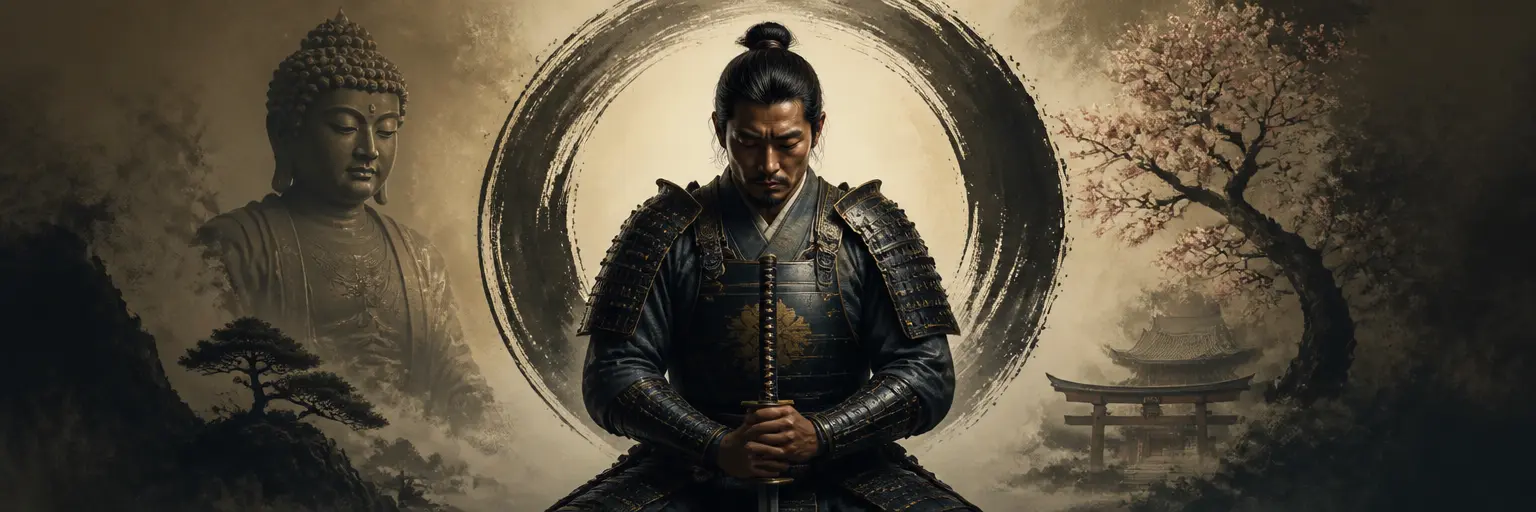
Explore how religion and philosophy shaped Bushido, the samurai code of honor, loyalty, courage, and self-discipline ⚔️. Discover the influence of Zen Buddhism, Confucian ethics, Shinto traditions, and other intellectual currents on feudal Japan’s warrior culture. Gain deeper insight into how spiritual beliefs and philosophical ideals guided samurai conduct, leadership, duty, and identity throughout Japanese history.

In exploring the complex dynamics of religion and warfare in feudal Japan, we uncover how spiritual beliefs shaped military strategies, influenced samurai…
Read article
Discover how meditation practices for samurai shaped their resilience, focus, and discipline, reflecting the deeper spiritual journey that defined Japan's feudal era.…
Read article
The feudal society shaped samurai religion, intertwining loyalty, honor, and spiritual beliefs. This article delves into how the hierarchical structure of feudal…
Read article
🌸 The intricate relationship between religion and governance shaped the samurai class, influencing their leadership styles and decision-making. Understanding Religion's Role in…
Read article
🌸 Delve into the profound Bushido rituals and beliefs that shaped the samurai code, revealing how these sacred practices influenced Japan's feudal…
Read article
🌸 Religion and Samurai Honor profoundly influenced the samurai's values, intertwining spiritual beliefs with a code of loyalty and duty. This article…
Read article
😊 Discover the spiritual foundations of Bushido, exploring the deep-rooted principles that shaped the samurai's way of life. This article delves into…
Read article
🌸 Female figures in Bushido played a crucial role in shaping the spiritual and ethical foundations of Japan’s feudal society, embodying virtues…
Read article
🌸 In the intricate tapestry of Japan's feudal era, Bushido rituals and warfare intertwine, showcasing how spiritual practices shaped the samurai ethos.…
Read article
In the feudal era of Japan, the samurai faced profound inner conflict and duty, grappling with their unwavering faith and the harsh…
Read article
Exploring Bushido ethics and religion reveals how samurai values intertwined with spiritual beliefs, shaping Japan's feudal society. This article delves into the…
Read article
The legacy of Bushido, rooted in samurai ethics, continues to influence modern society. This article explores how Bushido principles in modern society…
Read articleThe Influence on Bushido subcategory explores how religion and philosophy shaped the ethical ideals, warrior traditions, and social values associated with Japan’s samurai class. On Feudal Japan History, readers can discover how Zen Buddhism, Confucianism, Shinto, and other intellectual traditions contributed to ideas of loyalty, discipline, honor, courage, self-control, and duty. This section examines Bushido as a developing historical concept rather than a fixed code, providing carefully researched insights into Japanese history, samurai culture, feudal society, and the religious beliefs that influenced warrior identity.
Learn how Zen Buddhism influenced samurai discipline, meditation, concentration, and emotional control. Articles in this subcategory explain the connection between Zen practice and the warrior ideal of maintaining calmness under pressure, accepting impermanence, and acting decisively in moments of danger. Readers can explore the historical relationship between Zen temples, warrior patrons, swordsmanship, and the cultural life of medieval Japan.
This section also considers the limits of Zen’s influence on Bushido. Rather than presenting a simple claim that all samurai were Zen followers, the content examines regional differences, changing historical periods, and the varied religious identities of Japanese warriors. Expect discussions of mindfulness, death awareness, simplicity, martial arts, and spiritual discipline within their broader historical context.
Discover how Confucian philosophy shaped ideas of hierarchy, loyalty, obedience, filial piety, and moral responsibility in samurai society. Confucian teachings became especially influential during the Edo period, when peace, government administration, education, and social order encouraged scholars to define the duties of warriors in more formal terms.
Readers will learn how concepts such as the relationship between lord and retainer, family obligation, proper conduct, and service to the state contributed to later interpretations of Bushido. These articles distinguish between early medieval warrior practices and the more systematic Neo-Confucian explanations of samurai ethics that developed under the Tokugawa shogunate.
Explore the role of Shinto beliefs, sacred ancestry, shrine traditions, ritual purity, and reverence for local deities in the formation of Japanese warrior identity. Shinto was closely connected to the land, imperial mythology, family lineages, and community traditions, helping shape the cultural world in which samurai lived and served.
This subcategory examines how Shinto practices could support loyalty to a clan, devotion to ancestral spirits, and commitment to a particular domain or homeland. Readers can expect historically grounded explanations of warrior shrines, protective kami, battlefield rituals, sacred symbols, and the relationship between religion and political authority in feudal Japan.
Understand how religious and philosophical ideas influenced samurai attitudes toward death, sacrifice, courage, battlefield conduct, and the uncertainty of warfare. Medieval Japanese warriors faced shifting alliances, civil conflict, siege warfare, and political violence, all of which shaped practical attitudes toward risk and survival.
Articles also investigate the difference between historical warrior behavior and later romanticized images of the samurai. Topics may include death poems, ritual suicide, battlefield reputation, Buddhist teachings on impermanence, and the practical demands of serving a feudal lord. The aim is to present Bushido as a complex tradition shaped by military necessity, social expectations, religious thought, and later reinterpretation.
Learn how the long peace of the Edo period transformed the meaning of Bushido. As samurai increasingly served as administrators, officials, teachers, and bureaucrats rather than active battlefield warriors, philosophical discussions about proper conduct became more important. Confucian scholarship, Buddhist institutions, and Shinto revival movements all contributed to debates about the ideal Japanese warrior.
This section explains how Edo-period writers and scholars described loyalty, frugality, education, self-cultivation, and public service. Readers will also discover why later historical narratives sometimes project Tokugawa-era ideals backward onto earlier samurai history, creating a distinction between medieval warrior ethics and the codified Bushido of later centuries.
Explore the written sources used to study the religious and philosophical influence on Bushido, including warrior house codes, Buddhist writings, Confucian texts, family records, military tales, biographies, and Edo-period treatises. These materials reveal how samurai and scholars described ideals such as honor, loyalty, courage, and self-discipline.
Readers can also learn how historians assess the reliability and context of these sources. Some texts describe ideals rather than everyday behavior, while others were written long after the events they claim to represent. By comparing different records, this subcategory offers a more accurate understanding of samurai ethics, Japanese philosophy, feudal institutions, and the evolution of Bushido.
Bushido was influenced by several traditions, particularly Zen Buddhism, Confucianism, and Shinto. Buddhism contributed ideas about impermanence, meditation, and death; Confucianism emphasized loyalty, hierarchy, and duty; and Shinto reinforced connections to ancestry, sacred places, clans, and Japanese identity. Their influence varied according to time period, region, and social context.
No. Zen Buddhism did not single-handedly create Bushido. Samurai ethics developed through military customs, clan obligations, legal systems, political relationships, and multiple religious traditions. Zen became associated with samurai discipline and mental focus, but Bushido was a gradual and changing tradition rather than a single code established by one religion.
Confucianism encouraged values such as loyalty to one’s lord, respect for hierarchy, filial piety, education, self-control, and responsible public service. These ideas became particularly influential during the Tokugawa period, when samurai roles shifted from battlefield service toward administration and governance.
Shinto connected samurai life with ancestral traditions, local communities, sacred landscapes, and protective kami. It could strengthen a warrior’s attachment to a clan, domain, shrine, or lineage. Shinto’s influence was often intertwined with Buddhism and political authority rather than operating as an isolated source of Bushido values.
No. Bushido changed significantly across the Kamakura, Muromachi, Sengoku, and Edo periods. Medieval warriors often prioritized loyalty, military skill, family survival, and political alliances, while later writers emphasized moral cultivation, obedience, frugality, and idealized honor. Understanding these changes is essential to studying the historical development of samurai ethics.