The Role of Aesthetics in Feudal Japanese Philosophy: Beauty and Meaning
🌸 In "The Role of Aesthetics in Feudal Japanese Philosophy: Beauty and Meaning," we delve into how Feudal Japanese aesthetics philosophy shaped…
Read article
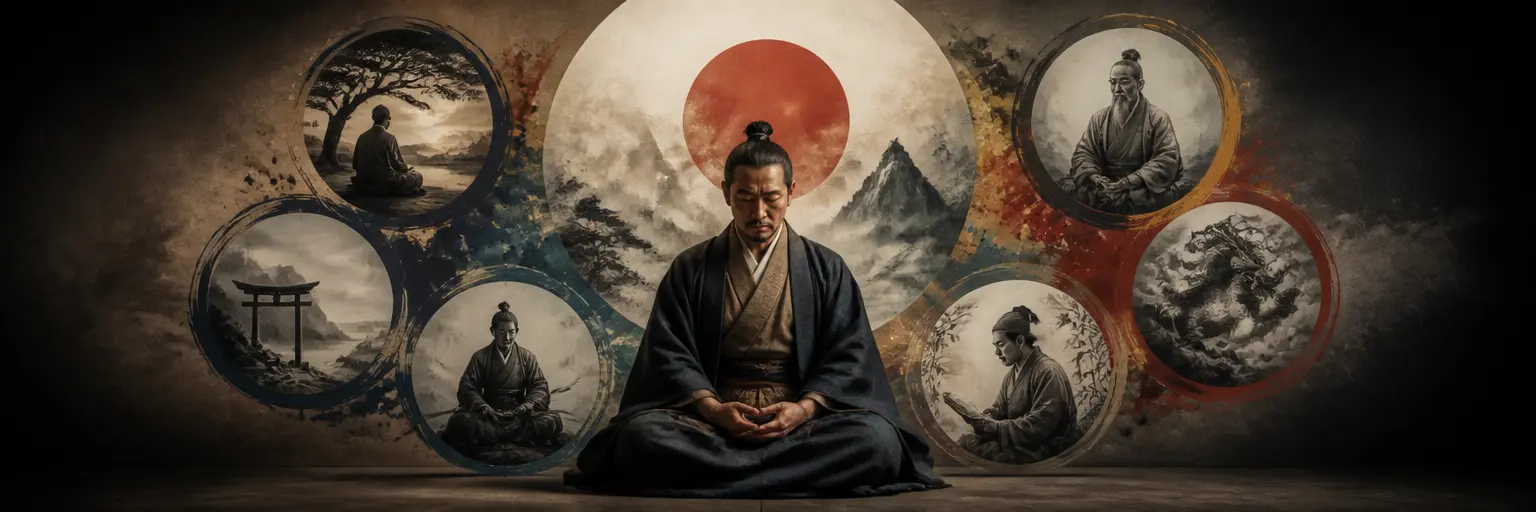
Explore the rich world of Philosophical Schools in feudal Japan, where Buddhist, Shinto, Confucian, and Zen traditions shaped spiritual life, ethics, politics, and culture. 🏯 Discover how influential thinkers and teachings guided samurai values, social order, artistic expression, and everyday beliefs throughout Japan’s medieval history. 📜 Gain deeper insight into the ideas that helped define Religion and Philosophy in feudal Japan through engaging, expert-informed historical content.

🌸 In "The Role of Aesthetics in Feudal Japanese Philosophy: Beauty and Meaning," we delve into how Feudal Japanese aesthetics philosophy shaped…
Read article
The Sumie philosophy in feudal Japan transcends mere brushwork, embodying a profound connection between art and mindfulness. This article delves into how…
Read article
Karma in Feudal Japan influenced not only personal morality but also social hierarchies. This article delves into the philosophical interpretations of karma,…
Read article
The evolution of ethical thought in feudal Japan reflects a complex interplay of Confucian ideals, samurai values, and Buddhist influences, shaping societal…
Read article
Confucianism's influence in feudal Japan profoundly shaped social hierarchies and governance structures. By promoting values such as loyalty, respect, and filial piety,…
Read article
😊 Taoism's influence on Japanese feudalism profoundly shaped the era's cultural and philosophical landscape. Emphasizing harmony and balance, this integration fostered a…
Read article
🌸 The spiritual philosophy of the samurai intertwines duty and honor, guiding warriors through the complexities of life and death. This exploration…
Read article
🌸 The resurgence of Shinto philosophy in feudal Japan significantly influenced the era's cultural identity, intertwining spirituality with governance and daily life,…
Read article
Exploring the insights of feudal philosophers and suffering, this article delves into how these thinkers interpreted pain and hardship, shaping societal views…
Read article
Exploring feudal Japan loyalty and honor reveals complex ethical dilemmas where allegiance to lords often conflicted with personal morality. This article delves…
Read article
The intricate relationship between religion and feudal Japan philosophy shaped societal norms and ethical frameworks. This comparative analysis delves into how various…
Read article
🌿 Japanese gardens serve as profound philosophical reflections, embodying the harmony between nature and human thought. This exploration delves into how these…
Read articleExplore the major philosophical schools of feudal Japan and discover how Buddhist thought, Confucian ethics, Shinto beliefs, and indigenous Japanese traditions influenced politics, education, warfare, art, social order, and daily life. This subcategory examines the ideas that shaped Japan from the Kamakura and Muromachi periods through the Sengoku era and the Tokugawa shogunate, offering historically grounded insights for readers interested in Japanese philosophy, samurai culture, religious history, Zen Buddhism, Neo-Confucianism, and feudal society.
Learn how Zen Buddhism in feudal Japan developed through meditation, discipline, simplicity, and direct spiritual experience. Articles explore the influence of Rinzai and Soto Zen on samurai conduct, monastic institutions, tea culture, ink painting, garden design, poetry, and martial traditions.
Readers can expect clear explanations of concepts such as zazen, mindfulness, impermanence, enlightenment, and non-attachment, along with historical context about Zen temples and influential teachers. Discover why Zen became closely associated with the warrior class and how it shaped Japanese aesthetics and intellectual life.
Examine the role of Confucian philosophy in feudal Japan, particularly its emphasis on hierarchy, loyalty, filial piety, education, social responsibility, and moral governance. This section explains how Confucian ideas influenced samurai values, domain administration, family structures, and the relationship between rulers and subjects.
Articles also investigate the development of Neo-Confucian thought under the Tokugawa shogunate. Readers will learn how scholars used Confucian principles to support political stability, define social classes, promote literacy, and shape the evolving ideal of bushido.
Discover how Shinto beliefs and philosophy shaped spiritual life in feudal Japan. Topics include kami worship, sacred landscapes, shrine traditions, purification rituals, ancestor reverence, and the relationship between human communities and the natural world.
This section also explores the interaction between Shinto and Buddhism, known as shinbutsu shūgō, which influenced religious practice for centuries. Readers can understand how Shinto contributed to Japanese identity, imperial ideology, agricultural customs, festivals, and the legitimacy of feudal authority.
Learn about Pure Land schools, including Jōdo and Jōdo Shinshū Buddhism, and their promise of rebirth in the Western Pure Land through faith in Amida Buddha. These traditions offered accessible religious teachings to farmers, merchants, women, warriors, and other communities beyond the elite.
Articles examine the importance of devotion, chanting the nenbutsu, salvation, compassion, and religious movements during periods of war and social change. Discover how Pure Land Buddhism expanded across medieval Japan and became one of the most influential forms of popular Japanese religion.
Explore the teachings of Nichiren Buddhism, which emphasized the Lotus Sutra as the highest expression of Buddhist truth. This section explains Nichiren’s criticism of competing schools, his calls for religious reform, and the political and social consequences of his message during the Kamakura period.
Readers can investigate the relationship between faith, national protection, prophecy, and authority in medieval Japan. Historical articles place Nichiren movements within the wider context of samurai rule, Buddhist institutions, warfare, natural disasters, and debates about the ideal religious order.
Understand how philosophical and religious ideas influenced the samurai worldview. Rather than treating bushido as a single unchanging code, this section traces the evolving combination of Zen discipline, Confucian loyalty, Shinto tradition, Buddhist impermanence, and practical military ethics.
Topics may include attitudes toward death, honor, duty, leadership, revenge, discipline, and service to a lord. Readers will gain a nuanced understanding of how philosophical teachings were interpreted in different periods and how later generations shaped the modern image of the Japanese warrior.
Discover how philosophical schools affected the organization of feudal Japanese government. Religious institutions and scholarly traditions helped rulers justify authority, educate officials, regulate communities, and establish moral expectations for warriors, peasants, artisans, and merchants.
This section connects Japanese intellectual history with the Kamakura shogunate, Ashikaga rule, Sengoku daimyo, and Tokugawa political order. Articles explain how philosophy became a practical tool for administration, social control, diplomacy, legal thought, and the maintenance of peace.
The most influential traditions included Zen Buddhism, Pure Land Buddhism, Nichiren Buddhism, Shinto, Confucianism, and Neo-Confucianism. These schools often interacted rather than existing in complete isolation, shaping Japanese religion, politics, ethics, education, and cultural expression.
Zen encouraged meditation, mental discipline, simplicity, awareness of impermanence, and direct experience. Some samurai and military leaders supported Zen temples and teachers, although the relationship between Zen and the warrior class varied across periods and should not be reduced to a single “warrior philosophy.”
Confucianism contributed ideas about loyalty, hierarchy, filial piety, education, duty, and moral conduct. These concepts later became important elements in interpretations of bushido, especially during the Tokugawa period, when scholars and rulers sought to define proper behavior for the samurai class.
Yes. For much of feudal Japanese history, Shinto and Buddhism were deeply connected through shared institutions, rituals, and interpretations of sacred figures. This combined religious environment influenced shrines, temples, festivals, political legitimacy, and everyday spiritual practice until modern separation policies changed the relationship.
Philosophical schools reveal how people understood authority, morality, nature, suffering, death, education, and social responsibility. Studying them provides essential context for Japanese history, helping readers interpret samurai culture, religious institutions, artistic traditions, political systems, and the lives of ordinary people.