⚔️ Religious Conflicts in Feudal Japan
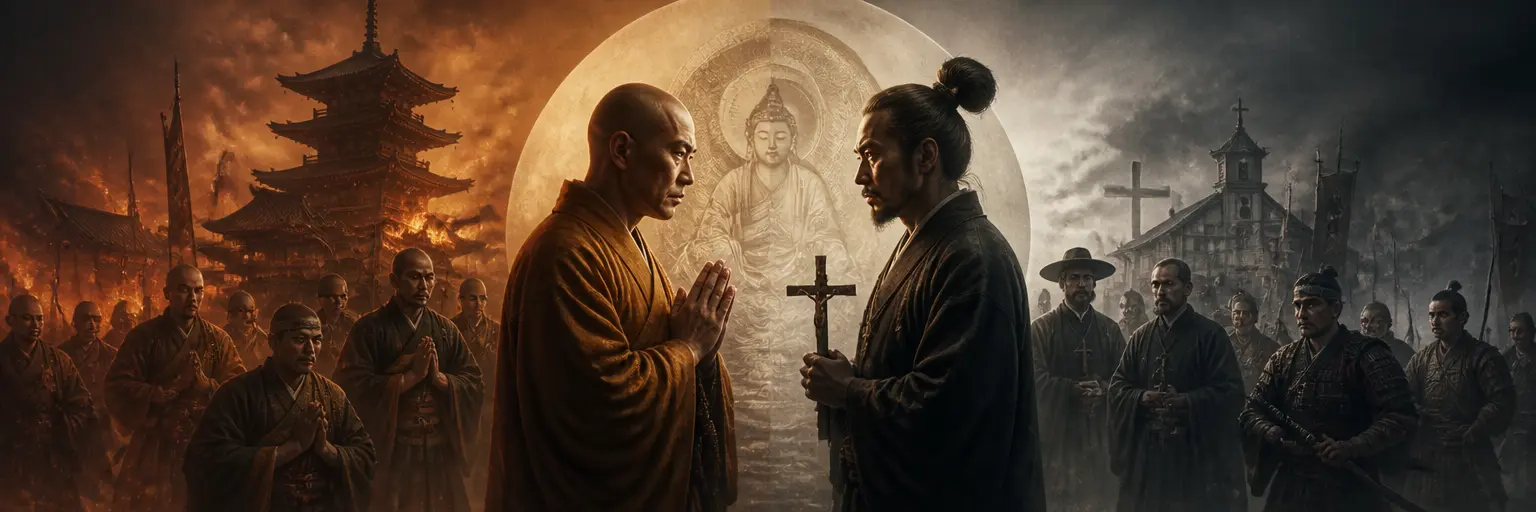
Explore the complex history of religious conflicts in feudal Japan, where Buddhism, Shinto, Christianity, and political authority shaped the country’s wars, alliances, laws, and social structures. This subcategory examines temple warfare, sectarian rivalries, religious persecution, missionary activity, and the relationship between faith and power during Japan’s feudal era. Through expert-driven historical analysis, readers can discover how religious institutions influenced samurai politics, local communities, diplomacy, and the development of Japanese culture.
🏯 Buddhist Sectarian Rivalries and Temple Warfare
Readers will learn how major Buddhist schools, including Tendai, Shingon, Pure Land, Nichiren, and Zen traditions, competed for influence during medieval and early modern Japan. The articles explore doctrinal disagreements, institutional rivalries, and the powerful role of temple networks in religious and political life.
This section also examines monastic armies, fortified temples, warrior monks, and armed religious communities. Discover how institutions such as Enryaku-ji and Hongan-ji became important political forces, controlled land, negotiated with feudal lords, and sometimes participated directly in military conflicts.
⚔️ Ikko-Ikki and Religious Uprisings
Discover the history of the Ikko-ikki, confederations of Buddhist followers, peasants, local warriors, and temple supporters who challenged samurai governments and regional daimyō. These movements played a significant role in the Sengoku period and demonstrate how religious identity could unite diverse social groups.
Articles in this section explain the causes, leaders, battles, and consequences of religious uprisings. Readers can expect detailed discussions of the Jōdo Shinshū tradition, fortified temple communities, rural resistance, and the struggle between religious autonomy and expanding feudal centralization.
⛩️ Shinto, Buddhism, and Religious Syncretism
Feudal Japan was not defined by a simple division between Shinto and Buddhism. This section explores Shinbutsu-shūgō, the long-standing fusion of kami worship and Buddhist practice that shaped temples, shrines, rituals, legends, and political ideology throughout Japanese history.
Readers will discover how religious conflicts sometimes emerged when rulers, reformers, or religious movements attempted to separate traditions or redefine sacred authority. Topics include shrine-temple complexes, kami interpretations, state rituals, local beliefs, and the changing relationship between Buddhism and Shinto before and after the Meiji-era separation policies.
✝️ Christianity, Missionaries, and Religious Persecution
Learn how Portuguese and Spanish missionaries introduced Christianity to Japan during the sixteenth century. This section examines Jesuit missions, Christian daimyō, conversions, foreign trade, and the ways Christianity became connected to diplomacy and commercial networks in the Sengoku period.
The articles also cover the persecution of Japanese Christians, the suppression of missionaries, the banning of Christianity under the Tokugawa shogunate, and the endurance of hidden Christian communities. Readers will gain insight into the political, cultural, and security concerns that shaped Japan’s anti-Christian policies.
👑 Religion, Daimyō, and Shogunal Authority
Religious conflict in feudal Japan was closely linked to struggles for political power. Explore how emperors, shōguns, daimyō, temples, and shrine institutions used religious legitimacy to strengthen authority, manage territory, and influence the loyalty of warriors and local communities.
This section explains how rulers sponsored religious institutions while also restricting them when they became political threats. Expect analysis of temple registration, land ownership, religious taxation, patronage, legal control, and the methods used by leaders such as Oda Nobunaga, Toyotomi Hideyoshi, and Tokugawa Ieyasu to control religious organizations.
🛡️ Religious Conflict and Samurai Society
Readers can explore how religious beliefs affected the values, behavior, and decisions of the samurai class. Buddhism, Shinto traditions, warrior ethics, death rituals, funerary practices, and ideas about loyalty influenced the way samurai understood warfare and social duty.
At the same time, this section considers the practical side of faith in wartime Japan. Articles discuss temple protection, battlefield prayers, sacred symbols, religious patronage, military alliances, and the ways samurai used religion to legitimize conquest or oppose rival powers.
📜 Causes and Consequences of Religious Conflict
Understand the wider causes of religious conflict, including disputes over doctrine, economic resources, land rights, political independence, foreign influence, and control of local populations. Each article connects religious events to the broader transformation of medieval and early modern Japanese society.
Readers will also examine the long-term consequences of these conflicts, including the centralization of government, the regulation of temples and shrines, changes in religious practice, and the formation of Japan’s early modern political order. The content highlights how faith and conflict continued to shape Japanese history beyond the battlefield.
❓ Frequently Asked Questions About Religious Conflicts in Feudal Japan
What were the main religious conflicts in feudal Japan?
The main conflicts included Buddhist sectarian rivalries, temple warfare, Ikko-ikki uprisings, disputes involving Shinto and Buddhism, and the persecution of Christianity. These conflicts often involved both religious beliefs and struggles over land, political authority, taxation, and regional power.
What were the Ikko-ikki?
The Ikko-ikki were religious and social leagues associated primarily with Jōdo Shinshū Buddhism. They included peasants, monks, local warriors, and other followers who organized to defend their communities and challenge samurai rulers. Some Ikko-ikki groups controlled territory and fought major military campaigns during the Sengoku period.
Why did Oda Nobunaga attack Buddhist temples?
Oda Nobunaga viewed powerful temples and warrior monk organizations as political and military threats to his efforts to unify Japan. His campaigns against institutions such as Enryaku-ji were aimed at weakening independent religious powers that controlled land, armies, and regional influence.
Why was Christianity persecuted in Tokugawa Japan?
Tokugawa authorities feared that Christianity could encourage foreign intervention, challenge loyalty to the shogunate, and create political divisions. As a result, the government banned Christian missionary activity, required people to register with Buddhist temples, and used severe measures to suppress the faith.
How did religion influence samurai warfare?
Religion influenced samurai warfare through ideas about loyalty, death, spiritual protection, sacred authority, and political legitimacy. Samurai supported temples and shrines, sought religious blessings, used sacred symbols, and sometimes fought alongside or against religious institutions. Faith was therefore both a personal belief system and a significant force in feudal politics.