
The Art of Origami: Folding Techniques and Cultural Significance

Welcome to Feudal Japan History, where we invite you to step into the rich tapestry of Japan's feudal era. Here, you will uncover the intricate layers of history, culture, and society that shaped this fascinating time. In our featured article, "The Art of Origami: Folding Techniques and Cultural Significance," we delve into the delicate interplay between artistry and tradition, revealing how this ancient craft reflects the values and beliefs of a bygone era.
Prepare to be captivated as we unfold the story behind origami's profound impact on Japanese culture. Your journey into the heart of feudal Japan begins now—let's explore together!
Introduction to Origami in Japan
Origami, the intricate art of paper folding, is more than just a creative pastime; it is a profound reflection of Japan's historical, cultural, and societal values. This art form has evolved through the centuries, transforming from simple folds into complex designs that require precision, creativity, and an understanding of geometry.
In Japan, origami is not merely an art but a cultural phenomenon that embodies the spirit of patience, discipline, and beauty. As we delve into the cultural significance of origami in Japan, we will explore its historical roots, its role in Japanese society, and the techniques that have been passed down through generations.
Overview of Origami and Its Evolution
Origami can be traced back to the 6th century when paper was introduced to Japan via Buddhist missionaries. Initially, it served religious purposes, often used in ceremonies or as offerings. Over time, the practice evolved, influenced by various cultural exchanges and technological advancements in paper production. The term "origami" itself, deriving from the Japanese words "oru" (to fold) and "kami" (paper), symbolizes the transformation of a simple sheet into a work of art through a series of meticulous folds.
- Key Milestones in Origami Evolution:
- 6th Century: Introduction of paper to Japan.
- 17th Century: Development of more complex folding techniques.
- 20th Century: Global recognition and the establishment of origami as an art form.
The Role of Origami in Japanese Culture
Origami holds a special place in Japanese culture, often associated with tradition, spirituality, and education. It is a common practice in cultural celebrations, weddings, and ceremonies where folded paper cranes symbolize hope and peace. The act of folding paper is not just a skill; it is a meditative process that encourages mindfulness and concentration.
- Cultural Significance:
- Symbolism of the Crane: Represents longevity and happiness.
- Educational Tool: Used in schools to teach geometry and enhance fine motor skills.
- Artistic Expression: Modern origami artists have pushed the boundaries, integrating origami into contemporary art and design.
Historical Context of Origami
The Origins of Origami in Feudal Japan
The roots of origami in feudal Japan can be traced back to the customs of the samurai class and the influence of Chinese culture. Early origami was primarily functional, serving as a means to create ceremonial items or simple toys for children. As the popularity of paper grew, so did the complexity of the designs, leading to the development of various folding techniques that are still in use today.
- Early Uses:
- Ceremonial Offerings: Origami was often incorporated into Shinto rituals.
- Children’s Toys: Simple designs like the "kabuto" (helmet) or "tako" (kite) became popular.
Origami in the Edo Period: A Cultural Renaissance
The Edo period (1603-1868) marked a significant turning point in the history of origami. During this time, Japan experienced a cultural renaissance characterized by increased peace, prosperity, and a flourishing of the arts. This era saw the emergence of sophisticated origami techniques and the establishment of origami as a respected art form.
- Edo Period Highlights:
- Increased Accessibility of Paper: The production of high-quality paper became widespread.
- Development of Formal Styles: The introduction of "origami books" that documented various folding techniques.
- Cultural Exchange: Engagement with Western art forms led to hybrid styles of origami.
The art of origami is deeply intertwined with Japan's cultural significance, showcasing the evolution of a simple craft into a revered art form that reflects the values and history of the nation. As we explore the intricacies of origami further, we will uncover more about its techniques and its ongoing influence in modern Japanese culture.
Folding Techniques in Origami
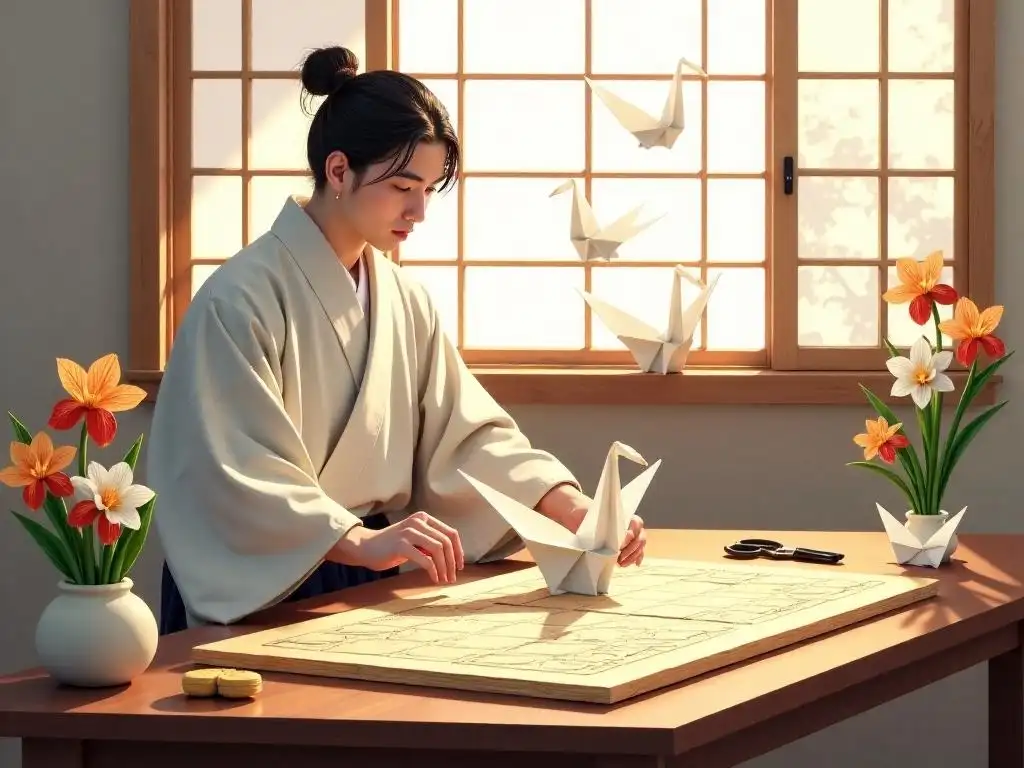
Origami, the intricate art of paper folding, encompasses a variety of techniques that transform a simple sheet of paper into elaborate sculptures. The mastery of these techniques often dictates the complexity and beauty of the final creation. Understanding the folding methods is crucial for both beginners and seasoned practitioners.
Basic Origami Folding Methods
At its core, origami utilizes several fundamental folding techniques that serve as the building blocks for more complex designs. Here are some of the essential methods:
- Valley Fold: This is the most basic fold, where the paper is folded towards the body, creating a "V" shape. It is often used to create the base of many models.
- Mountain Fold: The opposite of a valley fold, this technique folds the paper away from the body, resembling an upward peak. It is essential for creating 3D structures.
- Squash Fold: This technique involves opening up a flap and pressing it down flat against the model. It adds dimension and detail to the design.
- Reverse Fold: This fold allows for a section of paper to be turned inside out or backward, often used to create features like wings or limbs in more complex figures.
- Petal Fold: Commonly used in floral designs, this fold involves lifting a portion of the paper and folding it to create a petal-like shape.
These basic techniques form the foundation for nearly all origami designs. Mastery of these folds can lead to more intricate creations.
Advanced Origami Techniques
As practitioners become more skilled, they often delve into advanced origami techniques that require a deeper understanding of paper properties and design principles. Some noteworthy methods include:
- Tessellation: Involves creating a repetitive pattern of folds that can produce stunning geometric designs. This technique is often used to create intricate patterns that can resemble textiles or natural forms.
- Wet Folding: A technique that involves dampening the paper before folding. This allows for more fluid shapes and smoother curves, making it ideal for models requiring rounded features.
- Modular Origami: A method that utilizes multiple sheets of paper to create a single cohesive structure. This technique is often used in creating complex polyhedral shapes and can result in impressive three-dimensional figures.
- 3D Origami: This technique involves assembling multiple folded pieces into a three-dimensional structure, often creating large and complex designs that stand independently.
- Action Origami: Focuses on creating models that can move or change shape when manipulated. This can include designs like flapping birds or jumping frogs, showcasing the dynamic potential of origami.
These advanced techniques highlight the versatility and complexity of origami, transforming it from a simple craft into a sophisticated art form.
Cultural Significance of Origami in Japan
Origami has deep cultural roots in Japan, serving not just as a pastime but also as a medium of expression and communication. Its significance extends beyond mere paper folding, reflecting various aspects of Japanese society and culture.
Symbolism of Origami in Japanese Society
In Japanese culture, origami is imbued with meanings that resonate with traditions and beliefs. For example:
- Peace and Hope: The crane, one of the most famous origami figures, symbolizes peace and hope. According to legend, folding 1,000 cranes grants the folder a wish, often associated with recovery from illness or achieving peace.
- Gift-Giving: Origami plays a role in the Japanese custom of gift-giving. Beautifully folded paper can enhance the presentation of gifts, reflecting thoughtfulness and care.
- Cultural Heritage: Origami embodies the Japanese aesthetic of simplicity and elegance, representing the harmonious relationship between nature and art. It serves as a connection to Japan's historical and artistic traditions.
These symbolic meanings highlight origami's role as a cultural artifact that embodies core Japanese values and beliefs.
Origami in Religious and Ceremonial Practices
Origami also finds its place in various religious and ceremonial contexts in Japan. Some key aspects include:
- Shinto Rituals: In Shintoism, origami is used in rituals to symbolize offerings to the kami (spirits). The act of folding paper into shapes such as cranes or other designs is believed to convey respect and reverence.
- Weddings and Ceremonies: Origami is often incorporated into wedding ceremonies, where folded paper cranes and other shapes are used as decorations, symbolizing fidelity and happiness for the couple.
- Festivals: During festivals, origami is featured prominently in decorations and activities, fostering a sense of community and cultural pride.
These practices illustrate how origami transcends its artistic dimension, becoming interwoven with Japan's spiritual and communal life, marking significant moments and traditions.
Modern Interpretations of Origami
In recent years, origami has evolved from its traditional roots into a medium for contemporary artistic expression and innovation. Modern interpretations of origami have expanded beyond simple folding techniques, incorporating complex mathematics and engineering principles. Artists today use origami to explore themes of nature, identity, and the human experience, merging traditional aesthetics with contemporary concepts. This transformation reflects the adaptability of origami, allowing it to resonate with a diverse audience across the globe.
The use of advanced materials, such as synthetic papers and digital technologies, has further enhanced the possibilities of origami. Artists blend traditional craftsmanship with modern techniques, creating intricate designs that challenge viewers' perceptions. These modern interpretations not only celebrate the rich history of origami but also push its boundaries, encouraging new forms of creativity and expression.
Contemporary Artists and Their Contributions
Numerous contemporary artists have made significant contributions to the world of origami, each bringing their unique perspective and techniques. One notable figure is Robert J. Lang, who combines art and mathematics in his origami creations. His works often reflect natural forms, such as animals and plants, showcasing the intricate beauty of both nature and origami. Lang's innovations in folding techniques have inspired many artists and enthusiasts, leading to a renaissance in origami practices.
Another prominent artist is Tomoko Fuse, renowned for her modular origami designs. Fuse's work emphasizes the interplay between geometry and art, utilizing multiple sheets of paper to create stunning three-dimensional forms. Her contributions have not only advanced the technical aspects of origami but have also highlighted its potential for educational applications, promoting critical thinking and spatial reasoning.
Through exhibitions and workshops, these artists and others like them continue to inspire a new generation of origami practitioners, bridging the gap between traditional art and modern expression.
The Global Influence of Origami in Art and Education
Origami's influence transcends cultural boundaries, impacting various fields such as art, design, and education worldwide. In the realm of art, origami has inspired countless artists across different cultures to incorporate folding techniques into their work, leading to a rich tapestry of artistic expression. The versatility of origami allows it to be adapted for diverse styles, from minimalist designs to elaborate sculptures, demonstrating its universal appeal.
In education, origami serves as a powerful tool for teaching mathematics and science concepts. Educators leverage the hands-on experience of folding paper to enhance students' understanding of geometry, symmetry, and spatial visualization. Programs incorporating origami have been shown to improve problem-solving skills and foster creativity among learners. By connecting traditional craft with modern educational practices, origami continues to enrich the learning experience for students of all ages.
Conclusion: The Lasting Impact of Origami in Japanese Culture
Origami holds a significant place in Japanese culture, reflecting its historical roots while embracing contemporary interpretations. The art of folding paper has been a means of communication, expression, and celebration in Japanese society for centuries. Its cultural significance is evident in various ceremonies, such as weddings and festivals, where origami pieces symbolize good fortune and prosperity.
Reflection on Origami's Role in Cultural Heritage
Reflecting on origami's role in cultural heritage, it is clear that this art form embodies the spirit of Japanese craftsmanship and attention to detail. Each fold carries meaning and purpose, often rooted in long-standing traditions. Origami serves as a bridge between generations, allowing the wisdom of the past to be passed down while adapting to modern sensibilities. Its presence in everyday life, from simple paper cranes to elaborate ceremonial pieces, underscores the enduring connection between art and culture in Japan.
Future of Origami: Preserving Tradition Amidst Modernity
As origami continues to evolve, it faces the challenge of preserving its rich traditions while embracing modern influences. The future of origami lies in striking a balance between honoring historical practices and exploring innovative techniques. Artists and enthusiasts alike are tasked with ensuring that the essence of origami remains intact, even as it adapts to contemporary contexts.
Community efforts to promote origami through workshops, exhibitions, and educational programs are essential for maintaining its cultural significance. By fostering a deeper understanding of origami's history and techniques, future generations can appreciate and carry forward this cherished art form. The ongoing dialogue between tradition and innovation will ensure that origami remains a vibrant and relevant aspect of Japanese culture for years to come.
- Introduction to Origami in Japan
- Overview of Origami and Its Evolution
- The Role of Origami in Japanese Culture
- Historical Context of Origami
- Folding Techniques in Origami
- Cultural Significance of Origami in Japan
- Modern Interpretations of Origami
- Conclusion: The Lasting Impact of Origami in Japanese Culture
Frequently Asked Questions
What is the cultural significance of origami in Japan?
Origami holds deep cultural significance in Japan, symbolizing peace, prosperity, and hope. It is often used in ceremonial practices and as a form of artistic expression.
How did origami develop during the feudal era in Japan?
During the feudal era, origami evolved from simple folding techniques to a complex art form, influenced by samurai culture and religious practices that emphasized mindfulness and precision.
What are some traditional uses of origami in Japanese culture?
Origami is traditionally used in ceremonies, such as weddings and festivals, where folded paper cranes represent good fortune and longevity. It also plays a role in gift presentation.
Are there specific folding techniques that are significant in origami?
Yes, several folding techniques such as the valley fold and mountain fold are foundational. Mastery of these techniques allows artists to create intricate designs that reflect Japanese aesthetics.
How is origami viewed in contemporary Japan?
In contemporary Japan, origami is regarded as both a traditional art form and a modern educational tool. It promotes creativity, problem-solving, and is celebrated in workshops and exhibitions across the country.
Final Reflection: The Enduring Legacy of Origami in Japanese Culture
The art of origami transcends mere paper folding; it embodies a rich tapestry of cultural significance that continues to resonate in today’s world. As we explore the intricate techniques and historical roots of origami, we uncover not only a craft but a profound expression of Japanese identity and philosophy. In an era where digital distractions dominate, the meditative practice of origami invites us to slow down and appreciate the beauty of simplicity and patience.
Origami has woven itself into the fabric of Japanese culture, influencing art, education, and even therapy. The delicate folds and precise creases reflect a deep respect for nature and craftsmanship, reminding us of the importance of mindfulness in our fast-paced lives. As the renowned origami artist Akira Yoshizawa once said, Origami is the art of paper, but it is also the art of life.
This sentiment captures the essence of how origami serves as a metaphor for growth, transformation, and the interconnectedness of all things.
As you reflect on the lessons of origami, consider how you can incorporate its principles into your own life. Embrace the beauty of patience, creativity, and mindfulness in your daily activities. Whether through the simple act of folding paper or finding moments of stillness amidst chaos, let the art of origami inspire you to create, connect, and cultivate a deeper appreciation for the world around you. The journey of folding paper is not just about the final creation; it is about the process and the stories we unfold along the way.
Unleash Your Creativity: Start Folding Today!
Thank you for diving into the captivating world of origami with us! You've uncovered not just the intricate techniques, but also the rich cultural significance behind each fold. Now, let's put that knowledge into action and explore how you can incorporate the art of folding into your life.
Here are some exciting steps you can take:
- Begin your origami journey today: Grab a sheet of paper and try your hand at a simple design. Embrace the joy of creating something beautiful with your own hands!
- Join an origami community: Seek out local or online groups where you can share your creations, receive helpful tips, and connect with fellow origami enthusiasts. Learning together can be incredibly rewarding!
- Explore the cultural stories: Research the history of a specific origami figure and share your findings with friends or on social media to deepen your appreciation for this unique art form.
What origami creation are you excited to try first? Share your thoughts and inspire others in the comments below!