
The Isolationist Economy: How Japan Balanced SelfSufficiency and Foreign Influence

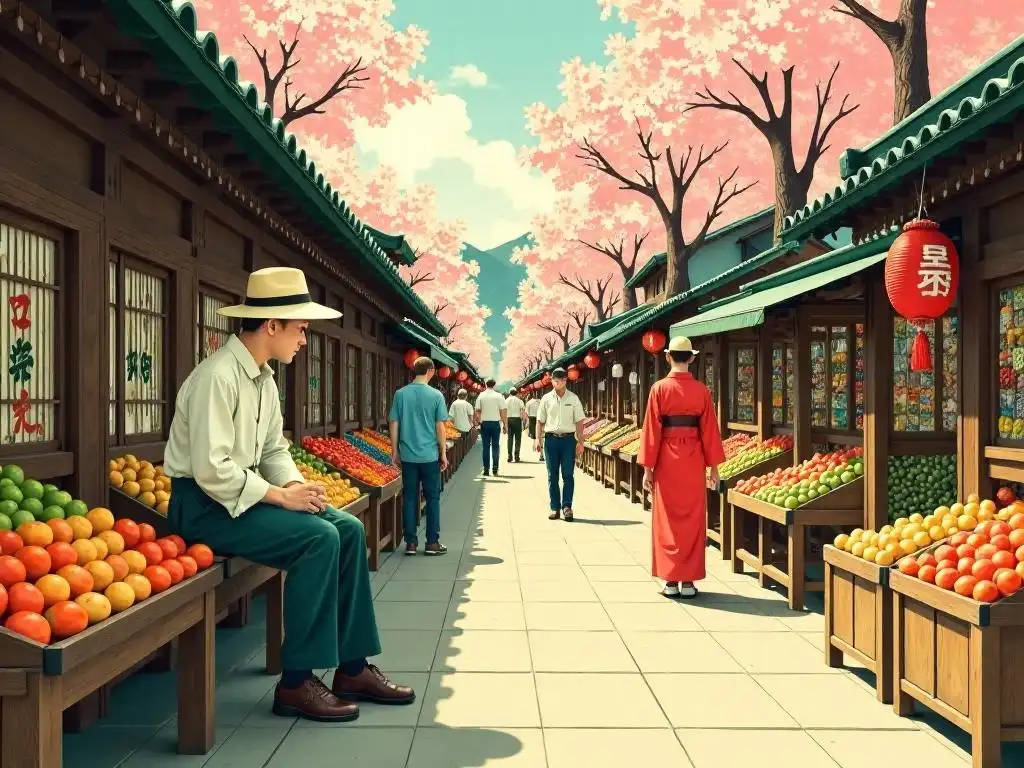
Welcome to Feudal Japan History, where we embark on an intriguing journey through the captivating tapestry of Japan’s feudal era. In this comprehensive exploration, we delve deep into the Japan feudal era economy analysis, unearthing the delicate balance between self-sufficiency and foreign influence that defined this fascinating period. Prepare to be enlightened as we unravel the complexities of economic strategies that shaped a nation. Ready to discover how isolationism paved the way for a unique economic landscape? Join us as we unfold the story behind "The Isolationist Economy" and ignite your curiosity to learn more!
Japan's feudal era, spanning from the late 12th century to the mid-19th century, was marked by a complex interplay of self-sufficiency and foreign influence. This period saw the establishment of a rigid social hierarchy and a unique economic system that prioritized local resources and minimized external dependencies. The economy during this time was not merely a backdrop to the political and social dynamics but played a crucial role in shaping the very fabric of feudal society.
In this article, we will conduct a comprehensive analysis of Japan's feudal era economy, exploring how isolationist policies were carefully crafted to balance the need for self-sufficiency with the inevitable influences from abroad. By delving into the historical context and key figures of this era, we aim to provide a detailed understanding of the economic landscape that defined Japan during its feudal period.
Introduction to Japan's Feudal Era Economy
Overview of the Feudal System in Japan
The feudal system in Japan was characterized by a decentralized political structure where power was held by local lords, known as daimyo, who governed their own domains. This hierarchy was supported by a class of samurai warriors who pledged loyalty to their lords in exchange for land and protection. The economy was predominantly agrarian, relying heavily on rice cultivation, which not only served as a staple food but also as a currency of sorts.
- Key Features of the Feudal Economy:
- Agricultural Focus: The backbone of the economy, with rice as the primary crop.
- Local Trade: Limited inter-regional trade due to the focus on self-sufficiency.
- Taxation System: Farmers were taxed based on their rice production, supporting the ruling class.
Importance of Economic Policies in Feudal Japan
Economic policies in feudal Japan were critical in maintaining the social order and stability of the time. The shogunate implemented various policies to control trade, agriculture, and commerce, which significantly influenced the daily lives of the populace.
- Major Economic Policies:
- Sakoku (Closed Country Policy): Initiated in the 17th century, restricting foreign trade to designated ports.
- Rice as Currency: Standardization of rice as a unit of economic exchange.
- Market Regulations: Strict control over market practices to prevent inflation and maintain local economies.
Historical Context of Japan's Isolationist Policies
The Rise of Isolationism in the Edo Period
The Edo period (1603-1868) marked a significant shift toward isolationism, primarily under the Tokugawa shogunate. This era was defined by the shogunate's efforts to consolidate power and minimize foreign influence, which they perceived as a threat to their authority and societal stability.
- Factors Leading to Isolationism:
- Fear of Colonialism: Rising European powers posed a threat to Japan's sovereignty.
- Internal Stability: A focus on internal harmony led to the suppression of external influences.
- Cultural Preservation: A desire to maintain traditional Japanese culture against foreign encroachment.
Key Figures Influencing Economic Isolation
Several key figures played pivotal roles in shaping Japan's isolationist economic policies. Their decisions and ideologies significantly influenced the course of the economy during the feudal era.
- Notable Figures:
- Tokugawa Ieyasu: The founder of the Tokugawa shogunate, whose policies laid the groundwork for isolation.
- Mizuno Tadakuni: An important reformer whose economic policies emphasized self-sufficiency.
- Katsu Kaishu: A naval officer who, despite advocating for modernization, recognized the need for a balance between isolation and foreign influence.
By analyzing these aspects of Japan's feudal era economy, we gain insight into how the nation successfully navigated the challenges of self-sufficiency and foreign influence, ultimately leading to a unique economic landscape that would influence its future.
The Concept of Self-Sufficiency in Feudal Japan
Self-sufficiency during the feudal era in Japan was a fundamental principle that shaped the country's economy and societal structure. This concept revolved around the idea of producing essential goods and services domestically to reduce dependency on foreign imports. The agrarian nature of Japanese society, where the majority of the population engaged in farming, heavily influenced this self-reliance. Villages aimed to meet their own needs, leading to a localized economy that prioritized agricultural production, craftsmanship, and barter systems.
The Japanese feudal system, characterized by a hierarchical structure of land ownership and loyalty, further reinforced self-sufficiency. Lords, or daimyos, controlled vast tracts of land, which they allocated to peasants. In return for protection and governance, peasants provided agricultural produce. This symbiotic relationship minimized the need for external economic influences, as most communities aimed to be self-sustaining.
Moreover, the concept of self-sufficiency was not merely economic but also cultural. It fostered a strong sense of community and identity, as local customs, traditions, and practices developed around agricultural cycles and local production methods. This cultural dimension played a crucial role in maintaining Japan's isolationist policies, as the nation sought to preserve its unique identity against foreign influences.
Agricultural Practices and Food Production
Agriculture was the backbone of the feudal Japanese economy, with rice being the staple crop that not only sustained the population but also served as a form of currency. The cultivation of rice required meticulous practices, including the use of irrigation, crop rotation, and seasonal planting techniques. These agricultural innovations allowed for increased yields, ensuring food security and contributing to the self-sufficient nature of rural communities.
In addition to rice, other crops such as millet, barley, and wheat, along with legumes and vegetables, were cultivated, enriching the diet of the populace. The practice of farming extended beyond mere subsistence; it also involved a deep understanding of the land and the seasons, which was passed down through generations. This connection to the land fostered resilience against famine and economic instability.
Furthermore, techniques such as communal farming and shared resources among villagers enhanced productivity. Villages often held collective harvests and festivals, reinforcing social bonds and ensuring that everyone had access to food. This communal approach to agriculture was vital in maintaining self-sufficiency, as it reduced individual risks and encouraged support systems within the community.
Local Markets and Trade Dynamics
Local markets played a pivotal role in the economic landscape of feudal Japan, promoting trade and exchange within communities. These markets typically emerged at the intersection of major trade routes and served as hubs where farmers, artisans, and merchants converged to buy and sell goods. The exchange of locally produced items, such as textiles, pottery, and foodstuffs, helped strengthen community ties and fostered economic interdependence.
Barter was the primary method of transaction in these markets, as currency was not uniformly established until later periods. Farmers would trade surplus produce for necessary goods, creating a dynamic system of local economies that emphasized resourcefulness and sustainability. The lack of reliance on foreign goods reinforced the self-sufficient ethos of feudal Japan, as communities focused on utilizing local resources.
However, while local markets thrived, they were not entirely isolated from external influences. The ebb and flow of goods from neighboring regions did occur, allowing for a limited exchange of ideas and products. This interaction brought about a rich tapestry of cultural influences, but overall, the local market dynamics remained centered on self-reliance and the needs of the immediate community.
The Role of the Samurai Class in Economic Self-Reliance
The samurai class held a unique position in the economic framework of feudal Japan, contributing significantly to the ideal of self-sufficiency. As the warrior elite, samurai were not only responsible for military duties but also governed the lands controlled by their daimyos. This dual role placed them at the heart of local economies, where they enforced agricultural practices and collected taxes, typically in the form of rice.
Samurai were tasked with ensuring the productivity of the land, often engaging in agricultural oversight and land management. This involvement created a vested interest in the success of local farming practices, as their status and income were directly tied to the prosperity of the peasants. By promoting efficient farming methods and supporting local markets, samurai helped maintain the economic stability of their domains.
Moreover, the samurai's code of honor, bushido, emphasized loyalty and duty to their lords and communities. This ethos extended to supporting economic self-reliance, as samurai were expected to protect their domains from external threats, including foreign economic influences. Thus, the samurai class became instrumental in fostering an environment where self-sufficiency was not just an economic necessity but also a cultural value.
Foreign Influence on Japan's Economy
Foreign influence on Japan's economy during the feudal era was complex and multifaceted. While the nation is often characterized by its isolationist policies, interactions with foreign powers did leave a mark on its economic landscape. Understanding this influence requires examining the nature of trade relationships prior to the implementation of isolationist measures.
Trade Relationships Prior to Isolationism
Before the establishment of the Sakoku policy in the 17th century, Japan engaged in trade with various countries, including China, Korea, and Southeast Asian nations. These relationships facilitated the exchange of goods, ideas, and technologies. Japanese exports included silver, swords, and ceramics, while imports often consisted of silk, spices, and precious metals.
The trade routes that connected Japan to the continent were vital for cultural and economic exchange. For instance, Chinese influence brought about advancements in agriculture and technology, which were crucial for improving local practices. Additionally, the influx of foreign goods introduced new tastes and preferences, shaping local consumption patterns and economic dynamics.
However, these relationships were often fraught with tension, as Japan struggled to balance its desire for foreign goods with the need to preserve its sovereignty and cultural identity. The growing influence of European powers, particularly the Portuguese and Dutch, further complicated these dynamics, leading to the eventual decision to limit foreign interaction.
The Impact of European and Asian Trade on Japan
The arrival of European traders in the 16th century had a profound impact on Japan's economy. Initially welcomed for their goods and technology, Europeans introduced firearms, new agricultural techniques, and various luxury items. This influx of foreign products expanded Japanese markets and influenced local production practices.
However, the rapid spread of Christianity and the socio-political implications of European colonization raised concerns among Japanese leaders. The Tokugawa shogunate, recognizing the potential destabilization posed by foreign influence, decided to implement strict isolationist policies. By limiting trade primarily to the Dutch in Nagasaki, Japan sought to curb the influence of external powers while still benefiting from select foreign goods.
Thus, while foreign influence initially spurred economic growth and diversification, it ultimately led to a reevaluation of Japan's trade practices, setting the stage for a more insular economic model that prioritized self-sufficiency.
Cultural Exchange and Economic Adaptation
Despite the isolationist policies that characterized Japan during the Tokugawa period, cultural exchanges continued to shape the nation’s economy. The limited trade with the Dutch, for example, allowed for the introduction of Western technologies and scientific knowledge. This exchange played a crucial role in Japan’s adaptation of agricultural practices and industrial techniques.
Moreover, the cultural influence of foreign nations often permeated Japanese art, literature, and philosophy, reflecting a blend of indigenous and external elements. This cultural adaptation was not merely superficial; it also influenced economic practices. For instance, the introduction of new crops and farming techniques from abroad led to increased agricultural productivity and diversity.
The ability of Japan to selectively integrate foreign influences while maintaining its core values exemplified a unique approach to economic adaptation. The resilience of local customs in conjunction with strategic borrowing from other cultures allowed Japan to develop a distinctive economic identity that balanced self-sufficiency with the benefits of external interaction.
Balancing Self-Sufficiency and External Trade
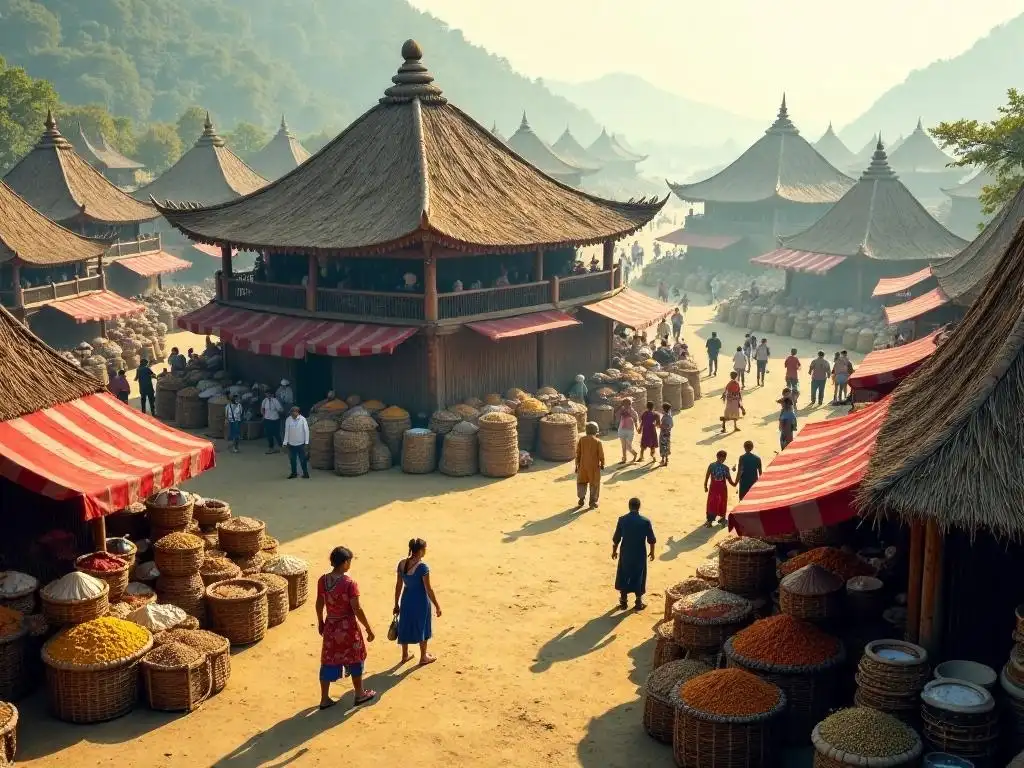
During the feudal era, Japan adopted a unique approach to balance self-sufficiency with external trade, primarily influenced by the Tokugawa shogunate's policies. This era, which lasted from the early 17th century until the mid-19th century, emphasized agricultural production and local resources, aiming to minimize reliance on foreign imports while still engaging in selective trade. The government implemented strict regulations that allowed limited foreign interaction, focusing on goods that could enhance domestic production without compromising the nation’s autonomy.
The primary goal was to create a robust agrarian economy, where the majority of the population, comprising farmers, could sustain themselves and contribute to the local economy. This self-sufficiency was bolstered by advancements in agricultural techniques, crop diversification, and the promotion of regional specialties. However, the Tokugawa shogunate recognized that complete isolation could stifle economic growth. To address this, Japan maintained limited trade relationships, particularly with the Dutch and Chinese, allowing for the importation of valuable goods and knowledge.
In this delicate balancing act, Japan’s economy thrived on a dual structure: a predominantly agrarian base complemented by controlled trade that brought in necessary foreign goods while preserving the integrity of domestic industries.
Mechanisms for Regulating Foreign Influence
The Tokugawa shogunate instituted several mechanisms to regulate foreign influence during the isolationist period. One of the most significant was the policy of Sakoku (literally “locked country”), which strictly limited foreign interactions. Foreign trade was confined to specific ports, such as Nagasaki, and only a handful of foreign merchants, notably the Dutch and Chinese, were allowed to operate. This exclusivity ensured that Japan could control the flow of foreign ideas and goods, minimizing the risk of cultural and political influence that could disrupt the established order.
Additionally, the shogunate enforced strict laws regarding the movement of its citizens. Common people were prohibited from traveling abroad, and those who returned faced severe consequences if they had been exposed to foreign ideologies. This isolationist stance extended to religious practices, with Christianity being banned, as it was viewed as a potential threat to the social fabric of Japanese society.
Trade regulations were also established to maintain economic stability. The shogunate controlled prices on imported goods and regulated the types of products that could be traded, ensuring that foreign commodities did not undermine local industries. Through these mechanisms, Japan effectively managed external influence while promoting a self-sufficient economy.
Case Studies: Successful Trade Agreements
Despite the overarching isolationist policies, there were notable instances of successful trade agreements that benefitted Japan during the feudal era. One of the most significant was the Treaty of the Dutch East India Company in the early 17th century. This agreement allowed the Dutch to trade at Nagasaki, introducing valuable commodities such as silk, spices, and scientific knowledge without the extensive cultural influence that other nations, particularly Spain and Portugal, sought to impose.
Another key case was the Sino-Japanese trade relations during the Tokugawa period. The Chinese were permitted to engage in commerce with Japan, which facilitated the exchange of goods like textiles and porcelain. This relationship proved mutually beneficial, allowing Japan to access high-quality Chinese products while maintaining a level of control over the trade dynamics.
These trade agreements exemplified Japan’s ability to engage with foreign economies selectively, ensuring that the benefits of trade could be harnessed without compromising the nation’s self-sufficiency or political stability.
The Role of Sakoku in Economic Strategy
The Sakoku policy was central to Japan's economic strategy during the feudal era. Instituted in the early 1600s, this policy not only served to isolate Japan from the outside world but also strategically positioned the nation to control its economic destiny. By restricting foreign trade to a few select partners and ports, the Tokugawa shogunate could monitor and regulate economic activities, thereby preventing the destabilization that could arise from uncontrolled foreign influence.
Sakoku encouraged a focus on internal development, prompting innovations in agriculture, manufacturing, and local commerce. The policy allowed for the cultivation of a unique Japanese economy, characterized by a rich tradition of craftsmanship and self-reliance. The emphasis on local production and consumption fostered a sense of community and strengthened socio-economic ties within the country.
Moreover, the limited foreign interaction under Sakoku facilitated the preservation of Japan’s cultural identity. The government’s careful management of foreign relations ensured that while Japan benefited economically, it did not become overly dependent on foreign entities, thus maintaining its sovereignty and cultural integrity.
Economic Consequences of Isolationist Policies
The isolationist policies implemented during the feudal era had profound economic consequences for Japan, shaping its development in various ways. While these policies fostered self-sufficiency, they also created challenges that would affect Japan in the long term.
Impacts on Domestic Industries
One of the most significant impacts of isolationist policies was the strengthening of domestic industries. With limited foreign competition, Japanese artisans and craftsmen were encouraged to innovate and improve their techniques. Industries such as textiles, pottery, and metalworking flourished, leading to a high level of craftsmanship that became a hallmark of Japanese goods.
However, the lack of exposure to international markets also meant that Japanese industries remained relatively insular. While they thrived in a controlled environment, they were potentially less competitive compared to foreign counterparts. As a result, post-isolation, Japan faced challenges in adapting to rapidly changing global markets and technologies, which had advanced significantly during its period of isolation.
Effects on International Relations and Trade
The isolationist policies profoundly affected Japan’s international relations. By limiting foreign contact, Japan was able to preserve its sovereignty and cultural identity, but this also led to a degree of stagnation. The country fell behind other nations in terms of technological advancements and economic development.
When Japan eventually reopened to the world in the mid-19th century, it faced pressure from Western powers that had advanced significantly in terms of industrialization. This sudden exposure to global trade dynamics forced Japan to rapidly modernize and adapt its economy to survive in a competitive international landscape.
Long-term Economic Implications for Japan
The long-term economic implications of Japan's isolationist policies are complex. On one hand, the focus on self-sufficiency helped create a strong domestic economy that was able to sustain itself for centuries. The craftsmanship and agricultural practices developed during this time laid the foundation for Japan's later industrialization.
On the other hand, the prolonged period of isolation limited Japan's engagement with global economic trends, resulting in a significant gap that needed to be bridged during the Meiji Restoration. This era of rapid modernization and industrial growth was in part a response to the deficiencies created by isolationist policies, as Japan sought to catch up with the advancements of Western nations.
While the isolationist policies of the feudal era allowed Japan to cultivate a self-sufficient economy, they also created challenges that would influence its economic trajectory in the modern era. The balance between self-sufficiency and foreign influence during this time remains a critical aspect of Japan’s economic history.
Conclusion: The Legacy of Japan's Isolationist Economy
The isolationist economy of feudal Japan, particularly during the Edo period (1603-1868), has left a profound legacy that continues to influence the nation’s economic and cultural landscape. This period was characterized by a delicate balance between self-sufficiency and the management of foreign influence, shaping not only Japan's domestic policies but also its interactions with the outside world. The policies enacted during this time laid the groundwork for a unique economic system that emphasized agricultural productivity, local craftsmanship, and trade regulation.
The legacy of this system can be seen in contemporary Japan's emphasis on quality, innovation, and self-reliance. Understanding this historical context is crucial to appreciating how Japan navigated the complexities of globalization in later periods.
Reflections on the Balance of Self-Sufficiency and Foreign Influence
The balance of self-sufficiency and foreign influence in Japan's feudal economy serves as a compelling case study in managing economic sovereignty. The Tokugawa shogunate's policies, which restricted foreign trade and promoted agricultural production, allowed Japan to develop a robust internal economy that minimized dependence on external sources. However, the limited interaction with foreign powers also fostered an insular attitude, which ultimately presented challenges as the world began to modernize rapidly.
Reflecting on this balance highlights the importance of adaptability in economic policies. While Japan benefited from its isolationist stance, it also faced the risk of stagnation. The eventual opening of Japan in the mid-19th century signaled a shift towards a more globalized economy, emphasizing the necessity of finding a sustainable equilibrium between self-sufficiency and external engagement. This historical balance provides valuable lessons for modern economies grappling with similar dilemmas.
Lessons Learned from Japan’s Feudal Era Economy Analysis
Analyzing Japan's feudal era economy reveals several key lessons that modern economies can apply today. Firstly, the significance of domestic resource management cannot be overstated. Japan's emphasis on agriculture and local production helped create a resilient economic framework. Economies today can benefit from investing in local industries and resources to ensure stability.
Secondly, the importance of cultural identity in economic policies is evident. Japan’s isolationist approach allowed for the preservation and cultivation of its unique cultural heritage. This highlights the need for modern economies to blend globalization with cultural values, ensuring that national identities are maintained while engaging with the broader world.
Lastly, the ultimate transition from isolation to engagement illustrates the necessity for flexibility within economic policies. As Japan adapted to external pressures, it underscored the importance of being responsive to changing global dynamics, a lesson that remains relevant in the face of rapid technological advancements and shifting geopolitical landscapes.
References
Suggested Readings on Japan's Economic History
- "The Economic History of Japan: 1600-1990" by Masahiro Okuno
- "Japan's Economic Ascent: International Trade, Growth and Policy" by Takahiro Saito
- "The Tokugawa World" edited by Gary P. Leupp
Key Historical Documents Related to Isolationist Policies
- The Sakoku Edicts (1635): Regulations that implemented Japan's isolationist policies.
- The Charter Oath of 1868: A pivotal document that marked Japan’s opening to the world.
- The Treaty of Kanagawa (1854): Established formal relations between Japan and the United States, signaling the end of isolationism.
- Introduction to Japan's Feudal Era Economy
- Historical Context of Japan's Isolationist Policies
- The Concept of Self-Sufficiency in Feudal Japan
- Foreign Influence on Japan's Economy
- Balancing Self-Sufficiency and External Trade
- Economic Consequences of Isolationist Policies
- Conclusion: The Legacy of Japan's Isolationist Economy
- References
- What was the primary focus of Japan's economy during the feudal era?
- How did isolation impact Japan's economic development?
- What role did agriculture play in the feudal economy?
- How did foreign trade influence Japan's economy during this period?
- What were the consequences of Japan's economic isolation?
Frequently Asked Questions
What was the primary focus of Japan's economy during the feudal era?
The Japan feudal era economy was primarily focused on self-sufficiency. This involved cultivating local resources while balancing foreign influence through limited trade.
How did isolation impact Japan's economic development?
Japan's isolationist policies helped maintain social stability and protect local industries, but it also limited technological advancements and access to foreign goods.
What role did agriculture play in the feudal economy?
Agriculture was the backbone of the feudal economy, providing essential resources and supporting the samurai class and their retainers through a system of land tenure and taxes.
How did foreign trade influence Japan's economy during this period?
Limited foreign trade introduced valuable goods and ideas, but strict regulations ensured that Japan could maintain its economic sovereignty and avoid over-dependence on outside markets.
What were the consequences of Japan's economic isolation?
The consequences included a stagnant economy in some areas, but it also allowed for the development of a unique cultural identity and the preservation of traditional practices, setting the stage for future modernization.
Final Reflection: The Balance of Isolation and Influence in Japan's Economic Legacy
The exploration of Japan's feudal era economy reveals a profound lesson in adaptability and resilience. In a world increasingly defined by globalization, the historical balance between self-sufficiency and foreign influence in Japan's economy remains strikingly relevant. As nations grapple with the complexities of trade, cultural exchange, and economic independence, Japan's past offers a blueprint for navigating these challenges. The ability to cultivate a robust internal economy while selectively engaging with external forces is a delicate dance that resonates with today's economic landscape.
Culturally and socially, Japan's isolationist policies during the feudal era have left an indelible mark on its identity. The careful curation of foreign influences allowed Japan to develop a unique cultural tapestry that still captivates the world today. This historical context reminds us that the choices made in economic policy can shape a nation's character and its people's worldview. As the philosopher Matsuo Bashō once said, Every day is a journey, and the journey itself is home.
This sentiment encapsulates the idea that our economic paths, much like our personal journeys, are defined by the balance we strike between self-reliance and openness to the world.
As we reflect on the lessons from Japan's economic history, I invite you to consider your own journey in a globalized world. How can you apply the principles of balance and adaptability in your life? Whether in personal finance, career choices, or community engagement, the insights gleaned from Japan's feudal era economy can inspire us to forge paths that honor our roots while embracing the richness of diverse influences. Let us strive to create a future where we are both self-sufficient and interconnected, drawing wisdom from the past to navigate the complexities of tomorrow.
Embrace the Balance: Take Action Today!
Thank you for diving into the intricate world of Japan's isolationist economy with us! You've explored how this unique approach shaped the nation’s self-sufficiency while managing foreign influences. Now, it’s time to embrace this balance in your own life and community.
Here are some impactful ways you can bring the insights from this article into your everyday actions:
- Dive deeper into history: Explore local or online resources for books and documentaries that delve into Japan's economic practices and cultural heritage.
- Join a discussion group: Connect with others who share your interest in historical economies and cultures—whether in person or through online forums—to exchange ideas and insights.
- Reflect and apply: Consider how you can integrate the principles of balance and self-sufficiency into your life. What small changes can you implement today?
We’d love to hear from you! How do you think balancing self-sufficiency and external influences can impact your community’s growth and resilience? Share your thoughts and let them inspire the conversation!