
The Scientific Revolution and Its Influence on Tokugawa Economic Policies


Welcome to Feudal Japan History, where we invite you to embark on a fascinating journey through the intricate tapestry of Japan's feudal era. Delve into our latest exploration, "The Scientific Revolution and Its Influence on Tokugawa Economic Policies," where we unravel the profound impact of innovative thinking on the economic landscape of Tokugawa Japan. What strategies shaped the course of trade and agriculture during this pivotal time? Join us as we uncover the connections between scientific advancements and economic transformations, sparking your curiosity and encouraging you to dive deeper into the rich historical narrative that awaits.
- Introduction to the Scientific Revolution and Tokugawa Economic Policies
- The Impact of the Scientific Revolution on Global Thought
- The Tokugawa Shogunate: Context and Background
- Tokugawa Economic Policies: An Overview
- Influence of Western Science on Tokugawa Economic Policies
- Case Studies: Specific Examples of Economic Policy Changes
- The Long-term Effects of the Scientific Revolution on Tokugawa Policies
- Conclusion: The Interplay Between Science and Economy in Tokugawa Japan
- Suggested Further Reading on Tokugawa Economic Policies and Scientific Influence
-
Frequently Asked Questions
- What were the main features of Tokugawa economic policies?
- How did the Scientific Revolution influence Tokugawa Japan?
- What was the impact of Tokugawa economic policies on society?
- Were there any negative consequences of Tokugawa economic policies?
- How did Tokugawa economic policies affect international trade?
- Final Reflection: The Lasting Impact of the Scientific Revolution on Tokugawa Economic Policies
- Unleash the Power of Knowledge: Take Action!
Introduction to the Scientific Revolution and Tokugawa Economic Policies
The interplay between the Scientific Revolution and the Tokugawa shogunate's economic policies presents a fascinating chapter in Japan's feudal history. This article delves into how the transformative ideas and discoveries of the Scientific Revolution influenced the economic landscape during the Tokugawa period (1603-1868). With a focus on the Tokugawa economic policies impact, we will explore the underlying principles of these policies, their implementation, and the broader implications for Japanese society and culture. By examining the convergence of scientific thought and economic strategy, we can gain a deeper understanding of the forces that shaped Japan during this pivotal era.
Overview of the Scientific Revolution
The Scientific Revolution, spanning from the late 16th century to the 18th century, marked a fundamental shift in scientific thought that drastically changed the way humans understood the natural world. Key figures such as Galileo Galilei, Isaac Newton, and Francis Bacon introduced new methodologies and concepts that emphasized empirical observation and experimentation. This period laid the groundwork for modern science and had profound implications across Europe and beyond, including influencing the political and economic systems of societies.
- Key Themes of the Scientific Revolution:
- Empiricism: Emphasis on observation and experimentation.
- Mathematical Precision: Utilization of mathematics to describe natural phenomena.
- Mechanistic Worldview: Understanding the universe through a lens of mechanics and laws.
This intellectual movement not only transformed scientific disciplines but also began to affect economic thought, as the application of scientific methods to agriculture, manufacturing, and trade led to increased productivity and economic growth.
Introduction to Tokugawa Japan
The Tokugawa period, also known as the Edo period, was characterized by a rigid social structure, political stability, and relative isolation from foreign influences. Under the leadership of the Tokugawa shogunate, Japan experienced significant changes in governance, culture, and economy. The shogunate's policies aimed to consolidate power, promote peace, and regulate the economy through various means, including the Sankin-kōtai system, which required daimyo (feudal lords) to spend alternating years in Edo (modern-day Tokyo).
- Key Features of Tokugawa Japan:
- Social Hierarchy: A structured society divided into classes, including samurai, farmers, artisans, and merchants.
- Cultural Flourishing: The period saw the rise of unique cultural expressions, including ukiyo-e (woodblock prints) and kabuki theatre.
- Trade Regulations: The shogunate imposed strict regulations on trade and commerce to maintain control over the economy.
The economic policies adopted during this time were not only a response to internal circumstances but were also shaped by the global transformations occurring due to the Scientific Revolution.
Importance of Economic Policies in Tokugawa Era
The economic policies of the Tokugawa shogunate were crucial in fostering a stable and prosperous society. These policies aimed to regulate agriculture, industry, and trade, ensuring that the shogunate maintained control over the economy while promoting growth and stability.
- Key Economic Policies:
- Rice as Currency: The use of rice as a primary currency facilitated trade and taxation.
- Market Regulation: The shogunate established regulations to control market activities and prevent monopolies.
- Infrastructure Development: Investments in infrastructure, such as roads and canals, improved transportation and trade efficiency.
The impact of these policies can be seen in the growth of urban centers, the rise of merchant classes, and increased agricultural productivity. The Tokugawa economic policies not only stabilized the feudal system but also laid the groundwork for Japan's eventual modernization. By understanding the relationship between the Scientific Revolution and Tokugawa economic policies, we can appreciate how external ideas influenced internal developments in one of history's most unique societies.
The Impact of the Scientific Revolution on Global Thought

The Scientific Revolution, spanning from the late 16th century to the early 18th century, marked a profound transformation in human understanding of the world. This period was characterized by a shift from a reliance on tradition and religious explanations to a focus on observation, experimentation, and rational analysis. The impact of this revolution extended far beyond Europe, influencing various regions, including Japan during the Tokugawa shogunate.
The Tokugawa era (1603-1868) was a time of significant economic and cultural development in Japan. The influx of Western scientific ideas during this period prompted the Tokugawa rulers to reevaluate their economic policies. As Japan began to engage more with Western nations, the principles of the Scientific Revolution played a crucial role in shaping Tokugawa economic policies, leading to innovations in agriculture, commerce, and industry.
Key Philosophies and Innovations of the Scientific Revolution
The Scientific Revolution introduced several key philosophies that reshaped the intellectual landscape of the time. These philosophies included:
- Empiricism: This principle emphasized observation and experience as the primary sources of knowledge. Empirical methods encouraged the Tokugawa shogunate to adopt more systematic approaches in agriculture and trade.
- Rationalism: Rational thought became essential in understanding natural phenomena. Japanese scholars began to apply rationalist principles to improve agricultural yields and optimize resource allocation.
- Interdisciplinary Approaches: The blending of various fields, such as mathematics, physics, and biology, led to comprehensive understanding. This approach influenced Japanese scholars, leading to the integration of Western technologies in sectors like farming and manufacturing.
Key innovations that emerged during the Scientific Revolution included the development of the scientific method, advancements in mathematics (notably calculus), and groundbreaking discoveries in astronomy and biology. These innovations encouraged Tokugawa policymakers to explore new agricultural techniques, including crop rotation and the introduction of Western farming tools, significantly impacting the economy.
Comparison of Eastern and Western Scientific Thought
While the Scientific Revolution primarily originated in the West, its impact reverberated through Eastern societies, including Japan. A comparison of Eastern and Western scientific thought during the Tokugawa period reveals both contrasts and similarities:
Differences
- Cultural Context:
- Western Thought: Heavily influenced by the Enlightenment, Western thinkers emphasized individualism and critical inquiry, often challenging established authorities.
- Eastern Thought: In Japan, Confucian values dominated, leading to a more collective approach to knowledge that prioritized harmony and societal stability.
- Methodology:
- Western Scientific Method: Relied on hypothesis testing and experimentation, which facilitated rapid advancements in technology and science.
- Eastern Approaches: Often integrated observations with traditional knowledge and philosophical beliefs, resulting in a different pace and style of scientific development.
Similarities
- Adoption of Knowledge:
- Both East and West showed a willingness to adopt and integrate new ideas. In Japan, the influx of Western scientific knowledge during the late Tokugawa period led to the Meiji Restoration and significant modernization.
- Impact on Society:
- Both regions experienced substantial transformations in their economies and societies due to new scientific ideas. In Japan, the application of Western techniques in agriculture and trade redefined the Tokugawa economic policies and laid the groundwork for future industrialization.
The Scientific Revolution significantly influenced Tokugawa economic policies, as the blending of Eastern and Western thought led to innovative practices that transformed Japan's economy. By embracing new philosophies and methodologies, Japan was able to adapt its traditional systems and prepare for the challenges of modernization. The impact of these changes can still be observed in Japan's economic framework today.
The Tokugawa Shogunate: Context and Background
The Tokugawa Shogunate, established in 1603, marked a significant turning point in Japanese history, transitioning the country from a period of feudal warfare to a time of relative peace and stability known as the Edo period. This era lasted until 1868, characterized by a unique political structure, economic development, and cultural flourishing. The Tokugawa regime sought to consolidate power while maintaining a strict social order, which profoundly influenced various aspects of Japanese society, including its economic policies.
The shogunate emerged after a long period of civil strife known as the Sengoku period, where numerous daimyō (feudal lords) vied for control. Tokugawa Ieyasu, a prominent warlord, unified Japan after winning the Battle of Sekigahara in 1600. His victory laid the foundation for a centralized government that emphasized stability and control over the previously fragmented political landscape.
The Establishment of the Tokugawa Shogunate
The Tokugawa Shogunate was founded by Tokugawa Ieyasu, who became shogun in 1603. His leadership was marked by the implementation of policies aimed at solidifying power and ensuring peace. The alternate attendance system (sankin-kōtai) was one such policy, requiring daimyō to spend every other year in Edo (modern-day Tokyo), effectively weakening their regional power and fostering loyalty to the shogunate.
Another vital aspect of the establishment was the Baku-han system, which divided Japan into various provinces governed by the shogunate and regional daimyō. This structure facilitated a degree of local governance while maintaining overarching control. The shogunate also implemented a strict class system, comprising samurai, farmers, artisans, and merchants, which played a crucial role in shaping economic policies and societal interactions.
Economic Structure of Tokugawa Japan
The Tokugawa economic policies were characterized by a blend of agrarian and market-oriented practices. Agriculture formed the backbone of the economy, with rice as the primary currency and measurement of wealth. The shogunate encouraged agricultural production through land reforms and improved irrigation techniques, leading to increased food security and population growth.
Trade flourished during this period, facilitated by a network of roads and the development of castle towns (jokamachi). These towns emerged as commercial hubs where merchants could thrive, despite being positioned beneath the samurai class in the social hierarchy. The growth of urban centers such as Edo, Osaka, and Kyoto stimulated commerce and led to the rise of a wealthy merchant class known as the chōnin.
However, the Tokugawa Shogunate also imposed restrictive policies to control trade and prevent foreign influence. The sakoku (closed country) policy limited international trade, allowing only the Dutch and Chinese to engage in commerce, which in turn shaped Japan's economic landscape. This isolationist approach, while protective, eventually contributed to stagnation and economic challenges by the late Edo period.
The social hierarchy during the Tokugawa era was rigidly defined, with the samurai class at the top, followed by farmers, artisans, and merchants. This structure had profound economic implications, as it dictated not only the distribution of wealth but also the flow of resources and labor.
Farmers were seen as the backbone of society, as they provided the essential agricultural output. However, they faced heavy taxation, which often stifled their ability to accumulate wealth. The samurai, while enjoying privileges and stipends from their daimyō, found themselves increasingly dependent on the economic activities of the lower classes.
Merchants, despite being at the bottom of the hierarchy, gained significant wealth and influence through trade and commerce. They often engaged in practices like money lending and speculation, which allowed them to accumulate power that sometimes rivaled that of the samurai. This shift in economic dynamics led to tensions between the classes, ultimately challenging the established social order.
The Tokugawa Shogunate's economic policies had a profound impact on the structure and dynamics of Japanese society. By fostering agricultural production while simultaneously restricting foreign influence, the shogunate created a unique economic landscape that would influence Japan's trajectory well into the modern era. The interplay between the rigid social hierarchy and the evolving economic practices set the stage for the eventual transformations that would challenge the Tokugawa regime and lead to the Meiji Restoration.
Tokugawa Economic Policies: An Overview

The Tokugawa period, spanning from 1603 to 1868, marked a significant transformation in Japan's economic landscape. The Tokugawa Shogunate, under the leadership of the Tokugawa clan, implemented a series of economic policies aimed at stabilizing and controlling the nation. These policies not only shaped the economic structure of feudal Japan but also influenced social hierarchies and cultural development.
The primary objective of Tokugawa economic policies was to maintain political stability and social order. By promoting agricultural production and regulating commerce, the Shogunate sought to enhance the wealth of the domain while simultaneously curbing the power of rival feudal lords (daimyō). This balance was crucial in preventing civil unrest and ensuring the longevity of the Shogunate's rule.
Definition and Goals of Tokugawa Economic Policies
Tokugawa economic policies can be defined as a set of regulations and practices instituted by the Tokugawa Shogunate to manage Japan’s economy during the Edo period. The overarching goals included:
- Agricultural Production: Enhancing agricultural output was crucial since the economy was predominantly agrarian. The Shogunate encouraged innovations in farming techniques and crop diversification.
- Market Regulation: By controlling trade practices and establishing market regulations, the Shogunate aimed to prevent monopolistic practices and ensure fair competition among merchants.
- Social Hierarchy Maintenance: The policies were designed to reinforce the feudal system, ensuring that the samurai class remained at the top of the social hierarchy, while merchants and peasants occupied lower ranks.
- Taxation System: Implementing a structured taxation system allowed for the collection of revenue that funded the Shogunate’s operations and infrastructure projects.
The Shogunate’s economic strategies reflected a desire for self-sufficiency and stability, laying the groundwork for Japan's eventual modernization.
Major Policies Implemented by the Tokugawa Shogunate
The Tokugawa Shogunate enacted several pivotal economic policies, each contributing uniquely to the overall economic framework. Key policies included:
- Land Surveys and Tax Reforms:
- The Shogunate conducted detailed land surveys to assess productivity and implement a more equitable taxation system. This ensured that taxes were based on actual agricultural yields rather than arbitrary assessments.
- Control of Trade and Commerce:
- The Shogunate established a system of licenses for merchants, restricting who could engage in trade and where. This control was aimed at fostering a stable market environment and preventing the rise of powerful merchant classes that could threaten the Shogunate’s authority.
- Infrastructure Development:
- Investment in infrastructure, such as roads and waterways, facilitated trade and transportation. The improvement of the Tōkaidō road, for instance, enhanced connectivity between major cities, boosting economic activity.
- Promotion of Domestic Industries:
- The Tokugawa Shogunate encouraged the development of local crafts and industries, such as textiles and ceramics. This not only stimulated local economies but also reduced reliance on foreign goods.
- Regulation of the Samurai Class:
- The Shogunate implemented policies to control the samurai class, including stipulations regarding their income and restrictions on their engagement in commerce. This was vital for maintaining the feudal order.
- Risk Management through Rice Storage:
- To mitigate the risks associated with poor harvests, the Shogunate promoted the establishment of rice granaries. This practice provided a buffer against famine and economic downturns.
These policies collectively reflect the Tokugawa Shogunate's commitment to maintaining economic order and social stability during a period of profound change in Japanese society. The impact of these economic policies laid the foundation for Japan's eventual transition into a more modern economic system in the late 19th century.
Influence of Western Science on Tokugawa Economic Policies

Adoption of Western Agricultural Techniques
During the Tokugawa period (1603-1868), Japan experienced a significant transformation in its agricultural practices, largely influenced by the introduction of Western agricultural techniques. The influx of knowledge from Europe and other regions played a crucial role in improving crop yields and agricultural sustainability.
One of the most notable techniques adopted was the use of crop rotation, which was essential for maintaining soil fertility. This practice, inspired by European farming methods, allowed farmers to cultivate different crops in succession, effectively managing nutrients in the soil. Additionally, the introduction of new crop varieties, such as potatoes and corn, diversified food sources and increased resilience against famine.
The Tokugawa government actively promoted these techniques through various means, including:
- Agricultural manuals: Scholars and farmers began to document successful farming practices, creating manuals that disseminated knowledge about Western methods.
- Government incentives: The Tokugawa shogunate offered incentives for land reclamation and improvements in irrigation systems, which were influenced by Western engineering principles.
- Education: The establishment of agricultural schools helped spread the knowledge of Western agricultural science to a broader audience, fostering innovation among the peasantry.
Overall, the adoption of these Western agricultural techniques significantly influenced Tokugawa economic policies by enhancing agricultural productivity, which in turn supported population growth and urbanization.
Innovations in Tokugawa Trade Practices
The Tokugawa era marked a pivotal shift in Japan's trade practices, heavily influenced by the global scientific revolution. The introduction of Western navigational techniques and the understanding of natural resources led to innovations that reshaped domestic and international trade.
Key innovations included:
- Maritime advancements: The Tokugawa shogunate observed European maritime practices, leading to improvements in shipbuilding and navigation. This allowed for longer voyages and enhanced trade with neighboring regions, particularly in the context of the Sakoku (closed country) policy, which limited foreign interactions.
- Standardization of weights and measures: Influenced by Western commercial practices, the Tokugawa government standardized weights and measures to facilitate smoother trade transactions. This standardization reduced disputes and increased efficiency in markets.
- Development of market towns: The establishment of shukuba (post towns) and ko (marketplaces) became crucial hubs for trade. These towns utilized Western-inspired organizational structures, promoting commerce and trade networks across the archipelago.
These innovations ultimately contributed to the Tokugawa economic policies impact by fostering a more organized and competitive marketplace, setting the stage for Japan's eventual modernization.
Impact of Western Ideologies on Tokugawa Governance
The influence of Western ideologies during the Tokugawa period extended beyond agriculture and trade, penetrating the very fabric of governance. The introduction of Enlightenment thought and scientific rationalism prompted a reevaluation of traditional Japanese governance and policies.
Several key impacts included:
- Meritocracy in administration: Inspired by Western principles, the Tokugawa shogunate began to emphasize merit-based appointments in administration. This shift aimed to improve efficiency and effectiveness in governance, moving away from hereditary privilege.
- Legal reforms: The adoption of Western legal concepts led to a more structured legal framework, which was crucial for managing disputes and fostering a sense of justice among the populace. This also contributed to the centralization of power within the shogunate.
- Public health and welfare: The importance of public health, influenced by Western medical advancements, became a focus for the Tokugawa government. Policies were introduced to improve sanitation and healthcare, reflecting an understanding of the connection between health and economic productivity.
The impact of Western ideologies on Tokugawa governance significantly shaped economic policies, fostering a more progressive and responsive administrative framework that would eventually support Japan's transformation into a modern state.
Case Studies: Specific Examples of Economic Policy Changes
Case Study 1: Agricultural Reforms in Tokugawa Japan
The Tokugawa period, spanning from 1603 to 1868, was marked by significant agricultural reforms that played a crucial role in shaping Japan's economy. The Jinshin Reforms, implemented in the late 17th century, aimed to increase agricultural productivity and stabilize the economy. These reforms included:
- Land Reclamation: Efforts were made to reclaim marshy and underutilized lands for cultivation. This expanded the arable land available for farming, which directly contributed to food production.
- Irrigation Systems: The development of new irrigation techniques improved water management, allowing farmers to cultivate rice and other crops more effectively. These innovations led to a notable increase in crop yields.
Furthermore, the Tokugawa shogunate introduced a system of taxation that incentivized agricultural production. By collecting taxes in the form of rice rather than currency, the government aligned its interests with the farmers, encouraging increased output. This policy not only stabilized the economy but also laid the groundwork for a more structured market economy, influencing future Tokugawa economic policies.
Case Study 2: Trade Policies and Foreign Relations
During the Tokugawa era, trade policies were heavily influenced by the need to maintain stability and control. The Sakoku (closed country) policy, enacted in the 1630s, restricted foreign interaction and trade to a select few ports, notably Nagasaki. This isolationist strategy had several economic implications:
- Limited Foreign Trade: By restricting trade with Western nations, the Tokugawa shogunate aimed to protect local industries and maintain social order. However, this also meant that Japan missed out on certain technological advancements that were part of the global trade network.
- Internal Trade Growth: In the absence of foreign competition, domestic trade flourished. The Daimyo (feudal lords) facilitated trade between regions, leading to the growth of urban centers and markets.
Despite its isolationist stance, the Tokugawa government recognized the importance of limited foreign trade. The Dutch trading company was allowed to operate in Nagasaki, bringing in valuable goods and knowledge. This cautious approach allowed for some exchange of ideas, subtly influencing the Tokugawa economic policies impact on domestic development.
Case Study 3: Technological Advancements and Their Economic Effects
The Tokugawa period also witnessed significant technological advancements that transformed economic practices. Notable innovations included:
- Agricultural Tools: The introduction of improved farming implements, such as the yoke for oxen and more effective plows, greatly enhanced productivity in agriculture. These tools facilitated the work of farmers, leading to higher yields and more efficient farming practices.
- Transportation Improvements: The construction of roads and waterways during the Tokugawa era improved the movement of goods. The Tokaido Road, for instance, became a vital trade route connecting Edo (modern Tokyo) and Kyoto, fostering economic activity between these major cities.
The impact of these technological advancements was profound. Enhanced agricultural output contributed to population growth and urbanization, while improved transportation networks facilitated trade, leading to a more interconnected economy. This integration of technology into economic policy not only strengthened Japan’s internal market but also set the stage for future modernization efforts that would emerge in the Meiji era.
The Long-term Effects of the Scientific Revolution on Tokugawa Policies
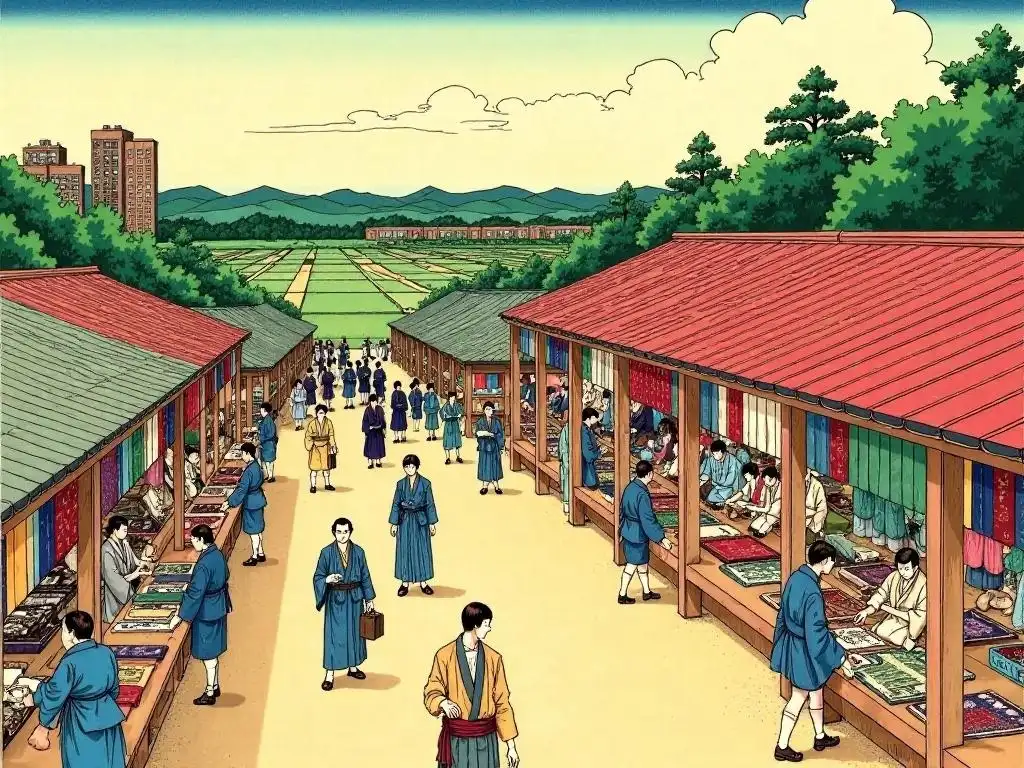
The Scientific Revolution, which predominantly unfolded in Europe from the late 16th century through the 18th century, catalyzed a profound transformation in various fields, including science, philosophy, and economics. Though Japan was relatively isolated during the Tokugawa shogunate (1603-1868), the residual effects of these European advancements eventually permeated its economic policies and practices. The Tokugawa economic policies were characterized by a unique blend of feudal traditions and emerging modern economic principles, influenced indirectly by the scientific advancements of the time.
Evaluating the Lasting Impact on Economic Development
The Tokugawa period was marked by a strict social hierarchy and the consolidation of power by the samurai class. However, the economic policies instituted during this time bore the imprint of scientific progress, particularly in agriculture and resource management. One of the significant impacts of the Scientific Revolution on Tokugawa economic policies was the introduction of improved agricultural techniques, which enhanced productivity.
- Agricultural Innovations:
- Crop Rotation: The adoption of crop rotation methods, influenced by European agricultural practices, led to more efficient use of land and increased yields.
- Seed Selection: The emphasis on selective breeding and improved seed varieties contributed to agricultural resilience and sustainability.
- Infrastructure Development:
- Irrigation Systems: Scientific principles guided the enhancement of irrigation systems, allowing for more effective water management. This was crucial in a country where rice was the staple crop.
- Transportation Networks: The establishment of better transportation networks, such as roads and canals, facilitated trade and the movement of goods, further stimulating the economy.
- Market Expansion:
- The interplay between improved agricultural practices and transportation led to a more interconnected market system. Urban centers began to flourish, leading to the growth of a merchant class that challenged the traditional samurai-dominated economic structure.
The cumulative effect of these advancements resulted in a more dynamic economy, which, while still retaining elements of its feudal past, began to lay the groundwork for modernization in the subsequent Meiji Restoration.
Influence on Future Japanese Economic Practices
The legacy of the Scientific Revolution on Tokugawa economic policies also extended into future practices, providing a foundation that would influence Japan's industrialization in the late 19th century. Key areas of influence include:
- Emphasis on Education and Knowledge:
- The Tokugawa period saw a burgeoning interest in education, with the establishment of schools that taught not only Confucian ideals but also practical subjects such as agriculture and trade. This emphasis on education can be traced back to the scientific inquiries of the time, fostering a culture of learning that would be essential for Japan's later modernization.
- Integration of Western Science and Technology:
- As Japan opened its borders in the mid-19th century, the groundwork laid by the Tokugawa policies allowed for a smoother integration of Western technologies and scientific methods. This led to rapid advancements in various sectors, including textiles, metallurgy, and transportation.
- Economic Diversification:
- The economic diversification initiated during the Tokugawa shogunate continued post-1868, as Japan transitioned from an agrarian economy to one that embraced industrialization. The principles of resource management and market expansion that had taken root during Tokugawa rule provided a blueprint for future economic strategies.
The influence of the Scientific Revolution on Tokugawa economic policies was profound and multifaceted. It not only shaped the economic landscape of the Tokugawa period but also set the stage for Japan's transition into a modern economic powerhouse. The careful evaluation of these impacts reveals a continuity of thought and practice that would resonate throughout Japanese history, ultimately leading to the country's emergence as a significant player on the world stage.
Conclusion: The Interplay Between Science and Economy in Tokugawa Japan

Summary of Key Points on Tokugawa Economic Policies Impact
The Tokugawa shogunate, which ruled Japan from 1603 to 1868, implemented a series of economic policies that profoundly shaped the nation’s development. These policies were not only influenced by the socio-political climate of the time but also significantly impacted by advancements stemming from the Scientific Revolution.
- Agricultural Reforms: The Tokugawa era saw a focus on agricultural productivity through land reclamation and improved farming techniques. The incorporation of scientific methods into agriculture, such as crop rotation and fertilizer use, contributed to enhanced yields, which in turn supported a growing population.
- Market Expansion: Economic policies during the Tokugawa period facilitated the emergence of a market economy. The establishment of a national currency and the development of roads and trade routes allowed for increased commerce. The influence of scientific thought encouraged innovations in trade practices, leading to the rise of merchant classes.
- Cottage Industries: The Tokugawa shogunate promoted artisanal production and cottage industries, which flourished due to increased demand for goods. The adoption of systematic approaches to production, reflecting scientific principles, enhanced quality and efficiency.
- Regulation and Control: Tokugawa economic policies were characterized by strict regulation aimed at maintaining stability. While these regulations ensured order, they also stifled some entrepreneurial spirit. Nonetheless, the balance of science and policy played a critical role in sustaining economic growth.
Reflection on the Legacy of the Scientific Revolution in Japan
The Scientific Revolution, which began in Europe in the 16th century, had far-reaching effects that resonated even in isolated Japan during the Tokugawa period. This legacy can be observed through several key dimensions:
- Intellectual Exchange: The arrival of Western knowledge, particularly through Dutch learning (Rangaku), introduced new scientific ideas and technologies to Japan. Scholars began to adopt and adapt these principles, leading to a gradual shift in intellectual thought that influenced Tokugawa economic policies.
- Technological Advancements: The incorporation of Western technologies in agriculture, navigation, and manufacturing during the Tokugawa era laid the groundwork for Japan's later industrialization. The understanding gained from scientific exploration allowed for improved production methods and efficiency.
- Cultural Shifts: The scientific mindset fostered a culture of inquiry and evidence-based reasoning. This shift influenced not only economic policy but also education and public discourse, as more individuals began to question traditional beliefs and practices.
- Long-Term Economic Impacts: The foundations laid during the Tokugawa period, influenced by scientific advancements, have had lasting effects on Japan’s economic structure. The emphasis on efficiency and innovation continued to resonate through subsequent periods, ultimately contributing to Japan's emergence as a global economic power in the late 19th and early 20th centuries.
The interplay between the Scientific Revolution and Tokugawa economic policies created a unique environment that fostered growth and adaptation, leaving a profound legacy that shaped Japan's trajectory in the centuries to follow. The impact of these policies continues to be a significant area of study, revealing the intricate connections between science and economy in historical contexts.
Suggested Further Reading on Tokugawa Economic Policies and Scientific Influence
Recommended Books and Articles
-
"The Tokugawa World" by Gary P. Leupp
This comprehensive volume delves into the socio-economic structures of the Tokugawa shogunate, providing a detailed analysis of the interplay between scientific advancements and economic policies during this era.
-
"Japan's Economic History 1600-2000" by Takafusa Nakamura
Nakamura's work offers a chronological examination of Japan's economic transformations, emphasizing the Tokugawa period and how scientific innovations shaped economic strategies and policies.
-
"The Making of Modern Japan" by James L. McClain
This book presents a broader historical context, discussing how the scientific revolution influenced various aspects of Japanese society, including the economic policies enacted by the Tokugawa shogunate.
-
"Science and Society in Modern Japan" by Naoko Shimazu
A fascinating exploration of the relationship between scientific progress and societal changes in Japan, with insights into how these factors influenced Tokugawa economic policies.
-
"Tokugawa Japan: The Social and Economic History" by Christopher G. R. H. Horie
This article provides an in-depth study of economic practices during the Tokugawa period, highlighting the significance of scientific advancements in shaping policies and economic outcomes.
Online Resources for Further Exploration
-
Japan National Museum of Nature and Science
An excellent resource for discovering the historical context of scientific advancements in Japan, with specific sections dedicated to the Tokugawa era and its economic implications.
-
The Japanese Historical Society Online Archive
A digital repository containing primary sources and scholarly articles related to the Tokugawa period, including discussions on the impact of science on economic policies.
-
Tokugawa Institute for Cultural Studies
This institute offers a wealth of information, including research papers and articles focused on the economic policies of the Tokugawa shogunate and their connection to scientific developments.
-
Japan Focus: The Asia-Pacific Journal
A multi-disciplinary journal that features articles examining Japan's historical narratives, including several pieces on the Tokugawa period's economic policies and the influence of Western science.
-
Project MUSE – Asian History and Culture
A database providing access to numerous academic journals and books that tackle various aspects of Tokugawa Japan, with specific references to economic policies and scientific influences.
By engaging with these resources, readers can deepen their understanding of the intricate relationship between scientific developments and Tokugawa economic policies, highlighting the era's complexity and significance in Japan's history.
Frequently Asked Questions
What were the main features of Tokugawa economic policies?
The Tokugawa economic policies emphasized agriculture, trade, and a stable currency to promote economic growth. The government regulated commerce and encouraged the development of urban centers.
How did the Scientific Revolution influence Tokugawa Japan?
The Scientific Revolution introduced new technological advancements and Western ideas, impacting agricultural practices and industry in Tokugawa Japan. These influences helped modernize and diversify the economy.
What was the impact of Tokugawa economic policies on society?
Tokugawa economic policies led to increased social stratification and a wealth gap between classes. However, they also facilitated urbanization and the growth of a merchant class.
Were there any negative consequences of Tokugawa economic policies?
Yes, while promoting stability, Tokugawa economic policies also resulted in rigid social structures and limited mobility for the lower classes, leading to discontent among peasants and merchants.
How did Tokugawa economic policies affect international trade?
Tokugawa policies restricted foreign trade and contact with the outside world, primarily focusing on self-sufficiency. This limited Japan's economic growth potential compared to other nations during that period.
Final Reflection: The Lasting Impact of the Scientific Revolution on Tokugawa Economic Policies
The intersection of the Scientific Revolution and Tokugawa economic policies illustrates a profound transformation in thought and practice that resonates today. As we navigate an era marked by rapid technological advancements and economic shifts, understanding how these historical influences shaped governance and economic strategies becomes increasingly relevant. The lessons from the Tokugawa period remind us that innovation and adaptation are vital for progress, and the echoes of this past continue to inform contemporary economic frameworks.
The influence of the Scientific Revolution on Tokugawa economic policies is not merely a historical curiosity; it is a reflection of how ideas can reshape societies. The integration of scientific thought into economic practices during this time laid the groundwork for a more structured and efficient economy, which in turn fostered stability and growth. This connection between knowledge and policy underscores the importance of intellectual advancement in shaping societal outcomes. Science knows no country, because knowledge belongs to humanity, and is the torch which illuminates the world.
– Louis Pasteur. This quote encapsulates the essence of how shared knowledge can transcend borders and time, impacting societies in ways that are both profound and lasting.
As we reflect on the lessons drawn from the Tokugawa era, let us consider how we can apply these insights to our own lives and communities. What innovations can we embrace today to foster economic resilience and adaptability? I invite you to take a moment to reflect on the importance of knowledge and its application in your own context.
Whether through education, collaboration, or the pursuit of new ideas, we each have the power to influence our economic landscapes. Embrace the spirit of inquiry and innovation, and let it guide you as we navigate the complexities of our modern world.
Unleash the Power of Knowledge: Take Action!
Thank you for exploring the fascinating intersection of the Scientific Revolution and Tokugawa economic policies! Your engagement with this critical topic underscores your interest in understanding how history shapes our present and future. Now, it's time to transform that knowledge into meaningful action!
Here are a few steps you can take to deepen your insights and connect with this rich history:
- Explore further: Dive into additional resources on our website to enhance your understanding of Tokugawa Japan and the global influences during this significant period.
- Share your thoughts: Join our community by leaving a comment below or sharing this article with friends who might be interested in the impact of history on policy.
- Join a discussion: We invite you to participate in our upcoming webinar, where we will examine the lasting effects of these policies on contemporary Japan!
What new perspective did you gain from the relationship between historical scientific advancements and economic strategies during the Tokugawa shogunate? We would love to hear your thoughts in the comments!