
Isolationism vs. Globalism: Lessons from Japan's Feudal Era


Welcome to Feudal Japan History, where we embark on a captivating journey through the intricate tapestry of Japan's feudal era. Here, you will uncover insights and lessons that resonate even today, particularly in our featured article, "Isolationism vs. Globalism: Lessons from Japan's Feudal Era." Dive deep into the historical currents that shaped Japan's foreign relations and discover how the choices of the past continue to influence our world. Are you ready to explore the delicate balance between isolation and connection? Let the exploration begin!
- Introduction to Japan's Feudal Era and Its Foreign Relations
- The Historical Background of Japan's Isolationist Policies
- Globalism during the Feudal Era: A Brief Overview
- Key Lessons from Japan's Feudal Era: Isolationism vs. Globalism
- Case Studies: Specific Examples of Isolationist and Globalist Policies
- The Relevance of Japan's Feudal Era Lessons in Modern Context
- Conclusion: Synthesizing Lessons from Japan's Feudal Era
-
Frequently Asked Questions
- What is the main theme of the article "Isolationism vs. Globalism: Lessons from Japan's Feudal Era"?
- How did Japan's feudal era influence its approach to globalism?
- What lessons can modern societies learn from Japan's feudal era?
- How does the article relate to the keyword "Japan feudal era lessons"?
- What are some key historical figures mentioned in the context of Japan's feudal era?
- Final Reflection: Embracing Global Perspectives through Japan's Feudal Era Lessons
- Unveil the Power of Perspective: Choose Your Path Forward!
Introduction to Japan's Feudal Era and Its Foreign Relations
Japan's feudal era, spanning from the 12th to the 19th century, represents a pivotal chapter in the nation's history, marked by complex social hierarchies, military governance, and distinct foreign relations strategies. This period is characterized by the rise of the samurai class and the establishment of shogunates, which led to varying degrees of engagement with the outside world. Notably, Japan oscillated between periods of isolationism and globalism, influenced by both internal dynamics and external pressures.
Understanding these historical nuances offers valuable insights into the broader themes of isolationism and globalism, particularly as they relate to Japan's feudal era lessons. By examining the interplay of these two approaches, we can uncover the implications they hold not only for Japan's past but also for contemporary global relations.
Overview of Isolationism and Globalism in Historical Context
During Japan's feudal era, isolationism and globalism were not mere policy choices but responses to a complex web of socio-political factors.
- Isolationism:
- The most notable implementation of isolationist policies occurred during the Edo period (1603-1868), under the Tokugawa shogunate. The Sakoku (closed country) policy effectively restricted foreign influence, limiting trade primarily to the Dutch and Chinese. This deliberate seclusion aimed to preserve Japanese culture, maintain social order, and prevent the spread of Christianity, which was seen as a destabilizing force.
- Globalism:
- In contrast, earlier periods, such as the Kamakura (1185-1333) and Muromachi (1336-1573) periods, were marked by increased trade and cultural exchange with neighboring countries, including China and Korea. These interactions fostered the influx of new ideas, technologies, and goods, laying the groundwork for a complex relationship with the outside world.
The oscillation between these two approaches illustrates how Japan navigated its foreign relations, adapting to internal challenges and external threats.
Importance of Understanding Japan Feudal Era Lessons
The lessons derived from Japan's feudal era concerning isolationism and globalism are not only relevant to historians but also to contemporary policymakers and global citizens.
- Cultural Preservation vs. Global Engagement:
- Japan's experience prompts critical questions about the balance between preserving cultural identity and engaging with a globalized world. The consequences of extreme isolationism can lead to stagnation, while unchecked globalism may risk cultural erosion.
- Adaptability and Resilience:
- Japan's ability to shift between isolationist and globalist stances reveals a significant lesson about adaptability. In today's interconnected world, nations must learn to navigate similar tensions, balancing national interests with international cooperation.
- Historical Precedents:
- By examining Japan's historical context, we can draw parallels to current global challenges, such as trade disputes, cultural conflicts, and the rise of nationalism, emphasizing the importance of learning from the past.
In essence, understanding the lessons from Japan's feudal era regarding isolationism and globalism provides a framework for addressing modern issues in international relations.
The Historical Background of Japan's Isolationist Policies

Japan's feudal era, particularly during the Tokugawa Shogunate, is marked by significant shifts in foreign relations, notably the adoption of isolationist policies. This period, which spanned from 1603 to 1868, was characterized by a conscious decision to limit external influences, fundamentally shaping Japan's historical trajectory. The isolationism of this era was not merely a reaction to external pressures but was also rooted in intricate socio-political dynamics within Japan itself.
The notion of isolation can be traced back to earlier historical events, such as the arrival of European traders and missionaries in the 16th century. Initially, these interactions brought new ideas, technologies, and trade opportunities. However, as foreign influence began to permeate Japanese society, concerns arose among the ruling classes about the potential destabilization of traditional values and the integrity of the state. Thus, a series of measures were gradually adopted to curtail foreign engagement, culminating in the more defined isolationist policies of the Tokugawa period.
The Tokugawa Shogunate and Sakoku (Closed Country)
The Tokugawa Shogunate established the Sakoku policy, which translates to "closed country." This policy was formalized in the early 17th century and effectively restricted foreign interactions. Under Sakoku, Japan forbade its citizens from traveling abroad and prohibited foreign ships from entering Japanese ports, with few exceptions for the Dutch and Chinese traders in Nagasaki.
The motivations behind Sakoku were multifaceted:
- Political Control: The Tokugawa regime aimed to consolidate power by minimizing foreign influence, which was seen as a destabilizing force. By controlling foreign trade and interactions, the Shogunate sought to prevent the rise of rival factions that could challenge their authority.
- Cultural Preservation: There was a strong desire to protect Japanese culture from Western and Christian influences, which were perceived as threats to social harmony and tradition.
- Economic Strategy: By limiting trade to specific nations, the Shogunate could regulate economic activity and ensure that the benefits of trade were retained within Japan.
The implementation of Sakoku had profound implications for Japan, fostering a unique environment where domestic culture and governance flourished in relative isolation for over two centuries.
Factors Leading to Japan's Isolationism
Several factors contributed to the emergence and entrenchment of isolationist policies during the feudal era:
- Threat of Colonization: The experiences of nearby nations facing colonization by European powers made Japanese leaders wary of foreign intervention. The fear of losing sovereignty prompted a defensive stance.
- Religious Conflict: The spread of Christianity in Japan, particularly by Jesuit missionaries, created tensions between converts and traditional Buddhist practices. The Tokugawa Shogunate viewed this as a potential catalyst for civil unrest.
- Internal Strife: The unification of Japan under the Tokugawa rule came after a long period of civil war. The newly established regime aimed to prevent any resurgence of conflict, leading to a preference for stability over external engagement.
- Economic Self-Sufficiency: The agricultural reforms under the Tokugawa administration allowed Japan to become self-sufficient, reducing reliance on foreign goods and trade. This shift further solidified the rationale for isolationism.
These factors combined to create a robust framework for Japan's isolationist policies, which would last for more than 200 years.
Consequences of Isolationist Policies on Japanese Society
The isolationist policies of the Tokugawa Shogunate had far-reaching consequences on Japanese society, influencing cultural, economic, and political landscapes:
- Cultural Flourishing: With limited foreign influence, indigenous arts, literature, and philosophy thrived. The Edo period saw the emergence of unique cultural expressions, such as ukiyo-e (woodblock prints) and kabuki theater, which remain integral to Japanese heritage today.
- Economic Stagnation: While isolation allowed for cultural growth, it also led to economic stagnation. Japan fell behind in technological advancements and industrialization compared to Western nations, which would become evident in the latter half of the 19th century.
- Rigid Social Structure: The feudal hierarchy became entrenched, preventing social mobility and reinforcing class divisions. This rigidity would later contribute to unrest, as the merchant class grew wealthier yet remained socially subordinate.
- Vulnerability to External Pressures: The strict isolationism ultimately left Japan unprepared for the global changes that came with the arrival of Commodore Perry in 1853. The forced opening of Japan to Western powers revealed the inadequacies of the isolationist policies and set the stage for significant transformations in the subsequent Meiji Restoration.
The lessons derived from Japan's feudal era of isolationism highlight the delicate balance between cultural preservation and the need for engagement with the outside world. These historical insights continue to resonate in contemporary discussions regarding globalization and national identity.
Globalism during the Feudal Era: A Brief Overview
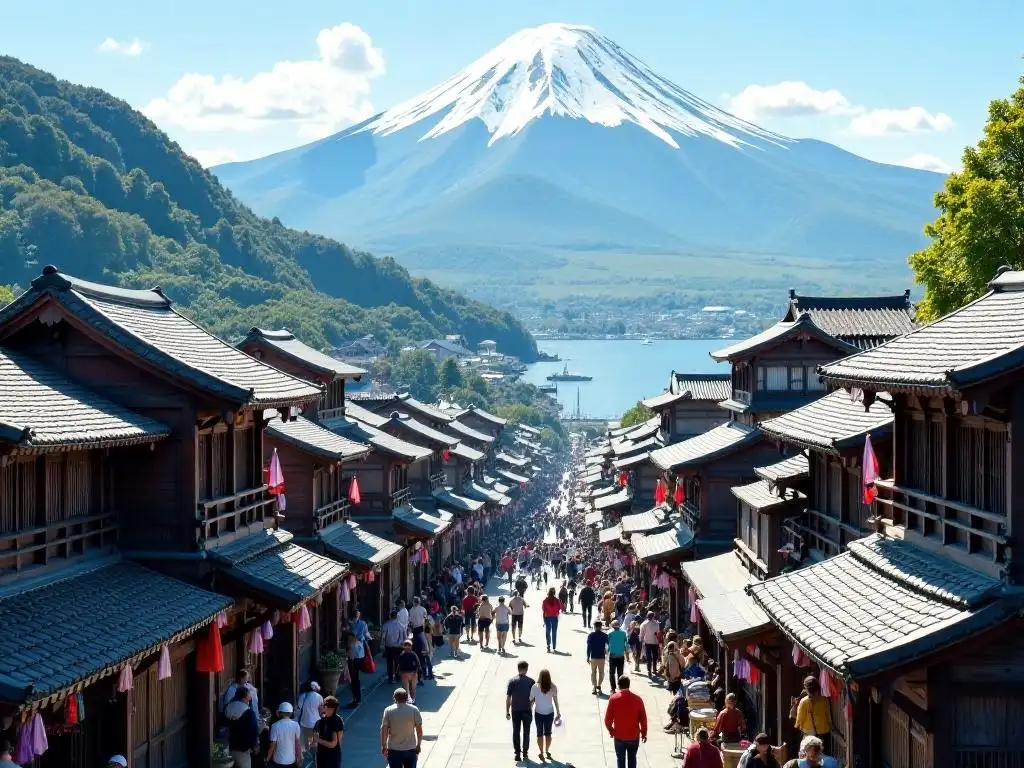
The feudal era in Japan, spanning from the late 12th century to the early 17th century, was characterized by a complex interplay of isolationist policies and global interactions. While the Tokugawa shogunate later solidified a period of isolation known as sakoku, the earlier phases of feudal Japan were marked by significant global engagement. This globalism was primarily driven by trade, cultural exchanges, and foreign influences that shaped Japan's development during this time.
Trade Relationships with Neighboring Countries
During the early feudal period, Japan engaged in extensive trade with neighboring countries, particularly Korea and China. These relationships were crucial for the exchange of goods, ideas, and technologies. Key trade partners included:
- Korea:
- The Goryeo Dynasty acted as a bridge for cultural and commercial exchanges.
- Japan imported silk, pottery, and ironware from Korea, while exporting Japanese swords and pottery.
- China:
- The Song Dynasty and later the Ming Dynasty were instrumental in introducing Buddhism, Confucianism, and Chinese characters to Japan.
- Japanese merchants traded for tea, ceramics, and luxury goods, fostering a rich cultural exchange.
These trade relationships not only provided Japan with material goods but also introduced new ideas and technologies, significantly influencing Japanese society and culture.
Cultural Exchanges and Their Impact on Japan
Cultural exchanges during the feudal era played a vital role in shaping Japan's identity. The influx of foreign ideas through trade and diplomacy led to profound transformations in various aspects of Japanese life:
- Religion:
- The introduction of Buddhism from Korea and later China significantly influenced Japanese spirituality, art, and philosophy. The adaptation of these religious practices helped shape the cultural landscape of Japan.
- Art and Literature:
- The importation of Chinese literary styles and artistic techniques led to the development of unique Japanese forms, such as Noh theater and ink painting. This blending of styles enriched Japan's cultural heritage.
- Technology and Innovation:
- Advances in agriculture and craftsmanship, such as improved rice cultivation methods and pottery techniques, were introduced through cultural exchanges. This contributed to the economic prosperity of feudal Japan.
The impact of these exchanges was profound, laying the groundwork for Japan's unique cultural identity while simultaneously keeping it connected to the broader East Asian context.
The Role of Foreign Influence on Japanese Development
Foreign influence during the feudal era was pivotal in shaping Japan's political, social, and economic structures. Various factors contributed to this development:
- Political Structures:
- The introduction of Confucian ideals from China influenced the hierarchical nature of Japanese society, reinforcing the samurai class's authority and the importance of loyalty and duty.
- Economic Growth:
- Trade with foreign nations stimulated Japan's economy, leading to urbanization and the rise of a merchant class. This economic change was crucial in setting the stage for later modernization efforts.
- Diplomatic Relations:
- Diplomatic missions to China and Korea established important precedents for international relations, influencing how Japan would later navigate its own foreign policy.
The foreign influences during Japan's feudal era were instrumental in shaping its development. The lessons learned from this dynamic interplay of globalism and isolationism continue to resonate in contemporary discussions on Japan's foreign relations and cultural identity. Understanding these historical contexts provides valuable insights into the complexities of Japan's position on the global stage today.
Key Lessons from Japan's Feudal Era: Isolationism vs. Globalism

The feudal era of Japan, spanning from the late 12th century to the mid-19th century, offers profound insights into the contrasting themes of isolationism and globalism. During this period, Japan's approach to foreign relations and trade not only shaped its own society but also influenced its interactions with the broader world. The lessons derived from this era are particularly relevant in understanding contemporary global relations and the impact of national policies on cultural and economic development.
Economic Implications of Isolationism in Japan's Feudal Period
Japan's isolationist policies, particularly during the Edo period (1603-1868), had significant economic implications. The Tokugawa shogunate implemented a policy known as sakoku, which effectively closed Japan off from most foreign influences. This led to several notable economic consequences:
- Self-Sufficiency: Japan developed a predominantly agrarian economy, focusing on rice production and internal trade. The isolationist stance forced the nation to rely on its own resources, fostering innovation in agriculture and local industries.
- Trade Limitations: With strict regulations on foreign trade, Japan limited contact primarily to a few Dutch traders in Nagasaki and Chinese merchants. This restriction curtailed the potential for technological exchange and economic diversification, which could have propelled further growth.
- Economic Stagnation: While Japan maintained stability and order under isolationism, it also experienced periods of economic stagnation. The inability to adapt to global economic changes ultimately set the stage for challenges when the country reopened to the world.
The balance of self-sufficiency and limited external engagement provides valuable insights into the long-term effects of isolationist policies on economic development.
In contrast, the sporadic periods of global engagement during Japan's feudal era had profound cultural and social effects:
- Cultural Exchange: Despite the overarching isolationist policies, Japan was not entirely cut off from the world. Interactions with the Dutch and Chinese allowed for the exchange of knowledge, particularly in fields such as medicine, astronomy, and art. This cultural influx enriched Japanese society, leading to the development of unique art forms and philosophies.
- Influence on Social Structures: The limited global engagement also influenced class structures and social hierarchies. The introduction of foreign ideas prompted shifts in societal norms, leading to gradual changes in the rigid samurai class system and an increased focus on commerce, particularly in urban areas.
- Resistance to Change: While globalization brought new ideas, it also faced resistance from conservative elements within Japanese society. The fear of losing traditional values led to a complex interplay between embracing new influences and maintaining cultural identity.
The cultural and social dynamics during this period illustrate the potential benefits of global engagement, as well as the challenges of reconciling tradition with change.
How Japan's Historical Choices Shape Today's Global Relations
The lessons from Japan's feudal era resonate in today's global landscape, particularly in how nations approach foreign relations:
- Isolationism vs. Globalism: Japan's historical experience highlights the delicate balance between isolationist policies and the benefits of globalism. Nations today can learn from Japan's path, recognizing that while self-sufficiency has its merits, openness to global influences can drive innovation and progress.
- Adaptation to Change: The stagnation faced by Japan during its isolationist period serves as a cautionary tale for modern economies. Countries must adapt to changing global contexts to thrive, as rigid adherence to isolationist policies can hinder growth and development.
- Cultural Resilience: Japan's ability to integrate foreign influences while maintaining its cultural identity offers a model for contemporary nations. The blending of external ideas with local traditions can lead to unique cultural expressions, fostering a sense of national identity that is both rooted and dynamic.
The lessons from Japan's feudal era regarding isolationism and globalism provide valuable insights for contemporary societies navigating the complexities of global relations. These historical choices continue to shape the way nations interact with one another, underscoring the importance of learning from the past.
Case Studies: Specific Examples of Isolationist and Globalist Policies

Case Study 1: The Impact of the Dutch Trade Policy
During the Edo period (1603-1868), Japan adopted a policy of sakoku, or "closed country," which severely restricted foreign influence. However, one notable exception was the Dutch trade policy. The Dutch were granted exclusive trading rights through the artificial island of Dejima in Nagasaki Bay, allowing them to engage in commerce with Japan while maintaining a level of isolation from other Western powers.
- Economic Impact: The Dutch provided Japan with valuable goods, including textiles, spices, and scientific instruments, which enriched the local economy. This trade facilitated the introduction of Western knowledge and technology, albeit in a limited scope.
- Cultural Exchange: Despite strict regulations, the Dutch were instrumental in introducing Western ideas and technologies to Japan. They brought books on medicine, astronomy, and military technology, which contributed to Japan's gradual modernization.
- Political Implications: The relationship with the Dutch demonstrated how controlled engagement with outsiders could provide economic benefits while maintaining political stability. The Tokugawa shogunate managed to balance isolation with selective global interaction, showcasing a unique approach to foreign relations.
Case Study 2: The Effects of Chinese Cultural Influence
China has historically been a significant cultural and intellectual influence on Japan, particularly during the Heian and Kamakura periods. However, during the Japan feudal era, this influence manifested differently, particularly in terms of how Japan absorbed and adapted Chinese ideas.
- Cultural Enrichment: Japan adopted various elements of Chinese culture, such as Confucianism, Buddhism, and art forms, which played a crucial role in shaping Japanese society. These aspects influenced governance, philosophy, and aesthetics.
- Isolationist Adaptation: While Japan embraced many Chinese cultural elements, it also developed its own unique identity. This selective absorption illustrates how Japan managed to remain culturally rich without fully succumbing to external dominance, highlighting an isolationist approach to cultural globalization.
- Diplomatic Relations: The relationship with China was complex, characterized by both admiration and rivalry. Japan's decision to limit direct political ties with China during certain periods reflects its isolationist mindset while still acknowledging the importance of cultural exchange.
Analysis of Lessons Learned from Each Case
Examining the case studies of Dutch trade policy and Chinese cultural influence offers valuable insights into the dynamics of isolationism and globalism during Japan's feudal era.
- Controlled Engagement: The Dutch case exemplifies how a nation can benefit economically and intellectually from global interactions while maintaining strict control over foreign influence. This model can inform modern discussions on balancing national interests with global cooperation.
- Cultural Resilience: The Chinese influence demonstrates the importance of cultural adaptation. Japan's ability to integrate foreign ideas while preserving its own identity is a lesson in resilience that resonates today, especially in an increasingly interconnected world.
- Strategic Isolationism: Both case studies underscore the effectiveness of strategic isolationism. Japan's selective policies allowed it to navigate external pressures while fostering internal stability, a lesson that can apply to contemporary foreign relations in various contexts.
The Japan feudal era presents a rich tapestry of lessons on isolationism and globalism that remain relevant. By studying these historical examples, modern policymakers can glean insights into managing foreign relations in a complex and changing world.
The Relevance of Japan's Feudal Era Lessons in Modern Context

The Japan feudal era offers profound lessons that resonate in today's globalized world. Understanding these historical precedents allows for a deeper comprehension of the dynamics between isolationist and globalist policies. By reflecting on Japan's past strategies, modern societies can glean insights into the consequences of their own foreign relations and domestic policies.
The feudal era, marked by the Tokugawa shogunate from the early 17th to the mid-19th century, exemplifies a deliberate choice of isolationism that shaped Japan's cultural and societal frameworks. This period is a testament to how a nation’s governance can directly influence its international standing and internal cohesion.
Comparison of Historical Policies with Today's Global Landscape
To grasp the lessons from the Japan feudal era, it's essential to draw parallels with contemporary policies:
- Isolationism in Feudal Japan:
- The Sakoku policy (鎖国), or "closed country," implemented in 1635, restricted foreign relations and trade to select nations, notably the Dutch and Chinese.
- This isolation led to a unique cultural development, allowing Japan to preserve its traditions and societal structures, albeit at the cost of technological and intellectual stagnation.
- Modern Isolationist Policies:
- Similar to the Sakoku policy, many nations today exhibit isolationist tendencies. For instance, North Korea maintains strict control over foreign interactions, leading to a unique but isolated cultural identity.
- Countries like the United States have oscillated between global engagement and protectionist policies. Recent trends towards nationalism echo the sentiments of feudal isolationism, raising questions about the long-term impacts on society and culture.
| Aspect | Feudal Japan (Sakoku) | Modern Isolationist Policies |
|---|---|---|
| Foreign Relations | Strictly limited | Varied; often protective |
| Cultural Impact | Preservation of traditions | Risk of cultural stagnation |
| Economic Consequences | Limited trade | Potential economic drawbacks |
The interplay of isolationism and globalization reflects historical patterns where nations choose to prioritize internal stability or engage with the wider world. The lessons from Japan's feudal era serve as a cautionary tale about the balance necessary between these opposing forces.
Implications for Current Isolationist and Globalist Trends
The implications of Japan's feudal era lessons are evident when analyzing current isolationist and globalist trends:
- Cultural Cohesion vs. Global Integration:
- The feudal model highlights how isolation can lead to strong national identity but may also result in a lack of innovation and adaptability. Nations today face similar challenges, where a strong cultural identity can sometimes clash with the need for global integration.
- Economic Resilience and Vulnerability:
- Japan's economy during the feudal era was insular yet stable. However, the lack of external trade ultimately limited growth. Modern economies must weigh the benefits of protective measures against the risks of becoming stagnant. Countries that embrace globalism often find themselves more resilient in the face of economic crises.
- Strategic Diplomacy:
- Just as feudal Japan selectively engaged with other nations, modern states must navigate complex international relations. Strategic diplomacy can prevent isolation while ensuring that national interests are safeguarded.
- Lessons on Sustainability:
- The environmental practices of the feudal era, where local resources were utilized sustainably due to isolation, can inform contemporary discussions on sustainability amidst global trade demands.
The lessons from Japan's feudal era provide essential insights into the ongoing discourse surrounding isolationism and globalism. By understanding how these historical policies shaped Japan's trajectory, modern nations can better navigate their own foreign relations, ensuring that they learn from the past rather than repeat it.
Conclusion: Synthesizing Lessons from Japan's Feudal Era
Final Thoughts on Isolationism vs. Globalism
Japan's feudal era, spanning from the 12th to the 19th centuries, presents a rich tapestry of lessons regarding isolationism and globalism. The Tokugawa shogunate, which governed from 1603 to 1868, epitomized a period of deliberate isolation known as sakoku. This policy effectively restricted foreign influence, promoting internal stability and cultural homogeneity. However, the consequences of such isolationism were profound, leading to both positive and negative outcomes.
On one hand, Japan's isolation allowed for the flourishing of a distinct culture, characterized by advancements in art, literature, and philosophy. The period saw the development of unique forms of theater, such as kabuki and noh, alongside the refinement of traditional crafts. In this context, isolationism can be seen as a protective measure that nurtured Japan's identity.
Conversely, this same isolation left Japan vulnerable when confronted with external pressures, particularly from Western powers in the mid-19th century. The arrival of Commodore Perry in 1853, which forcibly opened Japan to trade, highlighted the limitations of a strictly isolationist approach. The abrupt shift towards global engagement necessitated rapid modernization and adaptation, leading to significant societal upheaval.
Ultimately, the lessons gleaned from Japan's feudal era suggest a nuanced understanding of the balance between isolationism and globalism. While there are merits to protecting a nation's identity and culture, the risks of becoming detached from global dynamics can lead to unforeseen consequences.
The Importance of Historical Lessons for Future Policies
Understanding Japan's feudal era is essential for contemporary policymakers navigating the complexities of globalization and isolationism. The historical context provides critical insights into how nations can approach foreign relations in an increasingly interconnected world.
- Cultural Preservation vs. Global Integration
- Cultural Identity: Japan's experience underscores the importance of cultural preservation amidst globalization. While engaging with the global community, nations must find ways to honor and maintain their unique identities.
- Adaptation: A rigid stance against foreign influence can lead to stagnation. Japan's eventual transition from isolationism to globalism illustrates the need for flexibility and adaptability in policy-making.
- Economic Considerations
- Trade Opportunities: Japan's initial isolation limited economic opportunities, emphasizing the need for countries to engage in trade to foster economic growth.
- Resource Management: The lessons learned also highlight the need for careful resource management in a global market, where dependencies can create vulnerabilities.
- Geopolitical Awareness
- Strategic Alliances: The feudal era demonstrates the necessity of forming strategic alliances while maintaining sovereignty. Japan's late realization of the importance of global relationships serves as a cautionary tale for modern nations.
- Security Measures: Understanding historical threats, such as those faced by Japan from Western powers, can inform current security policies.
The Japan feudal era lessons emphasize the delicate balance between isolationism and globalism. As nations grapple with their identities in a globalized world, the historical insights from Japan's past can serve as a guide to navigating future challenges in foreign relations.
Frequently Asked Questions
What is the main theme of the article "Isolationism vs. Globalism: Lessons from Japan's Feudal Era"?
The article explores the contrast between isolationism and globalism during Japan's feudal era, emphasizing how these concepts shaped the country's historical and cultural development.
How did Japan's feudal era influence its approach to globalism?
During the feudal era, Japan adopted a policy of isolationism, limiting foreign influence and trade, which allowed for the preservation of culture and societal norms.
What lessons can modern societies learn from Japan's feudal era?
Modern societies can learn about the balance between isolationism and globalism, recognizing the importance of cultural identity while engaging with the global community.
How does the article relate to the keyword "Japan feudal era lessons"?
The article provides insights and lessons derived from Japan's feudal era, highlighting the impacts of isolationism and globalism on the nation's trajectory and offering valuable reflections for today's world.
What are some key historical figures mentioned in the context of Japan's feudal era?
The article references significant figures such as shoguns and samurai, who played crucial roles in shaping the political and social landscape during this period, influencing both isolationist policies and global interactions.
Final Reflection: Embracing Global Perspectives through Japan's Feudal Era Lessons
In a world increasingly defined by interconnectedness, the lessons from Japan's feudal era resonate with remarkable relevance today. The historical tension between isolationism and globalism serves as a powerful reminder of the consequences of closing off from the world versus embracing a broader perspective. As we navigate the complexities of modern geopolitics and cultural exchange, understanding these dynamics can help us forge a path toward collaboration and mutual growth.
The cultural and social landscape continues to be shaped by the legacies of past choices, and the lessons from Japan's feudal era underscore the importance of balance in our global interactions. The isolationist policies of the Tokugawa shogunate may have preserved a unique cultural identity, but they also stifled innovation and progress. As we reflect on this, we are reminded of the words of historian John W. Dower: Isolation can be a double-edged sword, preserving a culture while simultaneously hindering its evolution.
This ongoing dialogue about the merits and pitfalls of isolationism versus globalism is crucial as we strive to create a more inclusive and dynamic world.
As we conclude this exploration of Japan's feudal era lessons, I invite you to reflect on your own perspectives and actions in the context of our global society. Consider how you can embrace diversity and foster connections across cultural boundaries. Whether through personal relationships, professional endeavors, or community engagement, each of us has the power to contribute to a more interconnected world. Let us take these lessons to heart, championing openness and collaboration as we move forward into an uncertain yet promising future.
Unveil the Power of Perspective: Choose Your Path Forward!
Thank you for exploring the rich history of Japan's feudal era! You’ve gained valuable insights into how isolationism and globalism shaped the course of the nation. Now, let’s translate those lessons into actions that enhance your understanding of the world today.
Here’s how you can take the next step:
- Explore the Impact: Join a local history club or participate in an online forum focused on the influences of global historical contexts. Engage in discussions that challenge your views on current isolationist and globalist policies.
- Share Your Insights: Consider writing a blog post or updating your social media to reflect on how Japan's past informs your perspective on today’s global issues. Your voice could be the catalyst for important conversations!
- Become an Expert: Delve into studies or watch documentaries about other nations that face similar crossroads as Japan once did. Knowledge is your most powerful tool for understanding complex global dynamics.
How do you think the lessons learned from Japan's feudal era can be applied to today's global challenges? We invite you to share your thoughts below!