
The Black Ships' Arrival: A Turning Point in Japan's Foreign Relations

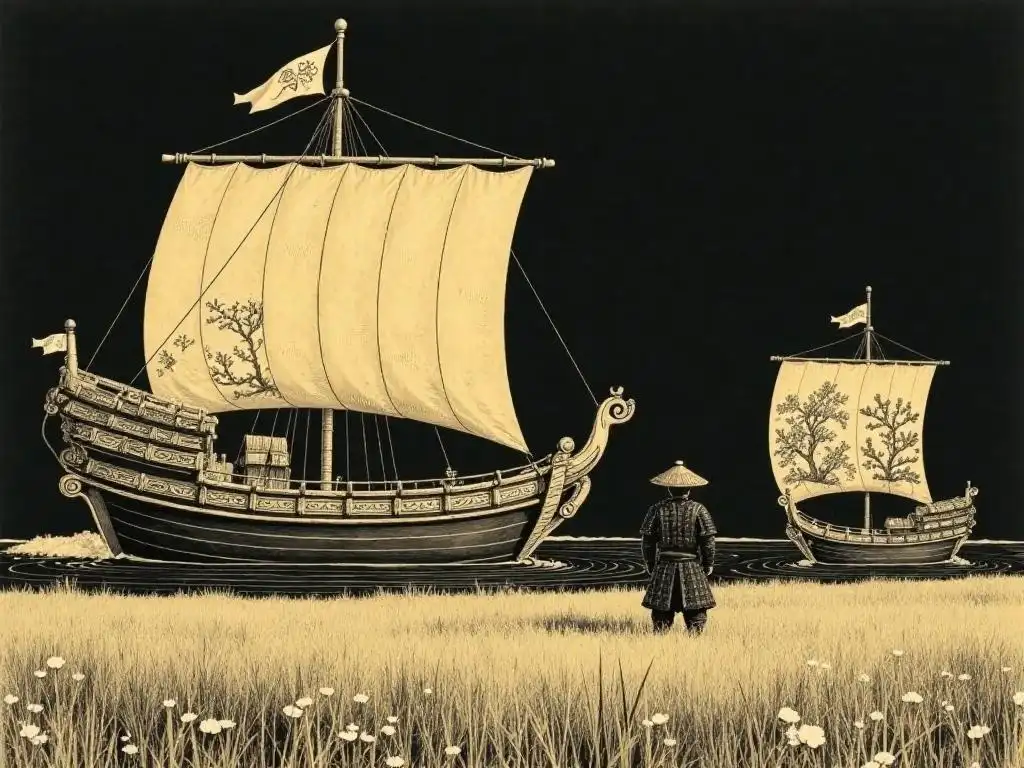
Welcome to Feudal Japan History, where we embark on a captivating journey through the intricate tapestry of Japan's feudal era. Prepare to dive deep into the fascinating world of historical, cultural, and societal aspects that shaped this remarkable period. Our featured article, "The Black Ships' Arrival: A Turning Point in Japan's Foreign Relations," unravels the intriguing story of how foreign contact transformed Japan forever. What secrets do these black ships hold, and how did they alter the course of a nation? Join us as we explore this pivotal moment and uncover the layers of history waiting to be discovered!
Introduction to the Black Ships and Their Significance
The arrival of the Black Ships, led by Commodore Matthew Perry in 1853, marked a pivotal moment in Japan's foreign relations, effectively ending over two centuries of self-imposed isolation. This event not only reshaped Japan's diplomatic landscape but also set in motion a series of transformations that would ultimately lead to the modernization of the nation.
Understanding the implications of the Black Ships' arrival requires an exploration of the context in which this event occurred, including Japan's isolationist policies and its previous interactions with foreign nations. The Black Ships represent a significant turning point in Japan's history, catalyzing discussions about trade, diplomacy, and cultural exchange with the Western world.
Overview of Japan's Isolationist Policy Before 1853
For more than two hundred years, Japan operated under a strict isolationist policy known as Sakoku, which limited foreign influence and trade. Instituted during the Edo period (1603-1868), this policy aimed to preserve Japanese culture and prevent the spread of Christianity, which was seen as a threat to the social order. Key features of this policy included:
- Limited Trade: Foreign trade was restricted to a few designated ports, such as Nagasaki, where only the Dutch and Chinese were allowed to conduct commerce.
- Cultural Preservation: The isolationist stance fostered a strong sense of nationalism and cultural identity, as Japan sought to protect its traditions from foreign influences.
- Control of Foreign Relations: Japanese officials maintained strict control over foreign interactions, refusing to engage with Western nations or recognize their authority.
Despite these measures, the global dynamics of the 19th century began to challenge Japan's isolation, setting the stage for the eventual arrival of the Black Ships.
The Role of Foreign Relations in Feudal Japan
Although Japan was largely isolated, it was not entirely devoid of foreign relations. Interaction with neighboring countries and limited trade with Europeans had occurred throughout the feudal era. Key aspects of foreign relations in Japan included:
- Tributary Relations: Japan maintained a tributary relationship with China, recognizing its influence while simultaneously asserting its sovereignty.
- Dutch Trade: The Dutch were allowed limited access to Japan, serving as a conduit for Western knowledge and technology, albeit under strict conditions.
- Piracy and Smuggling: Despite official policies, piracy and smuggling routes flourished, indicating a persistent demand for foreign goods and information among the Japanese populace.
These interactions, albeit limited, laid the groundwork for the eventual confrontation with Western powers, highlighting the complexities of Japan's foreign relations even in a period of isolation.
The Arrival of Commodore Perry and the Black Ships
The arrival of Commodore Perry and his fleet of Black Ships was not merely a maritime incident but a significant moment that would alter Japan's foreign relations forever. This section will delve into the background of Commodore Perry and the advanced technology of the Black Ships that facilitated this historic encounter.
Background of Commodore Matthew Perry
Commodore Matthew Perry was a career naval officer in the United States Navy, known for his significant contributions to naval strategy and diplomacy. His motivations for leading the expedition to Japan included:
- Encouraging Trade: Perry aimed to open Japan to American trade, recognizing the potential economic benefits for both nations.
- Demonstrating Naval Power: The display of military strength was a strategic move to compel Japan to engage in negotiations.
- Cultural Exchange: Perry also envisioned fostering cultural exchanges between Japan and the United States, promoting mutual understanding.
Perry's background and experiences played a critical role in shaping the approach he took during his expedition, emphasizing both diplomacy and military readiness.
Description of the Black Ships and Their Technology
The Black Ships were a group of steam-powered vessels, notably the USS Powhatan and the USS Mississippi, which showcased advanced maritime technology of the time. Key features included:
- Steam Power: Unlike traditional sailing ships, the steam engines allowed for greater maneuverability and speed, enabling an imposing presence.
- Armament: The ships were equipped with cannons and other weapons, demonstrating the military capabilities of the United States and underscoring the seriousness of Perry's mission.
- Symbolism: The Black Ships themselves became a symbol of Western industrial strength, representing both technological advancement and a challenge to Japan's isolationist ideals.
The arrival of the Black Ships was more than a naval event; it was a harbinger of change that would force Japan to reconsider its approach to foreign relations and engage with the global community.
Japan's Initial Reaction to the Black Ships
When Commodore Matthew Perry’s fleet, famously known as the "Black Ships," arrived in Japan in 1853, it marked a significant rupture in Japan’s longstanding policy of sakoku, or national isolation. The initial reaction to this unexpected intrusion was one of shock and confusion among the Japanese populace and government officials. The sight of the steam-powered warships, with their black hulls and unfamiliar technologies, was both awe-inspiring and intimidating.
The Shock and Awe of the Foreign Fleet
The arrival of the Black Ships elicited a profound sense of disbelief within Japan. For over two centuries, the country had maintained strict isolation from foreign influence, allowing only limited trade with the Dutch and Chinese. The sudden appearance of Perry’s fleet in Tokyo Bay challenged the very foundations of Japanese society, which had been largely insulated from the outside world.
Witnesses described the ships as "monstrous" and "demonic," with their towering masts and billowing smoke—a stark contrast to Japan's traditional wooden vessels. The Japanese government, particularly the Tokugawa shogunate, struggled to comprehend the implications of this foreign incursion. Panic spread throughout the government ranks, as officials debated whether to engage with the Americans or to resist their demands.
The Tokugawa Shogunate's Response
In response to the Black Ships, the Tokugawa shogunate found itself in a precarious position. The shogunate was already facing internal dissent and pressure from various factions, and the arrival of Perry intensified these challenges. Initially, the shogunate adopted a cautious approach, seeking advice from scholars and officials knowledgeable about Western technologies and politics.
Despite its initial hesitation, the shogunate recognized the necessity of addressing the situation. After much deliberation, they decided to negotiate, leading to the signing of the Treaty of Kanagawa in 1854. This decision represented a significant turning point, reflecting the shogunate's acknowledgment of Japan's vulnerability in the face of foreign powers.
The Impact of the Black Ships on Japan's Foreign Relations
The arrival of the Black Ships fundamentally transformed Japan's foreign relations, prompting a shift from centuries of isolationism toward engagement with the global community. The consequences of this transition were felt across various domains, leading to dramatic changes in Japan's political, economic, and cultural landscapes.
Shift from Isolationism to Engagement
The Black Ships served as a catalyst for change, compelling Japan to reconsider its isolationist policies. The encounter with Perry highlighted the technological and military superiority of Western nations, which instilled a sense of urgency among Japanese leaders to modernize and strengthen the nation.
This newfound awareness led to a gradual opening of Japan's borders. The Treaty of Kanagawa, which established official diplomatic relations with the United States, paved the way for additional treaties with other Western powers. It marked the beginning of Japan’s engagement with the world, setting the stage for subsequent reforms, including the Meiji Restoration. This period saw Japan actively seeking knowledge and technology from the West, ultimately transforming it into a formidable power in Asia by the early 20th century.
The Treaty of Kanagawa: Key Provisions and Implications
The Treaty of Kanagawa, signed on March 31, 1854, was instrumental in reshaping Japan's foreign relations. Key provisions included:
- Opening of Ports: The treaty mandated the opening of two ports, Shimoda and Hakodate, for American trading vessels, allowing them access to Japan for supplies and repairs.
- Consular Relations: It established a framework for diplomatic relations, which included the appointment of consuls to oversee American interests in Japan.
- Protection of American Citizens: The agreement stipulated protections for American citizens in Japan, including the right to trade freely and be subject to their own laws.
The implications of the Treaty of Kanagawa were far-reaching. It not only marked the end of Japan’s isolation but also signaled the beginning of a series of unequal treaties with Western powers, which often favored foreign interests over Japanese sovereignty. This influx of foreign influence eventually played a crucial role in instigating the political and social upheavals that would lead to the end of the Tokugawa shogunate and the emergence of modern Japan.
Cultural and Societal Changes Following the Arrival
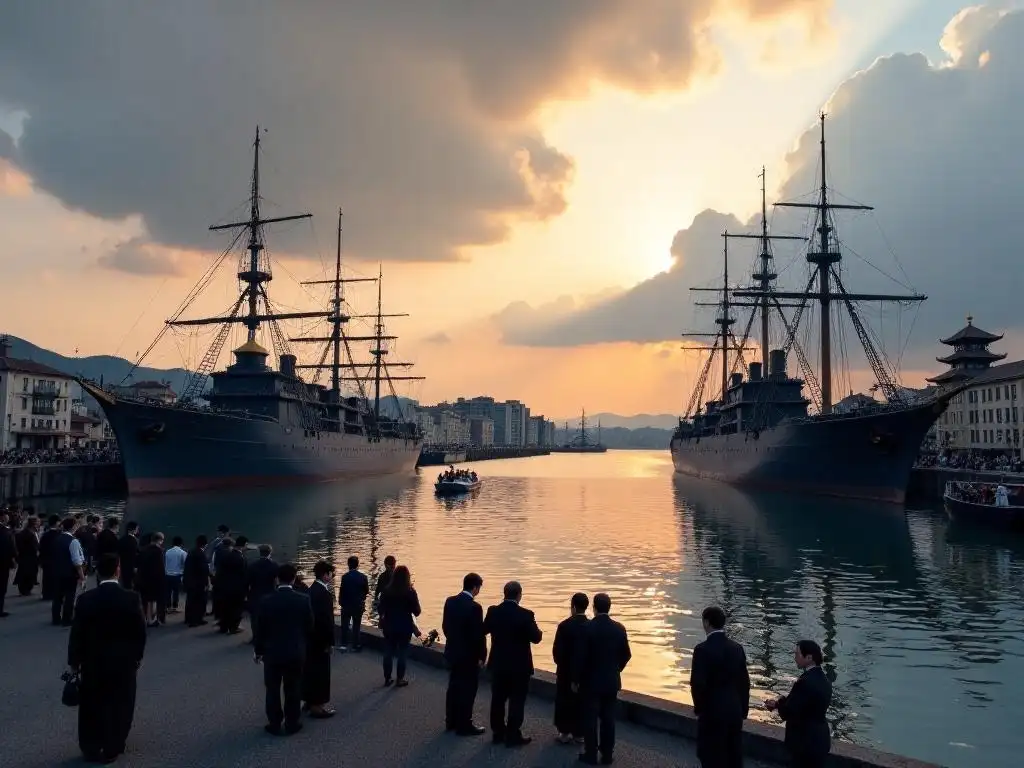
The arrival of Commodore Perry's Black Ships in 1853 marked a watershed moment in Japan's history, instigating profound cultural and societal changes. This unprecedented interaction with the Western world challenged Japan’s long-standing isolationist policies and prompted a reevaluation of its cultural identity. The ensuing years witnessed significant shifts as Japan began to assimilate foreign influences while striving to retain its traditional heritage.
Influence on Japanese Society and Culture
The Black Ships' arrival catalyzed a wave of curiosity and apprehension among the Japanese populace. Initially, the encounter with the Americans was met with suspicion; however, as information about Western customs and technologies began to circulate, a fascination with the West emerged. This cultural exchange led to:
- Introduction of Western Ideas: Concepts such as democracy, individual rights, and scientific rationalism began to permeate Japanese thought. Intellectuals and reformers started advocating for a more open society that embraced these new ideas.
- Art and Literature: The influence of Western art forms began to surface. Traditional Japanese painting styles incorporated Western perspective techniques, leading to a unique fusion of artistic expression. Similarly, Western literature inspired a new wave of Japanese writers who started exploring themes of modernity and change.
- Fashion and Lifestyle Changes: Western fashion trends influenced Japanese clothing styles. As a result, many Japanese began to adopt Western attire, especially among the upper classes, further blurring the lines between traditional and modern lifestyles.
- Social Structure Reassessment: The rigid class structures of feudal Japan began to erode as new social classes emerged. The rise of a merchant class and the eventual empowerment of commoners began to challenge the historical hierarchy, leading to a more fluid society.
The Beginning of Modernization in Japan
Perry's expedition served as a wake-up call that highlighted Japan's technological and military vulnerabilities. This realization spurred the Japanese government to initiate a series of modernization efforts across various sectors:
- Industrialization: The need to compete with Western powers prompted Japan to adopt industrial practices. Factories were established, and the country began to invest in railroads, telegraph networks, and modern shipbuilding techniques.
- Military Reforms: Recognizing the importance of a strong military, Japan reformed its armed forces by adopting Western military strategies and technologies. This included establishing a conscript army and modernizing its naval fleet to enhance national defense.
- Education System Overhaul: The introduction of Western educational models led to the establishment of new schools and universities. This emphasis on education was crucial in fostering a literate and skilled workforce capable of navigating the complexities of modern governance and industry.
Long-term Consequences of the Black Ships' Arrival
The repercussions of the Black Ships' arrival extended far beyond immediate cultural and societal shifts. They laid the groundwork for significant transformations in Japan's foreign relations and internal governance that would resonate throughout the following century.
Changes in Japan's Foreign Policy Post-1853
The arrival of the Black Ships forced Japan to abandon its isolationist stance, leading to a new era in foreign policy characterized by:
- Opening of Ports: The Treaty of Kanagawa, signed in 1854, marked the formal end of Japan's seclusion, requiring the opening of ports to American ships and establishing diplomatic relations. This was a pivotal moment that set a precedent for other Western nations to seek similar treaties.
- Engagement with Western Powers: Japan began to forge relationships with various Western countries, including the United Kingdom, France, and Russia. This engagement was not merely reactive; Japan actively sought to learn from and negotiate with these powers, gradually positioning itself as a player on the international stage.
- Shift Toward Imperialism: As Japan modernized, its foreign policy evolved into one of expansionism. The lessons learned from the West influenced Japan's desire to acquire territories, leading to conflicts such as the Sino-Japanese War (1894-1895) and the Russo-Japanese War (1904-1905).
The Role of the Black Ships in the Meiji Restoration
The Black Ships were a catalyst for the Meiji Restoration, which fundamentally transformed Japan's political landscape:
- Restoration of the Emperor: The arrival of Perry's fleet and the subsequent pressure from foreign powers led to the fall of the Tokugawa shogunate. In 1868, power was restored to the Emperor, igniting a national movement toward modernization and reform.
- Rapid Modernization Initiatives: The Meiji government recognized that modernization was essential for Japan to compete globally. Policies were enacted to promote industrial growth, military strength, and social reform, leading to Japan's emergence as a modern nation-state.
- Cultural Renaissance: The Meiji period also saw a renaissance in Japanese culture, where traditional arts coexisted with Western influences. This era fostered a unique cultural synthesis that defined Japan's identity moving forward.
The arrival of Commodore Perry and the Black Ships in 1853 was not just a pivotal moment in Japan's foreign relations but also a significant turning point that reshaped its society and culture, paving the way for modernization and global engagement.
Conclusion: The Legacy of the Black Ships in Japan's Foreign Relations
The arrival of the Black Ships, led by Commodore Matthew Perry in 1853, marked a significant turning point in Japan's foreign relations and had lasting impacts on the nation's trajectory. This pivotal event not only ended Japan's long-standing policy of isolation but also initiated a complex interaction with Western powers that would shape the country's modern identity. The legacy of the Black Ships is evident in Japan's subsequent diplomatic strategies, economic developments, and cultural exchanges that laid the groundwork for its emergence as a global player.
The Black Ships symbolize the beginning of a new era in Japan, characterized by the blend of traditional values and modern influences. As Japan navigated the challenges posed by foreign relations, it adopted various Western technologies and practices, transforming its military, education, and industry. This transformation was essential in Japan's ability to assert itself on the international stage and to negotiate its sovereignty in a rapidly changing world.
Reflection on Japan's Transformation After Contact

The arrival of the Black Ships catalyzed a profound transformation within Japan. Initially resistant to foreign influence, the nation gradually recognized the necessity of engaging with the outside world to preserve its sovereignty and ensure its survival. This shift was not merely political; it sparked a cultural renaissance that saw the integration of Western ideas and practices into Japanese society.
The Meiji Restoration of 1868 can be viewed as a direct outcome of the pressures and inspirations stemming from Perry's expedition. The new Meiji government sought to modernize Japan rapidly, leading to sweeping reforms in various sectors, including military, education, and infrastructure. The transformation was profound, as Japan transitioned from a feudal society to a centralized modern state, demonstrating remarkable adaptability in the face of foreign influence.
The Black Ships as a Catalyst for Change in the Feudal Era
The Black Ships served as a catalyst for change during a time when Japan was deeply entrenched in its feudal system. The sight of these imposing vessels forced Japanese leaders to confront the realities of global power dynamics and the limitations of their isolationist policies. The resulting discourse among the samurai, merchants, and political leaders highlighted the urgent need to reform and modernize.
This period marked the decline of the Tokugawa shogunate, as internal and external pressures coalesced to challenge the existing order. The realization that Japan needed to adapt to survive led to the dismantling of feudal structures and the rise of a more centralized government. The Black Ships, therefore, were not just ships; they represented a turning point in Japan's historical narrative, spearheading a transition that would ultimately lead to the establishment of modern Japan.
References and Further Reading on Japan's Black Ships and Foreign Relations
Recommended Books and Articles
- "Commodore Perry in the Land of the Shogun" by D. C. H. C. L. W. - A detailed account of Perry's expedition and its implications for Japan.
- "The Black Ships: The Story of Commodore Perry's Expedition to Japan": by T. R. Smith - A comprehensive examination of the events surrounding the arrival of the Black Ships and their impact on Japanese society.
- "Japan's Emergence as a Modern State" by S. T. K. - This book explores the political and social transformations in Japan following the Black Ships' arrival.
Online Resources for Further Exploration
- National Archives of Japan - A repository of documents and images related to the Black Ships' arrival, offering insights into Japan's foreign relations.
- The Japan Times - Articles and editorials discussing the historical significance of the Black Ships and their role in shaping modern Japan.
- BBC History: Commodore Perry's Expedition: - An overview of Perry's expedition and its consequences for Japan's interaction with the world.
- Introduction to the Black Ships and Their Significance
- The Arrival of Commodore Perry and the Black Ships
- Japan's Initial Reaction to the Black Ships
- The Impact of the Black Ships on Japan's Foreign Relations
- Cultural and Societal Changes Following the Arrival
- Long-term Consequences of the Black Ships' Arrival
- Conclusion: The Legacy of the Black Ships in Japan's Foreign Relations
- Reflection on Japan's Transformation After Contact
- The Black Ships as a Catalyst for Change in the Feudal Era
- References and Further Reading on Japan's Black Ships and Foreign Relations
Frequently Asked Questions
What were the Black Ships?
The Black Ships refer to the American naval vessels that arrived in Japan in 1853, signaling the end of Japan's isolationist policies and the beginning of new foreign relations.
How did the arrival of the Black Ships affect Japan's foreign relations?
The arrival of the Black Ships marked a significant turning point in Japan’s foreign relations, leading to the opening of Japanese ports to Western trade and diplomacy.
What was the impact of the Black Ships on Japanese society?
The Black Ships arrival led to major societal changes, including the introduction of Western technology and ideas, ultimately contributing to the Meiji Restoration.
Who commanded the Black Ships during their arrival in Japan?
The Black Ships were commanded by Commodore Matthew Perry, whose expedition aimed to establish trade relations with Japan and end its seclusion.
What was the long-term effect of the Black Ships on Japan?
The long-term effect of the Black Ships was the transformation of Japan into a modern nation-state, as it rapidly adopted Western practices in government, military, and industry.
Final Reflection: The Black Ships' Legacy in Japan's Foreign Relations
The arrival of the Black Ships marked a pivotal moment in Japan's foreign relations, illustrating the profound impact of external forces on a nation's trajectory. In an era where globalization continues to shape our world, understanding the implications of this historical event is more relevant than ever. The Black Ships not only forced Japan to confront its isolationist policies but also opened the door to a new era of engagement with the international community. This moment serves as a powerful reminder that change, often catalyzed by external pressures, can lead to significant transformation.
Culturally and socially, the influence of the Black Ships' arrival resonates deeply within Japan's contemporary identity. The shift from isolation to engagement has fostered a unique blend of tradition and modernity, shaping Japan's role on the global stage. As we reflect on this historical turning point, we can appreciate how it laid the groundwork for Japan's current diplomatic relationships and economic prowess. The past is not dead; it is not even past.
This quote by William Faulkner encapsulates how the echoes of history continue to inform our present and future.
As we contemplate the lessons from the arrival of the Black Ships, I invite you to consider your own relationship with change and foreign influences. How can you embrace the lessons of adaptability and openness in your life? Reflect on the importance of engaging with diverse perspectives and the potential for growth that comes from stepping outside of your comfort zone. By doing so, you not only honor the legacy of Japan's transformative journey but also empower yourself to navigate the complexities of our interconnected world.
Embrace the Journey of Discovery!
Thank you for diving into the intriguing history of Japan's foreign relations! By exploring the arrival of the **Black Ships**, you've gained valuable insights into a pivotal moment that shaped the nation. Now, it’s time to take that knowledge and put it into action!
What can you do next?
- Engage with History: Visit a local museum or historical site that features exhibits on Japan's international relations. Experience the past firsthand!
- Join the Conversation: Share your thoughts on how the **Black Ships** influenced Japan by commenting below or discussing with friends. What do you think were the most significant impacts?
- Explore Further: Dive into more articles on **Feudal Japan** to uncover related events and figures that contributed to Japan’s transformation. Every article is a new adventure!
What do you find most fascinating about the arrival of the **Black Ships** and its effects on Japan's worldview? Share your thoughts!