
The Role of Terrain in Feudal Japanese Battle Tactics


Welcome to Feudal Japan History, where we delve deep into the intricate tapestry of Japan's feudal era! Prepare to embark on a fascinating journey as we explore the dynamic interplay of historical, cultural, and societal elements that shaped this remarkable period. In our featured article, "The Role of Terrain in Feudal Japanese Battle Tactics," we unravel the strategic genius of feudal Japan's warriors, revealing how the very land itself became a silent yet powerful ally in their quests for honor and dominance.
Curious about how the mountains and rivers influenced the outcomes of legendary battles? Continue reading to uncover the secrets that lie within the landscape of feudal Japan!
Introduction to Feudal Japan Battle Tactics
The intricate tapestry of feudal Japan's military history is woven with a myriad of battles, strategies, and tactical innovations that were significantly influenced by the diverse terrain of the Japanese archipelago. Understanding feudal Japan battle tactics requires an appreciation of how the physical landscape shaped the strategies employed by samurai and their warlords.
From mountainous regions that offered natural fortifications to lush forests that provided cover for ambushes, the geography of Japan played a critical role in determining the outcomes of conflicts. This exploration delves into the relationship between terrain and military tactics during Japan's feudal era, shedding light on the innovative strategies that arose in response to the unique challenges posed by the environment.
Overview of Feudal Japan Military Strategies
The military strategies of feudal Japan were not only a reflection of the martial skills of its warriors but also a direct response to the geographical complexities of the land. The samurai class, with its rich code of honor and discipline, adapted their battle plans to leverage their surroundings effectively. Key strategies included:
- Guerrilla Warfare: Utilizing natural cover for ambushes and surprise attacks.
- Siege Tactics: Employing the terrain for fortification and defense during prolonged conflicts.
- Flanking Maneuvers: Taking advantage of geographical features to outmaneuver opponents.
These strategies were crucial in the context of the numerous clan wars that characterized the Sengoku period, where every advantage could determine victory or defeat.
Importance of Terrain in Warfare
The terrain in which battles were fought often dictated the flow and outcome of military engagements. Factors such as elevation, visibility, and the availability of resources significantly influenced tactical decisions. For instance:
- High Ground Advantage: Controlling elevated positions allowed archers and infantry to dominate the battlefield.
- Natural Barriers: Rivers, hills, and forests could impede enemy movements and provide strategic defensive positions.
- Logistical Considerations: Access to supplies and reinforcements was often determined by the terrain, affecting campaign sustainability.
These elements illustrate how terrain was not merely a backdrop for conflict, but a determining factor in the art of war during feudal Japan.
Understanding the Geographic Landscape of Feudal Japan
The geographic landscape of Japan is marked by its mountainous terrain, dense forests, and expansive plains, each presenting unique challenges and opportunities for military leaders. Understanding these features is essential for grasping how they shaped feudal Japan battle tactics.
Types of Terrain in Japan: Mountains, Forests, and Plains
Japan’s diverse topography can be categorized into several key types of terrain:
- Mountains: The Japanese Alps and other mountain ranges provided defensive advantages and natural barriers.
- Forests: Dense woodlands offered cover for stealthy movements and ambush tactics.
- Plains: Open areas allowed for large-scale battles, favoring cavalry and infantry formations.
This variety not only influenced how battles were fought but also dictated the movement and positioning of troops leading up to engagements.
How Geography Influenced Military Campaigns
The influence of geography on military campaigns in feudal Japan cannot be overstated. Key considerations included:
- Regional Variability: Different regions required tailored strategies based on their specific terrain characteristics.
- Seasonal Changes: Weather and seasonal variations affected visibility, mobility, and the effectiveness of certain tactics.
- Cultural Adaptations: Local customs and knowledge of the terrain played a crucial role in the success of military operations.
By examining these factors, one gains a deeper understanding of how feudal Japan battle tactics were intricately linked to the landscape, reflecting the adaptability and resourcefulness of its military leaders.
Key Elements of Terrain in Feudal Japanese Battle Tactics
The terrain played a crucial role in shaping the battle tactics employed during Japan's feudal era. The diverse landscapes, ranging from mountains and rivers to forests and plains, dictated how armies engaged in combat, influenced their strategies, and determined the outcomes of battles. Understanding the key elements of terrain is essential for comprehending the tactical decisions made by feudal Japanese commanders.
- Topography: The mountains and valleys of Japan were not merely obstacles but rather features that could be exploited. Commanders often sought the high ground to gain visibility and an advantageous position over their enemies.
- Waterways: Rivers acted as both barriers and strategic assets. Control over river crossings was vital, as these routes facilitated movement and supply lines while also serving as natural defenses.
- Vegetation: Dense forests provided cover for ambushes and surprise attacks. Warriors adept in guerrilla tactics utilized these natural formations to their advantage, often leading to devastating outcomes for less prepared foes.
High Ground: Advantages and Strategic Importance
In feudal Japan, the significance of high ground cannot be overstated. Possessing elevated terrain offered several tactical advantages that could decisively influence the outcome of a battle.
- Visibility: Commanders on higher ground could see the movements of enemy forces, allowing for better strategic planning and troop deployment.
- Defensive Strength: Defending troops positioned on elevated terrain had a natural advantage, making it more difficult for attackers to reach them and reducing their own casualties.
- Psychological Impact: The sight of an enemy on higher ground could demoralize opposing troops, which is vital in maintaining morale during combat.
Historical battles, such as the Battle of Kawanakajima, exemplified the importance of high ground in feudal Japanese warfare, where terrain directly influenced battle formations and engagement strategies.
River Crossings: Tactics for Utilizing Waterways
Rivers served as significant features in the tactical landscape of feudal Japan. The strategies employed regarding river crossings could mean the difference between victory and defeat.
- Control of Crossings: Securing river crossings enabled armies to control the flow of battle, as they could dictate when and how forces would engage each other.
- Ambush Opportunities: Commanders would often use rivers as traps, luring enemies into vulnerable positions as they attempted to cross.
- Logistical Benefits: Waterways provided essential resources for sustaining troops, such as drinking water and fish; thus, controlling these areas was crucial for supply lines.
The tactical use of rivers was evident in battles like the Battle of Ueda, where crossing strategies played a pivotal role in the engagement.
Forested Areas: Concealment and Ambush Opportunities
Forested areas in feudal Japan offered unique advantages for combatants skilled in stealth and surprise tactics.
- Concealment: Troops could hide within dense vegetation, waiting for the perfect moment to launch an ambush on unsuspecting foes.
- Tactical Mobility: Forests allowed for rapid movement and repositioning, enabling smaller forces to outmaneuver larger armies.
- Psychological Warfare: The unpredictability of hidden attacks could instill fear and uncertainty within enemy ranks, leading to disarray.
Historical encounters often showcased the effectiveness of forest warfare, such as the ambush tactics used by the Takeda clan during various skirmishes, demonstrating how terrain could be harnessed for strategic advantage.
Historical Examples of Terrain Utilization in Battles
Historical battles during the feudal era highlight the strategic deployment of terrain during engagements, showcasing how commanders adapted their tactics based on the landscape.
The Battle of Hakusukinoe: Terrain's Impact on Strategy
The Battle of Hakusukinoe (1584) is a prime illustration of how terrain determined battle strategies. The conflict between the forces of Toyotomi Hideyoshi and the Takeda clan was heavily influenced by the mountainous terrain.
- Tactical Advantage: Hideyoshi’s forces took advantage of the high ground, utilizing it to launch effective assaults against the Takeda troops.
- Disruption of Movement: The narrow pathways and steep slopes hindered the mobility of the Takeda warriors, forcing them into a disadvantageous position and contributing to their defeat.
This battle illustrates the critical nature of topography in shaping military tactics and outcomes.
The Siege of Osaka: Urban Terrain and Tactical Decisions
The Siege of Osaka (1614-1615) presented unique challenges due to its urban environment. The city’s layout significantly influenced the tactics employed by both the Tokugawa shogunate and the defending forces.
- Fortifications: The existing castle structures provided defensive advantages for the besieged, forcing the attackers to adapt their strategies to overcome these obstacles.
- Street Warfare: The urban terrain necessitated close-quarters combat, where traditional battlefield tactics had to be modified to account for the confined spaces and fortified positions.
The siege demonstrated how urban terrain could dictate the course of battle, requiring innovative approaches to warfare.
The Battle of Nagashino: Innovative Use of Open Fields
The Battle of Nagashino (1575) is renowned for its innovative tactics, particularly the effective use of open fields by Oda Nobunaga’s forces.
- Deployment of Firearms: The open terrain allowed for the strategic placement of arquebusiers, who could fire from a distance, disrupting enemy formations.
- Cavalry Flanking: Nobunaga utilized the flat landscape to execute cavalry flanking maneuvers, which proved devastating against Takeda’s charges.
This battle exemplified the effective use of open terrain in conjunction with technological advancements, marking a significant evolution in feudal Japanese battle tactics.
The Role of Terrain in Samurai Warfare
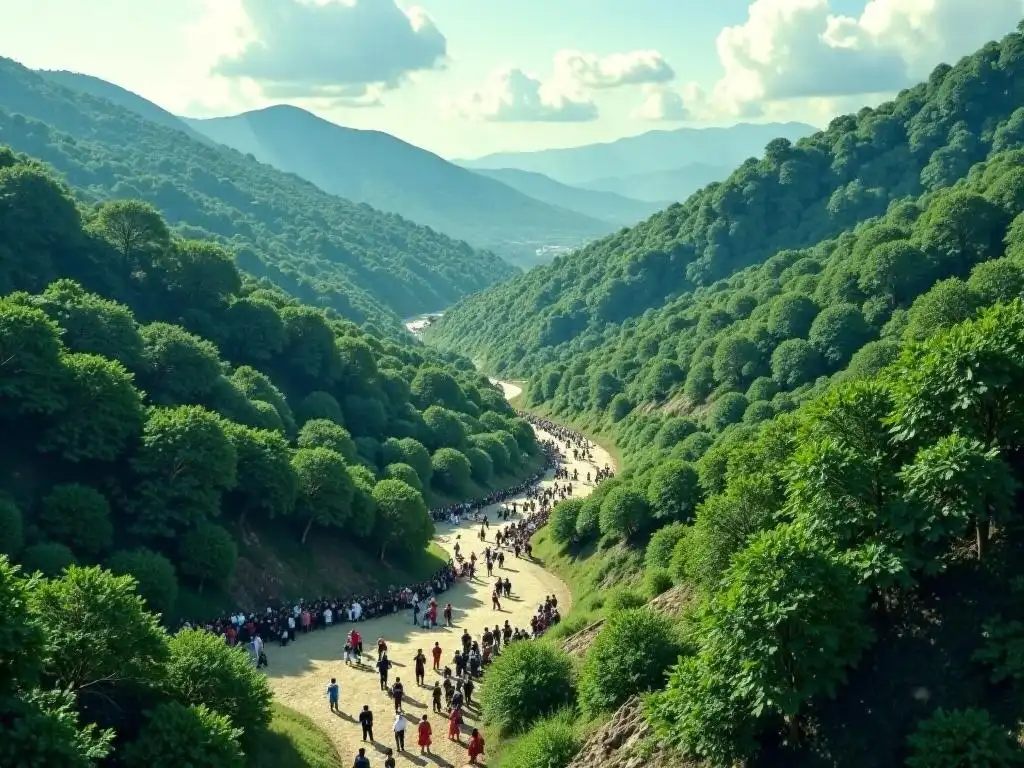
The terrain played a pivotal role in shaping the combat strategies of samurai during Japan's feudal era. The diverse landscapes of Japan, ranging from mountainous regions to rice paddies and coastal plains, greatly influenced how battles were fought and won. Samurai warfare was not merely about the clash of swords; it was a complex interplay between tactical maneuvering and the use of the natural environment.
In mountainous areas, for instance, the terrain could provide valuable cover and ambush opportunities. The samurai would often utilize the elevation to gain an advantage over their enemies, employing guerrilla tactics that took full advantage of the rugged landscape. In contrast, open plains allowed for larger formations and the use of cavalry, where speed and mobility became critical. Understanding the terrain enabled samurai leaders to devise strategies that maximized their strengths while exploiting the weaknesses of their opponents.
Furthermore, the seasonal changes in terrain, particularly in regions affected by heavy rainfall or snow, also dictated the types of strategies employed. Marshy fields could slow down enemy movements, allowing samurai to fortify their positions or retreat to safer ground. Thus, a deep understanding of the local geography was essential for successful military campaigns.
Samurai Tactics and Adaptation to Terrain
Samurai were renowned for their ability to adapt to various terrains, employing tactics that suited the environment in which they fought. In forested areas, for example, they often engaged in hit-and-run tactics, utilizing the cover provided by trees to launch surprise attacks. The dense foliage not only concealed their movements but also made it difficult for enemies to coordinate their responses.
In contrast, when fighting in more open terrains, samurai would organize themselves into formations that maximized their combat efficiency. The use of archers and spearmen was common in these scenarios, allowing them to engage the enemy from a distance before moving in for close combat. Additionally, the samurai's training in the martial arts included techniques specifically designed for different environments, ensuring that they could maneuver effectively, regardless of where the battle took place.
Another aspect of adaptation involved logistics and supply lines. Samurai leaders were adept at utilizing the terrain to their advantage when planning their campaigns. They would often choose routes that provided access to resources, such as water or food, which were crucial for sustaining their forces during prolonged engagements. This logistical foresight was essential for ensuring the success of their military operations.
The Code of Bushido and Environmental Considerations
The Code of Bushido, which emphasized values such as honor, loyalty, and courage, also had implications for how samurai interacted with their environment during warfare. Bushido advocated for a deep respect for nature, which influenced their approach to battle tactics. Samurai believed that understanding the land was not only a military necessity but also a moral obligation.
Environmental considerations were often factored into strategic decisions. For example, samurai commanders would take into account the weather conditions and terrain when planning an attack, as these elements could significantly impact the outcome of a battle. The samurai's connection to the land reinforced the idea that they were not just warriors but also stewards of their environment, further intertwining their military tactics with their cultural beliefs.
Additionally, the ethical dimensions of their warfare, as prescribed by Bushido, encouraged samurai to conduct battles that minimized unnecessary destruction to the land and its resources. This respect for the environment often translated into more strategic, less brutal forms of combat, where the goal was not merely to conquer but to do so in a way that preserved the land for future generations.
The Influence of Terrain on Feudal Alliances and Conflicts
Terrain not only shaped the tactics of individual battles but also had a significant impact on the broader political landscape of feudal Japan. The geographical features of a region often determined the formation and stability of alliances among various clans. Understanding the interplay between terrain and political dynamics is essential for comprehending feudal Japan's complex history.
How Geography Shaped Political Alliances
The geographical configuration of feudal Japan led to the formation of alliances based on mutual interests in controlling certain terrains. Clans located near rivers or coastal areas often formed coalitions to defend their trade routes and agricultural lands, which were vital for their economic stability. For instance, control over key mountain passes could dictate trade routes and access to resources, making these areas focal points for alliance-building.
Moreover, clans would often seek partnerships with others that had a complementary geographical advantage. For example, a clan in a fertile plain might ally with one in a mountainous region to protect against common enemies, leveraging each other's strengths. These alliances were often tested in conflicts, where the effectiveness of a coalition could be heavily influenced by the terrain in which battles occurred.
The Role of Terrain in Feudal Conflicts and Power Dynamics
The influence of terrain extended into how conflicts were waged and how power dynamics shifted throughout feudal Japan. Battles fought in mountainous regions, for example, often favored defenders who could utilize the natural landscape to their advantage, leading to prolonged sieges and power struggles. Conversely, open plains allowed for more decisive engagements, where the outcomes could quickly shift the balance of power between clans.
Territorial disputes over strategically significant areas frequently ignited conflicts, as clans vied for control of land that offered military and economic advantages. The resulting power struggles could lead to shifting allegiances and dramatic changes in the political landscape. For instance, the rise of the Takeda clan was significantly influenced by their adept use of the mountainous terrain of the Kai Province, allowing them to outmaneuver larger forces.
The terrain of feudal Japan was not just a backdrop for battles; it was a dynamic player in the strategies employed by samurai and the political machinations of the time. Understanding this intricate relationship between terrain and battle tactics is essential for a comprehensive exploration of feudal Japan's military history.
Conclusion: The Lasting Impact of Terrain on Feudal Japan Battle Tactics
The role of terrain in feudal Japan battle tactics cannot be overstated. The diverse geography of Japan, characterized by mountains, rivers, forests, and plains, significantly influenced military strategies and outcomes. Commanders had to adapt their tactics to leverage the natural landscape, utilizing features such as elevation for strategic advantage or rivers for defensive barriers. This adaptability often determined the success or failure of battles, ultimately shaping the course of Japanese history.
Terrain also influenced troop formations, movement, and supply lines. The use of fortified castles on hillsides, for example, allowed for superior defensive positions, while the strategic placement of troops in natural chokepoints enabled smaller forces to hold off larger armies. These tactics not only showcased the ingenuity of feudal leaders but also highlighted the importance of environmental knowledge in warfare.
Moreover, the lasting impact of these battlefield strategies can still be observed in modern Japan, where historical sites serve as reminders of the tactical significance of terrain during the feudal era. Understanding these tactics provides valuable insights into the military history of Japan and the evolution of its warfare strategies.
Summary of Key Points
- Geographical Influence: Japan's varied terrain, including mountains, rivers, and forests, played a crucial role in shaping battle tactics.
- Strategic Adaptability: Commanders adjusted their strategies to maximize the advantages of the landscape, influencing the outcomes of significant battles.
- Defensive Structures: The construction of castles on elevated ground allowed for better defense against attackers.
- Troop Movement and Supply: Natural features dictated formations, troop movements, and supply lines, enabling smaller forces to defend against larger armies effectively.
- Historical Legacy: The tactics developed during this era continue to impact Japan's military history and cultural heritage.
Reflection on the Importance of Terrain in Historical Context
Understanding the importance of terrain in feudal Japan battle tactics provides a deeper appreciation for the complexities of historical conflicts. The interplay between geography and warfare not only influenced individual battles but also shaped the political landscape of Japan. As clans vied for power, their ability to maneuver effectively within the constraints of their environment often determined their survival and dominance.
From the mountainous regions of the Japanese Alps to the vast rice paddies of the Kanto Plain, each geographic feature presented unique challenges and opportunities for military leaders. The ability to read and utilize the terrain was a skill honed by generations of warriors, reflecting a deep connection between the land and its people. Moreover, the enduring influence of these tactics can be seen in Japan’s cultural narratives, where tales of legendary battles often emphasize the significance of the landscape.
Further Reading on Feudal Japan Battle Tactics
To gain a comprehensive understanding of feudal Japan battle tactics and the role of terrain, the following resources are invaluable. They cover various aspects of military history, tactical innovations, and the cultural implications of warfare during this era.
Recommended Books and Articles
-
"Samurai Warfare: The Strategy and Tactics of the Samurai" by Stephen Turnbull
This book explores the strategies employed by samurai warriors and how terrain influenced their battle tactics.
-
"The Art of War in Japan" by William Scott Wilson
A detailed examination of the military strategies that took shape during feudal Japan, including the impact of geographical features.
-
"Warriors of Japan as Portrayed in the War Tales" by Thomas D. Conlan
This text provides insights into the narratives of warfare in feudal Japan and the influence of terrain on these stories.
Additional Resources on Military History in Feudal Japan
- Online Databases and Archives: Many universities and institutions offer digital collections of historical documents related to feudal Japan's military history.
- Documentaries and Educational Videos: Platforms like PBS and NHK often feature documentaries that discuss the military strategies and historical battles of feudal Japan.
- Academic Journals: Journals such as the Journal of Japanese Studies frequently publish articles on military history, providing scholarly insights into the tactics used during the feudal era.
These resources will enhance your understanding of the intricate relationship between terrain and battle tactics in feudal Japan, enriching your appreciation of this fascinating historical period.
- Introduction to Feudal Japan Battle Tactics
- Understanding the Geographic Landscape of Feudal Japan
- Key Elements of Terrain in Feudal Japanese Battle Tactics
- Historical Examples of Terrain Utilization in Battles
- The Role of Terrain in Samurai Warfare
- The Influence of Terrain on Feudal Alliances and Conflicts
- Conclusion: The Lasting Impact of Terrain on Feudal Japan Battle Tactics
- Further Reading on Feudal Japan Battle Tactics
- What were the primary battle tactics used in feudal Japan?
- How did terrain influence battle strategies in feudal Japan?
- What types of terrain were significant in feudal Japanese battles?
- How did samurai adapt their tactics based on terrain?
- What role did intelligence about terrain play in feudal Japan?
Frequently Asked Questions
What were the primary battle tactics used in feudal Japan?
The primary battle tactics included flanking maneuvers, ambushes, and the use of archers and cavalry, tailored to the terrain of the battlefield.
How did terrain influence battle strategies in feudal Japan?
Terrain played a crucial role as it determined troop movements, supply routes, and the effectiveness of various weapons, leading to strategic advantages.
What types of terrain were significant in feudal Japanese battles?
Significant terrain included mountains, forests, and rivers, each affecting visibility, mobility, and tactical decisions in feudal Japanese battles.
How did samurai adapt their tactics based on terrain?
Samurai adapted their tactics by utilizing the natural features of the landscape for cover, ambushes, and to enhance their combat effectiveness during battles.
What role did intelligence about terrain play in feudal Japan?
Intelligence gathering on terrain was vital, as it allowed commanders to plan effective strategies, anticipate enemy movements, and leverage natural advantages.
Final Reflection: The Enduring Influence of Terrain in Feudal Japan Battle Tactics
The intricate relationship between terrain and battle tactics in feudal Japan remains profoundly relevant today, as it underscores the timeless principle that environment shapes strategy. In a world where military engagements continue to evolve, understanding how terrain influenced the decisions of samurai and warlords offers invaluable insights into the art of warfare. The lessons learned from these historical battles remind us that the landscape is not merely a backdrop but a critical player in the theater of conflict.
The impact of terrain on feudal Japanese battle tactics has left an indelible mark on both historical scholarship and contemporary military strategy. As we analyze the strategies employed by figures like Takeda Shingen and Uesugi Kenshin, we see how their mastery of the land informed their tactical decisions and ultimately their successes and failures. In war, the terrain is the most important factor; it can be the difference between victory and defeat.
This observation resonates even in modern contexts, where the principles of terrain analysis continue to inform military planning and operations, highlighting the ongoing relevance of these ancient tactics.
As we reflect on the lessons of feudal Japan's battle tactics, I invite you to consider how the principles of strategy and adaptability can be applied in your own life. Whether in personal challenges or professional endeavors, recognizing the 'terrain' around you—be it your environment, resources, or relationships—can empower you to navigate obstacles more effectively. Embrace the wisdom of the past as you forge your path forward, and remember that understanding your surroundings is key to achieving your goals.
Unleash Your Inner Samurai: Take Action on What You've Learned!
Thank you for diving into the fascinating world of feudal Japanese battle tactics! We hope you've gained valuable insights into how terrain influenced strategic decisions on the battlefield. Now, it’s time to apply that knowledge and deepen your understanding of this rich history.
Here are a few steps you can take right now:
- Explore local history: Investigate how geographic features in your area have shaped past conflicts. You might be surprised by your discoveries!
- Join a discussion group: Share your thoughts and insights about the role of terrain in battle tactics with others who share your passion for history.
- Try a hands-on activity: Create a simple terrain map of a battle scenario from feudal Japan and consider how various landscapes might alter tactical approaches.
Which aspect of terrain do you believe had the most profound impact on battle strategies during feudal Japan? Let's discuss in the comments!