
The Role of Geography in the Unification of Japan: Natural Barriers and Strategic Locations

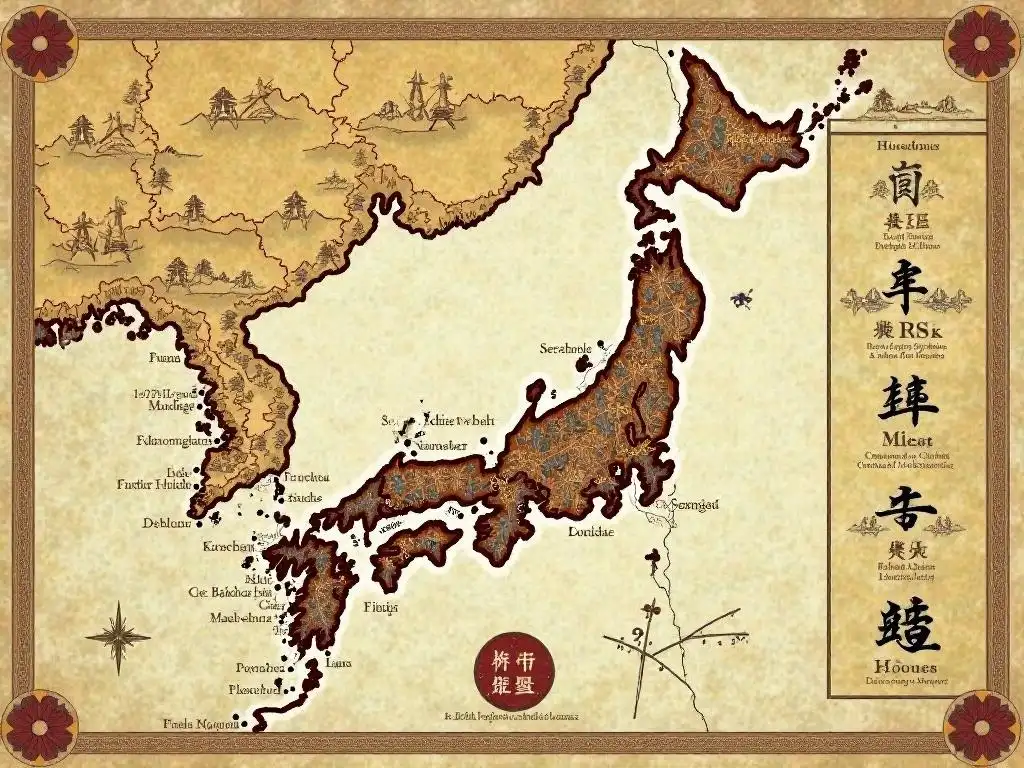
Welcome to Feudal Japan History, where we embark on a captivating journey through the intricate tapestry of Japan’s feudal era. Here, we delve deep into the impact of geography on the unification of Japan, uncovering how natural barriers and strategic locations shaped not only the landscape but also the political dynamics of the time. Have you ever wondered how mountains and rivers influenced the rise and fall of clans?
Join us as we explore the profound relationship between Japan's geography and its historical narrative, inviting you to uncover layers of intrigue that shaped a nation. Read on to discover the pivotal role these natural features played in crafting the very foundation of Japanese society.
Introduction to the Japan Feudal Era Geography Impact
The geography of Japan has played a pivotal role in shaping its history, particularly during the feudal era, which spanned from the 12th to the 19th centuries. This period was characterized by the rise of powerful clans, the establishment of the samurai class, and a complex political landscape that often hindered unification.
Understanding how natural barriers and strategic locations influenced the unification of Japan provides crucial insights into the broader historical narrative of the nation. As we delve into this topic, we will examine the critical geographical factors that both facilitated and impeded political consolidation, revealing how the very land itself shaped the course of Japanese history.
Overview of Japan’s Feudal Era
Japan’s feudal era is marked by a unique socio-political structure dominated by land-owning nobles and the warrior class known as samurai. This period saw the emergence of powerful shogunates, such as the Kamakura and Tokugawa, which governed the country amidst ongoing conflicts among rival clans. The intricate feudal system fostered a culture rich in traditions, arts, and martial values, but it also resulted in fragmentation and regionalism. The interplay of geography—such as mountains, rivers, and islands—contributed significantly to this complexity, acting as both barriers and conduits for political and cultural exchange.
Importance of Geography in Historical Context
The geographical landscape of Japan is characterized by its mountainous terrain, numerous islands, and significant waterways, all of which have profoundly influenced its political history. Natural barriers often isolated regions, allowing local leaders to maintain control and autonomy, while strategic locations became vital for trade and military advantage. Understanding the impact of geography during the feudal era is essential for grasping how these elements interacted with the social and political forces of the time, ultimately shaping the path toward unification.
Natural Barriers Influencing the Unification of Japan
Mountains as Natural Dividers
Japan's mountainous geography, particularly the rugged spine of the Japanese archipelago, has long served as a formidable natural barrier. The three major mountain ranges— the Japanese Alps, the Chugoku Mountains, and the Kyushu Mountains—created distinct regional identities and impeded communication and transportation between clans. This resulted in local powers consolidating control over their territories, often leading to conflicts between rival factions. The isolation provided by these mountains fostered unique cultural practices and local governance, thereby complicating efforts towards a unified Japan.
Rivers and Their Strategic Importance
In contrast to the mountains, Japan's rivers served as vital arteries for trade and communication. Major rivers such as the Shannon, Yoshino, and Tone not only facilitated the movement of goods and people but also played strategic roles in military campaigns. Control of these waterways often determined the success of military endeavors, as they provided logistical support for armies. The interplay between rivers and the feudal lords' ambitions illustrates how geography significantly influenced the political landscape of Japan, ultimately impacting the unification process in profound ways.
Strategic Locations Shaping Japan's Political Landscape
The geography of Japan played a pivotal role in shaping its political landscape during the feudal era. The country's unique topography, characterized by mountainous regions, coastal plains, and numerous islands, influenced not only the movement of armies but also the establishment of trade routes and cultural exchanges. Strategic locations became critical in the consolidation of power by various feudal lords, allowing them to control resources and maintain influence over their territories.
The various regions of Japan were often isolated from each other due to natural barriers, which led to the development of distinct political entities. Coastal areas facilitated maritime trade, while mountains provided natural fortifications. The interplay of these geographic elements created a complex tapestry of alliances, conflicts, and territorial claims that shaped the course of Japanese history.
Coastal Areas and Their Significance
The coastal areas of Japan served as vital gateways for trade and communication, significantly impacting the feudal structure. Regions such as the Kansai and Kanto plains, with their access to the Pacific Ocean, were crucial for the movement of goods and people. The ports along these coasts allowed local daimyos (feudal lords) to engage in maritime commerce, enhancing their wealth and power.
Additionally, the strategic positioning of coastal provinces enabled quicker military mobilization. Control over these areas meant the ability to intercept enemy forces and secure vital trade routes. Thus, coastal regions not only contributed to economic prosperity but also played a crucial role in the military strategies of feudal lords, facilitating both defense and expansion efforts.
Islands and Their Role in Unification
Japan's numerous islands, including the four main ones—Honshu, Hokkaido, Kyushu, and Shikoku—played a significant role in its unification during the feudal era. Each island had its own distinct cultural and political identity, often leading to rivalries and conflicts. However, these islands also provided opportunities for alliances and integration, facilitated by the development of naval capabilities.
Island groups, such as the Oki Islands and the Sado Island, served as strategic military outposts. Control over these islands allowed feudal lords to project power and influence over surrounding waters, leading to enhanced territorial claims. The unification process was significantly influenced by the ability of leaders to navigate these geographical barriers, establishing control over both land and sea.
Case Studies: Geography's Impact on Key Events
Geography not only shaped the political landscape of Japan but also had a direct impact on key historical events during the feudal era. Two prominent figures, Oda Nobunaga and Tokugawa Ieyasu, exemplify how geography influenced their respective paths to power and the eventual unification of Japan.
The Unification Efforts of Oda Nobunaga
Oda Nobunaga, one of the most influential warlords of the late 16th century, capitalized on Japan's geography to further his unification efforts. His strategic position in the Owari Province allowed him to control critical trade routes and access to the populous regions of the Kanto and Kansai. Nobunaga's military campaigns were often characterized by his ability to utilize the terrain to his advantage, employing innovative tactics that leveraged the natural landscape.
The siege of Inabayama Castle illustrates how Nobunaga employed geography for strategic military advantage. By capturing this fortification, he gained control over the Nobi Plain, a key agricultural and logistical hub that provided resources essential for further campaigns. Nobunaga's understanding of geography enabled him to expand his influence rapidly, setting the stage for the eventual unification of Japan.
Tokugawa Ieyasu and the Role of Geography in His Ascendancy
Tokugawa Ieyasu's rise to power is another prime example of geography's impact on Japan's unification. After the death of Nobunaga, Ieyasu skillfully navigated the power vacuum by leveraging his control of the Kanto region. The strategic location of Edo (modern-day Tokyo) allowed him to establish a stronghold from which he could assert influence over the entire country.
Ieyasu's successful victory at the Battle of Sekigahara in 1600 was significantly influenced by the geography of the battlefield. The surrounding hills and rivers provided natural barriers that aided his forces in outmaneuvering rival clans. Following this victory, Ieyasu was able to unify Japan under the Tokugawa shogunate, marking a new era in Japanese history. His reign exemplified how understanding and utilizing geographical advantages could dictate the outcome of political ambitions, solidifying the importance of geography in Japan's feudal era.
The Interplay Between Geography and Cultural Development

Geography played a pivotal role in shaping the cultural landscape of Japan during the feudal era. The archipelago's mountainous terrain, surrounded by the sea, created natural divisions among the various regions. This geographical isolation fostered distinct cultural identities as communities developed independently, influenced by local resources, climate, and external interactions.
The rugged mountains, such as the Japanese Alps, served as barriers that limited communication and travel between regions. Consequently, each area cultivated unique customs, dialects, and traditions. For instance, the agricultural practices in the rice-growing plains of the Kanto region differed significantly from the fishing traditions of coastal communities in Kyushu.
Moreover, geographical features like rivers and lakes functioned as conduits for trade and interaction, leading to cultural exchange. While some regions thrived on agriculture, others became centers of commerce and crafts, showcasing the diverse cultural tapestry of the feudal era. The interplay between geography and cultural development laid the foundation for the rich heritage that would shape Japan's identity.
Regional Variations in Culture Due to Geographic Isolation
The geographic isolation of Japan's islands led to significant regional variations in culture. Each area adapted to its environment, resulting in diverse lifestyles, practices, and beliefs. For example, the cold northern region of Hokkaido developed a culture centered around hunting and gathering, heavily influenced by the Ainu people's traditions. In contrast, the warmer southern regions like Okinawa showcased unique customs, heavily influenced by trade with neighboring Asian cultures.
This isolation was also reflected in the architectural styles and local arts. Traditional homes in rural areas were often built using local materials, while urban centers like Kyoto and Edo developed more sophisticated styles that reflected their status as political and cultural hubs. The practice of regional festivals, which often celebrated local deities and agricultural cycles, further exemplified how geography fostered unique cultural expressions.
The feudal system also mirrored these regional distinctions, with local lords (daimyos) promoting the traditions of their territories. Such variations contributed to a rich cultural mosaic that characterized Japan throughout the feudal era, showcasing how geography shaped not only social structures but also the very essence of life in different regions.
How Geography Influenced Feudal Alliances and Rivalries
Geography significantly influenced the formation of feudal alliances and rivalries during Japan's unification process. The location of feudal domains often dictated political power dynamics and military strategies. Regions with natural resources or strategic locations, such as coastal areas for trade or fertile plains for agriculture, became focal points for the rise of powerful clans.
The mountainous terrains acted as both barriers and fortifications, shaping the strategies of competing warlords. For instance, the Takeda clan, based in the mountainous region of Kai Province, employed guerrilla tactics to leverage their knowledge of the terrain against enemies. Conversely, clans located in plains or coastal areas often sought alliances to counterbalance the military advantages of their more fortified counterparts.
Moreover, rivers and valleys served as natural routes for armies, influencing the outcomes of battles and the shifting of allegiances. The battle of Sekigahara in 1600, a decisive conflict that led to the establishment of the Tokugawa shogunate, exemplifies how geography played a crucial role in military campaigns. The strategic positioning of forces along the riverbanks demonstrated the direct impact of geographic factors on feudal politics and territorial control.
Conclusion: The Lasting Impact of Geography on Japan’s Unification
Summary of Geography's Role in Shaping the Feudal Era
Geography was a fundamental factor in the unification of Japan during the feudal era. The natural barriers created by mountains and seas preserved regional cultures while also facilitating the development of alliances and rivalries that shaped political landscapes. The interplay between geography and culture not only influenced local identities but also played a crucial role in the broader narrative of Japan's unification.
The strategic locations of various clans and the topographical advantages they held were instrumental in determining the balance of power and the eventual rise of a centralized authority under the Tokugawa shogunate. Thus, the geographical features of Japan were not merely physical attributes; they were active participants in the historical processes that defined the nation.
Final Thoughts on the Geographical Legacy in Modern Japan
The geographical legacy of the feudal era continues to resonate in modern Japan. The regional cultural distinctions that emerged during this time are still evident today, contributing to the country's rich diversity. Furthermore, the strategic importance of geography remains relevant in contemporary politics and economics, as Japan navigates its position in the global arena.
Understanding the impact of geography on Japan's historical development enhances our appreciation for the intricate relationship between environment and culture. As Japan continues to evolve, the lessons from its feudal past serve as a reminder of how geography can shape societies, influence power dynamics, and foster cultural identities that endure through time.
References
Understanding the role of geography in the unification of Japan during the feudal era requires consulting a variety of scholarly sources. These references provide insights into how Japan’s natural barriers and strategic locations influenced political dynamics, cultural exchanges, and military strategies throughout history.
Key Sources on Japan’s Feudal Geography
-
"The Geography of Japan" by Richard H. P. S. Thomas
This comprehensive book delves into the physical geography of Japan and its implications for human settlement and political organization. It discusses how mountainous terrain and coastal features shaped regional power dynamics during the feudal era.
-
"Japan: A History" by Christopher Harding
Harding's work provides a broad overview of Japanese history with a focus on geographical influences. The book highlights key events where geography played a crucial role in shaping political and social structures.
-
"Feudal Japan: The History of the Samurai and the Unification of Japan" by Charles River Editors
This text offers a focused examination of the feudal system in Japan, including the geographical factors that facilitated or hindered the unification process among the warring states.
-
"The Making of Modern Japan" by Ian Buruma
While this book primarily covers the transition into modernity, it provides valuable context on how Japan’s geography impacted its feudal past, particularly in the context of regional conflicts and alliances.
-
"Historical Atlas of Japan" by Charles J. W. H. Watanabe
This atlas offers detailed maps and historical narratives that illustrate the geographical divisions within Japan, showcasing how mountains, rivers, and sea routes influenced military campaigns and trade.
Suggested Further Reading on the Unification of Japan
-
"The Samurai: A Military History" by Stephen Turnbull
Turnbull’s book outlines the role of the samurai class during Japan's unification, emphasizing the geographical challenges they faced and how these shaped their strategies.
-
"Shogun: The Life of Tokugawa Ieyasu" by John Man
This biography of Tokugawa Ieyasu, the unifier of Japan, examines the geographical factors that played a role in his rise to power and the establishment of the Tokugawa shogunate.
-
"Japan’s Unification: 1500-1600" by John F. Richards
This scholarly work provides an in-depth analysis of the unification process during the late feudal era, focusing on the interplay of geography, warfare, and diplomacy.
-
"The Origins of Japan’s Modern Economy" by Ellen P. Conant
This book explores the economic transformations during Japan's unification period, linking geographical advantages and trade routes to the emergence of a unified state.
-
"The Rise of the Samurai" by J. A. McKimm
McKimm’s research focuses on the samurai's ascent in power and influence, with particular attention to how geographical factors influenced their military campaigns and governance strategies.
These sources provide a well-rounded foundation for understanding the profound impact of geography on Japan's feudal era and the unification process.
- Introduction to the Japan Feudal Era Geography Impact
- Natural Barriers Influencing the Unification of Japan
- Strategic Locations Shaping Japan's Political Landscape
- Case Studies: Geography's Impact on Key Events
- The Interplay Between Geography and Cultural Development
- Conclusion: The Lasting Impact of Geography on Japan’s Unification
- References
- What was the geographical significance in the unification of Japan during the feudal era?
- How did natural barriers affect the development of regions in Japan?
- What were some strategic locations that influenced Japan's feudal conflicts?
- How did geography contribute to the rise of the samurai class?
- In what ways did geography impact the social structure of feudal Japan?
Frequently Asked Questions
What was the geographical significance in the unification of Japan during the feudal era?
The geographical landscape of Japan, including its mountains and coastal areas, played a crucial role in shaping the political boundaries and military strategies during the feudal era.
How did natural barriers affect the development of regions in Japan?
Natural barriers such as mountains and rivers limited communication and trade, leading to the development of distinct regional cultures and feudal systems that often competed for power.
What were some strategic locations that influenced Japan's feudal conflicts?
Key locations like the Seto Inland Sea and Kyoto served as strategic hubs for trade and military operations, significantly impacting the outcomes of feudal conflicts and the centralization of power.
How did geography contribute to the rise of the samurai class?
The challenges posed by Japan’s island geography necessitated the development of a strong military class, the samurai, who were essential for defending territories and enforcing local governance during the feudal era.
The diverse geographical regions led to variations in agriculture and resources, which influenced the social hierarchy, with different classes emerging based on their economic roles and land ownership.
Final Reflection: The Enduring Influence of Geography on Japan's Unity
The intricate relationship between geography and the unification of Japan during the feudal era remains profoundly relevant today. The natural barriers and strategic locations that shaped historical events are not merely relics of the past; they continue to influence Japan's cultural identity, economic development, and political landscape. Understanding this connection allows us to appreciate how geography has played a pivotal role in the formation of a nation, reminding us that the physical world can significantly impact human affairs.
Clearly, the geographical features of Japan have left an indelible mark on its social and cultural evolution. From the mountains that isolated communities to the seas that facilitated trade and communication, these elements have fostered a unique blend of regional identities and national unity. As we reflect on this, we can recall the words of historian John W. Hall: Geography is a powerful force in shaping the destinies of nations.
This observation underscores the ongoing relevance of geography in understanding not just Japan's past, but also its present and future.
As we conclude our exploration of Japan's feudal era geography, I invite you to reflect on the lessons learned from this historical context. Consider how the interplay of natural barriers and strategic locations can inform your understanding of contemporary issues, both in Japan and globally. Embrace the idea that geography is not just a backdrop for human activity but a dynamic force that shapes our lives. Let this awareness inspire you to engage more deeply with the world around you, recognizing the profound impact of our environment on our shared human experience.
Unveil Japan's Geographic Secrets and Embrace History!
Thank you for diving into the fascinating world of Japan's geography and its pivotal role in the nation's unification. We hope you’ve gained valuable insights into how natural barriers and strategic locations have shaped its rich history. Now, it’s time to take that knowledge further and make it actionable!
Here are a few ways you can deepen your understanding of Japan's geography and share this journey with others:
- Join a local history group or an online forum dedicated to Japanese history to engage in discussions and broaden your perspective.
- Start a blog or social media account where you can share interesting facts and insights about Japan's geography and history with your friends and followers.
- Explore documentaries or literature that delve deeper into Japan's geographical features and their impact on the country’s culture and politics.
As you reflect on Japan’s geography, consider this: How do you think Japan’s natural landscapes continue to influence its culture and identity today? We invite you to share your thoughts below!