
Farming as a Way of Life: The Philosophical Perspectives of Feudal Japanese Farmers


Welcome to Feudal Japan History, where we embark on a captivating journey through the intricate tapestry of Japan's feudal era. Dive deep into the philosophical views of feudal farming, a topic that reveals not just the agricultural practices of the time, but also the profound beliefs that shaped the lives of farmers in this unique historical landscape.
As you explore our expert-driven articles, prepare to uncover the rich cultural and societal nuances that defined an era when farming was not merely a means of survival but a way of life. Join us as we unveil the layers of wisdom and tradition that continue to resonate today.
- Introduction to the Philosophical Views of Feudal Farming
- Historical Context of Feudal Japanese Farmers
- Core Philosophical Perspectives Influencing Feudal Farming
- Daily Life of Feudal Japanese Farmers
- Challenges Faced by Feudal Farmers
- The Interplay Between Philosophy and Farming Practices
- Legacy of Feudal Farming Philosophies
- Conclusion: The Philosophical Views of Feudal Farming as a Way of Life
-
Frequently Asked Questions
- What were the primary philosophical views of feudal farming in Japan?
- How did Buddhism influence feudal farmers' perspectives?
- What role did Shinto beliefs play in agriculture during the feudal era?
- How did the social hierarchy affect the lives of feudal farmers?
- What is the significance of community in feudal farming practices?
- Final Reflection: Embracing the Philosophical Views of Feudal Farming
- Embrace the Harvest of Knowledge!
Introduction to the Philosophical Views of Feudal Farming
Farming in feudal Japan was not merely a means of subsistence; it was deeply interwoven with the socio-economic fabric and cultural ethos of the time. The philosophical views of feudal farming reflect a rich tapestry of beliefs, traditions, and practices that governed the lives of farmers. Understanding these perspectives offers insight into how agriculture shaped not only the economy but also the spiritual and communal lives of the people.
This exploration delves into the various philosophical frameworks that influenced feudal Japanese farmers, emphasizing their relationship with the land, nature, and the cycles of life and death. By examining these philosophies, we can better appreciate the profound impact of agricultural life on Japanese society during the feudal era.
Overview of Feudal Japan and Its Farming Practices
Feudal Japan, spanning from the 12th to the 19th century, was characterized by a hierarchical social structure dominated by the samurai class. However, the backbone of this society was its agrarian economy, with farming serving as the primary occupation for the majority of the population.
- Key Features of Feudal Farming:
- Rice Cultivation: Rice was not only a staple food but also a symbol of wealth and status. The cultivation of rice was governed by seasonal cycles, requiring deep respect for nature's rhythms.
- Terracing and Irrigation: Farmers employed sophisticated techniques such as terracing and irrigation to maximize productivity in mountainous regions.
- Community Collaboration: Farming was often a communal activity, with farmers working together to ensure successful harvests, fostering strong social bonds among villagers.
The practices of feudal farming were deeply rooted in the philosophies of respect for the land and the belief in harmony with nature. These values shaped the way farmers approached their work, influencing their daily lives and interactions with their environment.
Importance of Philosophy in Understanding Agricultural Life
The philosophical perspectives of feudal Japanese farmers provide a lens through which we can understand the broader cultural and spiritual dimensions of agricultural life.
- Connection to Nature: Many farmers held animistic beliefs, viewing the land as a living entity deserving of reverence. This connection fostered sustainable farming practices that prioritized environmental stewardship.
- Buddhist and Shinto Influences: The integration of Buddhist and Shinto philosophies emphasized the importance of balance, respect for all living beings, and the impermanence of life. These beliefs guided farmers in their daily activities and rituals surrounding planting and harvesting.
- Community and Identity: The shared philosophical views among farmers reinforced their identity and sense of belonging within their communities. This collective mindset was essential for the survival and resilience of farming families throughout various challenges.
Understanding these philosophical views not only enriches our knowledge of feudal farming practices but also highlights the enduring legacy of these beliefs in contemporary Japanese society. By exploring the intricate relationship between philosophy and agriculture, we can gain a deeper appreciation for the life of farmers in feudal Japan and the values that shaped their existence.
Historical Context of Feudal Japanese Farmers

The historical context of feudal Japanese farmers is vital for understanding their philosophical views and the significance of agriculture during this period. The feudal era in Japan, which spanned from the 12th to the 19th century, was characterized by a rigid social hierarchy, with the samurai class at the top and farmers positioned below them, yet still holding a crucial role in society.
Farmers were responsible for producing rice, the staple food of Japan, which was more than just sustenance; it was a symbol of wealth and power. The agrarian lifestyle was deeply intertwined with spiritual beliefs and local customs, reflecting the farmers' connection to the land and their reliance on nature's cycles.
During this era, the concept of shiki (land tenure) played a significant role, where farmers worked the land in exchange for protection from the ruling samurai. This relationship fostered a sense of loyalty and duty, significantly influencing their philosophical outlook on farming as a means of not only survival but also a moral obligation to their lords and the community.
The Role of Farmers in Feudal Society
Farmers in feudal Japan were often referred to as the backbone of society. Despite being placed below the samurai in the social hierarchy, their contributions were indispensable. The taira and minamoto clans, which played pivotal roles during the Gempei War, relied heavily on the agricultural output of farmers to support their military endeavors and sustain their clans.
- Cultural Significance:
- Farmers engaged in various rituals and festivals that honored the deities of agriculture, such as Inari and Omoikane. These practices highlighted their philosophical view of farming as a sacred duty, intertwining their agricultural activities with spiritual beliefs.
- The concept of amae, or dependence, reflects how farmers viewed their relationship with the land and the ruling class, fostering a sense of belonging and responsibility within the social structure.
- Social Dynamics:
- The role of farmers was not static; it evolved through the Tokugawa period (1603-1868), when policies encouraged agricultural expansion and security. This period saw the rise of daimyo who focused on land management, leading to innovations in farming techniques.
- Farmers often formed communal bonds, working together to ensure the success of their crops, which enhanced their philosophical understanding of interdependence and community.
- Philosophical Perspectives:
- The philosophical views of feudal farming encompassed ideas of harmony with nature, respect for the cycles of life, and the importance of hard work. The concept of mono no aware, or the beauty of transience, resonated deeply with farmers, reflecting their understanding of life's impermanence through seasonal changes in agriculture.
Economic Impact of Agriculture in Feudal Japan
The economic impact of agriculture during feudal Japan cannot be overstated. Agriculture was the foundation of the economy, influencing trade, taxation, and social stability.
- Rice as Currency:
- In feudal Japan, rice was not just food; it functioned as a form of currency. The production and distribution of rice were tightly controlled, with farmers required to pay taxes in rice, reinforcing the economic dependency on agricultural practices.
- The koku system, which measured the amount of rice required to feed one person for a year, served as a standard for wealth and power among the samurai class, further emphasizing the farmers' critical role in sustaining the economy.
- Trade and Commerce:
- Surpluses in agricultural production allowed for the development of local markets and trade, enabling farmers to exchange goods for other necessities. This trade network facilitated economic growth and cultural exchange, enriching the lives of farmers and their communities.
- The evolution of farming techniques, such as sukiyaki and sato, led to increased yields and diversified crops, which in turn supported population growth and urbanization.
- Impact of Natural Disasters:
- Farmers' livelihoods were heavily influenced by natural disasters, such as floods and droughts, which could devastate crops and lead to famine. This unpredictability shaped their philosophical views on life, emphasizing resilience and the need to live in harmony with nature to mitigate the effects of calamity.
The philosophical views of feudal farming were deeply rooted in the historical, cultural, and economic contexts of the time. Farmers not only contributed to the agricultural output but also played a pivotal role in shaping the social fabric of feudal Japan through their beliefs, practices, and contributions to the economy. Understanding these perspectives enriches our appreciation of their lives and the legacy they left behind.
Core Philosophical Perspectives Influencing Feudal Farming

Shintoism and Its Connection to Nature and Agriculture
Shintoism, the indigenous spirituality of Japan, plays a crucial role in shaping the philosophical views of feudal farming. At its core, Shintoism emphasizes a profound connection between humans and nature, viewing the natural world as imbued with spiritual significance. This belief system manifests in various agricultural practices and rituals that highlight the reverence for the land and its deities.
- Kami and Agricultural Practices: Farmers often sought the blessings of kami (gods or spirits) associated with agriculture. For instance, Inari, the kami of rice, was venerated through rituals aimed at ensuring bountiful harvests. This relationship fostered a sense of responsibility among farmers to care for their environment, as neglecting the land could anger the kami and result in poor yields.
- Seasonal Festivals: Shinto rituals, such as the rice planting and harvest festivals (taue and kaminari matsuri), reflect the agricultural calendar and reinforce community bonds. These festivals serve not only as a means of expressing gratitude for the harvest but also as a reminder of the cyclical nature of life and the importance of harmony with nature.
The philosophical perspective rooted in Shintoism instilled a deep respect for the land, shaping the daily lives and practices of feudal Japanese farmers. Their connection to the spiritual world influenced their agricultural methods, emphasizing sustainability and balance.
Buddhism's Influence on Farming Practices and Mindset
Buddhism, which arrived in Japan in the 6th century, introduced a different set of philosophical views that significantly impacted feudal farming. The core teachings of Buddhism, particularly the concepts of impermanence, interconnectedness, and mindfulness, resonated with the agricultural communities of feudal Japan.
- Impermanence and Acceptance: The Buddhist principle of impermanence (anicca) encouraged farmers to accept the transient nature of their work. This perspective helped them cope with the uncertainties of farming, such as unpredictable weather or poor harvests. By acknowledging that all things are subject to change, farmers developed resilience and adaptability.
- Interconnectedness with Nature: The Buddhist view of interconnectedness (pratītyasamutpāda) emphasized the relationship between humans, nature, and all living beings. This understanding fostered a sense of stewardship among farmers, who recognized their role in the ecosystem. Practices like crop rotation and the use of natural fertilizers were informed by this philosophy, promoting sustainable agriculture.
- Mindfulness in Farming: Mindfulness, a key aspect of Buddhist practice, found its way into farming techniques. Farmers often engaged in meditative practices while working the fields, cultivating a deeper awareness of their surroundings. This mindfulness not only enhanced their connection to the land but also contributed to better productivity and mental well-being.
Through these philosophical lenses, Buddhism encouraged a holistic approach to agriculture, intertwining spiritual growth with the practicalities of farming. The teachings resonated with farmers, helping them navigate the challenges of their environment with a sense of purpose and tranquility.
Confucian Ideals and Their Application in Agricultural Life
Confucianism, which emphasizes social harmony, hierarchy, and moral duty, also shaped the philosophical views of feudal farming in Japan. Although its roots are in China, Confucian ideals found resonance among Japanese farmers, influencing their societal roles and agricultural practices.
- Moral Duty and Agriculture: Confucianism posits that agriculture is a noble profession, essential for societal stability. Farmers were viewed as vital contributors to the community, responsible for providing sustenance. This belief instilled a sense of pride and moral obligation in their work, reinforcing the idea that diligent farming was a means of serving the greater good.
- Education and Knowledge: Education, a key aspect of Confucian thought, was valued among farmers who sought to improve their practices. The transmission of knowledge regarding agricultural techniques, crop selection, and soil management was seen as vital for enhancing productivity. This emphasis on learning fostered innovation in farming methods, leading to increased yields and sustainability.
- Social Hierarchy and Community: Confucian ideals also emphasized the importance of social hierarchy and community relationships. Farmers often gathered in groups to share knowledge and resources, fostering a cooperative spirit. This sense of community was essential in times of hardship, reinforcing the belief that collective effort could lead to prosperity.
The philosophical perspectives derived from Confucianism provided a framework for understanding the role of farmers within society. By promoting moral duty, education, and community, these ideals shaped the agricultural practices and societal structures of feudal Japan, underpinning the significance of farming as a way of life.
Daily Life of Feudal Japanese Farmers
The daily life of feudal Japanese farmers was deeply intertwined with the rhythms of nature and the demands of agricultural labor. As the backbone of the society during the feudal era, farmers not only contributed to the economy but also embodied the philosophical views of feudal farming, emphasizing hard work, community, and a spiritual connection to the land.
The Routine and Rituals of Farming Life
The daily routine of a feudal farmer typically began at dawn and ended at dusk. Farmers would rise early to take advantage of the daylight, often starting their day with a simple breakfast before heading into their fields. The main crops during this period were rice, millet, and barley, and the farming practices were heavily influenced by the seasons.
Key Aspects of the Routine:
- Seasonal Work: Activities varied significantly throughout the year, from planting in the spring to harvesting in the autumn. Each season required specific tasks:
- Spring: Land preparation and planting.
- Summer: Weeding and irrigation.
- Autumn: Harvesting and storing crops.
- Winter: Repairing tools and preparing for the next planting season.
- Rituals and Festivals: Farmers engaged in various rituals to ensure a good harvest. These included:
- Rice Planting Festivals: Celebrations that coincided with the planting season, invoking blessings from deities.
- Harvest Festivals: Giving thanks to the gods for a bountiful harvest, often marked with communal feasts.
These rituals not only served a practical purpose but also reinforced the philosophical beliefs surrounding agriculture, emphasizing gratitude and harmony with nature.
Community and Family Dynamics in Farming Villages
Farming communities were structured around close-knit family units, where cooperation and collaboration were essential for survival. The dynamics within these communities were influenced by mutual dependence and shared responsibilities.
Family Structure:
- Extended Families: Households often included several generations, with grandparents, parents, and children living together. This structure provided support and ensured the transmission of agricultural knowledge.
- Division of Labor: Responsibilities were typically divided by gender and age, with men focusing on heavier tasks like plowing and women handling planting and harvesting. Children were involved in simpler tasks, learning the trade from a young age.
Community Bonds:
- Cooperative Farming: Villagers often worked together during critical periods, such as planting and harvesting. This cooperation fostered a sense of community and shared purpose.
- Social Gatherings: Festivals and communal gatherings played a crucial role in reinforcing social ties and celebrating the agricultural calendar. These events allowed farmers to share experiences, resources, and cultural practices.
The community-oriented lifestyle of feudal farmers reflected their philosophical views, which emphasized interdependence and the importance of social harmony.
Spiritual Practices and Their Role in Agriculture
Spirituality was a fundamental aspect of the lives of feudal Japanese farmers, deeply influencing their farming practices and philosophical views. Farmers believed that their success depended on the favor of the kami (spirits) and the natural world.
Spiritual Beliefs:
- Shinto Influence: Many farmers practiced Shinto, a faith centered on kami worship. This included rituals to honor the spirits of nature, particularly those associated with rice and agriculture.
- Protective Rituals: Farmers conducted various rituals to protect their crops from pests and bad weather, reflecting a deep respect for the forces of nature.
Philosophical Perspective:
Farmers viewed agriculture as a sacred duty, intertwining their spiritual beliefs with their daily labor. This relationship was characterized by:
- Harmony with Nature: The belief that working in harmony with the land would yield better results, reflecting a philosophical view that emphasized balance and respect for the environment.
- Gratitude: A profound sense of gratitude for the bounties of nature, which influenced both personal and communal practices.
The spiritual practices of feudal Japanese farmers were not merely superstitions but integral to their understanding of life, shaping their philosophical views on agriculture and community.
Challenges Faced by Feudal Farmers

The life of farmers in feudal Japan was fraught with numerous challenges that not only impacted their livelihoods but also shaped their philosophical views on farming. These challenges ranged from natural disasters to economic struggles and the ever-looming threat of warfare. Each of these factors contributed significantly to the development of a complex philosophical perspective on agriculture, reflecting the deep connection between farmers and their land.
Natural Disasters and Their Philosophical Implications
Natural disasters were a constant threat to feudal Japanese farmers. Earthquakes, typhoons, and floods could devastate crops and disrupt the delicate balance of agricultural life. The recurring nature of these events led farmers to adopt a philosophical outlook characterized by acceptance and resilience.
- Acceptance of the Uncontrollable: Farmers often believed that the forces of nature were beyond human control, leading to a stoic acceptance of disasters. This perspective is reflected in the Japanese concept of mono no aware, the awareness of the impermanence of things. Farmers understood that their efforts could be undone by natural events, fostering a humility that permeated their daily lives.
- Spiritual Practices: To cope with the unpredictability of nature, farmers engaged in various spiritual practices. They offered prayers and rituals to deities such as Inari, the god of rice, seeking protection and favorable conditions for their crops. This intertwining of spirituality and agriculture further illustrates the philosophical depth of farming life, where every harvest was a communal event intertwined with their spiritual beliefs.
- Community Resilience: The adversity faced during natural disasters often strengthened community bonds. Farmers relied on one another for support, developing a collective identity that was deeply rooted in shared struggles. This unity fostered a philosophical view that highlighted the importance of community in overcoming challenges and sustaining agricultural practices.
Economic struggles were another significant challenge for feudal farmers, shaped by the rigid social hierarchy of the time. The feudal system dictated land ownership and labor, often placing farmers in a precarious position.
- Land Ownership Issues: Most farmers were tenant farmers, working land owned by feudal lords. This created a cycle of debt and dependence, as farmers were required to pay a portion of their harvest to landowners. The economic burden led to philosophical reflections on justice and fairness, often inspiring a sense of resentment towards the ruling class.
- Cultural Values of Hard Work: Despite their struggles, feudal farmers held a deep respect for hard work and perseverance. The Confucian ideals that permeated Japanese society valued diligence and moral integrity. This cultural framework influenced farmers’ philosophical views, leading them to find dignity in their labor, even in the face of exploitation.
- Philosophy of Sustainability: The necessity to survive amidst economic hardship encouraged farmers to adopt sustainable practices. They developed traditional methods of agriculture that ensured the longevity of their land, reflecting a philosophical commitment to stewardship over mere profit.
The Impact of Warfare on Agricultural Stability
Warfare was a significant disruptor of agricultural stability during the feudal era. The constant threat of conflict not only affected farming practices but also influenced farmers' philosophical perspectives on their role in society.
- Displacement and Destruction: Warfare often led to the displacement of farmers from their lands, causing profound instability in agricultural production. This loss instilled a sense of transience and vulnerability in farmers, prompting them to contemplate the ephemeral nature of life and the futility of human ambition.
- Role as Defenders of the Land: Farmers were sometimes called upon to defend their communities during conflicts, blurring the lines between agricultural and military life. This dual role fostered a philosophy that viewed farming not just as a means of sustenance but as a vital contribution to the defense of one’s homeland.
- Reflection on Peace and Prosperity: The devastation caused by warfare led farmers to value peace as essential for prosperity. Philosophically, this created a longing for stability and a recognition that agricultural success was inextricably linked to social harmony. The desire for a peaceful existence became a central tenet of their worldview, influencing their aspirations and communal efforts.
The philosophical views of feudal farming in Japan were shaped by a myriad of challenges, including natural disasters, economic struggles, and the impacts of warfare. These factors not only influenced the day-to-day realities of farmers but also instilled a rich tapestry of philosophical beliefs that guided their lives and practices.
The Interplay Between Philosophy and Farming Practices
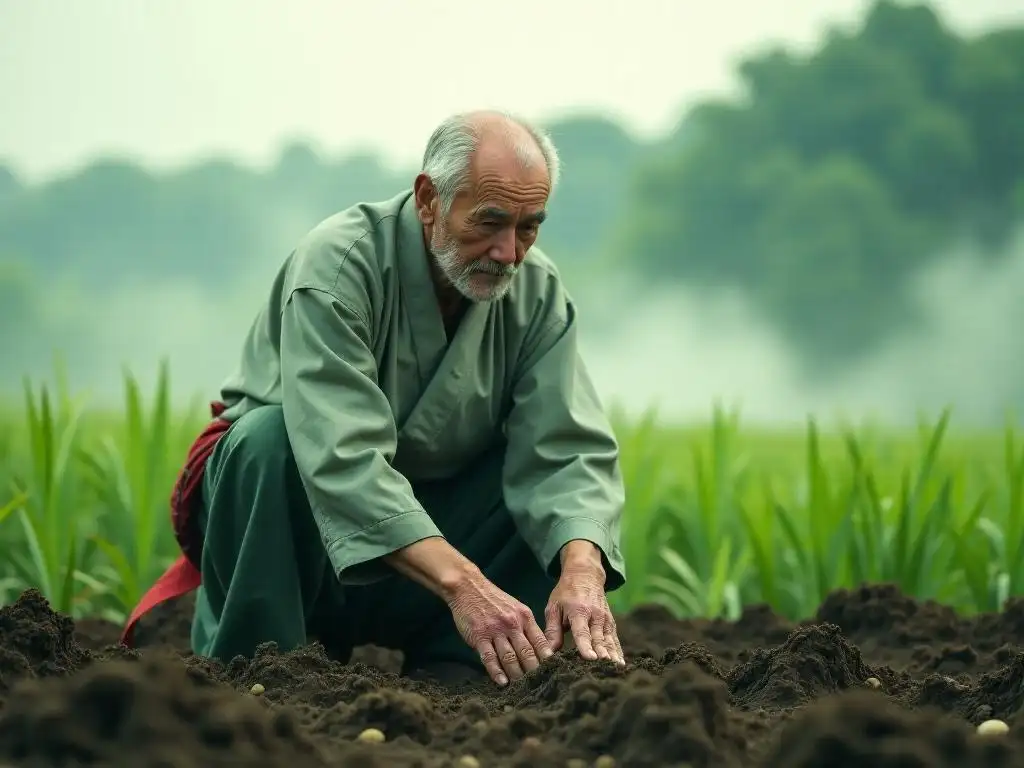
The philosophical views of feudal farming in Japan were deeply intertwined with the agricultural practices of the time. Farming was not merely a means of survival; it was a way of life that was influenced by various philosophical schools, including Confucianism, Buddhism, and Shintoism. Each of these philosophies offered unique perspectives that shaped how farmers approached their work, their relationship with the land, and their community.
For instance, Confucianism emphasized the importance of harmony and hierarchical relationships within society. This led farmers to adopt practices that respected the land and the seasons, understanding that their labor was part of a larger cosmic order. This perspective encouraged the cultivation of crops that aligned with the seasonal cycles, fostering a deep respect for the natural world.
Additionally, the philosophy of Shintoism, which centers around the worship of kami (spirits) associated with natural elements, further influenced farming practices. Farmers often conducted rituals to appease these spirits, believing that their success depended on maintaining harmony with the environment. This interplay between philosophy and farming created a holistic view of agriculture, wherein spiritual beliefs directly impacted the practical aspects of farming.
How Philosophical Views Shaped Agricultural Techniques
The integration of philosophical perspectives into agricultural techniques is evident in various practices adopted by feudal Japanese farmers. One significant technique influenced by Confucian ideals was the implementation of crop rotation. This method, which involved alternating the types of crops planted in a particular field, was not only a practical response to soil depletion but also a reflection of the Confucian concept of balance and moderation.
Farmers believed that rotating crops would maintain soil fertility and prevent pest infestations, aligning their agricultural methods with the philosophical notion of sustaining the environment. This technique exemplifies how philosophical views directly influenced practical farming methods, demonstrating a commitment to both productivity and ecological balance.
Moreover, the adoption of terraced farming in hilly regions showcases another intersection between philosophy and agricultural practices. The careful construction of terraces required significant labor and foresight, reflecting a philosophical dedication to diligence and perseverance. By adapting to the landscape rather than altering it, farmers demonstrated a respect for nature that resonated with the Shinto belief in the sacredness of the earth.
The Influence of Philosophy on Crop Selection and Sustainability
Philosophical views also played a critical role in crop selection and sustainability during the feudal era. The teachings of Buddhism, particularly the emphasis on simplicity and mindfulness, encouraged farmers to choose crops that not only sustained them nutritionally but also aligned with their spiritual beliefs. Rice, for example, was more than just a staple food; it symbolized purity and was often associated with rituals and offerings.
Farmers practiced sustainable agriculture by selecting crops that thrived in their specific environment, often relying on indigenous species that required fewer resources. This practice was rooted in the philosophical understanding of interconnectedness within ecosystems, emphasizing the need to respect the natural balance. The careful selection of crops demonstrated a commitment to sustainability and long-term ecological health, which is a vital aspect of the philosophical views of feudal farming.
Additionally, the use of organic fertilizers, such as compost made from plant and animal waste, reveals how philosophical beliefs informed sustainable practices. Farmers recognized the importance of replenishing the soil's nutrients while minimizing harm to the environment, reflecting an ethical approach to farming that was intertwined with their philosophical outlook.
Ethical Considerations in Farming as a Way of Life
The ethical dimensions of farming in feudal Japan were heavily influenced by philosophical perspectives. Farmers often viewed their work as a form of stewardship over the land, guided by a moral obligation to care for their environment and community. This ethical framework was rooted in the understanding that their actions had repercussions not only for their immediate surroundings but also for future generations.
The concept of "mottainai," which expresses a sense of regret over waste, emerged as a guiding principle in farming practices. This philosophy encouraged farmers to value every resource, from seeds to water, and to utilize them efficiently and respectfully. They believed that wastefulness was not only an economic folly but also a moral failing, reinforcing the idea that ethical considerations were foundational to their way of life.
Moreover, community cooperation was a significant ethical aspect of farming. Farmers often engaged in collective activities, such as shared labor during harvests, which were informed by the Confucian values of reciprocity and social harmony. This collaborative spirit fostered strong community bonds and illustrated how philosophical views shaped the interpersonal dynamics of farming life.
The philosophical views of feudal farming provided a comprehensive framework that influenced agricultural techniques, crop selection, sustainability, and ethical considerations. This interplay between philosophy and farming practices reflects a rich cultural heritage that continues to resonate in contemporary discussions about agriculture and environmental stewardship.
Legacy of Feudal Farming Philosophies

The philosophies surrounding feudal farming in Japan have left an indelible mark on the practices and cultural attitudes towards agriculture. Rooted in a complex interplay of Confucianism, Buddhism, and Shinto beliefs, these philosophies emphasized harmony with nature, community spirit, and respect for the land. Farmers were not merely laborers; they were seen as stewards of the earth, holding a sacred responsibility to maintain balance and sustainability.
The concept of “Satoyama”, which refers to the sustainable use of rural landscapes, embodies the essence of feudal farming philosophies. This approach promotes a symbiotic relationship between agricultural practices and the natural environment, emphasizing biodiversity and the importance of traditional knowledge in farming. Such philosophies have transcended time, influencing modern agricultural practices and inspiring movements focused on sustainability and environmental protection.
The Enduring Influence of Feudal Farming Philosophies on Modern Agriculture
Today, the philosophical views of feudal farming continue to resonate within contemporary agricultural practices. Modern farmers draw upon traditional methods that prioritize ecological balance and community involvement. For instance, crop rotation and intercropping techniques, which were prevalent during the feudal era, are now being revisited for their efficacy in maintaining soil health and increasing yields.
Moreover, the concept of mottainai, a Japanese term expressing regret over waste, reflects the feudal emphasis on resourcefulness and respect for materials. This principle is increasingly relevant as modern agriculture grapples with challenges such as food waste and resource depletion. By embracing mottainai, farmers today are encouraged to minimize waste, recycle materials, and adopt holistic approaches to farming that honor the traditions of their ancestors.
| Feudal Farming Philosophy | Modern Practice |
|---|---|
| Harmony with nature | Sustainable farming methods |
| Community stewardship | Cooperative farming initiatives |
| Respect for resources | Zero-waste farming strategies |
Incorporating these values not only aids in preserving the environment but also fosters a sense of community among farmers, echoing the collaborative spirit of feudal Japan.
Lessons from Feudal Japanese Farmers for Contemporary Farming Practices
Feudal Japanese farmers faced numerous challenges, from natural disasters to economic fluctuations. Their philosophies provided frameworks for resilience and adaptability. One key lesson is the importance of local knowledge. Farmers relied on their understanding of the land's rhythms, weather patterns, and crop cycles, tailoring their practices to suit local conditions. This localized approach remains vital today as climate change presents new agricultural challenges.
Another significant lesson is the value placed on interconnectedness. Farmers were acutely aware of their role within a larger ecosystem, recognizing that their success depended not only on their efforts but also on the health of their community and environment. This perspective encourages modern farmers to engage in collaborative practices, fostering partnerships with local organizations and using agroecological strategies that support biodiversity.
Lastly, the emphasis on perseverance and patience in feudal farming reflects the necessity of long-term thinking in agriculture. Unlike quick-profit models, sustainable agriculture requires time and commitment to build soil health and ecosystem resilience. By adopting a similar mindset, contemporary farmers can cultivate systems that not only yield immediate benefits but also ensure the health of future generations.
The philosophical views of feudal farming provide valuable insights for today’s agricultural practices, advocating for a harmonious relationship with nature, community engagement, and a commitment to sustainability. As modern challenges mount, revisiting these time-honored philosophies may offer essential guidance for cultivating a more sustainable agricultural future.
Conclusion: The Philosophical Views of Feudal Farming as a Way of Life
The philosophical views of feudal farming in Japan encapsulated a profound connection between the land and the spirit of the community. Farmers were not merely laborers; they were custodians of tradition and nature, embodying a worldview that intricately linked their agricultural practices to broader philosophical doctrines. This perspective not only shaped their daily lives but also influenced the cultural and spiritual fabric of feudal Japan.
Reflection on the Cultural Significance of Agriculture in Feudal Japan
Agriculture in feudal Japan was more than a means of sustenance; it was a way of life steeped in cultural significance. The agrarian society revered rice cultivation, which was viewed as sacred, symbolizing prosperity and life. This reverence is reflected in various aspects:
- Spiritual Beliefs: Farmers engaged in rituals to honor the rice deity, Inari, and to ensure bountiful harvests. These practices underscored the belief that human effort must be harmonized with nature's cycles.
- Community Identity: The agricultural calendar dictated the rhythm of rural life, fostering a strong sense of community. Festivals and communal labor, such as planting and harvesting, reinforced social bonds and collective identity.
- Philosophical Underpinnings: Influenced by Confucianism and Shinto beliefs, farmers viewed their work as a moral duty. This perspective instilled a sense of honor and purpose in their labor, aligning everyday tasks with higher ethical standards.
The importance of agriculture was not just practical; it was existential, shaping the farmers' worldview and their place within the larger cosmos. The interplay of nature, spirituality, and community life created a rich tapestry that defined the essence of feudal Japanese farming.
The Intersection of Philosophy and Everyday Life for Farmers
Feudal Japanese farmers lived in a world where philosophy permeated their daily routines. The intersection of philosophical thought and agricultural practices created a unique lifestyle characterized by reflection and mindfulness. Key elements of this intersection included:
- Zen Buddhism: Farmers often adopted Zen principles, emphasizing simplicity, mindfulness, and harmony with nature. This approach transformed mundane farming tasks into acts of meditation, fostering a deep appreciation for the land.
- Confucian Ethics: The emphasis on filial piety and respect for hierarchy influenced farming communities. Farmers taught their children not only the techniques of cultivation but also the moral implications of their labor, ensuring the continuation of their philosophical legacy.
- Natural Cycles and Seasonal Rhythms: The philosophical views of nature as a living entity encouraged farmers to observe and respect seasonal changes. This awareness guided their agricultural practices, allowing them to work in harmony with the land rather than against it.
By intertwining philosophical beliefs with their daily lives, feudal farmers cultivated not only crops but also a profound understanding of their role in the universe. Their labor was infused with meaning, reflecting a deep respect for the land and a commitment to sustaining their community and heritage.
The philosophical views of feudal farming illuminate the intricate relationship between agriculture and the broader cultural and spiritual life of Japan, revealing how deeply interconnected these elements were in shaping the experience of farmers during this era.
Frequently Asked Questions
What were the primary philosophical views of feudal farming in Japan?
The philosophical views of feudal farming emphasized harmony with nature and the importance of community, reflecting the belief that agricultural practices were vital to societal well-being.
How did Buddhism influence feudal farmers' perspectives?
Buddhism introduced concepts of impermanence and interconnectedness, leading farmers to appreciate the spiritual significance of their work and the cycles of nature.
What role did Shinto beliefs play in agriculture during the feudal era?
Shinto beliefs fostered a deep respect for the land and its spirits, encouraging farmers to engage in rituals that honored nature and sought blessings for successful harvests.
The social hierarchy placed farmers lower than samurai and nobles, often leading to exploitation and limited rights, which influenced their philosophical outlook on life and labor.
What is the significance of community in feudal farming practices?
Community played a crucial role in feudal farming, as farmers relied on cooperation and shared resources to ensure survival, fostering a strong sense of solidarity and collective identity.
Final Reflection: Embracing the Philosophical Views of Feudal Farming
The philosophical views of feudal farming resonate profoundly in today's world, reminding us of the intrinsic connection between humanity and the land. As we navigate an era marked by rapid technological advancement and urbanization, the timeless wisdom of feudal Japanese farmers offers a poignant reminder of the values of sustainability, community, and respect for nature. Their practices and beliefs not only shaped their lives but also laid the groundwork for a harmonious existence that many of us seek to rediscover in our modern lives.
Cultivating a deeper understanding of these philosophical perspectives enriches our cultural and social landscape, urging us to reflect on our relationship with the environment. The teachings of feudal farmers emphasize the importance of balance and reciprocity with nature, principles that are increasingly relevant as we confront climate change and ecological degradation. To cultivate the land is to cultivate the spirit,
a sentiment that echoes through the ages, reminding us that our stewardship of the earth is intertwined with our personal and communal well-being.
As we conclude this exploration of feudal Japanese farming, I invite you to reflect on how these philosophical views can inspire your own life. Consider how you can incorporate the values of sustainability, community, and respect for nature into your daily practices. Whether through gardening, supporting local agriculture, or simply being more mindful of your consumption, each small action contributes to a larger movement towards a more harmonious existence with our planet. Embrace the lessons of the past to forge a brighter, more sustainable future.
Embrace the Harvest of Knowledge!
Thank you for exploring the rich tapestry of feudal Japanese farming and its philosophical underpinnings. You’ve uncovered insights that not only reflect a way of life but also inspire a deeper understanding of our connection to nature and tradition. Now, let's cultivate that knowledge further!
- Explore deeper! Dive into additional articles about feudal Japan’s agricultural practices to grasp their cultural and philosophical significance.
- Join the conversation! Share your thoughts and reflections on this topic in the comments below or connect with fellow history enthusiasts.
- Expand your horizons: Consider visiting a local farm or community garden to experience the principles of agrarian life firsthand!
Which aspect of feudal farming resonates most with you, and how can you apply those philosophies to enrich your modern life?