
Samurai and Agriculture: Cultivating Wealth in a Warrior Society


Welcome to Feudal Japan History, where we invite you to journey back in time to explore the intricate tapestry of Japan’s feudal era. In our featured article, “Samurai and Agriculture: Cultivating Wealth in a Warrior Society,” we delve into the unexpected relationship between the noble samurai and the vital practices of agriculture that sustained their warrior lifestyle. Discover how these formidable warriors balanced their martial prowess with the cultivation of the land, shaping not only their fate but that of an entire nation.
Curious about how agriculture fueled the ambitions of the samurai? Join us as we uncover the fascinating interplay of power and sustenance in this captivating period of history!
- Introduction to Samurai Agriculture in Feudal Japan
- The Historical Context of Samurai Agriculture
- The Interconnection Between Samurai and Agriculture
- Case Studies of Samurai Agriculture Practices
- Challenges Faced by Samurai in Agriculture
- The Legacy of Samurai Agriculture in Contemporary Japan
- Conclusion: The Role of Samurai Agriculture in Shaping Feudal Japan
-
Frequently Asked Questions
- What role did samurai play in agriculture during feudal Japan?
- How did samurai agriculture contribute to the Japanese economy?
- Were samurai involved in direct farming activities?
- What were the cultural attitudes toward agriculture among the samurai?
- How did changes in the samurai class affect agricultural practices?
- Final Reflection: The Enduring Legacy of Samurai Agriculture
- Cultivate Your Knowledge and Explore Further
Introduction to Samurai Agriculture in Feudal Japan
In the intricate tapestry of feudal Japan, the relationship between the samurai and agriculture was both complex and pivotal. While the samurai are often romanticized as fierce warriors engaged in the art of combat, their role within the socio-economic framework of the time extended far beyond the battlefield.
Understanding samurai agriculture in feudal Japan provides insight into how these elite warriors cultivated wealth, sustained their clans, and contributed to the broader economy. This article delves into the multifaceted relationship between samurai and agriculture, highlighting the essential role that farming played in supporting the samurai class and the feudal system as a whole.
Overview of the Samurai Class and Their Role in Society
The samurai were not merely soldiers; they were members of a distinct social class that embodied the values of loyalty, honor, and discipline. Emerging during the late Heian period (794-1185), the samurai became prominent as military leaders and landholders. Their societal structure was deeply intertwined with the land they controlled, which was often cultivated by peasant farmers.
- Hierarchy and Land Ownership:
- Samurai were vassals to powerful lords known as daimyo, who granted them land in exchange for military service.
- This land was often farmed by tenant farmers, who worked the fields and produced crops that supported both the samurai and the local economy.
- Cultural Significance:
- The samurai upheld a code of conduct known as Bushido, which stressed the importance of ethical behavior, even in their economic dealings.
- They were expected to protect their lands and the people who worked on them, creating a bond between the samurai and their agrarian subjects.
- Military Obligations:
- Agricultural productivity directly influenced the samurai's ability to maintain their military readiness.
- A prosperous agricultural base allowed samurai to equip themselves and their retainers for warfare, thereby reinforcing their status as protectors of their domains.
Importance of Agriculture in the Samurai Economy
Agriculture served as the backbone of the samurai economy, providing the resources necessary for both sustenance and wealth accumulation. The symbiotic relationship between samurai and agriculture can be summarized in several key aspects:
- Economic Foundation:
- Agricultural production, particularly rice cultivation, was the primary source of wealth and taxes for the samurai class.
- Rice was not only a staple food but also a currency in trade and taxation, making it central to the samurai's economic strategies.
- Feudal Obligations:
- Samurai were responsible for managing agricultural lands and ensuring that crops were cultivated efficiently.
- They collected taxes in the form of rice, which contributed to the stability of their households and the wider feudal system.
- Innovation and Adaptation:
- The samurai engaged in agricultural innovations, such as crop rotation and irrigation techniques, to enhance productivity.
- These advancements were crucial in periods of population growth and increased demand for food, allowing the samurai to maintain their status and power.
The exploration of samurai agriculture not only sheds light on the economic practices of feudal Japan but also illustrates how these practices were integral to the identity and sustainability of the samurai class. As we delve deeper into this topic, we will uncover the intricate dynamics that defined the relationship between warriors and the land they governed.
The Historical Context of Samurai Agriculture

The relationship between samurai and agriculture in feudal Japan is a complex tapestry woven through centuries of political, social, and economic change. Agriculture served not only as the backbone of the Japanese economy but also as a primary means through which the samurai class established their power and influence. Understanding this context is essential to grasp the significance of samurai agriculture in feudal Japan.
The Rise of the Samurai Class in Feudal Japan
The emergence of the samurai class can be traced back to the late Heian period (794-1185), a time characterized by the decline of imperial power and the rise of regional military leaders. As warfare became more prevalent, the need for skilled warriors grew, leading to the establishment of a distinct warrior class known as the samurai. This class was not only responsible for military duties but also became vital in the administration of land and resources.
The samurai's role in agriculture was multifaceted. Initially, many samurai were landowners who relied on peasant labor to cultivate their fields. This relationship was often hierarchical, with samurai serving as local lords (daimyō) who controlled agricultural production in their territories. In exchange for protection, the samurai would receive a portion of the harvest, creating a symbiotic relationship that benefited both parties.
Key Factors in the Rise of Samurai Agriculture:
- Land Ownership: The samurai gradually acquired lands, leading to increased agricultural production.
- Military Service: As protectors of their domains, samurai ensured the safety of agricultural workers, fostering stability.
- Political Power: The consolidation of power among samurai allowed for organized agricultural practices, enhancing productivity.
Agricultural Practices During the Heian and Kamakura Periods
During the Heian (794-1185) and Kamakura (1185-1333) periods, agriculture in Japan underwent significant developments influenced by the samurai class. The introduction of new farming techniques and crops played a crucial role in enhancing agricultural output.
Innovations in Agriculture:
- Rice Cultivation: Rice became the staple crop, with samurai focusing on its production as a means of wealth accumulation. The establishment of irrigation systems improved yields and allowed for more efficient farming.
- Crop Rotation: Farmers began to implement crop rotation methods, which helped maintain soil fertility and increase overall productivity. This was vital as the samurai sought to maximize their income from the land.
- Use of Tools: The adoption of advanced agricultural tools, such as the wooden plow, facilitated improved farming techniques, allowing for the cultivation of larger areas.
Moreover, the samurai's involvement in agriculture was not merely economic; it was also cultural. The practice of farming was viewed with honor, and samurai often engaged in land management and agricultural festivals, reinforcing their connection to the land and the people.
Transition of Samurai Roles in the Muromachi Period
The Muromachi period (1336-1573) marked a significant transition in the roles of samurai within the agricultural landscape of Japan. As the political structure stabilized under the Ashikaga shogunate, the samurai began to diversify their roles beyond strictly military functions.
Changes in Samurai Agriculture:
- Rise of the Merchant Class: The growth of commerce and trade led to the emergence of a wealthy merchant class. This shift altered the dynamics of land ownership and agricultural production, as merchants began to invest in land and agricultural enterprises.
- Land Reclamation: Many samurai became involved in land reclamation projects to increase agricultural output. This included the draining of swamps and the development of new farmland, reflecting a strategic adaptation to changing economic conditions.
- Shift to Administrative Roles: With the decline of feudal warfare, many samurai transitioned into bureaucratic roles, managing agricultural production and overseeing local economies, thus continuing their influence over agricultural practices.
The evolution of samurai agriculture in feudal Japan reflects the intricate interplay between military power, economic growth, and societal change. The importance of agriculture in sustaining the samurai class cannot be overstated, as it provided not only sustenance but also wealth and status within a warrior society. By examining these historical contexts, we gain a deeper understanding of how the samurai shaped and were shaped by the agricultural landscape of Japan.
The Interconnection Between Samurai and Agriculture

Land Ownership and the Samurai's Economic Power
During the feudal era of Japan, the samurai were not only warriors but also key players in the agricultural economy. Their relationship with land ownership played a crucial role in establishing their economic power. The samurai class was granted land by their lords, or daimyōs, in exchange for military service and loyalty. This land was typically farmed by peasants, who worked the fields to produce food and resources.
The daimyōs would allocate portions of their lands to samurai, who were responsible for the oversight of agricultural production. This system created a hierarchical structure where samurai benefited from the agricultural output without directly farming the land themselves. The economic power of the samurai was derived from:
- Taxation: Samurai collected taxes from the peasants, often in the form of rice, which was the main currency of the time. This practice ensured a steady flow of wealth to the samurai class.
- Wealth Accumulation: The more land a samurai controlled, the more wealth they could accumulate. This wealth was not only vital for maintaining their status but also for funding their military endeavors.
- Resource Management: By overseeing agricultural production, samurai could implement policies that maximized output and efficiency, further consolidating their economic strength.
This intricate relationship between land ownership and samurai authority highlights the interconnectedness of the warrior class and agriculture in feudal Japan.
The Role of Samurai in Agricultural Production
Samurai played a significant role in agricultural production, influencing both the management and methods of farming during feudal Japan. Although samurai were primarily known for their martial skills, many were deeply involved in the agricultural processes that sustained their livelihoods.
- Management: Samurai were responsible for managing the peasants who worked their lands. This included overseeing the planting and harvesting of crops, maintaining irrigation systems, and ensuring that the peasants fulfilled their obligations. Their authority often extended to resolving disputes among farmers and maintaining order in the agricultural community.
- Labor Participation: Some samurai directly participated in agricultural labor, especially during times of peace. This involvement demonstrated their commitment to their lands and helped build rapport with the local farming population, fostering a sense of loyalty among the peasants.
- Military Strategy: Agricultural prosperity was essential for sustaining military campaigns. Samurai understood that a well-fed army was crucial for success in battle. Therefore, they often implemented practices that ensured food security, which included crop rotation and diversification to reduce the risk of famine.
The active involvement of samurai in agricultural production not only bolstered their economic status but also reinforced their role as leaders in the local community, bridging the gap between warrior and farmer.
Innovations in Farming Techniques by Samurai
The samurai class contributed significantly to agricultural innovations during the feudal period, facilitating advancements that improved productivity and sustainability in farming. Their involvement brought about several notable changes:
- Irrigation Systems: Samurai invested in the development of sophisticated irrigation systems, which allowed for more efficient water management and the cultivation of rice in areas that were previously less fertile. This innovation led to increased yields and supported larger populations.
- Crop Rotation: Understanding the importance of soil health, samurai promoted crop rotation practices. By alternating different crops in the same field, they enhanced soil fertility and reduced the prevalence of pests and diseases, leading to more sustainable agricultural practices.
- Tools and Techniques: The introduction of new farming tools, such as the improved plow and rice transplanting methods, can be attributed to the samurai's influence. These tools increased efficiency and reduced the labor intensity of farming, enabling greater productivity.
- Education and Training: Samurai often took on the role of educators, sharing their knowledge and techniques with peasants. This transfer of knowledge helped to elevate agricultural practices across the regions they controlled.
Through these innovations, samurai not only fortified their economic power but also contributed to the overall advancement of agricultural practices in feudal Japan, ensuring a robust and resilient economy that sustained both their society and military endeavors.
Case Studies of Samurai Agriculture Practices

The intersection of samurai culture and agriculture in feudal Japan presents a fascinating study of how warrior clans not only engaged in military endeavors but also played a pivotal role in the agrarian economy. Two notable clans, the Takeda of Kai Province and the Uesugi of Echigo Province, exemplify the diverse agricultural practices employed by samurai and their impact on local communities.
The Takeda Clan of Kai Province
The Takeda clan, renowned for its military prowess, also significantly influenced agricultural development in Kai Province. Under the leadership of Takeda Shingen, the clan implemented various agricultural strategies to enhance productivity and support their military campaigns.
Agricultural Techniques Employed
The Takeda clan was known for adopting advanced agricultural techniques, such as:
- Terracing: To maximize arable land, the Takeda utilized terracing on hilly terrains, which reduced soil erosion and improved water retention.
- Crop Rotation: They practiced crop rotation to maintain soil fertility, alternating between rice and other crops like millet and barley.
- Irrigation Systems: The clan invested in sophisticated irrigation systems that ensured a steady water supply to their fields, increasing crop yields significantly.
These innovations not only catered to the needs of their soldiers but also contributed to the overall food security of the region.
Economic Impact on the Local Community
The agricultural advancements made by the Takeda clan had profound economic implications for the local community. By increasing productivity, they were able to:
- Support a Larger Population: Enhanced food production led to population growth in Kai Province as more people could be sustained.
- Generate Surplus: The surplus allowed the clan to trade with neighboring regions, fostering economic ties and enhancing wealth within the domain.
- Foster Loyalty: Providing food security improved the loyalty of the peasantry, as they felt supported by the clan's benevolent leadership.
This symbiotic relationship between samurai and farmers solidified the Takeda clan's power and influence in feudal Japan.
The Uesugi Clan of Echigo Province
The Uesugi clan, another prominent samurai family, operated in the fertile lands of Echigo Province. Their approach to agriculture was characterized by both traditional practices and innovations tailored to their geographic advantages.
Comparison of Agricultural Practices
The Uesugi clan's agricultural methods can be contrasted with those of the Takeda clan in several ways:
- Focus on Rice Cultivation: While both clans cultivated rice, the Uesugi placed a heavier emphasis on rice as a staple, employing techniques such as:
- Wet Rice Cultivation: Utilizing the abundant water supply from rivers to flood fields for rice paddies.
- Integrated Pest Management: Employing natural methods to control pests, minimizing the need for harmful chemicals.
- Community Involvement: The Uesugi encouraged communal farming practices, which not only increased productivity but also fostered a sense of community among the peasants.
Contributions to Feudal Japanese Economy
The agricultural practices of the Uesugi clan contributed significantly to the feudal Japanese economy by:
- Enhancing Trade Networks: Their rice surplus became a crucial trade commodity, establishing strong economic links between provinces and facilitating commerce.
- Supporting Military Campaigns: The wealth generated from agriculture allowed the Uesugi to fund military campaigns, enhancing their influence in the region.
- Cultural Development: By investing in agriculture, the Uesugi clan also patronized cultural activities, leading to a flourishing of arts and education in Echigo Province.
Through their agricultural endeavors, the Uesugi clan not only sustained their own power but also contributed to the broader economic landscape of feudal Japan, showcasing the integral role of samurai agriculture in shaping society.
Challenges Faced by Samurai in Agriculture
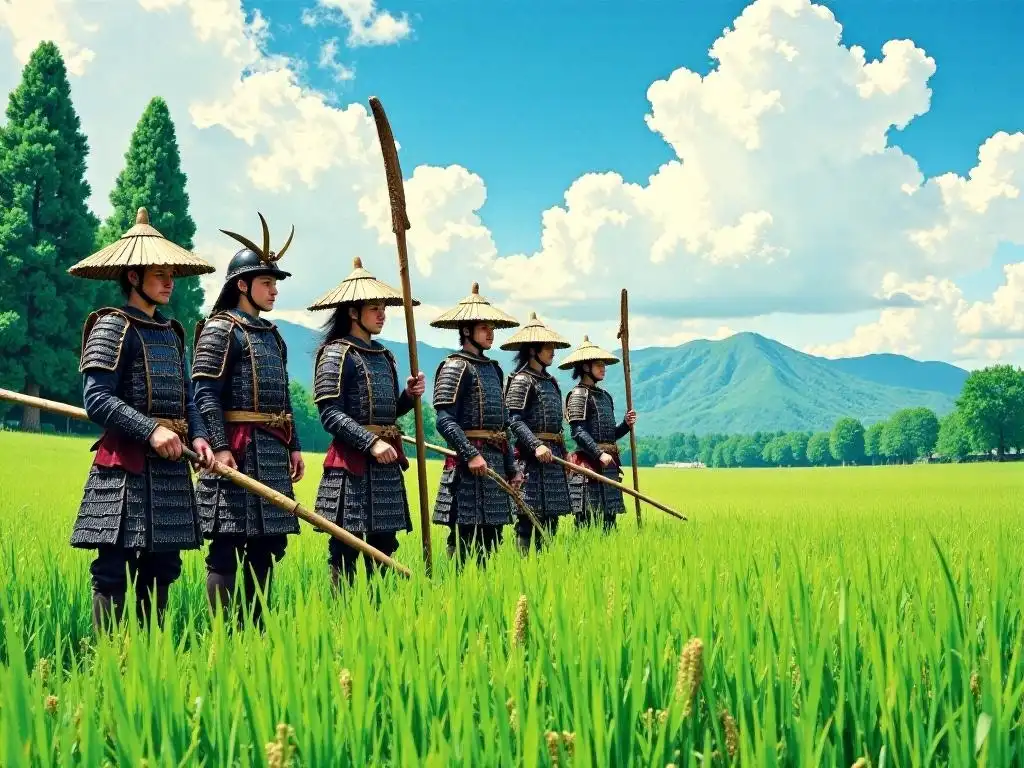
The relationship between samurai and agriculture in feudal Japan was complex and multifaceted. While samurai were primarily known as warriors, many were also landowners and had a vested interest in the agricultural productivity of their domains. However, this dual role came with significant challenges that could impact both their status and wealth.
Natural Disasters and Their Impact on Farming
Natural disasters posed a persistent threat to agricultural productivity in feudal Japan. The archipelago's geographical features made it susceptible to a variety of environmental challenges:
- Earthquakes: Japan is located on the Pacific Ring of Fire, which makes it prone to seismic activity. Major earthquakes could devastate farmland, destroy irrigation systems, and disrupt the livelihoods of farming communities.
- Typhoons: Seasonal typhoons could bring heavy rains and winds that not only damaged crops but also eroded soil and washed away seeds. For instance, the typhoon of 1777 destroyed extensive rice fields, leading to famines that directly affected samurai and their retainers.
- Droughts and Floods: Unpredictable weather patterns could lead to severe droughts or floods. A drought could cause crop failures, while flooding could submerge fields, rendering them unusable for extended periods. Historical records indicate that in the mid-1600s, a series of droughts led to widespread famine, affecting both the peasantry and the samurai class.
The consequences of these natural disasters were significant. They often led to food shortages, forcing samurai to reconsider their agricultural strategies and sometimes leading to increased taxation of their peasant tenants to cover losses. Furthermore, the inability to produce sufficient harvests could diminish a samurai's status, as a wealthy samurai's power was closely tied to the prosperity of their lands.
In addition to natural disasters, social and political factors played a crucial role in shaping agricultural production during the feudal era. Some key elements included:
- Feudal Obligations: Samurai were bound by a feudal system that dictated land ownership and the responsibilities of landholders. Many samurai had to balance their duties as warriors with the demands of managing agricultural production. This often led to conflicts of interest, as military campaigns could disrupt farming cycles.
- Taxation Policies: The taxation system imposed on peasantry often affected agricultural production. High taxes could lead to peasant unrest and reduced motivation to cultivate their fields effectively. Samurai had to navigate the fine line between extracting wealth from their lands and ensuring that their tenants remained productive and satisfied.
- Land Reforms and Policies: Changes in land ownership or policies, such as the introduction of new agricultural techniques, could also influence productivity. The Tokugawa shogunate, for instance, implemented land reforms that aimed to optimize agricultural output but sometimes resulted in challenges for samurai who were unaccustomed to new farming practices.
- Social Hierarchy and Labor: The rigid social hierarchy of feudal Japan meant that samurai often relied on peasant labor for agricultural work. Disruptions in this labor force—due to wars, uprisings, or social mobility—could significantly impact farming productivity.
Navigating these social and political factors required samurai to adopt strategies that often blurred the lines between their roles as warriors and landowners, ultimately shaping the agricultural landscape of feudal Japan. Balancing military duties with agricultural responsibilities was essential for maintaining their wealth and status within the warrior society.
The Legacy of Samurai Agriculture in Contemporary Japan

The agricultural practices of the samurai class during Japan's feudal era have left a profound legacy that continues to influence contemporary agricultural methods and cultural values. Samurai agriculture was not merely a means of sustenance; it embodied a complex relationship between the warrior class and the land, highlighting the interdependence of military and agricultural success. Understanding this legacy provides insight into how historical practices shape modern agricultural techniques and cultural significance.
Influence on Modern Agricultural Practices
The samurai's approach to agriculture introduced several techniques and philosophies that have been adapted and integrated into today's farming practices in Japan. Key elements include:
- Rice Cultivation Techniques: The samurai placed a high value on rice as a staple food and a symbol of wealth. Their methods of irrigation and crop rotation laid the groundwork for modern rice farming. Today, advanced techniques such as sustainable water management and integrated pest control can be traced back to these early practices.
- Land Management: Samurai were often responsible for managing vast tracts of land. This necessitated an understanding of soil health and crop diversity, principles that are foundational in modern organic farming. The emphasis on crop rotation and companion planting seen in contemporary practices were concepts that emerged during the samurai era.
- Community Involvement: The samurai often collaborated with peasants, fostering a sense of community responsibility towards land stewardship. In modern Japan, this tradition persists through community-supported agriculture (CSA) initiatives, where local farmers engage with urban consumers to promote sustainable practices.
- Use of Technology: Innovations in agricultural technology, such as mechanization and precision farming, can also be seen as a continuation of the samurai's quest for efficiency and productivity. The integration of modern tools reflects the same spirit of improvement that characterized samurai agriculture.
The transformation of these historical practices into modern techniques demonstrates the enduring impact of samurai agriculture on Japan's agricultural landscape.
Cultural Significance of Samurai Agriculture Today
The cultural significance of samurai agriculture extends beyond mere farming practices; it embodies values and traditions that resonate within contemporary Japanese society.
- Honor and Respect for the Land: The samurai's relationship with the land was rooted in a code of honor, emphasizing respect for nature. This ethos continues to influence modern Japanese culture, where sustainability and environmental stewardship are paramount. Initiatives that promote eco-friendly farming reflect this deep-seated respect for the natural world.
- Symbolism of Rice: Rice remains a powerful symbol in Japanese culture, representing prosperity and community. Festivals celebrating rice planting and harvest echo the rituals practiced by samurai farmers, preserving a connection to the past while reinforcing community ties.
- Culinary Heritage: The samurai's agricultural practices have also shaped Japan's culinary landscape. Traditional dishes that highlight locally sourced ingredients reflect the agricultural diversity nurtured by samurai farmers. This culinary heritage is celebrated in contemporary Japanese cuisine, emphasizing seasonal and regional specialties.
- Martial Values in Agriculture: The samurai's disciplined approach to farming is mirrored in modern agricultural practices that emphasize diligence, precision, and craftsmanship. This philosophy is evident in artisanal farming movements that prioritize quality over quantity, akin to the samurai's pursuit of excellence in their martial skills.
The legacy of samurai agriculture is a vital thread in the fabric of contemporary Japan. It influences modern agricultural practices and enriches cultural values, illustrating the enduring connection between the land and the people who cultivate it. As Japan continues to navigate the challenges of modern agriculture, these historical roots provide a framework for sustainable development and cultural continuity.
Conclusion: The Role of Samurai Agriculture in Shaping Feudal Japan
Summary of Key Points
The relationship between samurai and agriculture in feudal Japan is multifaceted and significant. Here are the key points that encapsulate this intricate dynamic:
- Dual Role of Samurai: Samurai were not only warriors but also landowners and agricultural overseers. Their responsibilities extended beyond the battlefield, as they played a crucial role in managing the agricultural output of their domains.
- Economic Foundations: The wealth of the samurai class was heavily reliant on agricultural production. Rice, the staple crop, was not just a food source but also a form of currency, influencing trade and taxation systems.
- Land Management: Samurai implemented innovative farming techniques and land management strategies. They encouraged agricultural advancements, such as irrigation systems, crop rotation, and the introduction of new crop varieties, which significantly enhanced productivity.
- Social Structures: The samurai's involvement in agriculture helped shape feudal Japan's social hierarchy. Peasants worked the land under the protection of samurai, creating a symbiotic relationship where both classes relied on each other for prosperity.
- Cultural Significance: Agricultural festivals and rituals were integral to samurai culture, reflecting the deep connection between the warrior class and the land. This cultural aspect highlights the importance of agriculture in shaping societal values and traditions.
Reflection on the Economic Impact of Samurai Agriculture in Historical Context
The economic impact of samurai agriculture in feudal Japan cannot be overstated.
- Wealth Generation: Samurai agriculture was the backbone of the feudal economy. The productivity of the lands owned by samurai directly influenced their wealth and status. Successful harvests meant greater resources for the samurai to maintain their warrior status, fund military campaigns, and support their retainers.
- Stability and Control: By overseeing agricultural production, samurai ensured a degree of stability in their domains. A well-managed agricultural system lessened the likelihood of famine, which could lead to social unrest and rebellion. This stability allowed samurai to focus on their military duties without the constant threat of peasant uprisings.
- Taxation and Revenue: The collection of rice as a tax from peasant farmers was a primary source of revenue for samurai. This taxation system established a direct economic relationship between the samurai and the peasantry, where agricultural yield dictated the wealth and power of the warrior class.
- Long-Term Effects: The practices and policies established during the samurai era influenced Japan’s agricultural landscape for centuries. The innovations in farming techniques and land management laid the groundwork for modern agricultural practices in Japan.
The interplay between samurai and agriculture in feudal Japan illustrates a complex relationship that underpinned the economic, social, and cultural fabric of the era. Understanding this relationship provides valuable insights into how the samurai class not only wielded power through martial prowess but also cultivated wealth and stability through their stewardship of the land.
Frequently Asked Questions
What role did samurai play in agriculture during feudal Japan?
Samurai were not only warriors but also landowners who managed agricultural lands. Their involvement in agriculture was crucial for sustaining their wealth and power.
How did samurai agriculture contribute to the Japanese economy?
Samurai agriculture provided essential resources and food security for their clans, thereby supporting the feudal economy and ensuring stability within their domains.
Were samurai involved in direct farming activities?
While samurai primarily focused on military duties, many participated in farming activities to oversee production and ensure the profitability of their lands, often employing peasants to assist them.
What were the cultural attitudes toward agriculture among the samurai?
Agriculture was often seen as a noble pursuit by samurai, reflecting their connection to the land and the importance of self-sufficiency in maintaining honor and status.
How did changes in the samurai class affect agricultural practices?
As the samurai class evolved, especially during the Edo period, their roles in agriculture shifted, leading to increased commercialization and the rise of market-oriented farming practices.
Final Reflection: The Enduring Legacy of Samurai Agriculture
Samurai agriculture in feudal Japan is not merely a historical footnote; it is a testament to the intricate relationship between warrior culture and agrarian life that shaped a society. Today, as we navigate the complexities of modern life, the lessons drawn from this unique fusion of martial prowess and agricultural stewardship resonate deeply. The samurai's commitment to land and cultivation reminds us that true strength lies not only in battle but also in nurturing and sustaining our communities.
Samurai agriculture has left an indelible mark on Japan's cultural and social landscape, illustrating the profound interconnectedness of honor, duty, and sustenance. The dual role of the samurai as both warriors and farmers highlights a remarkable balance that is often overlooked in contemporary discussions about societal roles. The wisdom of the samurai is encapsulated in the words of the famous Japanese philosopher, D.T. Suzuki: The true warrior is not one who fights, but one who cultivates.
This perspective invites us to reconsider our definitions of strength and success in today's world, where nurturing relationships and environments is just as vital as achieving personal victories.
As we reflect on the legacy of samurai agriculture, I encourage you to consider how you can cultivate your own "fields"—whether they be in your personal life, community, or professional endeavors. Embrace the spirit of the samurai by nurturing your passions and relationships, understanding that the wealth of a society is measured not just in material gain but in the richness of its connections and the care it extends to its members. Let us honor the lessons of the past and strive to cultivate a future where strength and compassion go hand in hand.
Cultivate Your Knowledge and Explore Further
Thank you for taking the time to dive into the intersection of samurai culture and agriculture! You’ve uncovered how these elements not only shaped a warrior society but also laid the groundwork for its wealth and stability. Now, it’s time to transform that knowledge into action!
Here are a few ways you can continue your journey:
- Explore Local Japanese Gardens: Visit a Japanese garden near you to experience the tranquility and beauty inspired by samurai aesthetics firsthand.
- Share Your Insights: Discuss what you learned with friends or on social media—spreading knowledge strengthens our community.
- Delve Deeper: Pick up a book or watch a documentary about feudal Japan to gain a more profound understanding of how these dynamics influenced modern society.
What aspect of samurai life or agricultural practice fascinates you the most, and how would you like to explore it further?