
The Naval Legacy of the Edo Period: Peace and Sea Trade

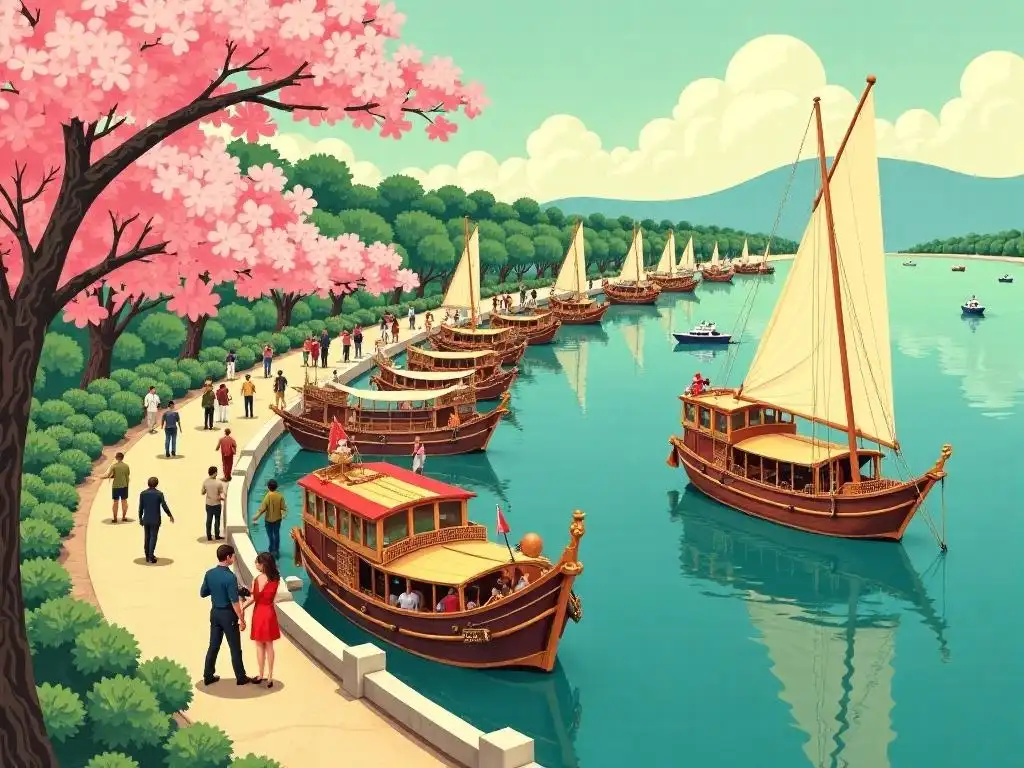
Welcome to Feudal Japan History, your gateway to the fascinating world of Japan's feudal era! Prepare to dive deep into the Edo period naval trade history, where the tranquility of peace gave rise to a vibrant maritime economy. Discover how the confluence of culture, society, and military strategy shaped this pivotal time, and learn how the seas became a dynamic arena for trade and diplomacy. As you navigate through our expert-driven articles, an intriguing legacy awaits—uncover the secrets behind Japan's naval prowess and its lasting impact on the modern age. Join us on this voyage of discovery!
The Edo period, spanning from 1603 to 1868, marks a significant era in Japan's history characterized by relative peace, stability, and isolation under the Tokugawa shogunate. This period saw the remarkable evolution of Japan's naval trade, which played a crucial role in shaping not only the economy but also cultural exchanges with neighboring countries and beyond. The Edo period naval trade history is not merely about maritime endeavors; it encapsulates the intricate relationships forged through commerce, diplomacy, and cultural interactions.
As Japan turned inward and limited foreign influence, the naval strategies employed during this time were pivotal in maintaining peace and ensuring the prosperity of the archipelago. In this article, we will delve into the complexities of naval trade during the Edo period, exploring how it influenced Japan's societal structure, economy, and its lasting naval legacy.
Overview of the Edo Period
The Edo period was marked by the establishment of a centralized feudal system that allowed for stability and growth in Japan. Under the rule of the Tokugawa clan, the shogunate implemented policies that controlled trade, leading to significant developments in naval operations.
- Political Stability: The unification of Japan under Tokugawa Ieyasu initiated a long-lasting peace known as the Pax Tokugawa, reducing the frequency of internal conflicts and allowing for the growth of commerce.
- Economic Growth: With peace came prosperity. The Edo period witnessed a surge in urbanization and the rise of a merchant class, which shifted the dynamics of trade. Major cities like Edo (now Tokyo) became bustling centers of commerce.
- Cultural Flourishing: The stability of the era allowed for the flourishing of arts, literature, and culture, which were often intertwined with trade practices. The establishment of the ukiyo-e (floating world) prints depicted scenes of daily life, including maritime activities.
The naval trade during the Edo period was crucial for sustaining these developments. As we explore the intricacies of this topic, we will uncover how the maritime strategies and trade routes established during this time laid the foundation for Japan's naval legacy and influenced its interactions with the world.
The Edo period, spanning from 1603 to 1868, was marked by a notable peace known as the Pax Tokugawa, which significantly influenced naval trade. The absence of major military conflicts allowed Japan to focus on economic stability and development, with maritime activities emerging as a cornerstone of commerce. Naval trade during this era was not only vital for economic prosperity but also played a crucial role in cultural exchanges and international relations.
Japan's geographic isolation, enforced by the sakoku policy, limited foreign interactions primarily to specific Dutch and Chinese merchants. Nonetheless, this controlled engagement fostered a unique maritime culture, leading to a thriving trade network that connected various regions within Japan and with select foreign entities. The significance of naval trade during the Edo period can be summarized as follows:
- Economic Growth: The trade routes facilitated the flow of goods, contributing to the prosperity of coastal cities.
- Resource Distribution: Naval trade allowed for the redistribution of resources, such as rice, textiles, and metals, from surplus regions to areas with shortages.
- Cultural Exchange: The interactions with foreign traders introduced new ideas, technologies, and cultural practices, enriching Japanese society.
Economic Impact of Sea Trade on Japan
The economic impact of sea trade during the Edo period was profound, leading to a transformation in Japan's economic landscape. The flourishing maritime trade networks enabled the circulation of goods across the archipelago and beyond, significantly contributing to the overall wealth of the nation. Key aspects of this economic impact include:
- Increased Wealth: Coastal cities like Nagasaki and Osaka became bustling trade hubs, accumulating wealth through the exchange of local and foreign products.
- Agricultural Development: The demand for agricultural products, particularly rice, was stimulated by trade, leading to advancements in farming techniques and increased productivity.
- Emergence of Merchant Class: A new merchant class rose to prominence, gaining economic power and influencing local politics, which gradually shifted the social hierarchy of Japan.
Cultural Exchange through Naval Commerce
Naval commerce during the Edo period served as a conduit for cultural exchange, allowing for the flow of ideas, art, and technology between Japan and the outside world. The controlled interaction with foreign traders created a unique blend of local and foreign influences, which had lasting effects on Japanese culture. Key elements of this cultural exchange include:
- Introduction of New Ideas: Foreign merchants brought with them various ideas, including Western scientific concepts and trade practices that enriched Japanese knowledge.
- Artistic Influences: The influx of foreign goods and art forms, such as textiles and ceramics, inspired local artisans, leading to new artistic styles and techniques.
- Culinary Exchange: Naval trade also facilitated the introduction of new ingredients and culinary practices, contributing to the evolution of Japanese cuisine.
The Edo period saw significant advancements in naval technology that enhanced maritime trade and navigation. These developments were driven by the need for more efficient vessels capable of handling increased trade volumes and ensuring safe passage across the seas. The evolution of naval technology can be categorized into two primary areas: shipbuilding and navigation.
Innovations in Shipbuilding Techniques
Shipbuilding in the Edo period underwent considerable innovation, resulting in the creation of larger and more resilient vessels that could withstand the rigors of sea trade. Notable advancements included:
- Design Improvements: The introduction of the "sankin-kōtai" system, where feudal lords were required to travel to Edo, necessitated the construction of larger ships to accommodate the transport of goods and retainers.
- Use of Local Materials: Shipbuilders increasingly utilized regional timber and materials, optimizing durability while reducing costs associated with imports.
- Enhanced Sailing Techniques: The incorporation of advanced rigging systems allowed for better maneuverability and speed, facilitating longer voyages and safer navigation.
The Role of Navigation Tools in Sea Trade
The development of navigation tools during the Edo period played a crucial role in enhancing the efficiency and safety of maritime trade. As trade routes expanded, the need for reliable navigation became paramount. Key navigation tools and practices included:
- Use of Compasses: The introduction of magnetic compasses improved navigational accuracy, enabling sailors to chart more precise courses across open waters.
- Astrolabes and Sextants: These tools allowed for celestial navigation, helping sailors determine their latitude and longitude, which was essential for long-distance voyages.
- Coastal Charts: The creation of detailed coastal maps provided vital information for safe navigation, reducing the risks associated with treacherous waters and unknown territories.
Through these innovations in shipbuilding and navigation, the Edo period established a robust maritime infrastructure that supported the thriving naval trade, ultimately leaving a lasting legacy in Japan's history.
The Edo period (1603-1868) is often characterized as a time of peace and stability in Japan, primarily due to the strong governance of the Tokugawa Shogunate. This era followed a long period of civil wars and political turmoil, which had left the country fragmented and vulnerable. The establishment of a centralized feudal system under the Shogunate not only brought order but also created an environment conducive to economic growth and maritime trade.
With the absence of war, resources that would have been allocated to military endeavors were redirected towards developing infrastructure, including ports and shipbuilding capabilities. The Tokugawa regime encouraged maritime activities, recognizing the importance of trade for national prosperity. This emphasis on peace allowed for the establishment of reliable trade networks, both domestically among the islands and internationally with neighboring countries.
Moreover, the peaceful era facilitated cultural exchanges through trade, which enriched Japan's cultural landscape. A flourishing maritime trade industry emerged, significantly impacting the economy and society. As a result, the Edo period stands as a unique chapter in Japan's history, where naval trade flourished, and the nation's maritime legacy began to take shape.
The Role of the Tokugawa Shogunate in Maritime Policies
The Tokugawa Shogunate played a crucial role in shaping Japan's maritime policies during the Edo period. Under Tokugawa Ieyasu, the first shogun, the Shogunate sought to establish control over the seas to protect Japan's interests and maintain peace. This control was evident in the formulation of regulations governing maritime trade, which aimed to promote economic growth while minimizing conflict.
One of the significant policies was the Sakoku, or "closed country" policy, which limited foreign influence and interaction. Although it restricted direct foreign trade, it did not eliminate it entirely. The Shogunate designated specific ports, such as Nagasaki, as trading hubs, where select foreign merchants, primarily from the Netherlands and China, were allowed to engage in commerce. This approach enabled Japan to benefit from foreign trade while maintaining a degree of sovereignty.
The Tokugawa Shogunate also supported the development of a merchant marine, encouraging shipbuilding and navigation skills among the Japanese. This not only facilitated domestic trade but also empowered Japanese merchants to engage in international trade effectively. Through strategic policies, the Tokugawa Shogunate laid the groundwork for Japan's naval trade history, balancing economic interests with national security.
Impact of Peace on Trade Routes and Maritime Security
The peace established during the Edo period had a profound impact on trade routes and maritime security. With the absence of internal conflict, merchants could travel safely across the seas, fostering a robust network of trade routes that connected Japan with the rest of Asia. The Shogunate's efforts to maintain order extended to maritime security, which was crucial for protecting merchant vessels from piracy and other threats.
To ensure safe passage, the Tokugawa government implemented strict regulations on maritime activities. This included the establishment of patrols and the construction of fortified ports, which served as safe havens for ships. The promotion of a stable maritime environment not only contributed to the growth of trade but also attracted foreign merchants eager to engage with Japan.
Additionally, the peace of the Edo period allowed for the development of trade routes to flourish. Notable routes emerged, linking Japan to key trading partners and facilitating the exchange of goods such as silk, spices, and ceramics. The overall security provided by the Tokugawa Shogunate reinforced the importance of these trade routes, showcasing the interconnectedness of maritime security and economic prosperity during this era.
During the Edo period, Japan established itself as a significant player in regional trade, forming relationships with various countries and utilizing key maritime routes. The era was marked by a selective engagement with the outside world, focusing on strategic trade partnerships that benefited Japan's economy while preserving its cultural integrity.
Key Countries Involved in Trade with Japan
Several countries played pivotal roles in Japan's naval trade during the Edo period. The most notable trading partners included:
- The Netherlands: As Japan's primary European trading partner, the Dutch were allowed to trade through Nagasaki. They facilitated the exchange of goods and knowledge, particularly in science and technology.
- China: Engaging with Japan through multiple ports, Chinese merchants exchanged silk, porcelain, and other goods, fostering a rich cultural and economic relationship.
- Korea: Trade with Korea was significant, focusing on agricultural products and textiles. The proximity of Korea made it a vital trading partner for Japan.
- Southeast Asian Countries: Nations such as Siam (Thailand) and the Philippines were also involved in trade, exchanging spices and other commodities that were highly valued in Japan.
These countries contributed to a diverse array of goods flowing into Japan, which stimulated local economies and enriched Japanese culture.
Notable Trade Routes and Their Significance
Several trade routes were crucial to the Edo period's naval trade history, each serving distinct purposes and contributing to economic growth. Notable routes included:
- The Nagasaki Route: This route served as the primary gateway for foreign trade, connecting Japan with the Netherlands and China. It was vital for the import of Western technology and cultural exchange.
- The Tsushima Route: Linking Japan to Korea, this route facilitated regular trade exchanges, allowing for the flow of agricultural products and textiles between the two nations.
- The Southeast Asian Route: Connecting Japan to various Southeast Asian nations, this route was essential for importing spices and luxury goods, enhancing Japan's culinary and cultural repertoire.
Each of these routes not only played a critical role in facilitating trade but also contributed to Japan's maritime legacy, showcasing the interconnectedness of nations during the Edo period and laying the foundations for future economic interactions.
During the Edo period (1603-1868), Japan experienced an unprecedented era of peace and stability, known as the Pax Tokugawa. This extended peace allowed for the flourishing of trade, particularly maritime trade, which played a crucial role in the economic landscape of the time. The merchant class, or chōnin, emerged as a vital force in naval trade, influencing both domestic and international commerce.
The chōnin were primarily urban dwellers who engaged in various trading activities, including shipping goods across the seas. Their role became increasingly significant as they not only facilitated the movement of goods but also contributed to the development of a robust market economy. The chōnin were instrumental in establishing trade routes, negotiating with foreign powers, and enhancing Japan's economic ties with neighboring countries. As a result, they helped create a vibrant maritime culture that would define the Edo period.
Emergence of the Chōnin and Their Influence
The emergence of the chōnin during the Edo period was a transformative development in Japan's social hierarchy. Traditionally, the samurai class held the highest status, but as trade expanded, the chōnin began to gain wealth and influence. This shift was particularly evident in cities such as Osaka and Edo (modern-day Tokyo), where merchants established themselves as powerful players in the economy.
The chōnin contributed to naval trade not only through their economic activities but also by fostering a sense of community and collaboration among merchants. They established networks that facilitated the exchange of goods and information, which proved invaluable for navigating the complexities of maritime trade. Additionally, the chōnin invested in ships and naval technology, further enhancing their ability to engage in long-distance trade.
Merchant Guilds and Their Impact on Trade Dynamics
Merchant guilds emerged as a crucial element in the structure of Edo period trade. These guilds, known as za, were formed by groups of merchants who banded together to protect their interests and regulate trade practices. They played a pivotal role in overseeing pricing, quality control, and dispute resolution, which contributed to the stability of trade within the region.
The influence of merchant guilds extended beyond mere regulation; they also acted as a bridge between the merchant class and the ruling samurai class. By fostering relationships with local authorities, guilds were able to secure favorable trade terms and protections for their members. This collaboration not only facilitated trade but also allowed the chōnin to exert political influence, further entrenching their position in Edo society.
The Edo period saw numerous successful naval trading ventures that exemplified the importance of maritime commerce in Japan's economy. These ventures not only contributed to the wealth of the merchant class but also reinforced Japan's position in the global trade network of the time.
Analysis of the Dutch East India Company's Trade with Japan
The Dutch East India Company (VOC) established a significant trading presence in Japan during the Edo period, primarily through its operations in Nagasaki. The VOC was the only European entity permitted to engage in trade with Japan, making it a crucial player in the country’s maritime trade landscape.
The Dutch traded various goods, including silk, spices, and textiles, while importing Japanese products such as silver, copper, and porcelain. This exchange not only enriched both parties economically but also facilitated cultural exchanges, introducing Western concepts and technologies to Japan. The relationship between the VOC and Japanese merchants exemplified the complexities of international trade during this era, highlighting the delicate balance of power and commerce.
Outcomes and Historical Significance of the Nagasaki Trade System
The Nagasaki trade system stands as a testament to the economic and cultural exchange that characterized the Edo period. As the sole port open to foreign trade, Nagasaki became a melting pot of ideas, goods, and cultures. The system operated under strict regulations, ensuring that trade remained controlled and beneficial to the Tokugawa shogunate.
The outcomes of the Nagasaki trade system were profound. It stimulated economic growth, particularly for the merchant class, and led to the development of new industries within Japan. Furthermore, the cultural impacts of this trade were significant, as Japan began to adopt and adapt foreign influences in art, science, and technology. The historical significance of the Nagasaki trade system lies in its role as a conduit for Japan’s integration into the global economy, paving the way for future interactions and exchanges in the modern era.
The Edo period, spanning from 1603 to 1868, was a time of relative peace in Japan, which allowed for the expansion of domestic and international trade. However, this era was not without its challenges, particularly in the realm of naval trade. Understanding these challenges provides insight into the complexities of maritime activities during this time.
Natural Disasters and Their Effects on Maritime Activities
Japan's geographical position makes it prone to a variety of natural disasters, significantly impacting naval trade. The occurrence of typhoons, earthquakes, and tsunamis posed substantial threats to shipping routes and port operations.
- Typhoons were particularly common in late summer and could disrupt trade by damaging vessels and ports. For example, the Great Ansei Earthquake of 1855 resulted in severe damage to coastal infrastructure, hindering trade routes and causing economic strain.
- Earthquakes not only caused immediate destruction but also triggered tsunamis, which could devastate coastal settlements and ports vital for trade.
- Seasonal Variability affected the timing and safety of voyages. Mariners had to carefully plan their journeys to avoid the tumultuous weather, which sometimes led to delays in the delivery of goods and disruption of trade schedules.
These natural adversities required trade operators to develop resilient strategies, such as improved shipbuilding techniques and better navigation practices. However, no amount of preparation could completely mitigate the risks posed by nature.
Piracy and Security Concerns in Sea Trade
Another significant challenge to Edo period naval trade was the threat of piracy. While the period was marked by relative peace, piracy often surged, particularly in the waters surrounding Japan and its trade routes.
- Pirate Groups emerged as a significant concern for merchants and the shogunate. Notably, the wako pirates, who were active during the earlier centuries, continued to pose threats even as the Edo period progressed. They often attacked merchant ships, seizing valuable cargo and instilling fear in traders.
- Security Measures were implemented to counter piracy, including the establishment of patrols and the fortification of coastal defenses. The shogunate sought to maintain control over trade routes and protect merchants from these threats.
- Impact on Trade: The fear of piracy often led traders to take longer, more circuitous routes, which increased shipping times and costs. Additionally, merchants had to invest in protective measures for their cargo, further straining their resources.
The combination of natural disasters and security concerns thus created a challenging environment for naval trade during the Edo period, forcing traders to adapt continuously in order to thrive.
Despite the flourishing trade that characterized the Edo period, several factors contributed to the decline of naval trade as the era progressed. Understanding these factors sheds light on the transition towards modernity in Japan.
Factors Leading to the Decline of Maritime Commerce
The decline of Edo period naval trade can be attributed to a variety of interrelated factors:
- Isolationist Policies: The Tokugawa shogunate's sakoku (closed country) policy restricted foreign interactions, limiting trade primarily to the Dutch and Chinese. This isolation led to stagnation in trade growth and a lack of diversification in trading partners.
- Economic Changes: As the economy began shifting towards a more land-based agricultural focus, the importance of maritime trade diminished. The rise of a merchant class and urbanization led to increased trade within Japan, but this often came at the expense of sea-based commerce.
- Technological Advances: The arrival of Western technology and naval tactics towards the end of the Edo period began to outdate traditional Japanese maritime practices. This transition led to a gradual decline in the effectiveness of indigenous naval operations.
These factors collectively contributed to the decline of Edo period naval trade, signaling a shift in Japan’s economic landscape.
Transition to Modernity: The End of the Edo Period
The end of the Edo period marked a significant turning point in Japanese history, with profound implications for naval trade:
- Commodore Perry's Arrival: In 1853, Commodore Matthew Perry's expedition to Japan prompted the country to open its ports to foreign trade. This event catalyzed the end of the isolationist policies that had defined the Edo period.
- Meiji Restoration: Following the fall of the Tokugawa shogunate in 1868, the Meiji Restoration ushered in a new era of modernization. This period saw the development of a more robust and modern navy, facilitating increased maritime trade on a global scale.
- Global Trade Networks: The transition to a modern economy allowed Japan to integrate into international trade networks, leading to a revival and expansion of maritime commerce that had been stifled during the Edo period.
The decline of Edo period naval trade and the transition to modernity marked the end of an era, paving the way for Japan to emerge as a significant player on the world stage.
The Edo period, spanning from 1603 to 1868, is characterized by a unique blend of peace, stability, and flourishing maritime trade. The naval trade practices that emerged during this era laid the groundwork for Japan's modern economic and cultural landscape. The establishment of the Tokugawa shogunate allowed for the growth of a structured trade network, which not only facilitated the exchange of goods but also fostered cultural interactions with foreign nations.
The legacy of this period is reflected in Japan's approach to maritime activities today. The emphasis on trade and the establishment of ports as centers for commerce has evolved, influencing Japan's contemporary role as a global economic powerhouse. Furthermore, the naval innovations and practices from the Edo period continue to shape Japan's maritime policies and industry standards, reinforcing the importance of naval history in understanding modern maritime dynamics.
Reflections on How Edo Naval Trade Influenced Modern Japan
The naval trade during the Edo period was pivotal in shaping Japan's international relations and economic practices. The focus on secure and structured trade routes helped establish Japan as a significant player in maritime commerce. This era saw the rise of port cities such as Nagasaki and Osaka, which became crucial nodes for trade, facilitating cultural and economic exchanges.
Modern Japan has inherited this legacy in various ways:
- Economic Structure: The principles of trade established during the Edo period laid the foundation for Japan's current economic framework, emphasizing the importance of maritime logistics and trade partnerships.
- Cultural Exchange: The interactions with foreign traders during the Edo period have evolved into Japan's modern approach to globalization, where cultural exchange remains a vital aspect of its identity.
- Naval Innovation: The advancements in shipbuilding and navigation during the Edo period have influenced contemporary maritime technologies, showcasing the importance of historical practices in modern innovations.
The Enduring Cultural and Economic Impact of the Edo Period on Contemporary Maritime Practices
The impact of the Edo period on contemporary maritime practices is profound and multifaceted. The era's focus on naval trade not only enriched Japan's economy but also fostered a unique maritime culture that persists today.
Key aspects of this enduring legacy include:
- Cultural Integration: The Edo period facilitated the exchange of ideas, goods, and traditions, which continues to influence modern Japanese culture. Maritime festivals and practices rooted in this era are still celebrated, reflecting the historical significance of the sea in Japanese life.
- Economic Framework: Contemporary Japan's economy still relies heavily on maritime trade, with shipping and logistics playing critical roles in its global trade strategy. The foundational practices from the Edo period have influenced current maritime regulations, trade agreements, and shipping routes.
- Environmental Stewardship: The Edo period's relationship with the sea has prompted a modern emphasis on sustainable fishing and maritime conservation practices, highlighting the importance of preserving Japan's rich maritime heritage.
The naval trade history of the Edo period has left an indelible mark on the cultural, economic, and maritime practices of contemporary Japan, reminding us of the profound interplay between history and modernity.
- Introduction to the Edo Period Naval Trade History
- Overview of the Edo Period
- Significance of Naval Trade in the Edo Period
- Development of Naval Technology During the Edo Period
- The Peaceful Era of the Edo Period and Its Influence on Naval Trade
- Major Trade Partners and Routes in Edo Period Naval Trade History
- The Role of the Merchant Class in Edo Period Naval Trade
- Case Studies of Successful Naval Trading Ventures
- Challenges Faced in Edo Period Naval Trade
- The Decline of Edo Period Naval Trade
- Conclusion: The Lasting Legacy of Edo Period Naval Trade History
Frequently Asked Questions
The Edo period (1603-1868) was marked by peaceful trade expansion, allowing Japan to engage in increased naval commerce with foreign nations, notably through ports like Nagasaki.
The peace established by the Tokugawa shogunate allowed for a stable environment that fostered economic growth and the flourishing of naval trade, leading to significant cultural exchanges.
What were the main trade goods during the Edo period?
Key trade goods included silk, ceramics, and spices, which were exchanged with foreign traders, enhancing Japan's economy and cultural diversity.
The Tokugawa shogunate implemented strict maritime policies that regulated foreign trade, promoting a unique balance of national security and economic interaction during the Edo period.
The legacy of Edo period naval trade continues to influence modern Japan, with historical practices shaping current maritime policies and trade relationships in a globalized world.
The naval legacy of the Edo period remains profoundly relevant today, as it exemplifies how peace can foster economic prosperity through maritime trade. In an era marked by globalization, the lessons learned from the Edo period's approach to naval trade history resonate with contemporary societies striving for balance between commerce and diplomacy. The intricate networks established during this time not only enriched Japan but also laid the groundwork for international relations that continue to influence global trade dynamics.
The impact of Edo period naval trade extends beyond mere historical significance; it has shaped cultural exchanges and social interactions that persist in modern times. The harmonious coexistence of various cultures facilitated by maritime routes during the Edo period serves as a testament to the power of trade in bridging divides. As the historian John W. Hall once said, Trade is not just an economic activity; it is a means of cultural exchange and understanding.
This observation underscores the importance of recognizing our shared histories and the role they play in fostering mutual respect and cooperation among nations.
As we reflect on the lessons of the Edo period, let us embrace the spirit of collaboration and peace that characterized its naval trade. I invite you to consider how you can apply these principles in your own life and community. Whether through promoting local businesses, engaging in cultural exchanges, or advocating for peaceful dialogue, each of us has the power to contribute to a legacy of understanding and prosperity. Together, we can honor the past while shaping a future that values the interconnectedness of our global society.
Unveil the Riches of Edo Era Maritime Mastery!
Thank you for diving into the fascinating world of Edo Period naval history! You've uncovered the allure of peace and sea trade that shaped Japan's cultural and economic landscape. Now, it’s time to take your passion for this intriguing era a step further.
Here are a few impactful actions you can take right now:
- Join a local maritime history group or an online community to connect with fellow enthusiasts and exchange insights.
- Explore related resources — seek out books, documentaries, or websites that delve deeper into Edo maritime practices to enhance your understanding.
- Share your thoughts and insights about the Edo Period in the comments below, sparking a discussion on its relevance in today’s world.
How does the legacy of the Edo Period's maritime practices inspire your view of modern trade and cultural exchange?