
The Forgotten Stories of Commodore Perry's Crew in Japan


Welcome to Feudal Japan History, where the rich tapestry of Japan's feudal era unfolds before your eyes. Dive deep into the forgotten stories of Commodore Perry's crew in Japan, a captivating exploration of how foreign relations forever altered the course of this ancient culture. What secrets did these sailors uncover in a land shrouded in tradition? As you journey through our expert-driven articles, prepare to challenge your perceptions of history and uncover the profound impact of these encounters. Join us in unraveling the intricate narratives that shaped a nation—your adventure begins now!
Exploring the lesser-known narratives surrounding Commodore Matthew Perry's expedition to Japan unveils a crucial chapter in the annals of both Japanese and American history. While Perry's arrival in 1853 is often highlighted for its diplomatic significance, the stories of the crew members who accompanied him are frequently overlooked.
These individuals played pivotal roles not only in the success of the mission but also in the broader context of U.S.-Japan relations during a transformative period. Their experiences offer valuable insights into the socio-cultural dynamics of the time, revealing how their interactions with Japanese society contributed to shaping perceptions and policies that would resonate long after their departure.
In this article, we will delve into the composition, roles, and personal backgrounds of Perry's crew, illuminating their contributions and the lasting impact of their journey on Japan's history.
Introduction to Commodore Perry’s Expedition
Overview of Commodore Perry's Mission
Commodore Matthew Perry's expedition to Japan marked a turning point in the country's isolationist policies, which had persisted for over two centuries. Commissioned by the U.S. government, Perry's mission aimed to open Japan to American trade and establish diplomatic ties. In July 1853, Perry arrived in Tokyo Bay with a fleet of four warships, known as the Black Ships due to their black hulls. This show of naval power was designed to impress upon the Japanese the importance of engaging with the outside world.
Significance of Perry’s Arrival in Japan
Perry's arrival in Japan not only initiated diplomatic relations between the United States and Japan but also catalyzed significant changes within Japan itself. The subsequent Treaty of Kanagawa in 1854 allowed for trade and the establishment of a U.S. consulate in Japan, effectively ending Japan's policy of seclusion. This momentous event set the stage for modernization and westernization in Japan, as it began to interact more extensively with foreign powers. The implications of Perry’s mission were profound, shaping Japan’s future and altering its trajectory on the global stage.
Keywords Highlight: Commodore Perry Japan history
Understanding the Commodore Perry Japan history is essential for grasping the complexities of foreign relations during this pivotal period. The expedition not only marked a significant shift in Japanese policy but also opened the floodgates for increased foreign influence that would ultimately lead to the Meiji Restoration and Japan's emergence as a world power.
The Crew Behind the Mission
Composition of Commodore Perry's Crew
Perry's crew was a diverse group consisting of sailors, diplomats, scientists, and photographers, each bringing a unique set of skills to the mission. The crew included around 300 men, ranging from seasoned naval officers to young apprentices. Among them were notable figures such as Lieutenant Edward W. Carpenter, who documented the expedition, and botanist Philip Franz von Siebold, who played a role in cultural exchanges.
Roles and Responsibilities of Crew Members
Each member of Perry's crew had distinct roles that contributed to the success of the mission. Officers were responsible for navigation and command, while sailors handled the ship operations. Scientists conducted studies of Japanese flora and fauna, and diplomats facilitated communications with Japanese officials. The collaboration among various crew members was crucial in presenting a united front during negotiations and fostering a spirit of inquiry.
Personal Backgrounds of Notable Crew Members
The backgrounds of Perry's crew members varied widely, reflecting a tapestry of American society. For instance, Lieutenant Carpenter came from a family of naval officers, while some crew members were drawn from humble beginnings, seeking opportunity and adventure. Their diverse experiences enriched the expedition, allowing them to engage with Japanese culture in meaningful ways, bridging the gap between two very different worlds.
In uncovering these forgotten stories, we gain a deeper understanding of the complexities of Commodore Perry's mission and the significant roles played by his crew in shaping the course of Japan's history.
Daily Life on Board the Ships
Life aboard the ships that made up Commodore Perry's fleet was marked by a strict regimen and unique challenges. The crew members of the USS Mississippi and the USS Powhatan experienced a lifestyle that was a blend of military discipline, maritime tradition, and the high stakes of international diplomacy. Understanding this daily life provides a clearer picture of the men who played a critical role in the opening of Japan to the West.
Living Conditions Aboard the USS Mississippi and USS Powhatan
The living conditions aboard the USS Mississippi and USS Powhatan were cramped and utilitarian. Crew members typically shared small quarters, which were often below deck, leading to limited personal space. The ships were designed for function rather than comfort, and many sailors had to sleep in hammocks, which swung with the ship's movements.
Sanitation was a constant concern; the ships lacked modern plumbing, and sailors had to manage waste disposal carefully to maintain health. Common ailments included scurvy, caused by a lack of fresh fruits and vegetables, and other diseases spread in the close quarters. Despite the hardships, the men developed camaraderie, forming bonds that would last through their voyage and beyond.
Daily Routines and Duties of Crew Members
The daily routine aboard the ships was structured around military discipline and maritime responsibilities. Crew members woke at dawn, often to the sound of a drum or a bell signaling the start of the day.
Duties varied by rank and role but typically included:
- Watchkeeping: Crew members took turns at the helm, monitoring the ship's direction and ensuring safety against navigational hazards.
- Maintenance: Regular upkeep was essential; this involved cleaning, repairing sails, and maintaining the ship's equipment.
- Drills and Training: Sailors participated in regular drills, which prepared them for potential combat scenarios or emergencies at sea.
- Cooking and Mess Duties: The preparation of meals was a communal effort, with specific crew members assigned to cook and serve food, often consisting of preserved meats, hardtack, and occasionally fresh produce when available.
Evenings allowed for some leisure, where sailors might share stories, play cards, or write letters home, providing a necessary respite from the rigors of their daily tasks.
Cultural Interactions with Japanese Society
As the expedition drew closer to Japan, the crew's interactions with local society began to unfold. Much of the crew's cultural exchange was limited and often mediated by interpreters. However, these interactions were pivotal in shaping the crew's understanding of Japan and vice versa.
The crew observed various aspects of Japanese life, from traditional garments to customs and practices. They noted the differences in social structure, etiquette, and daily activities, often taking mental notes or sketching scenes. Some crew members were even able to engage with Japanese locals, sharing stories and experiences, which helped to foster a sense of respect for Japanese culture, despite the prevailing views of superiority that characterized Western attitudes of the time.
The Journey to Japan: Challenges Faced
The journey to Japan was fraught with numerous challenges that tested the resolve and adaptability of Commodore Perry's crew. From navigational hazards to supply issues, each obstacle presented unique difficulties that required quick thinking and cooperation among the crew.
Navigational Obstacles Encountered
Navigating the waters leading to Japan was a complex task, compounded by the lack of detailed charts and the unpredictable nature of the sea. The crew faced various obstacles, including treacherous currents, fog, and rocky coastlines.
To combat these challenges, the ships relied on skilled navigators and the use of celestial navigation techniques. The crew utilized sextants and compasses to chart their course, but they also had to be prepared for unexpected weather changes, which could drastically alter their planned route.
Supplies and Resources: What They Brought to Japan
Preparing for the journey required meticulous planning regarding supplies and resources. The crew brought essential items to sustain them during the voyage, including:
- Food: Preserved meats, hardtack, beans, and rice were staples, supplemented by fresh provisions when possible.
- Medical Supplies: The ships carried a limited supply of medicines and surgical instruments to treat injuries and illnesses.
- Cultural Artifacts: Some crew members brought items representing American culture, which would later serve as points of interest during their interactions with the Japanese.
Despite careful planning, the long journey sometimes led to shortages, particularly of fresh food, which contributed to health issues among the crew.
Weather and Its Impact on the Expedition
Weather played a significant role in the expedition to Japan. The crew had to contend with storms, high winds, and changing sea conditions, which often delayed their progress. These weather challenges could be both dangerous and disheartening, leading to a sense of urgency as they approached their destination.
The crew was trained to respond to adverse weather conditions, but severe storms still posed risks, including damage to the ships and potential loss of life. The unpredictable nature of the sea served as a constant reminder of the vulnerability of their mission and the need for resilience in the face of adversity.
Through these challenges, the crew's determination and teamwork were essential for the successful completion of their journey, leading to the historic opening of Japan to Western influence.
First Impressions: Arrival in Japan
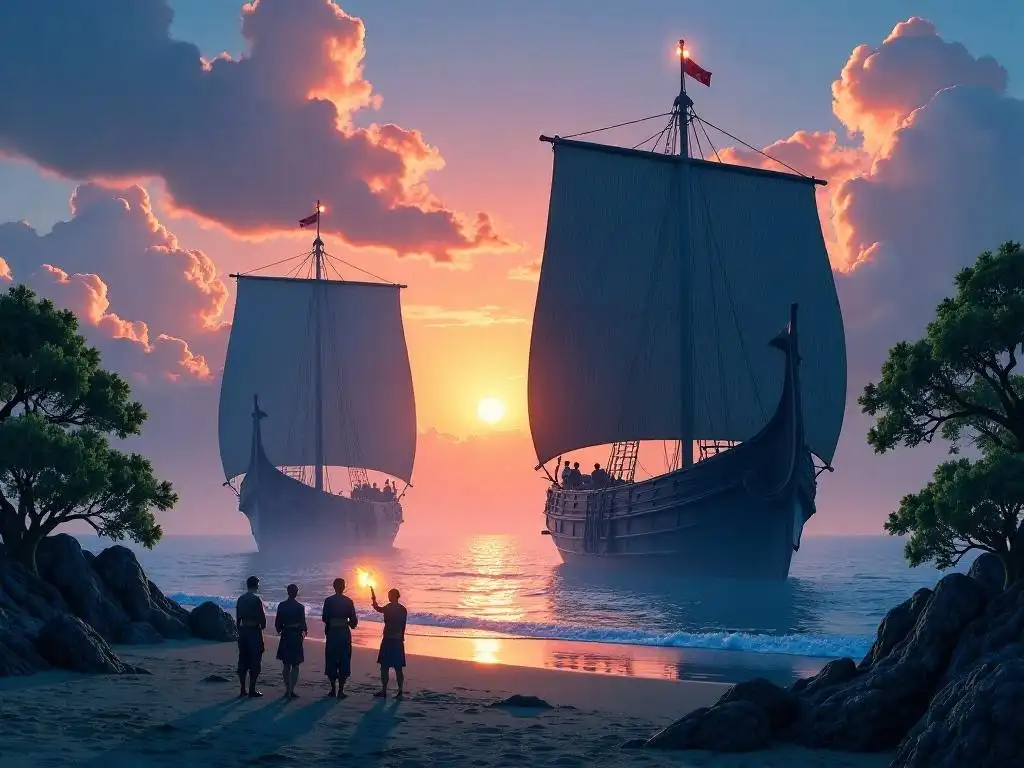
Commodore Matthew Perry's arrival in Japan in 1853 marked a pivotal moment in Japanese history, heralding the end of over two centuries of self-imposed isolation under the Tokugawa shogunate. As Perry's fleet approached the shores of Uraga, the crew's first impressions were a mixture of awe and curiosity. The sight of Japan's rugged coastline, dotted with traditional fishing villages, contrasted sharply with the modern naval ships they commanded. This juxtaposition of Western technology and Japanese tradition would frame their entire experience in this enigmatic land.
The moment they set foot on Japanese soil, the crew was immediately struck by the unfamiliar sights, sounds, and smells. The bustling activity of local fishermen, the vibrant colors of traditional clothing, and the intricate architecture of Japanese buildings captivated their senses. The crew's excitement was palpable, as they anticipated the adventure that lay ahead in a country that had remained largely untouched by the outside world.
Initial Encounters with Japanese Officials
Upon their arrival, Commodore Perry and his crew were met with a complex array of protocols and customs that governed Japanese society. Initial encounters with Japanese officials were marked by a blend of suspicion and curiosity. The Japanese were wary of the foreign presence, having heard tales of Western powers’ imperial ambitions. However, Perry’s insistence on diplomacy and respect for Japanese customs helped to set a more conciliatory tone.
In their first meetings, Perry sought to present himself not merely as a conqueror but as a representative of a nation eager to engage in trade and cultural exchange. Japanese officials, including the local daimyōs, were initially hesitant but intrigued by the technological advancements that Perry's ships represented. Their cautious engagement was a reflection of Japan’s broader struggle between tradition and the pressures of modernization.
Reactions of the Crew to Japanese Culture
The crew members of Commodore Perry were largely unprepared for the profound cultural differences they encountered. Many were fascinated by the intricate customs of daily life in Japan. From the politeness of the people to the meticulous attention to detail in art and cuisine, the crew members found themselves immersed in a culture that was both foreign and captivating.
Some crew members kept journals, detailing their observations of Japanese rituals, clothing, and social norms. They noted the significance of tea ceremonies and the beauty of traditional clothing, often expressing admiration for the craftsmanship involved. However, there were also moments of cultural clash, as some crew members struggled to reconcile their own values with those of the Japanese, leading to misunderstandings that sometimes strained interactions.
The Role of Interpreters in Communication
Effective communication was vital during Perry's mission, and interpreters played a crucial role in bridging the significant language barrier between the Americans and Japanese. Among the crew was a skilled interpreter, who had previously lived in Japan and possessed a deep understanding of both languages and cultures. His expertise not only facilitated negotiations but also helped diffuse tensions during misunderstandings.
The interpreters were responsible for conveying not just words, but also the nuances of intent and tone, which were essential in discussions surrounding trade and diplomacy. Their efforts often required sensitivity to Japanese customs, ensuring that the American crew's intentions were communicated respectfully. This role proved to be pivotal in fostering a degree of trust between the two parties, allowing for more productive dialogues.
The Negotiation Process
The negotiation process between Commodore Perry and Japanese officials was a complex interplay of diplomacy, strategy, and cultural sensitivity. Perry's objectives were clear: to secure a treaty that would open Japan to American trade, ensure the safety of shipwrecked sailors, and establish a formal relationship between the two nations.
Key Events During the Negotiations
Several key events punctuated the negotiation process, each contributing to the eventual signing of the Treaty of Kanagawa in 1854. One notable moment was the presentation of Perry's "black ships" as a demonstration of American naval power. The sight of steam-powered vessels was both awe-inspiring and intimidating, compelling Japanese officials to reconsider their isolationist stance.
Another significant event was the strategic use of gifts and cultural exchanges. Perry brought a variety of items, including scientific instruments and luxury goods, which showcased American ingenuity and wealth. These gestures were instrumental in winning the goodwill of Japanese officials, who were eager to understand the outside world while still safeguarding their own traditions.
Strategies Employed by Commodore Perry and His Crew
Perry's negotiation strategy was characterized by a blend of firmness and diplomacy. He understood the importance of presenting a strong front while also being respectful of Japanese customs. His approach included:
- Demonstrating Naval Power: The presence of his fleet served as a powerful reminder of the consequences of refusal.
- Cultural Sensitivity: Perry and his crew made efforts to understand and respect Japanese traditions, which helped in building rapport.
- Gradual Build-Up of Trust: By engaging in dialogue and showing willingness to listen, they fostered a more favorable negotiating environment.
Perry's ability to balance these strategies was crucial in navigating the challenges of cross-cultural negotiations.
Outcomes of the Negotiation: Treaties and Agreements
The culmination of the negotiation process was the signing of the Treaty of Kanagawa on March 31, 1854. This landmark agreement marked the end of Japan's isolationist policies, establishing formal diplomatic relations between Japan and the United States. The treaty allowed American ships to access two Japanese ports for trade, provided for the safe treatment of shipwrecked sailors, and set the stage for further interactions with Western powers.
The outcomes of these negotiations extended beyond mere trade agreements; they signified a transformative shift in Japan’s foreign relations and domestic policies. The opening of Japan to the West would ultimately lead to significant changes in Japanese society, culture, and its position on the global stage. The legacy of Perry's crew, through their interactions and experiences, remains a fascinating chapter in the broader narrative of Commodore Perry's Japan history.
Untold Stories of the Crew Members
The arrival of Commodore Perry in Japan in 1853 marked a significant turning point in the nation’s history, yet the stories of his crew members often remain overshadowed by the more prominent figures. These sailors and officers contributed unique experiences and perspectives that are essential for understanding the broader context of Perry's expedition. Many of them kept personal journals, chronicling their interactions with Japanese culture, customs, and society, which provide invaluable insight into this pivotal moment.
While historical accounts typically focus on Perry's negotiations and strategies, the crew members' day-to-day experiences reveal the human side of the mission. From the challenges of navigating unfamiliar waters to the awe of witnessing Japan’s rich traditions, these sailors faced a world that was both exotic and daunting. Their interactions with the local populace, often characterized by curiosity and mutual respect, helped to bridge the cultural divide between East and West.
Personal Accounts and Diaries of Crew Members
Many crew members documented their experiences through diaries and personal letters, which serve as a rich resource for historians. These writings often reflect a diverse array of sentiments, ranging from fascination to apprehension about Japanese society. For instance, Lieutenant John E. Montgomery recorded his impressions of Japanese hospitality, detailing meals with local dignitaries and the intricacies of traditional ceremonies.
Others, like Midshipman John W. Smith, expressed the challenges of adjusting to a vastly different culture, noting the linguistic barriers and misunderstandings that arose during interactions with the Japanese. Such accounts illustrate not only the individual experiences of the crew but also the broader themes of cultural exchange and misunderstanding that characterized the expedition.

The crew played a crucial role in the diplomatic negotiations that followed Perry’s arrival. Beyond their military duties, many crew members acted as translators, cultural liaisons, and even informal ambassadors. Their ability to communicate and connect with Japanese officials often proved vital in fostering a sense of goodwill and mutual respect.
For example, crew member James D. McMillan, who had a keen interest in botany, engaged Japanese scholars in discussions about local flora. These interactions not only showcased the crew's diverse talents but also helped establish an atmosphere of cooperation that was essential for the subsequent Treaty of Kanagawa in 1854. This treaty ultimately opened Japanese ports to American trade, signifying a foundational moment in U.S.-Japan relations.
Impact of Their Experiences on Future Relations with Japan
The experiences of Commodore Perry’s crew left a lasting impact on diplomatic relations between the United States and Japan. The crew members’ firsthand accounts influenced how American society viewed Japan, helping to shape public opinion and policy decisions in the years following the expedition.
As these sailors returned home, they shared their stories, sparking curiosity and interest in Japan. Their accounts contributed to a growing fascination with Japanese culture, which would later influence art, literature, and even fashion in the United States. Furthermore, their experiences laid the groundwork for future diplomatic missions and exchanges, highlighting the importance of personal narrative in international relations.
Aftermath of the Expedition
The aftermath of Perry’s expedition was marked by significant changes in Japan, propelled by the newfound interaction with Western powers. The country began to undergo a transformation from isolation to engagement with the global community, leading to a series of reforms known as the Meiji Restoration.
Changes in Japan Following Perry’s Arrival
Perry's arrival acted as a catalyst for Japan’s modernization. The pressure from the U.S. Navy and other Western nations forced Japan to reconsider its isolationist policies, leading to the opening of ports and the adoption of Western technologies and methodologies. The influx of foreign influence reshaped various aspects of Japanese society, from military organization to educational reforms.
Additionally, the introduction of Western ideas prompted a renaissance in Japanese arts and culture, as well as a re-evaluation of traditional practices. This period paved the way for Japan to emerge as a significant player on the world stage, ultimately leading to its transformation into a modern nation.
Long-term Effects on Commodore Perry’s Crew

The expedition had varied long-term effects on Perry’s crew members. Some returned to the United States with newfound perspectives that influenced their careers and personal lives. For instance, many crew members pursued further careers in naval service, utilizing their experiences in Japan to foster better relationships with other cultures.
Conversely, some crew members struggled to reintegrate into civilian life, as their experiences abroad had fundamentally altered their worldviews. The bonds formed during the expedition often led to lifelong friendships, and the shared stories of their time in Japan became a source of camaraderie among them.
Reflections on the Mission’s Legacy
The legacy of Commodore Perry's mission is multifaceted, encompassing not only the diplomatic outcomes but also the personal stories of his crew. Their experiences offer a deeper understanding of the complexities surrounding the U.S.-Japan relationship and highlight the importance of individual narratives in shaping historical events.
As historians continue to explore these untold stories, it becomes clear that the crew’s contributions were vital in forging the path toward mutual respect and cooperation between two distinct cultures. Their reflections serve as a reminder of the human elements inherent in diplomatic endeavors, emphasizing that history is often written by those who live it.
Conclusion
Commodore Perry's expedition to Japan in the mid-19th century marked a pivotal moment in both American and Japanese history. While much attention has been focused on Perry himself and his role in opening Japan to the West, the stories of his crew also deserve recognition. These men, who experienced a vastly different culture and environment, contributed to the significant events and transformations that followed Perry's arrival. Their narratives offer a rich tapestry of human experience, reflecting the complexities of cross-cultural encounters during a time of profound change.
Summary of Commodore Perry's Impact on Japan
Commodore Matthew Perry's arrival in Japan in 1853 not only opened the doors for trade but also ignited a series of social and political transformations that would ultimately lead to the Meiji Restoration. The forced opening of Japan to foreign relations shifted the nation from centuries of isolation to active engagement with the global community. Perry's influence extended beyond mere diplomacy; it catalyzed modernization efforts in Japan, impacting military, educational, and industrial advancements. These changes reshaped Japanese society and laid the groundwork for its emergence as a major world power in the 20th century.
The Importance of Remembering Crew Narratives
The narratives of Perry's crew members provide a unique perspective on the expedition and its aftermath. These sailors and officers faced not only the challenges of navigating uncharted waters but also the intricacies of cultural exchange in an unfamiliar land. By exploring their stories, we gain insight into the daily lives, struggles, and interactions these individuals had with the Japanese people.
Remembering their experiences enriches our understanding of this historical event and highlights the human element of international relations. It serves as a reminder that history is not solely defined by prominent figures but also by the collective experiences of those who accompany them.
Final Thoughts on Commodore Perry Japan history
In examining Commodore Perry's history in Japan, it is essential to approach the subject with a nuanced perspective that includes the contributions and experiences of his crew. Their stories are integral to understanding the broader implications of Perry's expedition and the intricate dynamics of early Western-Japanese relations. As we reflect on this period, we must appreciate how these intertwined narratives continue to shape Japan's ongoing journey through modernization and globalization. Commodore Perry's legacy, therefore, is not merely about opening Japan but also about the complex interplay of cultures that emerged from this significant encounter.
Additional Resources
Recommended Readings on Commodore Perry and Japan
For those interested in delving deeper into the history of Commodore Perry's expedition and its impact on Japan, several key texts provide thorough analyses and perspectives:
- "Commodore Perry in the Land of the Shogun" by Rhoda Blumberg - A detailed account of Perry's journey and its significance.
- "The Opening of Japan, 1853-1854" by John W. Dower - An exploration of the geopolitical context and implications of Perry's arrival.
- "Japan: A Modern History" by James L. McClain: - Offers a comprehensive overview of Japan's evolution from isolation to modernization, including Perry's role.
Documentaries and Films Related to the Expedition
Visual storytelling can provide additional layers of understanding regarding Perry's expedition. Notable documentaries and films include:
- "The Last Samurai" - While a fictional narrative, it explores themes of Western influence in Japan during the 19th century.
- "Perry's Expedition to Japan" - A documentary that chronicles the events leading up to and following Perry's arrival in Japan, featuring expert interviews and historical footage.
Historical Sites to Visit in Japan Related to Perry’s Arrival
Visitors to Japan can explore numerous historical sites that commemorate Commodore Perry's expedition:
- Yokohama - The port city where Perry's Black Ships first docked, featuring museums dedicated to this period.
- The Commodore Perry Memorial Park in Shimoda - A site dedicated to the arrival of Perry, complete with historical markers.
- The Kanagawa Prefectural Museum of Cultural History - Offers exhibitions on the foreign relations history of Japan, including the impact of Perry’s expedition.
These resources and sites allow for a richer understanding of Commodore Perry's influence on Japan and the broader implications of this historic moment.
- Introduction to Commodore Perry’s Expedition
- The Crew Behind the Mission
- Daily Life on Board the Ships
- The Journey to Japan: Challenges Faced
- First Impressions: Arrival in Japan
- The Negotiation Process
- Untold Stories of the Crew Members
- Personal Accounts and Diaries of Crew Members
- Uncovering Hidden Contributions to Diplomatic Relations
- Impact of Their Experiences on Future Relations with Japan
- Aftermath of the Expedition
- Changes in Japan Following Perry’s Arrival
- Long-term Effects on Commodore Perry’s Crew
- Reflections on the Mission’s Legacy
- Conclusion
- Additional Resources
- What was the significance of Commodore Perry in Japan's history?
- How did Commodore Perry's arrival impact Japanese society?
- What were some of the lesser-known stories of Commodore Perry's crew?
- How did the Japanese respond to Commodore Perry and his crew?
- What legacy did Commodore Perry leave on Japan's history?
Frequently Asked Questions
What was the significance of Commodore Perry in Japan's history?
Commodore Perry played a crucial role in opening Japan to the Western world in the mid-19th century, which marked the end of over 200 years of isolation.
How did Commodore Perry's arrival impact Japanese society?
Perry's arrival led to significant political and social changes, prompting Japan to modernize and adopt Western technologies and ideas, reshaping its future.
What were some of the lesser-known stories of Commodore Perry's crew?
The forgotten stories of Perry's crew include their interactions with local Japanese, cultural exchanges, and the challenges they faced during their time in Japan.
How did the Japanese respond to Commodore Perry and his crew?
The Japanese response was initially one of curiosity and concern, leading to complex negotiations and eventual agreements that changed Japan's foreign relations.
What legacy did Commodore Perry leave on Japan's history?
Perry's legacy includes the opening of Japan to international trade and influence, which ultimately led to the Meiji Restoration and Japan's emergence as a modern nation.
Final Reflection: Rediscovering the Voices of Commodore Perry's Crew
The stories of Commodore Perry's crew in Japan are not just historical footnotes; they are vital narratives that illuminate the complexities of cultural exchange and imperial ambition. As we navigate a world increasingly defined by globalization and cross-cultural interactions, understanding these forgotten tales becomes crucial in appreciating the nuances of our shared history. The experiences of Perry's crew remind us that history is not solely shaped by leaders and events, but also by the myriad voices that contribute to the larger narrative.
The impact of Commodore Perry's expedition extends far beyond the immediate political outcomes; it has woven itself into the fabric of cultural identity and memory in both Japan and the United States. The crew's interactions with Japanese society serve as a powerful reminder of the human connections that transcend borders. Their stories, often overshadowed by the grand narratives of diplomacy, invite us to reflect on the personal experiences that shape our understanding of history. History is not a mere collection of facts; it is the stories of those who lived it.
As we close this exploration of Commodore Perry's crew, I invite you to reflect on the importance of uncovering and sharing these lesser-known narratives in your own life. Consider how the stories of individuals around you—whether in your community or your family—can enrich your understanding of the world. By valuing these voices, we not only honor the past but also foster a deeper connection to the present and future, reminding ourselves that every story matters in the tapestry of history.
Unveil the Untold Tales of Commodore Perry’s Journey!
Thank you for exploring the fascinating stories of Commodore Perry's crew during their historic mission to Japan. We hope you found inspiration in these narratives that played a crucial role in shaping international relations. Now, it's time to take your newfound knowledge even further!
Here are some exciting actions you can take:
- Explore more: Delve deeper into the lives of individual crew members. Choose a story that resonated with you and seek out additional resources or biographies.
- Share your thoughts: Engage in discussions about these untold tales with friends or family. Ignite a conversation about how these events have influenced modern Japan.
- Join our community: Connect with fellow history enthusiasts and share your insights on our forum! Contribute your own perspective on how Commodore Perry's mission has shaped cultural exchanges.
Which story or fact about Commodore Perry’s crew surprised you the most, and how do you think it relates to today's global interactions?