
The Dawn of Interactions: How Japan First Encountered the West

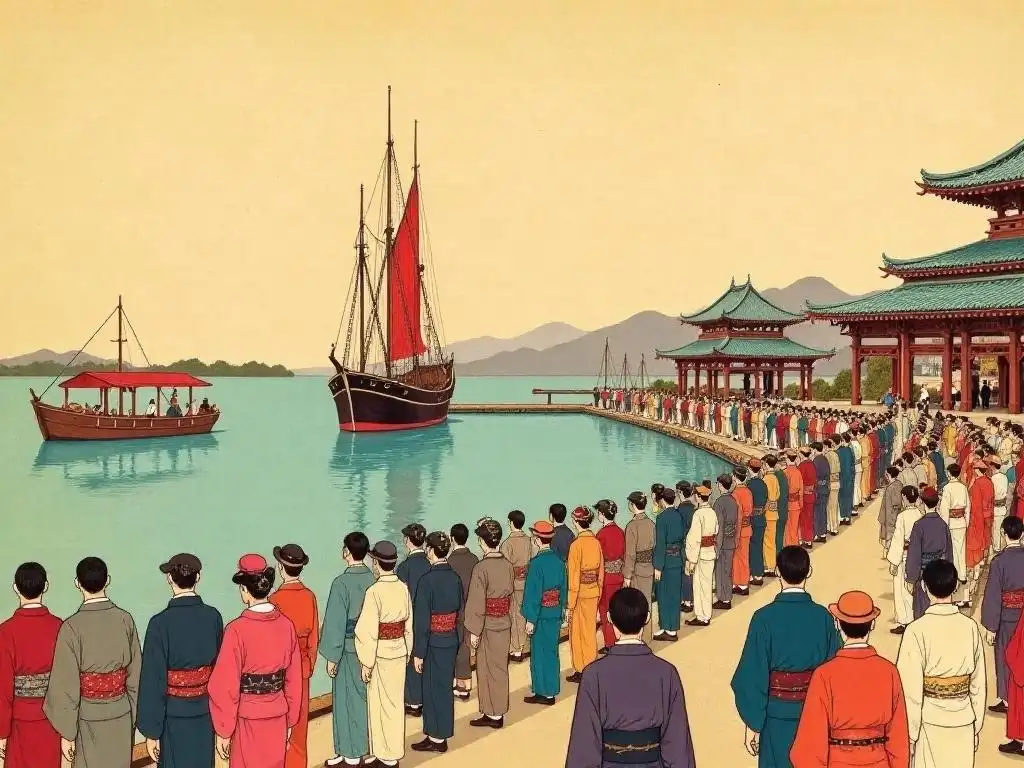
Welcome to Feudal Japan History, where we embark on a captivating journey through the intricate tapestry of Japan's feudal era. Here, you will uncover the fascinating tale of Japan encounters the West, a pivotal moment that forever altered the course of its history. Dive into our in-depth article, "The Dawn of Interactions: How Japan First Encountered the West," and prepare to explore how these early interactions shaped not only Japan’s foreign relations but also its cultural identity. What secrets lie within this transformative encounter? Join us as we unravel the complexities of a world on the brink of change!
Introduction to Japan's Encounters with the West
The story of Japan's interactions with the West is a pivotal chapter in the annals of history, marking a transformative period that reshaped the nation's trajectory. As Japan navigated its feudal era, a series of encounters with Western powers began to unfold, introducing new ideas, technologies, and cultural exchanges that would deeply influence Japanese society.
This article delves into the nuances of these early interactions, exploring the historical context, significance, and consequences of Japan's initial encounters with Western nations. By examining both the intricate tapestry of feudal Japan and the broader global backdrop, we aim to illuminate how these exchanges laid the groundwork for Japan's evolution into a modern nation.
Overview of Japan Western Contact in History
Japan's first significant contact with Western powers occurred in the mid-16th century, primarily through trade and missionary activities. Portuguese explorers arrived on Japanese shores in 1543, bringing with them firearms, new trade commodities, and an influx of Christian missionaries. This initial contact fostered a complex relationship characterized by both curiosity and conflict. Notably, the introduction of the arquebus revolutionized Japanese warfare, while the spread of Christianity sparked tensions with local feudal lords and led to a series of persecutions.
- Key Events:
- 1543: Portuguese traders arrive in Japan.
- 1549: Francis Xavier, a Jesuit missionary, begins spreading Christianity in Japan.
- 1587: Toyotomi Hideyoshi issues an edict banning Christian missions.
Through these interactions, Japan was not merely a passive recipient of foreign influence; it actively engaged with Western ideas, leading to significant shifts in its political and social structures.
Significance of Japan-West Interactions in Feudal Era
The interactions between Japan and the West during the feudal era were significant for several reasons. Firstly, they opened Japan to new technologies and ideas, which challenged traditional practices and prompted innovation. The introduction of European weaponry changed the dynamics of power among feudal lords, while Western philosophy and science began to permeate Japanese thought.
Moreover, these encounters set the stage for future conflicts and negotiations, as the Japanese grappled with the implications of foreign influence on their sovereignty and culture. The eventual isolationist policies that emerged in the early 17th century were, paradoxically, a response to the very interactions that had initially sparked Japan's interest in the West.
The Historical Context of Japan and the West
To fully understand Japan's interactions with the West, it is essential to explore the historical context of both Japan and the global landscape in the 16th century.
Japan before Western Contact: A Feudal Society
Before the arrival of Western powers, Japan was a highly stratified feudal society characterized by a complex hierarchy of samurai, daimyō (feudal lords), and peasants. This system was deeply rooted in loyalty and honor, with the samurai class playing a crucial role in maintaining order and governance. The political landscape was dominated by powerful clans, each vying for control over territory and resources.
- Social Structure:
- Emperor: The symbolic figurehead with little actual power.
- Shōgun: The military leader who held real political authority.
- Daimyō: Regional lords who governed large estates.
- Samurai: Warrior class serving the daimyō.
- Peasants: The majority, largely responsible for agriculture and labor.
The insular nature of this society, coupled with its rigid class structure, would be challenged by the influx of Western ideas and technologies, leading to a period of profound transformation.
The Global Landscape in the 16th Century
The 16th century marked a time of significant global exploration and exchange. European nations, particularly Spain and Portugal, were expanding their empires, seeking new trade routes, and exploring uncharted territories. The Age of Discovery was characterized by maritime advancements and the desire for wealth and power, which motivated European powers to establish contact with distant lands.
- Key Global Developments:
- The rise of maritime powers in Europe.
- The establishment of trade routes between Europe and Asia.
- The spread of Christianity as a missionary endeavor.
As these global dynamics unfolded, they set the stage for Japan's initial encounters with the West, forging a path that would ultimately lead to a complex interplay of cultural exchange and conflict.
The Initial Encounters: First Contact with Western Explorers
Japan's first encounters with Western explorers occurred in the mid-16th century, marking a pivotal shift in the nation's historical trajectory. This period saw the arrival of European traders and missionaries who brought new ideas, goods, and religious doctrines to Japan. The interactions were characterized by curiosity, mutual benefit, and occasional conflict, fundamentally altering Japan's perception of the outside world.
The Portuguese, in particular, played a crucial role in these initial encounters. They were not only the first Europeans to reach Japan but also the catalysts for opening up trade routes that would lead to significant cultural and economic exchanges. The excitement over new trade opportunities and the introduction of foreign technologies and ideas marked an era of exploration and adaptation that Japan had not previously experienced.
The Arrival of the Portuguese in Japan
In 1543, a Portuguese ship inadvertently arrived on the shores of Tanegashima, a small island south of Kyushu, during a trade voyage. This serendipitous encounter initiated a series of interactions between the Portuguese and the Japanese, leading to the establishment of trade relations. The Portuguese introduced firearms, particularly matchlocks, which would later revolutionize Japanese warfare and military strategy.
The Portuguese also brought with them various goods, including textiles, tobacco, and food items, which sparked significant interest among the Japanese populace. Their arrival marked an era of unprecedented trade relations, as they established direct trade routes that bypassed intermediaries. By the end of the 16th century, Portuguese traders had set up trading posts in Nagasaki, which became a vital hub for commerce and cultural exchanges between Japan and the West.
Impacts of Early Trade Relations with the West
The early trade relations between Japan and the Portuguese resulted in profound impacts on Japanese society. Economically, the influx of foreign goods contributed to a burgeoning market that stimulated local industries. The introduction of new crops, such as sweet potatoes and peanuts, diversified agricultural practices and improved food security.
Culturally, these interactions led to the exchange of ideas and customs. The Portuguese influence can be seen in various aspects of Japanese culture, including cuisine, clothing, and even language, with numerous Portuguese words entering the Japanese lexicon. However, these exchanges were not without challenges, as the growing presence of foreign traders and missionaries also led to tensions with the Japanese feudal lords and local Buddhist establishments.
Cultural Exchanges: How Japan Embraced Western Influences
The interactions with Western explorers initiated significant cultural exchanges that deeply influenced Japanese society. Japan began to embrace various Western innovations in technology, art, and religion, marking a period of transformation that would shape its future.
Introduction of Christianity and Its Effects
With the arrival of the Portuguese, Christianity entered Japan as a new religious and cultural force. Jesuit missionaries, notably Francis Xavier, began their evangelization efforts in 1549, aiming to convert the Japanese populace. The initial reception of Christianity was relatively positive, with many Japanese, including local rulers, converting to the faith.
However, the spread of Christianity also sparked resistance among the ruling samurai class and Buddhist institutions, leading to a complex relationship between the two faiths. By the early 17th century, the Tokugawa shogunate began to perceive Christianity as a threat to their authority and societal stability, resulting in the persecution of Christians and the eventual ban on the religion in 1614. Despite this repression, the early presence of Christianity left a lasting impact on Japanese culture and society, influencing art, education, and philosophical thought.
Western Technology and Its Adoption in Japan
The introduction of Western technology during this period had a transformative effect on Japan. The most significant technological transfer was the adoption of firearms, which changed the nature of warfare in Japan. The use of matchlock guns allowed for more efficient military strategies and led to the rise of new samurai tactics.
In addition to military technology, Western advancements in navigation and shipbuilding improved Japan's maritime capabilities, fostering further trade and exploration. Other areas, such as medicine and astronomy, also saw the introduction of new ideas and practices that contributed to Japan's intellectual growth.
The early encounters with the West thus served as a catalyst for technological advancement, laying the groundwork for Japan's eventual modernization. While the initial interactions were marked by both collaboration and conflict, they ultimately led to a redefinition of Japan's place within the global community, setting the stage for future developments in the nation's history.
The Political Ramifications of Japan-West Relations
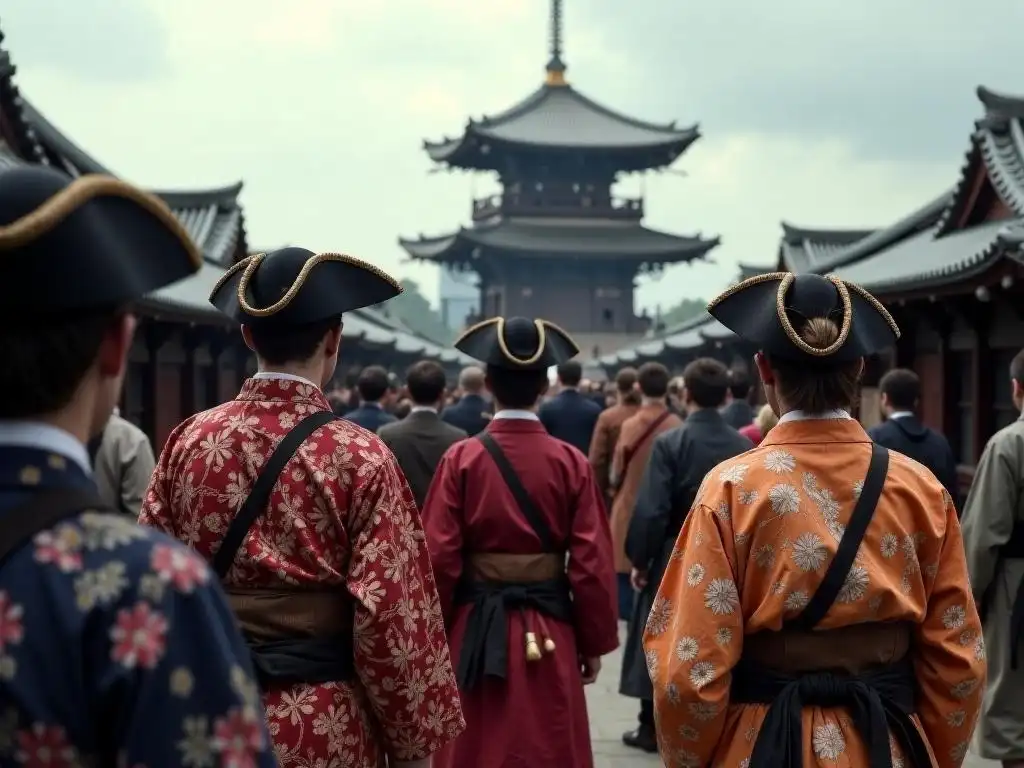
The interactions between Japan and the West during the feudal era significantly influenced the political landscape of Japan. Initially marked by curiosity and trade, these encounters set the stage for a complex relationship that would shape Japan's foreign policy and internal power dynamics. The arrival of European traders, particularly the Portuguese in the 1540s, introduced new goods, technologies, and ideas, leading to a reevaluation of Japan's position in the global arena.
As various feudal lords, or daimyōs, engaged with Western powers, they recognized the potential benefits of alliances and trade agreements. This interaction enabled the consolidation of power among some daimyōs who leveraged Western firearms and techniques to gain advantages in their local conflicts. However, the political ramifications weren't limited to military and economic aspects; they also opened Japan to religious influences, particularly Christianity, which further complicated the political landscape and created tensions between traditional Japanese beliefs and Western ideologies.
The Role of the Ashikaga Shogunate in Foreign Relations
The Ashikaga Shogunate, which ruled from the mid-14th century until the late 16th century, played a pivotal role in Japan's early foreign relations. This period, known for its political instability and the emergence of regional warlords, also saw increased interactions with foreign nations. The Ashikaga shōguns were initially open to trade, particularly with China and later with European nations. This openness was partly motivated by a desire for economic stability and the acquisition of foreign goods, which included firearms, textiles, and various luxuries.
However, as foreign influence began to grow, the Ashikaga Shogunate faced challenges in maintaining control over the increasingly powerful daimyōs. Some feudal lords began to form alliances with Western traders, undermining the shōgun's authority. The introduction of Christianity by missionaries such as Francis Xavier also posed a challenge, as it disrupted the established socio-political order and led to fears of a loss of traditional values and power. Ultimately, the Ashikaga Shogunate’s inability to manage these foreign pressures contributed to its decline, paving the way for the more centralized Tokugawa Shogunate, which would later adopt a more isolationist stance.
The Response of Japanese Feudal Lords to Western Influence
Japanese feudal lords, or daimyōs, responded to Western influence in various ways, reflecting their individual political ambitions and regional circumstances. Some daimyōs embraced Western technologies and ideas, recognizing the potential advantages they could gain in the ongoing power struggles among themselves. For instance, the adoption of European firearms enabled certain daimyōs to achieve military victories that would enhance their status and influence.
Conversely, other feudal lords were wary of the cultural and religious implications of Western contact. The introduction of Christianity led to significant resistance, as many daimyōs feared that conversion among their subjects could erode their authority and traditional Japanese values. This led to a dichotomy of responses: some actively sought alliances and trade with Western powers, while others sought to limit or entirely reject foreign influence. This complex interplay of acceptance and resistance among the daimyōs laid the groundwork for the future isolationist policies of Japan.
The Decline of Initial Interactions
The initial enthusiasm for interaction with the West began to wane in the late 16th century, leading to a decline in Japan-West encounters. This shift was influenced by a combination of socio-political factors, including the rise of the Tokugawa Shogunate, which sought to consolidate power and control over the feudal lords. The Tokugawa regime adopted a more isolationist policy, culminating in the Sakoku Edict of 1635, which severely restricted foreign interactions and trade.
Factors Leading to the Decrease in Japan-West Encounters
Several factors contributed to the decrease in Japan-West encounters. The foremost was the Tokugawa Shogunate's desire to establish stability and control in a politically fragmented society. The shōgunate perceived Western influence as a potential threat to its authority, particularly due to the spread of Christianity, which was seen as a destabilizing force. Additionally, the shōgunate aimed to prevent a unified challenge from the daimyōs who had allied with Western powers, thus limiting their ability to leverage foreign relationships for power gains.
Economic considerations also played a role. As trade with Western nations initially flourished, the shōgunate eventually deemed it necessary to prioritize self-sufficiency and domestic trade over foreign engagement. This mindset led to strict regulations on foreign merchants, ultimately driving them away and curtailing international interactions.
The Impact of Internal Conflicts on International Relations
Internal conflicts significantly impacted Japan's international relations during the feudal era. The Sengoku period, marked by widespread warfare among the daimyōs, created an environment where external influences were both welcomed and feared. As daimyōs sought to gain military advantages, they occasionally turned to Western nations for alliances, leading to fluctuating relationships based on the prevailing power dynamics.
However, as the Tokugawa Shogunate established its rule, the emphasis shifted towards internal stability. The government focused on suppressing any potential dissent from the daimyōs and maintaining a strict social order. This internal focus meant that foreign relations became secondary, leading to a deliberate distancing from the West. The internal conflicts that had once propelled Japan into the global arena now became a reason for isolation, cementing the country's trajectory towards a prolonged period of seclusion that would last until the mid-19th century.
Legacy of Japan's First Encounters with the West
The legacy of Japan's first encounters with the West in the 16th century is profound and multifaceted, shaping various aspects of Japanese life and society. These initial interactions, primarily with Portuguese and Spanish traders and missionaries, marked the beginning of a complex relationship characterized by both cultural exchange and conflict. The introduction of Western goods, technologies, and ideas had a lasting impact on Japan’s development, influencing everything from trade practices to religious beliefs.
The arrival of European traders brought not only new commodities such as firearms and textiles but also novel philosophies and religious doctrines. The Jesuit missionaries, in particular, played a crucial role in introducing Christianity to Japan, leading to significant changes in spiritual and cultural landscapes. This initial wave of cultural exchange laid the groundwork for future interactions, as Japan began to engage more deeply with Western ideas and practices, marking a pivotal shift in its historical narrative.
Long-Term Effects on Japanese Culture and Society
The long-term effects of Japan's early encounters with the West are evident in various cultural and societal transformations. One significant outcome was the introduction of Western technology, which influenced military tactics and industrial practices. The adoption of firearms, for instance, dramatically changed warfare in Japan, leading to the rise of powerful daimyos who could dominate their rivals through superior firepower.
Culturally, there was a blending of Japanese and Western art forms. The Nanban art movement, which emerged during this period, showcased the influence of European aesthetics on traditional Japanese art. This fusion can be seen in various art forms, including painting, ceramics, and even the introduction of Western music and theatrical practices.
Furthermore, the initial contacts prompted a reevaluation of Japan’s position in the world. The awareness of Western advancements led to a cultural introspection that would later inform the Meiji Restoration, as Japan sought to modernize and compete with Western powers. Thus, the early interactions laid the groundwork for Japan’s rapid transformation and eventual emergence as a global power.
Reflections on Japan's Foreign Relations Evolution
The reflections on Japan's foreign relations evolution reveal a trajectory shaped significantly by its encounters with the West. Initially characterized by curiosity and openness, these relationships gradually shifted towards suspicion and isolationism, particularly during the Edo period. The Tokugawa shogunate's policy of sakoku (closed country) was a direct response to the perceived threats posed by Western influences, particularly Christianity, which was seen as a challenge to the established social order.
However, the legacy of these early interactions remained potent. Even during isolation, Japan continued to observe Western developments from a distance, which would later inform its strategies during the period of reopening in the mid-19th century. This historical backdrop highlights the complex interplay between cultural exchange and national identity, illustrating how Japan's experiences with Western powers have shaped its foreign policy and international relations to this day.
Conclusion: Understanding Japan's Historical Encounter with the West
Understanding Japan's historical encounter with the West necessitates a comprehensive examination of the various dynamics at play during this transformative period. The interactions were not merely transactional but deeply cultural, influencing the trajectory of Japanese society in profound ways. This exploration reveals how initial contacts set the stage for an ongoing dialogue between Japan and the West, characterized by both adaptation and resistance.
Summary of Key Points in Japan's Western Interactions
The key points in Japan's early interactions with the West include:
- Cultural Exchange: Introduction of Western goods, technologies, and philosophies that influenced Japanese society and culture.
- Military Transformation: Adoption of firearms and military techniques, leading to significant changes in warfare.
- Artistic Fusion: Emergence of Nanban art, reflecting the blending of Japanese and Western aesthetics.
- Shifts in Foreign Policy: Transition from openness to isolationism and its impact on Japan's foreign relations.
The Importance of This History for Understanding Modern Japan
The importance of this history for understanding modern Japan cannot be overstated. The foundation laid during the initial encounters with the West continues to resonate in contemporary Japanese society. Elements of Western culture, technology, and philosophy have been integrated into the fabric of Japanese life, influencing everything from education to business practices.
Moreover, the historical context of these encounters provides insight into Japan’s current foreign relations. Understanding how Japan navigated its early interactions with Western powers helps illuminate its diplomatic strategies today, including its approach to globalization and international collaboration. By examining this legacy, one can gain a deeper appreciation for Japan’s unique position in the modern world and the enduring influence of its historical encounters with the West.
- Introduction to Japan's Encounters with the West
- The Historical Context of Japan and the West
- The Initial Encounters: First Contact with Western Explorers
- Cultural Exchanges: How Japan Embraced Western Influences
- The Political Ramifications of Japan-West Relations
- The Role of the Ashikaga Shogunate in Foreign Relations
- The Response of Japanese Feudal Lords to Western Influence
- The Decline of Initial Interactions
- Legacy of Japan's First Encounters with the West
- Conclusion: Understanding Japan's Historical Encounter with the West
- What were the key events in Japan's early encounters with the West?
- How did Japan's isolation policy affect its interactions with Western countries?
- What role did Christianity play in Japan's encounters with the West?
- How did Japan's perception of the West evolve over time?
- What were the long-term impacts of Japan's early interactions with Western nations?
Frequently Asked Questions
What were the key events in Japan's early encounters with the West?
Japan's early encounters with the West began in the 16th century with Portuguese traders and missionaries, leading to significant cultural exchanges and the introduction of Christianity.
How did Japan's isolation policy affect its interactions with Western countries?
Japan's isolation policy (Sakoku) implemented in the 17th century limited foreign influence, restricting trade primarily to the Dutch and Chinese, which shaped its socio-economic landscape for over two centuries.
What role did Christianity play in Japan's encounters with the West?
Christianity was a catalyst for change, as early missionaries sought to convert Japanese people, leading to both cultural exchange and subsequent persecution of Christians during the Tokugawa shogunate.
How did Japan's perception of the West evolve over time?
Initially, Japan viewed the West with curiosity and intrigue, but this shifted to suspicion and hostility due to conflicts and the desire to maintain sovereignty, particularly during the 19th century.
What were the long-term impacts of Japan's early interactions with Western nations?
The interactions laid the groundwork for modernization during the Meiji Restoration, as Japan sought to adopt Western technologies and practices while preserving its own cultural identity.
Final Reflection: The Lasting Legacy of Japan's Encounters with the West
The historical encounters between Japan and the West have shaped not only the trajectory of Japanese society but also the broader narrative of global interactions. As we navigate an increasingly interconnected world, understanding these pivotal moments in history allows us to appreciate the complexities of cultural exchange and the profound impact it has on national identity. The initial encounters were not merely exchanges of goods and ideas; they were transformative events that set the stage for Japan's modernization and its role on the world stage.
The influence of these early interactions continues to resonate in contemporary culture, as we witness a blend of Eastern and Western philosophies and practices. The way Japan embraced and adapted Western technologies and ideas while maintaining its unique cultural identity serves as a powerful reminder of resilience and innovation. History is not a burden on the memory but an illumination of the soul.
This quote encapsulates the essence of how Japan's history with the West has illuminated its path forward, fostering a rich tapestry of cultural dialogue that persists today.
As we reflect on the lessons from Japan's encounters with the West, let us consider how we, too, can engage with diverse cultures in our own lives. I invite you to explore the richness of cultural exchange in your surroundings, to learn from others, and to contribute to a dialogue that respects and celebrates differences. By embracing the spirit of curiosity and openness that characterized Japan's early interactions with the West, we can foster a more inclusive and harmonious world for future generations.
Unveil New Connections: Engage with Japan's Fascinating History!
Thank you for exploring the captivating journey of Japan's first encounters with the West! We hope you gained insights into this monumental turning point in history and felt inspired to learn more. Now, let’s take your exploration further!
Here are some actionable steps you can take to deepen your understanding and connect with this fascinating topic:
- Dive into further research by visiting our detailed sections on specific cultural exchanges between Japan and the West.
- Join our community by sharing your thoughts and experiences regarding these historical interactions in the comments below or on our social media platforms.
- Surprise yourself with a virtual museum tour showcasing artifacts from the era—discover pieces that tell stories of cultural fusion!
In what ways do you think Japan's early encounters with the West have shaped its modern culture? We invite you to share your thoughts with us!