
Shogunate Diplomacy: The Interactions Between Japan and Foreign Powers

Welcome to Feudal Japan History, where we invite you to embark on a captivating journey through the intricate tapestry of Japan's feudal era. Delve into the fascinating world of shogunate diplomacy and uncover how the interactions between Japan and foreign powers shaped the political landscape of the time. What secrets lie behind the diplomatic maneuvers of the shoguns? Join us as we unravel the complexities of these foreign relations and explore their lasting impact on Japan's cultural and societal evolution. Your adventure into the depths of history begins here—read on to discover more!
Introduction to Shogunate Diplomacy
Shogunate diplomacy represents a pivotal aspect of Japan's feudal era, a time when the country was largely isolated yet engaged in various foreign relations that shaped its political landscape. During this period, the ruling shogunates developed intricate diplomatic strategies to navigate interactions with foreign powers. These relationships were not merely transactional; they were deeply intertwined with Japan's cultural and societal evolution. Understanding shogunate diplomacy provides insights into how Japan balanced its isolationist tendencies with the need for external engagement, ultimately influencing its historical trajectory.
Definition of Shogunate Diplomacy
Shogunate diplomacy refers to the strategies, practices, and policies employed by the shogunate—the military government that ruled Japan during the feudal era—to manage relationships with foreign nations. This involved a variety of diplomatic activities, including trade negotiations, military alliances, and cultural exchanges. The term encompasses both formal diplomatic missions and informal interactions, highlighting the complexity and nuance of Japan's foreign relations during this time.
Importance of Foreign Relations in Japan's Feudal Era
Foreign relations during Japan's feudal era were crucial for several reasons:
- Economic Growth: Engaging with foreign powers facilitated trade, which was vital for economic prosperity. The influx of goods and resources from abroad helped stimulate local economies.
- Cultural Exchange: Diplomatic interactions led to cultural exchanges that enriched Japanese society. The introduction of new ideas, technologies, and art forms influenced various aspects of life in Japan.
- Military Alliances: Forming alliances with foreign powers could bolster Japan's defense against external threats, particularly during periods of instability.
- Strategic Isolation: Conversely, the shogunate also had to navigate the delicate balance of maintaining its sovereignty while managing foreign influence, leading to a unique form of strategic isolation that defined much of Japan's foreign policy.
Historical Context of Japan’s Shogunate
Overview of the Shogunate System in Japan
The shogunate system was characterized by a centralized military government, where the shogun held ultimate power, often overshadowing the emperor, who was relegated to a ceremonial role. This system evolved through various shogunates, each adopting distinct approaches to governance and foreign relations. The major shogunates include the Kamakura, Ashikaga, and Tokugawa shogunates, each marking significant periods in Japan's history and contributing to the development of shogunate diplomacy.
Key Shogunates and Their Time Periods
The history of Japan's shogunates can be outlined as follows:
| Shogunate | Time Period | Key Features |
|---|---|---|
| Kamakura Shogunate | 1185 - 1333 | Established the first military government; interaction with Mongol invasions. |
| Ashikaga Shogunate | 1336 - 1573 | Marked by civil strife and internal conflict; attempts to engage with China. |
| Tokugawa Shogunate | 1603 - 1868 | Notable for its isolationist policies and limited foreign trade; emphasized control over foreign relations. |
Understanding these key shogunates is essential to grasp the broader narrative of Japan's foreign relations, shedding light on how historical contexts influenced diplomatic strategies and international interactions throughout the feudal era.
Japan’s Foreign Relations Before the Shogunate
Japan's foreign relations prior to the establishment of the shogunate were characterized by limited interactions with neighboring cultures and a focus on trade, which laid the groundwork for future diplomatic endeavors. The archipelago's geographical isolation, surrounded by the Pacific Ocean and the Sea of Japan, naturally limited extensive foreign contact. However, Japan engaged in significant exchanges with neighboring regions, particularly with Korea and China, which influenced its early cultural and political development.
Early Interactions with Neighboring Cultures
Japan's earliest foreign relations can be traced back to the Yayoi period (300 BCE - 300 CE), when the archipelago began to establish contact with the Korean Peninsula and China. These interactions were fundamental in introducing advanced agricultural techniques, metallurgy, and cultural practices. The introduction of Buddhism from Korea in the 6th century marked a significant cultural shift, leading to the establishment of formal diplomatic relations with the Sui and Tang dynasties in China.
During the Nara (710-794) and Heian (794-1185) periods, Japan sent official missions, known as "kentōshi," to China, which aimed to learn from the sophisticated Chinese civilization. These missions facilitated the exchange of knowledge, including governance, literature, and religious practices, profoundly impacting Japanese society. The resulting Sinicization led to the adoption of Chinese characters, Confucian ideals, and Buddhist teachings, which were integral to shaping Japan's cultural identity.
The Impact of Trade on Japanese Society
Trade played a crucial role in Japan's early foreign relations, particularly with the Asian mainland. The Japanese engaged in the exchange of goods such as silk, ceramics, and iron, which were highly sought after. The establishment of trade routes facilitated the movement of not only goods but also ideas, technologies, and cultural practices.
In the 8th century, Japan began to establish its own maritime trade networks, leading to the growth of port cities and increased economic activity. The Japanese traded actively with the Tang dynasty, and this interaction significantly impacted local economies and social structures. However, Japan's foreign trade was not without its challenges. The influx of foreign goods and ideas sometimes met resistance from conservative elements within society, leading to tensions between traditional values and new influences.
The Role of the Shogunate in Foreign Affairs
With the establishment of the Kamakura shogunate in 1192, Japan saw a more structured approach to foreign relations. The shogunate's political framework allowed for more centralized and organized diplomatic efforts. The leaders of the shogunate, primarily the shoguns, became the de facto rulers of Japan, influencing foreign policy and interactions with other nations.
Political Structure and Foreign Policy
The political structure established by the shogunate had profound implications for Japan's foreign policy. The shogun held significant power, often overriding the imperial court in matters of diplomacy and war. This centralization allowed the shogunate to pursue a more assertive foreign policy, particularly in dealings with neighboring countries.
During the Kamakura period, the shogunate focused on maintaining peace and stability within Japan while managing threats from the Mongols. The failed invasions by Kublai Khan in 1274 and 1281 showcased the shogunate's military capabilities and its ability to coordinate a national defense. Following these invasions, the shogunate also recognized the importance of alliances and diplomatic relationships with other states, such as the Korean kingdom of Goryeo, which was often caught in the crossfire of these conflicts.
The Influence of Samurai Culture on Diplomacy
The samurai class, which emerged as the military elite during the shogunate era, played a vital role in shaping Japan's diplomatic relations. Samurai culture emphasized loyalty, honor, and martial prowess, which influenced how Japan engaged with foreign powers. Diplomacy was often conducted through formal and ceremonial exchanges, reflecting the samurai's values and the importance of maintaining face and honor in international relations.
The samurai's code of conduct, known as "bushido," underscored the significance of ethical behavior in both warfare and diplomacy. This cultural framework impacted Japan's interactions with foreign nations, as samurai were often dispatched as envoys to negotiate treaties or alliances. Their training in martial arts and strategy also provided insight into military diplomacy, allowing Japan to navigate complex international landscapes effectively.
Overall, the interplay between samurai culture and shogunate diplomacy shaped Japan's foreign relations, fostering an environment where honor and respect were paramount, even in the context of political negotiations. As a result, these early diplomatic efforts laid the foundation for Japan's foreign relations in the centuries to come.
Key Foreign Powers Interacting with the Shogunate
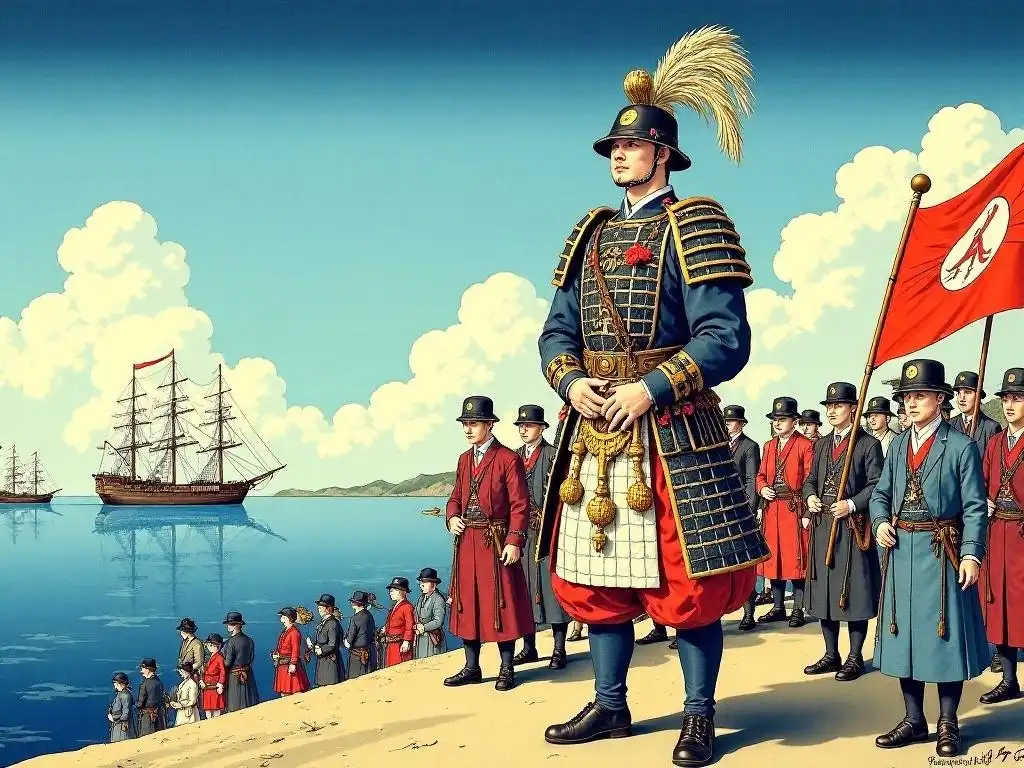
Throughout Japan's feudal era, particularly under the rule of the shogunates, several foreign powers interacted with the Japanese state, shaping its diplomatic landscape. The most significant of these powers included China, Korea, and various European nations. Each of these interactions reflected the complexities of international relations during a time when Japan was both protective of its sovereignty and open to cultural exchanges.
Relations with China
Japan's relationship with China has a long and storied history, deeply influenced by cultural, political, and economic exchanges. During the shogunate period, particularly in the Kamakura (1185-1333) and Muromachi (1336-1573) eras, China was seen as a model of civilization. The Japanese adopted various aspects of Chinese culture, including Buddhism, Confucianism, and administrative practices.
Despite the cultural admiration, the political relationship was often fraught with tension. The Ming dynasty (1368-1644) and later the Qing dynasty (1644-1912) maintained a tributary system, wherein Japan was expected to acknowledge China's superiority. This led to fluctuating diplomatic relations, especially during periods of internal strife within Japan. The shogunate often sent missions to China to solidify ties, but these were sometimes met with ambivalence, particularly during the periods of isolationism.
Relations with Korea
Korea played a crucial role in Japan's foreign relations, especially during the early feudal period. The relationship was marked by both conflict and collaboration. The shogunate engaged in trade with Korea, which was vital for the importation of goods such as textiles and ceramics. However, the relationship soured during the invasions of Korea in the late 16th century, particularly the Imjin War (1592-1598) led by Toyotomi Hideyoshi.
These invasions resulted in significant diplomatic fallout, with Korea viewing Japan as an aggressor. Despite this, there were periods of reconciliation, leading to exchanges of envoys and cultural missions in subsequent years. The shogunate's interactions with Korea were characterized by this duality of conflict and diplomacy, reflecting the broader geopolitical dynamics of East Asia.
Relations with European Powers
The arrival of European powers in the 16th century marked a significant shift in Japan's foreign relations. Initially, Portuguese traders and Jesuit missionaries introduced new technologies, Christianity, and trade opportunities. The shogunate, particularly under the Tokugawa (1603-1868), initially welcomed these interactions, which facilitated trade and cultural exchanges.
However, as European influence grew, particularly with the arrival of Dutch, British, and Spanish interests, the shogunate became increasingly wary of foreign intervention in domestic affairs. The Tokugawa shogunate eventually adopted a policy of isolationism, leading to the expulsion of missionaries and a restriction on foreign trade to a few select ports, notably Nagasaki. This cautious approach helped maintain Japan's sovereignty while navigating the complexities of European imperial ambitions.
Notable Diplomatic Events in Shogunate History
The shogunate era witnessed several pivotal diplomatic events that shaped Japan's foreign policy and relations with other nations. These events often reflected the shogunate's strategic interests, balancing between isolationism and engagement with foreign powers.
The Sakoku Policy and Its Implications
The Sakoku policy, instituted in the early 17th century, was a significant diplomatic stance adopted by the Tokugawa shogunate. This policy effectively closed Japan off from most foreign influences, restricting trade and prohibiting Japanese citizens from traveling abroad. The only exceptions were limited trade agreements with the Dutch and the Chinese in Nagasaki.
The implications of Sakoku were profound. While it allowed Japan to maintain cultural homogeneity and political stability, it also resulted in technological and scientific stagnation, as Japan became increasingly isolated from global developments. This period of seclusion lasted for over two centuries, shaping Japan's national identity and foreign relations until the mid-19th century when external pressures forced the country to reopen.
Treaties and Agreements: Key Examples
Throughout the shogunate period, several treaties and agreements were established to formalize relations with foreign powers. One of the most notable was the Treaty of Kanagawa in 1854, which marked the end of Japan's isolationist policies. This treaty, signed with the United States, opened up two ports for American ships and established a framework for future trade relations.
Another significant agreement was the Harris Treaty of 1858, which expanded trade relations with the United States and other Western powers. These treaties often reflected the imbalance of power between Japan and the foreign nations, as they were typically imposed under duress rather than negotiated on equal terms. The resulting diplomatic landscape marked a transition from isolation to engagement, setting the stage for Japan's modernization in the late 19th century.
The Role of Missions and Envoys
Missions and envoys played a critical role in shaping Japan's diplomatic relations during the shogunate era. These diplomatic missions were often sent to foreign courts to negotiate treaties, establish trade relations, and exchange cultural knowledge.
For instance, the Tenshō Embassy (1582-1590) was an important diplomatic mission to Europe, aimed at establishing relations with the Spanish and the Pope. This mission highlighted Japan's initial openness to foreign influence and its desire to learn from Western powers.
Conversely, as the shogunate adopted more isolationist policies, the role of missions diminished, reflecting a shift in Japan's foreign policy priorities. The legacy of these diplomatic missions remains evident in Japan's modern diplomatic practices, showcasing the historical significance of shogunate foreign relations.
Shogunate Diplomacy and Its Cultural Impact
Shogunate diplomacy played a crucial role in shaping the cultural landscape of Japan during the feudal era. The interactions between Japan and foreign powers not only facilitated trade but also led to the exchange of ideas, technology, and cultural practices. As Japan engaged with various nations, particularly during the Edo period, it became a melting pot of influences that enriched its own traditions while simultaneously impacting foreign perceptions of Japanese culture.
This diplomatic engagement was not merely transactional; it fostered a deeper understanding between Japan and its trading partners, which included the Portuguese, Dutch, and English. The selective nature of these interactions allowed Japan to assimilate foreign elements that aligned with its cultural values, while preserving its unique identity. The impact of such diplomacy is evident in various aspects of Japanese life, from cuisine to religion, and even in societal structures.
The Exchange of Ideas and Technology
One of the most significant outcomes of shogunate diplomacy was the exchange of ideas and technology. The arrival of European traders in the 16th century introduced new technologies to Japan, such as firearms, which drastically changed the nature of warfare. The Portuguese, for example, brought matchlock guns that were quickly adopted by samurai clans, influencing military strategies and conflicts.
In addition to weaponry, foreign contact also facilitated advancements in navigation and shipbuilding. The Japanese adopted European maritime practices, which enhanced their capabilities for trade and exploration. Notably, the introduction of Western medicine and scientific knowledge had a lasting impact on Japanese healthcare and education systems. The exchange was often facilitated through the establishment of trading posts and missions, which served as cultural conduits.
Furthermore, the importation of Western philosophical ideas encouraged intellectual discourse in Japan. Scholars began to explore concepts such as individualism and rationalism, leading to a gradual transformation in Japanese thought and culture.
The Influence of Foreign Relations on Japanese Arts and Literature
The influence of foreign relations during the shogunate era is also reflected in Japanese arts and literature. Contact with European artists and writers inspired Japanese creators to experiment with new styles and techniques. For instance, the introduction of oil painting techniques and perspective in visual arts led to a fusion of Western and Japanese artistic expressions.
Literature was similarly affected, as foreign tales and narratives found their way into Japanese storytelling. The adaptation of Western literary forms, such as the novel, brought about a new wave of creativity among Japanese authors. Works began to explore themes of modernity, identity, and cultural exchange, reflecting the complexities of Japan's interactions with the outside world.
Traditional crafts, such as textiles and ceramics, also experienced a renaissance due to foreign influences. The incorporation of new motifs and styles enriched the aesthetic diversity of Japanese art, showcasing the ability of Japanese artisans to adapt and innovate.
The Decline of Shogunate Diplomacy
The decline of shogunate diplomacy was marked by various internal and external factors that led to significant shifts in Japan's foreign relations. As the Edo period progressed, the rigid isolationist policies of the Tokugawa shogunate began to face challenges from both foreign powers and domestic factions seeking reform.
Factors Leading to Changes in Foreign Relations
Several factors contributed to the decline of shogunate diplomacy. The increasing pressure from Western nations, particularly in the 19th century, challenged Japan's isolationist stance. The arrival of Commodore Matthew Perry and his "Black Ships" in 1853 symbolized this external pressure, demanding that Japan open its ports to trade. This event served as a wake-up call for the shogunate, revealing the limitations of its diplomatic policies.
Internally, the growing discontent among various social classes, including the samurai and merchants, highlighted the inadequacies of the shogunate's governance. Calls for modernization and reform gained momentum, leading to a reevaluation of Japan’s diplomatic strategies. The inability of the shogunate to effectively respond to foreign demands ultimately weakened its authority and credibility.
The Meiji Restoration and Its Impact on Diplomacy
The Meiji Restoration of 1868 marked a pivotal turning point in Japan's approach to diplomacy. The restoration led to the dismantling of the feudal system and the establishment of a centralized government focused on modernization and Westernization. This shift allowed Japan to re-engage with the world on its own terms.
Under the Meiji government, Japan adopted a more aggressive foreign policy, seeking to establish itself as a global power. This included negotiating treaties that opened markets and secured equal standing with Western nations. The new leadership emphasized the importance of adopting Western technologies and institutions to foster economic growth and military strength.
As a result, Japan transformed from a nation largely isolated from the world into an influential player in international relations. The changes initiated during the Meiji Restoration not only altered Japan's diplomatic posture but also laid the groundwork for its emergence as a formidable power in the 20th century, demonstrating the profound impact of shogunate diplomacy on Japan’s historical trajectory.
Conclusion
The intricate web of foreign relations established during Japan's shogunate period has left an indelible mark on the nation's political, cultural, and economic landscapes. The diplomatic maneuvers of the shoguns not only shaped Japan's interactions with neighboring countries but also influenced its internal governance and societal structures. As Japan navigated through periods of isolation and engagement with foreign powers, the decisions made by shogunate leaders laid the groundwork for the country's future diplomatic strategies. Understanding these historical contexts enhances our comprehension of Japan's contemporary international relations and its unique position in the global arena.
Summary of Japan’s Shogunate Foreign Relations
Japan’s shogunate foreign relations were characterized by a series of diplomatic strategies aimed at balancing isolationist policies with selective engagement. Initially, the Kamakura shogunate (1185-1333) established limited contacts with the Mongol Empire, leading to military confrontations. The subsequent Ashikaga shogunate (1336-1573) saw increased trade and cultural exchanges, particularly with China and Korea, fostering a vibrant exchange of ideas and goods. However, it was during the Tokugawa shogunate (1603-1868) that Japan adopted a more isolationist stance, epitomized by the Sakoku policy, which severely restricted foreign influence and trade.
Despite these restrictions, the Tokugawa period did not completely sever ties with the outside world. The Dutch, for instance, were allowed to trade at Nagasaki, facilitating a unique channel for Western knowledge and technology to permeate Japanese society. This selective diplomacy reflected the shogunate’s broader goals of maintaining stability and control while cautiously integrating foreign influences that could benefit Japan.
The Legacy of Shogunate Diplomacy in Modern Japan
The legacy of shogunate diplomacy is evident in modern Japan's foreign relations and international policies. The historical context of isolationism and the eventual opening to the West during the Meiji Restoration (1868) significantly shaped Japan's approach to diplomacy. The experiences of the shogunate era instilled a sense of cautious engagement with foreign powers, leading to a blend of adaptation and resistance throughout Japan's modernization efforts.
Moreover, the diplomatic strategies employed by the shogunate have influenced Japan's contemporary reputation as a nation that values both tradition and innovation. Today, Japan maintains a strong presence in international affairs, balancing its historical legacies with the demands of a rapidly changing global landscape. The lessons learned from shogunate diplomacy continue to inform Japan's diplomatic ethos, emphasizing the importance of dialogue, cultural exchange, and strategic partnerships.
Further Reading on Japan Shogunate Foreign Relations
To gain a deeper understanding of Japan’s shogunate foreign relations, the following resources provide valuable insights into the historical complexities of this period.
Recommended Books and Articles
- "Japan’s Foreign Relations in Asia" by Takashi Inoguchi - This book explores Japan’s evolving foreign relations, emphasizing historical contexts, including the shogunate period.
- "The Tokugawa World" edited by Peter Nosco - A comprehensive collection that examines various aspects of Tokugawa society, including its foreign relations.
- "Japan and the West: The Meiji Restoration": by John W. Hall - Although focusing on the Meiji period, this work provides crucial background on the shogunate's foreign policies and their implications.
Online Resources for Deeper Exploration
- The National Diet Library of Japan - Offers extensive archives and resources on Japan's diplomatic history, including documents from the shogunate era.
- Japan Society - Hosts articles and lectures that delve into Japan’s historical foreign relations and their modern implications.
- University of California, Berkeley’s "Japan in the World" project - A collection of scholarly articles and research papers examining Japan’s historical engagement with foreign nations, from the shogunate period to the present.
By exploring these resources, readers can further appreciate the nuances of Japan’s shogunate foreign relations and their lasting impact on the country’s history and identity.
- Introduction to Shogunate Diplomacy
- Historical Context of Japan’s Shogunate
- Japan’s Foreign Relations Before the Shogunate
- The Role of the Shogunate in Foreign Affairs
- Key Foreign Powers Interacting with the Shogunate
- Notable Diplomatic Events in Shogunate History
- Shogunate Diplomacy and Its Cultural Impact
- The Exchange of Ideas and Technology
- The Influence of Foreign Relations on Japanese Arts and Literature
- The Decline of Shogunate Diplomacy
- Conclusion
- Further Reading on Japan Shogunate Foreign Relations
- What is the main focus of the article on Shogunate Diplomacy?
- How did the Japan shogunate manage foreign relations?
- What were some key foreign powers involved with Japan during the feudal era?
- How did foreign relations impact Japan's culture during the shogunate?
- What were the long-term effects of shogunate foreign relations on Japan?
Frequently Asked Questions
What is the main focus of the article on Shogunate Diplomacy?
The article explores the interactions between Japan's shogunate and various foreign powers, examining the diplomatic strategies employed during the feudal era.
How did the Japan shogunate manage foreign relations?
The Japan shogunate utilized a mix of isolationist policies and selective diplomacy, engaging with certain nations while maintaining strict boundaries with others.
What were some key foreign powers involved with Japan during the feudal era?
Key foreign powers included Portugal, the Netherlands, and later, the United States, each playing significant roles in shaping Japan's diplomatic landscape.
How did foreign relations impact Japan's culture during the shogunate?
Interactions with foreign powers introduced new ideas and technologies, which influenced Japanese culture, art, and trade practices, leading to a unique blend of influences.
What were the long-term effects of shogunate foreign relations on Japan?
The diplomatic interactions established during the shogunate laid the groundwork for Japan's modern foreign relations, ultimately influencing its transition into a global power in the late 19th century.
Final Reflection: The Enduring Legacy of Shogunate Diplomacy
The intricate web of Japan's shogunate foreign relations remains profoundly relevant today, as it shaped not only the nation's historical trajectory but also its modern identity. The interactions between Japan and foreign powers during the shogunate era laid the groundwork for the complex diplomatic landscape we navigate in the present. Understanding these historical dynamics allows us to appreciate the delicate balance of cultural exchange and political maneuvering that continues to influence international relations.
The legacy of shogunate diplomacy is evident in Japan's ongoing cultural and economic interactions with the world. This historical period serves as a reminder of how nations can engage with one another, fostering mutual respect while navigating the challenges of power and influence. As the renowned historian John W. Dower once said, "> The past is never dead. It's not even past." This quote encapsulates the idea that the lessons learned from shogunate diplomacy are not merely relics of history; they are vital components of our contemporary global interactions.
As we reflect on the themes of this article, I invite you to consider how the principles of diplomacy and cultural exchange can be applied in your own life. Engage with the world around you, seek understanding, and build bridges across cultural divides. Just as Japan navigated its relationships with foreign powers, we too can foster connections that enrich our lives and contribute to a more harmonious global community. Let the story of shogunate diplomacy inspire you to embrace the complexities of our interconnected world.
Unveil New Perspectives on Shogunate Diplomacy!
Thank you for taking the time to explore the fascinating world of shogunate diplomacy! You've gained invaluable insights into how Japan interacted with foreign powers and navigated complex relationships during this pivotal historical era. Now, it's time to take your curiosity further!
Here are some actionable steps you can take:
- Delve deeper: Explore articles on cultural exchanges during feudal Japan and their influence on modern Japan's international relations.
- Join the conversation: We invite you to share your thoughts and interpretations in the comments section below—your perspective on how these diplomatic ties have influenced contemporary society is invaluable.
- Connect with history enthusiasts: Find a local or online community dedicated to East Asian history and engage in discussions about the long-term effects of shogunate diplomacy.
What aspect of Japan's foreign relations during the shogunate intrigues you the most, and why?