
The Impact of the Tokugawa Shogunate on Japan’s Foreign Relations


Welcome to Feudal Japan History! Dive into the captivating world of Japan’s feudal era, where intricate political maneuvers and rich cultural narratives intertwine. In our featured article, The Impact of the Tokugawa Shogunate on Japan’s Foreign Relations, we unravel the complexities of a pivotal period that shaped Japan’s interactions with the outside world. How did the Tokugawa Shogunate influence diplomacy and trade? Join us as we explore these questions and more, igniting your curiosity about this transformative epoch in Japanese history. Let the journey begin!
Introduction to the Tokugawa Shogunate
The Tokugawa Shogunate, established in 1603 by Tokugawa Ieyasu, marked a pivotal period in Japanese history characterized by political stability, economic growth, and a distinct isolationist foreign policy. This era, which lasted until 1868, was defined by the shogunate's efforts to consolidate power and maintain order in a country previously fragmented by civil war.
The impact of the Tokugawa Shogunate on Japan’s foreign relations was profound and far-reaching, as the regime sought to limit external influences while simultaneously managing essential trade relationships. Understanding the intricate dynamics of this period is crucial to grasping how Japan navigated its foreign relations and cultural exchanges during a time of significant upheaval and transformation.
Overview of the Tokugawa Era
The Tokugawa era is often referred to as the Edo period, named after the shogunate's capital in Edo (modern-day Tokyo). This period witnessed the unification of Japan under a centralized feudal system where the shogun held ultimate authority over the daimyōs (feudal lords). The Tokugawa regime implemented a strict social hierarchy and a system of governance that prioritized stability and control.
Key features of the Tokugawa era include:
- Political Stability: The shogunate established a centralized government that effectively quelled internal conflicts.
- Economic Growth: Advances in agriculture, commerce, and infrastructure contributed to a prosperous economy.
- Cultural Flourishing: The era saw the rise of unique art forms, literature, and philosophies that shaped Japanese identity.
Significance of Foreign Relations in Feudal Japan
During the Tokugawa period, foreign relations were crucial for various reasons. The shogunate recognized that engagement with foreign nations could bolster Japan's economy through trade while also posing potential threats to its sovereignty.
Key aspects of foreign relations significance include:
- Trade Opportunities: Foreign trade provided essential goods and resources, enhancing local economies.
- Cultural Exchange: Interaction with foreign nations facilitated cultural and intellectual exchanges that enriched Japanese society.
- Political Dynamics: Foreign relations played a role in shaping Japan's political landscape, especially concerning regional powers and emerging Western nations.
Key Policies of the Tokugawa Shogunate Regarding Foreign Relations
The Tokugawa Shogunate's approach to foreign relations was characterized by a series of policies aimed at controlling and restricting international interactions. Understanding these policies is essential to comprehend the broader implications of the shogunate's isolationist stance.
Sakoku: The Closed Country Policy
One of the hallmark strategies of the Tokugawa Shogunate was the implementation of the Sakoku, or "Closed Country" policy, which effectively isolated Japan from the rest of the world. This policy was formalized in the mid-17th century and aimed to eliminate foreign influence, particularly from Christianity and Western powers.
Key elements of Sakoku include:
- Strict Limitations: Only a few designated ports were open to foreign trade, with Nagasaki being the primary gateway.
- Exile of Foreigners: Foreign missionaries and traders were expelled, and Japanese citizens were prohibited from traveling abroad.
- Cultural Preservation: The policy aimed to protect Japanese culture and traditions from foreign influences.
Restrictions on Foreign Trade and Diplomacy
The Tokugawa Shogunate enforced stringent regulations on foreign trade and diplomatic relations. These restrictions were designed to control the flow of goods and ideas into Japan, ensuring that the shogunate maintained authority over foreign interactions.
Key restrictions included:
- Limited Trade Partners: Japan primarily engaged in trade with the Dutch and Chinese, who were allowed to conduct business under strict conditions.
- Monopolization of Trade: The shogunate regulated trade to ensure that it benefited the state and local economies while limiting foreign access.
- Diplomatic Isolation: Formal diplomatic relations with most foreign nations were either nonexistent or highly regulated.
The Role of the Dutch and Chinese in Trade
Despite the isolationist policies, the Tokugawa Shogunate recognized the importance of trade with select nations, particularly the Dutch and Chinese. These two countries played a vital role in supplying goods and facilitating limited cultural exchanges during the Tokugawa era.
Key points regarding their roles include:
- Dutch Trade: The Dutch were permitted to trade at Nagasaki, acting as intermediaries for European goods and knowledge.
- Chinese Influence: Trade with China allowed Japan to access essential goods such as silk and tea, while also fostering cultural exchanges.
- Cultural Contributions: The interactions with these nations contributed to Japan's understanding of Western science, medicine, and technology, albeit in a controlled manner.
The Tokugawa Shogunate's foreign relations were marked by a complex interplay of isolationism and selective engagement, which significantly influenced Japan's historical trajectory and cultural development. Understanding this impact is crucial for comprehending Japan's eventual emergence as a modern nation-state.
The Tokugawa Shogunate’s Relations with Neighboring Countries
The Tokugawa Shogunate, which ruled Japan from 1603 to 1868, adopted a policy of isolation that significantly influenced its foreign relations with neighboring countries. This era, known as the Edo period, saw Japan's engagement with foreign entities become highly regulated, leading to a unique diplomatic environment. The shogunate's efforts to maintain stability and control over Japan resulted in a cautious approach to interactions with other nations, often characterized by limited trade and diplomatic missions.
Relations with Korea during the Tokugawa Period
During the Tokugawa period, relations with Korea were complex and often strained. While the shogunate recognized Korea’s importance as a neighbor, the historical context of invasions and conflicts, notably the Imjin War (Japanese invasions of Korea from 1592 to 1598), created a backdrop of mistrust. In 1607, the first official diplomatic mission from Japan to Korea was dispatched, referred to as the "Joseon Mission." This mission was aimed at establishing peaceful trade and diplomatic relations.
However, subsequent interactions were fraught with challenges. The Tokugawa Shogunate maintained a policy of limited engagement, and relations oscillated between diplomacy and conflict. Notably, Korea was often wary of Japan's intentions, particularly as Japan sought to expand its influence in the region. Despite the tension, cultural exchanges did occur, with influences in art and trade, yet the overall relationship remained cautious throughout the Tokugawa era.
Tokugawa Foreign Relations with the Ainu and Northern Territories
The Ainu people, indigenous to the northern regions of Japan, particularly Hokkaido, had a unique relationship with the Tokugawa Shogunate. The shogunate's foreign policy towards the Ainu was primarily focused on establishing control over the northern territories. In the early years of the Tokugawa period, the Ainu engaged in trade with Japanese merchants, exchanging goods like fish and animal pelts.
However, as the Tokugawa government sought to consolidate power and expand its territory, relations became increasingly exploitative. The shogunate implemented policies that marginalized the Ainu, leading to land disputes and cultural suppression. The establishment of Matsumae Domain in Hokkaido marked a significant shift, as it served as a center for trade and control over Ainu lands. This relationship reflects the broader themes of colonialism and control that characterized the Tokugawa approach to foreign relations within its own territories.
The Impact of Tokugawa Policies on Japan’s Relations with China
The Tokugawa Shogunate maintained a delicate balance in its foreign relations with China, influenced by historical ties and the shogunate's isolationist policies. The shogunate recognized the cultural and economic significance of China and sought to preserve a stable relationship. Trade with China was primarily conducted through the port of Nagasaki, where the Dutch and Chinese were allowed to engage in limited commerce.
The shogunate’s policies emphasized a tributary system, whereby Japan acknowledged China's cultural supremacy while limiting direct political influence. The "Sakoku" (locked country) policy further restricted foreign interactions, leading to a focus on internal stability. As a result, while Japan benefited economically from trade with China, the Tokugawa Shogunate’s isolationist stance ultimately limited deeper diplomatic engagements and interactions with its powerful neighbor.
The Influence of Western Powers on Tokugawa Foreign Relations
The arrival of Western powers during the late Tokugawa period marked a turning point in Japan's foreign relations. The shogunate's longstanding isolationism faced significant challenges as Western nations sought to expand their influence in Asia.
Initial Encounters with European Nations
The late 16th and early 17th centuries saw initial encounters between Japan and European nations, primarily through Portuguese and Dutch traders. These interactions brought new technologies, goods, and ideas to Japan, leading to a cautious interest in Western culture. However, the Tokugawa Shogunate was wary of the influence of Christianity and the potential for colonialism, leading to a ban on Christianity and the expulsion of foreign missionaries in the early 17th century.
As the century progressed, the Dutch were allowed to maintain a trading post on Deshima, a small artificial island in Nagasaki Bay. This controlled interaction enabled the shogunate to monitor Western influences while benefiting economically from trade. However, the overall approach remained one of caution, seeking to protect Japanese society from external influences.
The Impact of Christianity and Western Trade
Christianity’s spread in Japan during the early Tokugawa period posed a significant threat to the shogunate's authority. The shogunate viewed Christianity as a destabilizing force that could undermine traditional Japanese values and loyalty to the emperor. In response, the Tokugawa government enacted strict anti-Christian edicts, leading to the persecution of Christians and the eventual eradication of the faith from Japan.
Despite the suppression of Christianity, Western trade continued to flourish, albeit under strict regulations. The shogunate's economic policies aimed to benefit from trade while minimizing the cultural and political influences of Western nations. This duality reflected the broader tensions in Tokugawa foreign relations, as the government sought to balance economic interests with societal stability.
Commodore Perry and the End of Sakoku
The arrival of Commodore Matthew Perry in 1853 marked a decisive moment in Tokugawa foreign relations. Perry’s mission to open Japan to American trade exemplified the pressures exerted by Western powers on the shogunate’s isolationist policies. The subsequent Treaty of Kanagawa in 1854 forced Japan to open select ports to American vessels, effectively ending the sakoku policy that had isolated Japan for over two centuries.
This pivotal event had far-reaching consequences, leading to the establishment of formal diplomatic relations with various Western nations. The influx of foreign influence ultimately contributed to the decline of the Tokugawa Shogunate and set the stage for the Meiji Restoration in 1868. The transformation of Japan’s foreign relations during this period illustrated the challenges of maintaining sovereignty in the face of external pressures and marked the beginning of a new era in Japanese history.
The Consequences of Tokugawa Foreign Relations on Japan
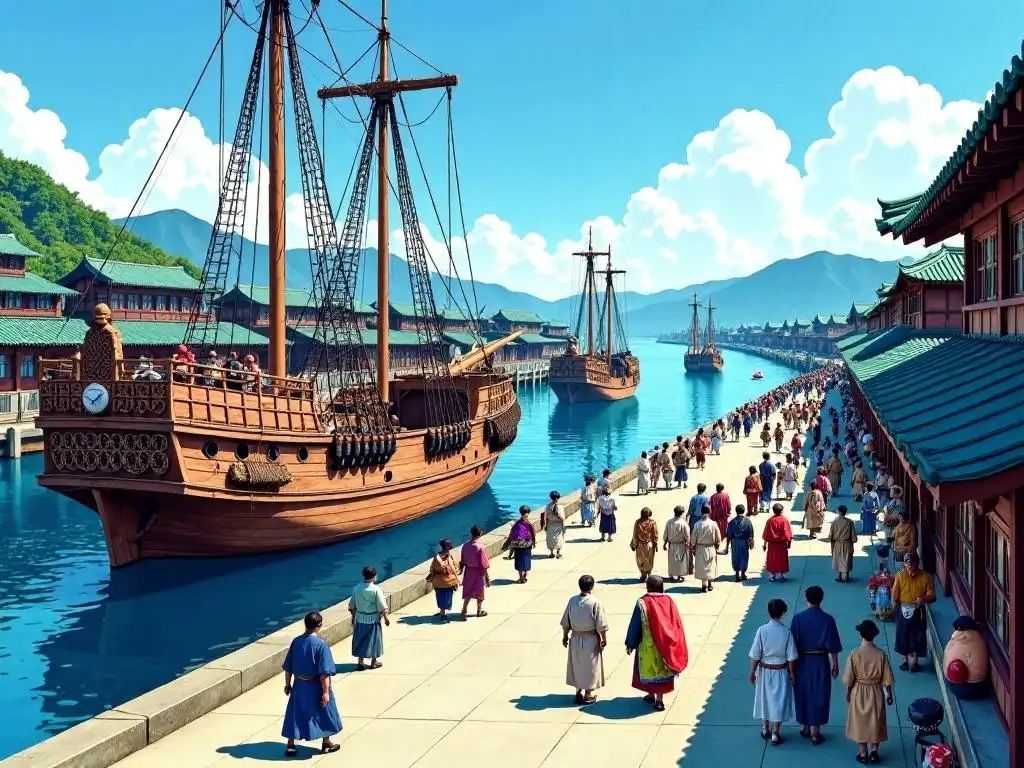
The Tokugawa Shogunate, which ruled Japan from 1603 to 1868, had profound effects on the country's foreign relations, shaping both its diplomatic stance and its internal policies. The period is characterized by a strict isolationist approach known as sakoku, which had far-reaching consequences on Japan's economic, cultural, and global standing.
Economic Impact of Isolationist Policies
The isolationist policies of the Tokugawa Shogunate greatly influenced Japan’s economy. By limiting foreign trade primarily to the Dutch and Chinese, Japan aimed to control economic influences and maintain political stability. This restriction led to several key economic consequences:
- Limited Trade Opportunities: Japan's trade was confined to certain ports, such as Nagasaki, which stunted the growth of a more diverse trading system. While foreign goods were available, the limited access meant that Japan missed out on the benefits of broader international markets.
- Self-Sufficiency: The shogunate promoted agricultural production and self-sufficiency. This resulted in a stable food supply for the population but also limited technological advancements that could have been gained through foreign interactions.
- Economic Stagnation: Over time, the lack of foreign competition led to economic stagnation. While the domestic economy was stable, it lacked the dynamism that could have been fostered through international trade and investment.
Despite these limitations, the Tokugawa period did see the growth of a merchant class, which emerged as an influential socio-economic group, albeit within the confines of a largely closed economy.
Cultural Exchange and Its Limitations
The Tokugawa Shogunate's policies also affected cultural exchange with the outside world. While there were some channels of cultural interaction, they were highly regulated:
- Restricted Cultural Influences: The shogunate's strict controls limited the influx of foreign ideas, philosophies, and religions. While the Dutch were allowed to trade, the exchange of knowledge was heavily censored, preventing significant Western influence.
- Adaptation of Foreign Technologies: Despite the limitations, Japan did adapt certain foreign technologies, particularly from the Dutch. This included advancements in navigation, medicine, and military technology, which were selectively integrated into Japanese practices.
- Cultural Isolation: The isolationist policies fostered a unique Japanese culture that developed independently. Traditional arts, literature, and crafts flourished but were often devoid of external influences that could have enriched them.
Overall, while the Tokugawa period preserved a distinct Japanese culture, it also limited the country’s exposure to global cultural developments.
Long-term Effects on Japan’s Global Position
The consequences of the Tokugawa Shogunate’s foreign relations were felt long after its fall, particularly in terms of Japan's position in the global arena:
- Delayed Modernization: The isolationist policies contributed to Japan's technological and industrial lag compared to Western powers. When Japan finally opened up in the mid-19th century, it faced significant challenges in catching up with the West.
- Initial Vulnerability: Japan’s isolation left it unprepared for the pressures of Western imperialism. The forced opening of Japan by Commodore Perry in 1853 highlighted the vulnerabilities stemming from centuries of isolation.
- Transition to Engagement: The end of the Tokugawa Shogunate marked a shift toward modernization and engagement with the world. The Meiji Restoration initiated efforts to build a stronger and more competitive nation on the global stage.
These long-term effects illustrate how the Tokugawa era’s foreign relations shaped Japan’s subsequent interactions with the world.
Conclusion: Legacy of the Tokugawa Shogunate on Modern Japan’s Foreign Relations
The Tokugawa Shogunate's legacy is evident in modern Japan's approach to foreign relations. While the period was marked by isolation, it laid the groundwork for Japan's eventual transformation into a global power.
Reflection on Historical Lessons
The historical lessons from the Tokugawa Shogunate emphasize the complexities of isolationism versus engagement. Japan's experience highlights the risks of closing off from the world, as well as the importance of adapting to changing global dynamics. The shogunate's restrictive policies serve as a cautionary tale about the potential consequences of avoiding international collaboration and exchange.
The Shift from Isolationism to Engagement in the Meiji Era
The Meiji Restoration in 1868 signified a dramatic shift from the isolationist stance of the Tokugawa Shogunate to an era of active engagement with the world. This transition involved:
- Rapid Modernization: Japan undertook extensive reforms to modernize its military, government, and economy, drawing on Western technologies and systems.
- Diplomatic Expansion: Japan began establishing diplomatic relations and treaties with Western nations, marking its emergence as a significant player on the global stage.
- Cultural Exchange: The end of isolation allowed for a vibrant exchange of ideas, culture, and technology, which enriched Japanese society and contributed to its rapid development.
While the Tokugawa Shogunate’s foreign relations were marked by isolation, the subsequent shift during the Meiji era transformed Japan into a modern nation, capable of navigating the complexities of international relations.
References
The study of the Tokugawa Shogunate and its influence on Japan's foreign relations is supported by a variety of historical texts, scholarly articles, and primary sources. These references provide context and depth to the understanding of how the Tokugawa period shaped Japan's interactions with the outside world. Below are some essential references that can further enhance your knowledge on this topic.
Suggested Further Reading on Tokugawa History
-
"The Tokugawa World" by James L. McClain
This comprehensive work explores the political, social, and cultural dimensions of the Tokugawa period, providing insights into how these aspects influenced foreign relations.
-
"Japan in the Tokugawa Period (1603-1868)" by John Whitney Hall
Hall offers an in-depth analysis of Tokugawa Japan, detailing the shogunate's policies that affected both domestic and foreign affairs.
-
"The Making of Modern Japan" by John Dower
Dower discusses the transition from the Tokugawa Shogunate to modern Japan, highlighting the shifts in foreign relations during and after the Tokugawa era.
-
"Tokugawa Japan: The Cultural Roots of Modern Japan" by Marcia Yonemoto
This text examines the cultural influences during the Tokugawa period and how they laid the groundwork for Japan's later foreign policies.
-
"The Samurai: A Military History" by Stephen Turnbull
Turnbull provides a detailed account of the samurai's role in Japan's military and diplomatic history during the Tokugawa period, shedding light on the external relations dynamics.
Key Historical Texts on Japan’s Foreign Relations
-
"The Closed Country Letters" by Tokugawa Ieyasu
These letters give insight into the early foreign policy decisions of the Tokugawa Shogunate, particularly the restrictions placed on foreign interactions.
-
"The History of Japan" by George Sansom
Sansom's work is a classic and provides a thorough historical narrative, including a detailed examination of Japan's foreign relations during the Tokugawa period.
-
"Japan's Foreign Relations: A Historical Perspective" by A. J. S. P. K. Mukherjee
This book discusses the evolution of Japan's foreign relations, placing significant emphasis on the Tokugawa Shogunate's policies and their long-term impacts.
-
"The Dutch East India Company and the Tokugawa Shogunate" by J. Van D. De Vries
This text delves into the unique relationship between the Dutch traders and the Tokugawa government, highlighting the complexities of foreign trade and diplomacy.
-
"The Pacific War: Japan vs. the US" by John W. Dower
Although focused on a later period, Dower's analysis includes reflections on the legacy of Tokugawa foreign policy and its influence on Japan's eventual engagement in World War II.
These references serve as a foundation for understanding the multifaceted relationships that Japan fostered with foreign entities during the Tokugawa period. They illustrate the complexities of diplomacy, trade, and cultural exchange that defined Japan's isolationist policies and their eventual shift in the modern era.
- Introduction to the Tokugawa Shogunate
- Key Policies of the Tokugawa Shogunate Regarding Foreign Relations
- The Tokugawa Shogunate’s Relations with Neighboring Countries
- The Influence of Western Powers on Tokugawa Foreign Relations
- The Consequences of Tokugawa Foreign Relations on Japan
- Conclusion: Legacy of the Tokugawa Shogunate on Modern Japan’s Foreign Relations
- References
- What was the Tokugawa Shogunate's approach to foreign relations?
- How did the Tokugawa Shogunate influence Japan's cultural exchange?
- What were the main foreign powers interacting with Japan during the Tokugawa era?
- How did the Tokugawa Shogunate's foreign relations impact Japan's modernization?
- What were the long-term effects of the Tokugawa Shogunate's foreign relations policies?
Frequently Asked Questions
What was the Tokugawa Shogunate's approach to foreign relations?
The Tokugawa Shogunate adopted a policy of isolation, limiting foreign influence and trade primarily to the Dutch and Chinese. This strategy helped maintain internal stability and control.
How did the Tokugawa Shogunate influence Japan's cultural exchange?
Despite its isolationist policies, the Tokugawa Shogunate facilitated limited cultural exchanges through controlled trade, allowing for the introduction of Western ideas and technologies, particularly in the fields of science and art.
What were the main foreign powers interacting with Japan during the Tokugawa era?
The Dutch and Chinese were the primary foreign powers allowed to engage with Japan during the Tokugawa period, as they were seen as less threatening compared to other nations, such as Spain and Portugal.
How did the Tokugawa Shogunate's foreign relations impact Japan's modernization?
The isolationist policies of the Tokugawa Shogunate delayed Japan's modernization, as the country was largely cut off from Western innovations until the mid-19th century, which eventually led to significant reforms during the Meiji Restoration.
What were the long-term effects of the Tokugawa Shogunate's foreign relations policies?
The foreign relations policies of the Tokugawa Shogunate resulted in a cultural homogeneity that shaped Japanese identity, but also created challenges in adapting to global changes when the country opened up in the late 1800s.
Final Reflection: The Enduring Legacy of the Tokugawa Shogunate on Japan's Foreign Relations
The Tokugawa Shogunate's influence on Japan's foreign relations remains profoundly relevant today, as it laid the groundwork for the nation's modern diplomatic identity. The isolationist policies and strategic engagements of the Tokugawa era not only shaped Japan's interactions with the world during its time but also set a precedent for how Japan would navigate the complexities of international relations in the centuries to follow. As we witness the ongoing evolution of global diplomacy, the lessons from this pivotal period in Japanese history resonate with contemporary issues of trade, cultural exchange, and national security.
The Tokugawa Shogunate's foreign relations strategies have left an indelible mark on Japan's cultural and social landscape, influencing everything from trade practices to cultural exchanges. The careful balance of isolation and engagement during this period has fostered a unique Japanese identity that continues to thrive in a globalized world. In the midst of chaos, there is also opportunity.
This quote encapsulates the essence of how the Tokugawa Shogunate navigated its foreign relations—finding opportunities for growth and stability amidst the challenges of the time.
As we reflect on the lessons of the Tokugawa Shogunate, let us consider how we can apply its principles of strategic engagement and cultural understanding in our own lives. I invite you to explore the ways in which history informs our present and future interactions with others. By embracing the complexities of our own relationships—both personal and global—we can foster a more harmonious and interconnected world, much like the delicate balance the Tokugawa Shogunate sought to achieve in its foreign relations.
Unlock the Secrets of Japan’s Rich History!
Thank you for diving into the fascinating world of the Tokugawa Shogunate and its profound influence on Japan’s foreign relations! We hope you’ve gained valuable insights into this intriguing era that shaped the nation’s path and global interactions.
Now, it’s time to take your interest further and deepen your understanding of this pivotal period. Here’s how you can continue your journey:
- Explore our comprehensive resources on the Tokugawa period to uncover more details about trade, diplomacy, and cultural exchanges.
- Join our community by sharing your thoughts or experiences related to Japan’s feudal history; your perspective can inspire others!
- Consider visiting historical sites or exhibitions dedicated to the Tokugawa Shogunate to experience its legacy firsthand.
What aspect of the Tokugawa Shogunate intrigues you the most, and how do you think it continues to influence Japan today? We’d love to hear your thoughts!