
The Transition from Feudalism to Centralized Power: Japan's Unification Journey


Welcome to Feudal Japan History, where we embark on a fascinating journey through the intricate tapestry of Japan’s feudal era. Here, we delve deep into the transition from feudalism to centralized power, exploring the pivotal moments that shaped the nation’s political landscape. What drove this dramatic shift? What cultural and societal influences were at play? As you navigate our expert-driven articles, prepare to uncover the rich narratives and profound transformations that defined Japan's unification journey. Join us in unlocking the secrets of a bygone era and discover how the echoes of feudalism continue to resonate in modern Japan.
Introduction to Japan's Feudalism and Centralization
The journey of Japan from a fragmented feudal society to a centralized state is a significant chapter in the nation's political history. This transition, spanning several centuries, is marked by shifting power dynamics, intricate social hierarchies, and the emergence of influential leaders.
Understanding how Japan evolved from feudalism to centralization not only sheds light on the political landscape of the time but also provides insight into the cultural and societal transformations that accompanied this critical period. By exploring the key elements of Japan's feudal era and the subsequent unification efforts, we can gain a deeper appreciation for how these changes laid the groundwork for the modern Japanese state.
Overview of Feudal Japan's Political Structure
Feudal Japan was characterized by a decentralized political structure, where power was distributed among local lords, known as daimyō, and their vassals. This system fostered a hierarchy that revolved around land ownership and military service. Key features of this political landscape included:
- Daimyō: Powerful feudal lords who controlled large domains and commanded loyalty from samurai.
- Samurai: The warrior class serving the daimyō, bound by a code of honor known as bushidō.
- Shōgun: The military leader who held the real power, often ruling on behalf of the emperor.
This structure created a complex web of allegiances and rivalries, which significantly influenced Japan's social and political developments.
Importance of Understanding Japan's Transition to Centralization
Studying the transition from feudalism to centralized power is crucial for several reasons:
- Historical Context: It illuminates the factors that led to the decline of feudalism, including internal strife and external threats.
- Cultural Implications: The shift marked significant changes in societal norms, governance, and Japanese identity.
- Political Legacy: Understanding this era provides insights into the formation of modern political systems in Japan, including the role of the emperor and the establishment of a unified state.
The Era of Feudalism in Japan
The era of feudalism in Japan is a fascinating period that set the stage for the eventual unification of the country under centralized power. It is essential to grasp the defining characteristics of this era to comprehend the complexity of Japan's historical trajectory.
Definition and Characteristics of Feudalism in Japan
Feudalism in Japan can be defined as a socio-political system where land ownership and military service formed the basis of relationships among the ruling and warrior classes. Key characteristics of Japanese feudalism included:
- Land Ownership: The daimyō owned vast tracts of land, which were worked by peasants who paid taxes in exchange for protection.
- Military Obligations: Samurai were required to serve their daimyō in times of conflict, reinforcing the bond of loyalty between lord and vassal.
- Social Hierarchy: Society was stratified, with the emperor at the top, followed by shōgun, daimyō, samurai, and peasants, creating a rigid class system.
Key Figures of the Feudal Period
Several influential figures emerged during Japan's feudal period, shaping the course of history through their actions and ambitions. Notable individuals include:
- Minamoto no Yoritomo: The first shōgun of the Kamakura period, who established the shōgunate and centralized military power.
- Oda Nobunaga: A powerful warlord who played a crucial role in the unification process during the late 16th century.
- Toyotomi Hideyoshi: Nobunaga's successor, known for his efforts to consolidate power and implement land reforms.
These figures were instrumental in dismantling the feudal system and paving the way for a more centralized form of governance, which would ultimately lead to the unification of Japan.
Factors Leading to the Decline of Feudalism
The decline of feudalism in Japan was a complex process influenced by various interrelated factors. These factors not only paved the way for the transition to a more centralized form of governance but also reshaped the socio-economic landscape of the nation. The period leading up to the unification of Japan saw significant shifts in political power, economic structures, and societal norms. Understanding these factors is crucial to grasping how Japan evolved from a feudal society to a centralized state.
Internal Conflicts and Civil Wars
Internal conflicts and civil wars were pivotal in destabilizing the feudal system in Japan. The Sengoku period (1467-1603), characterized by continuous military conflict among the daimyō (feudal lords), significantly weakened the feudal structure. The constant power struggles led to widespread chaos, as various factions vied for control over territories. Notable battles, such as the Battle of Okehazama in 1560 and the Siege of Osaka in the early 1600s, exemplified this tumultuous era.
These internal conflicts strained the resources of the feudal lords, forcing them to adapt their strategies. As daimyō fought for supremacy, they began to recognize the need for alliances and centralized authority to maintain stability. This realization initiated a shift toward a more unified governance structure, culminating in the eventual unification under Tokugawa Ieyasu. The internal strife served as a catalyst that demonstrated the inefficiencies of a decentralized feudal system and highlighted the necessity for centralization to ensure peace and order.
Economic Changes and the Rise of Commerce
Economic changes during the late feudal period also played a critical role in the decline of feudalism in Japan. The rise of commerce and trade, particularly in urban centers, transformed the socio-economic dynamics of the era. As cities like Edo (modern-day Tokyo) and Osaka flourished, a new merchant class emerged, challenging the traditional power held by the samurai and feudal lords.
This burgeoning merchant class began to exert influence over local economies, leading to increased wealth distribution and the establishment of a more complex economic system. The demand for goods and services fueled innovation and development in agriculture, manufacturing, and trade. The increased economic interdependence among regions made the feudal system's fragmented nature less viable, as local daimyō found themselves reliant on the stability and prosperity of the larger economic landscape.
Moreover, as commerce thrived, the central authority became more appealing. Merchants and commoners began to support the idea of a strong, centralized government that could protect trade routes and ensure economic stability. This support was crucial for the eventual acceptance of centralized power, as it aligned with the interests of the newly emerging economic classes.
The Unification of Japan: Path to Centralization
The unification of Japan from a fractured feudal system to a centralized state was marked by significant events and influential leaders. This transformation was not instantaneous; rather, it was a gradual process characterized by strategic warfare, political alliances, and social changes that collectively shaped Japan's trajectory toward centralization.
Key Events in Japan's Unification Journey
Several key events marked the path to Japan's unification and centralization. The most notable of these was the rise of powerful warlords who sought to consolidate power amidst the chaos of the Sengoku period.
- Nobunaga's Campaigns (1560-1582): Oda Nobunaga was among the first to effectively utilize military strategy and technology to defeat rival daimyō. His campaigns laid the groundwork for the unification by eliminating key opponents and establishing control over significant territories.
- Hideyoshi's Consolidation (1582-1598): Following Nobunaga's death, Toyotomi Hideyoshi continued the unification efforts by implementing land surveys and promoting agricultural production. His policies aimed to strengthen central authority, as he sought to create a unified tax system and reduce the power of the daimyō.
- Tokugawa's Ascendancy (1600-1603): The decisive Battle of Sekigahara in 1600 marked the turning point in Japan's unification. Tokugawa Ieyasu emerged victorious, establishing the Tokugawa shogunate. This victory effectively ended the era of feudal warfare and initiated over 250 years of relative peace known as the Edo period.
- Implementation of the Sankin-kōtai System: Under the Tokugawa shogunate, the sankin-kōtai policy required daimyō to spend every other year in the shogun's capital, Edo. This system weakened the power of the regional lords by making them reliant on the central government and fostering loyalty to the shogunate.
These events collectively contributed to the decline of feudalism and the establishment of a centralized political system in Japan. The successful unification represented a significant cultural and political shift, laying the foundation for modern Japan and its emergence as a centralized, cohesive nation.
Mechanisms of Centralized Power

The transition from feudalism to centralized power in Japan was a multifaceted process that involved various mechanisms designed to consolidate authority and streamline governance. A key aspect of this transition was the establishment of a centralized bureaucratic system that replaced the fragmented feudal structure. This system was characterized by a more organized administration, which allowed for better resource allocation and more effective law enforcement.
One of the primary mechanisms was the creation of a national tax system, which significantly reduced the financial autonomy of local lords (daimyōs). Instead of collecting taxes independently, daimyōs were required to pay a fixed amount to the central government. This shift not only increased the revenue stream for the shogunate but also diminished the power of local feudal lords, effectively tightening the grip of centralized authority.
Additionally, the implementation of a system of vassalage with loyalty oaths ensured that local lords remained subservient to the shogunate. By reinforcing the notion of loyalty to the shogun rather than to individual lords, the government was able to create a more unified political landscape.
Administrative Reforms Under Tokugawa Rule
The Tokugawa shogunate, which ruled from 1603 to 1868, introduced significant administrative reforms that were crucial in centralizing power. One notable reform was the establishment of the bakuhan system, which divided the realm into domains ruled by daimyōs but under the strict oversight of the shogunate. This system allowed the Tokugawa to maintain control over the daimyōs while still using them to govern local areas.
Another major reform was the creation of a centralized legal system. The Tokugawa shogunate codified laws, providing a legal framework that applied uniformly across the country. This helped to standardize governance and reduce the arbitrariness of feudal justice systems. The roles of samurai were also redefined, transitioning from warriors to administrative officials, which further entrenched centralized governance.
Moreover, the implementation of the sankin-kōtai system required daimyōs to spend alternate years in Edo (modern-day Tokyo), the capital of the shogunate. This practice not only ensured the shogunate's surveillance over the daimyōs but also fostered a sense of loyalty, as their families were held in Edo as hostages, ensuring their compliance with Tokugawa policies.
As Japan transitioned to centralized power, significant cultural and social changes unfolded. The Tokugawa period saw the rise of a new social hierarchy, which was distinct from the feudal system. The samurai class, once the ruling elite, found their roles shifted as they became bureaucrats and administrators. In contrast, the merchant class began to gain wealth and influence, leading to a revaluation of social status based on economic power rather than noble birth.
Culturally, the era was marked by a flourishing of the arts, particularly in literature, theater, and visual arts. The peace and stability provided by Tokugawa rule allowed for the growth of urban centers, where culture thrived. The development of ukiyo-e (woodblock prints) and kabuki theater became popular forms of entertainment, reflecting the changing societal values and the interests of a growing urban populace.
Education also became more widespread during this time. The establishment of terakoya (temple schools) enabled children of all classes, including commoners, to receive an education. This focus on learning contributed to a literate society that was more engaged in cultural and political discourse, further embedding the ideals of centralized governance.
Consequences of Moving from Feudalism to Centralization
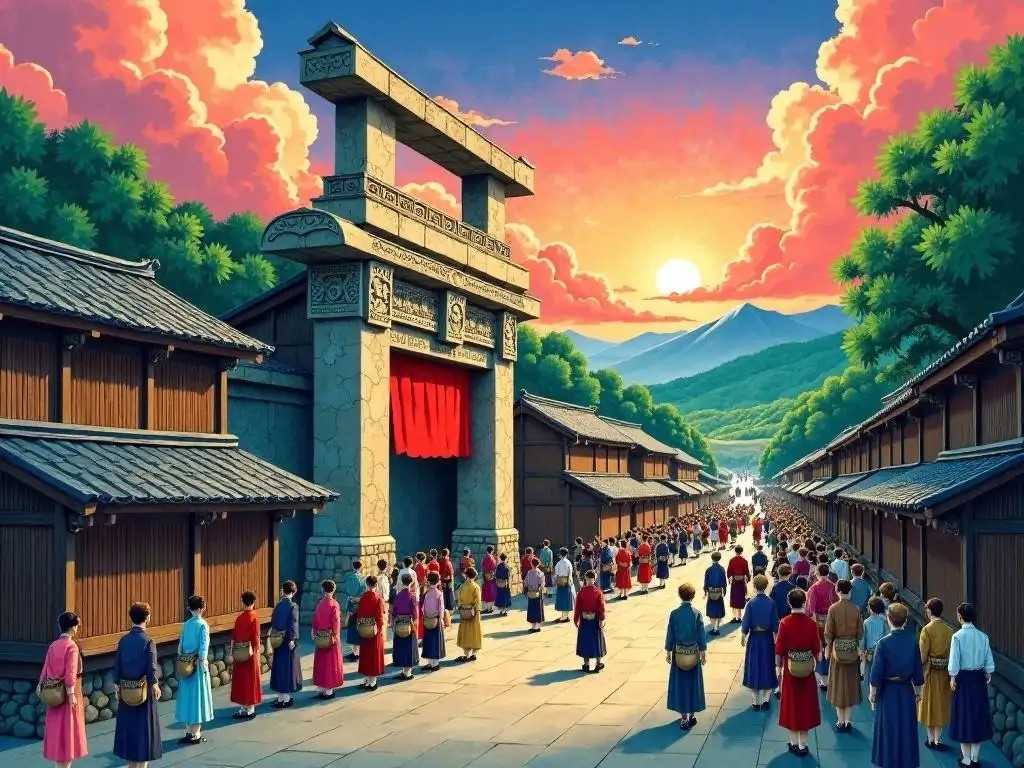
The transition from feudalism to centralized power in Japan had profound consequences that shaped the nation’s future.
Political Stability and Governance
One of the most significant outcomes was the establishment of political stability. The centralized authority of the Tokugawa shogunate effectively ended the widespread conflicts that characterized the late feudal era, creating a long period of peace known as the Edo period. This stability allowed for the development of a consistent governance framework, which facilitated law and order across the nation.
The Tokugawa shogunate also laid the groundwork for a more structured government, reducing the volatility associated with feudal lords who often acted independently. This centralized governance system allowed for more effective administration and a more predictable political landscape, significantly contributing to Japan’s long-term stability.
Economic Growth and Development
The shift to centralized power also spurred economic growth and development. The Tokugawa period saw the expansion of trade and commerce, both domestically and internationally. The establishment of a national market was facilitated by improved transportation networks, including roads and waterways, which promoted the movement of goods across various regions.
Additionally, agricultural practices were enhanced through the introduction of new techniques and crops, leading to increased productivity. The resulting agricultural surplus supported urbanization, as people moved to cities in search of work and opportunities, further fueling economic expansion.
Cultural Flourishing and the Edo Period
The Edo period is often regarded as a time of cultural flourishing, which was a direct consequence of the centralized power structure. With the political stability and economic prosperity provided by the Tokugawa shogunate, arts and culture thrived. Literature, particularly novels and poetry, saw a resurgence, with famous works like "The Tale of Genji" gaining renewed interest.
The arts, such as painting, ceramics, and crafts, flourished as well, leading to the development of unique Japanese styles. The era also witnessed the emergence of distinct cultural practices, such as the tea ceremony, which became a symbol of Japanese aesthetics and social interaction.
The transition from feudalism to centralized power not only transformed Japan’s political landscape but also catalyzed profound economic and cultural changes, laying the foundations for the modern nation-state.
Conclusion: The Legacy of Japan's Transition from Feudalism to Centralization
The transition from feudalism to centralized power in Japan represents a pivotal moment in the nation's history, shaping its political, social, and cultural landscapes. This transformation not only established a unified state but also laid the groundwork for modern governance and national identity. The Tokugawa shogunate's policies and the subsequent Meiji Restoration marked significant shifts that eliminated the fragmented power structures of the feudal era, fostering a sense of nationalism and collective identity among the populace.
The legacy of this transition can still be felt today, as Japan's political framework continues to reflect the balance between centralized authority and local governance. The historical journey from decentralized feudal lords to a unified central government illustrates the complexities of power dynamics and the importance of strategic leadership in overcoming fragmentation.
Reflection on the Historical Significance
Japan's unification journey holds historical significance not only for its domestic implications but also for its impact on international relations. The consolidation of power under a central authority allowed Japan to emerge as a formidable force on the global stage, particularly during the late 19th and early 20th centuries. Understanding this historical context reveals how the foundations laid during the transition from feudalism continue to influence Japan's approach to diplomacy, trade, and military strategy.
Additionally, this historical reflection highlights the importance of cultural unification alongside political consolidation. The shared experiences and cultural heritage fostered during the transition period strengthened the bond among the Japanese people, facilitating a collective identity that transcended regional loyalties. This cultural cohesion remains vital in contemporary Japan, where regional identities coexist with a national consciousness.
Future Implications for Japan's Political Landscape
As Japan navigates the complexities of the 21st century, the implications of its transition from feudalism to centralized power resonate in various aspects of its political landscape. The historical shift established a centralized bureaucracy that continues to influence governance, policy formulation, and administrative practices.
Looking ahead, the need for adaptability in political structures will be paramount as Japan faces new challenges, such as demographic shifts, economic pressures, and global environmental issues. The lessons learned from the past, particularly the importance of unity and strategic leadership, can guide contemporary policymakers in fostering resilience and innovation within the political framework.
Furthermore, Japan's historical journey underscores the significance of balancing central authority with regional autonomy, a theme relevant in discussions around local governance and community empowerment today. As Japan continues to evolve, the interplay between its feudal past and modern governance will remain a critical area of examination.
Further Reading on Japan's Feudalism and Centralized Power
For those interested in delving deeper into the intricate history of Japan's transition from feudalism to centralized power, a wealth of resources is available that offers diverse perspectives and insights.
Recommended Books and Resources
- "The Making of Modern Japan" by Bruce Cumings: This comprehensive work explores the historical trajectory of Japan from the feudal period through the Meiji Restoration, offering critical analysis and context.
- "Japan: A Modern History" by James L. McClain: This book provides a detailed account of Japan's political development, emphasizing the transition from the shogunate to a modern nation-state.
- "The Tokugawa World" edited by J. Victor Koschmann: A collection of essays that examine various aspects of the Tokugawa shogunate, including its political, social, and cultural dimensions.
- Online Resources: Websites like the National Diet Library of Japan offer digitized historical documents and scholarly articles that can deepen understanding of Japan’s political evolution.
Expert Articles and Research Papers on Japan's Political History
- "The Legacy of the Tokugawa Shogunate: Political and Social Dynamics": An academic article that investigates the social structures and governance mechanisms of the Tokugawa era and their influence on modern Japan.
- "From Feudalism to Modernity: Japan's Political Transition": A research paper analyzing the key events, figures, and policies that facilitated Japan's transition from a feudal society to a centralized state.
- "Cultural Identity and National Unification in Early Modern Japan": This article examines the role of culture in shaping national identity during the transition from feudalism, providing insights into the social fabric of the time.
By exploring these resources, readers can gain a deeper understanding of Japan's historical journey from feudalism to centralized power and its enduring impact on the nation's political landscape.
- Introduction to Japan's Feudalism and Centralization
- The Era of Feudalism in Japan
- Factors Leading to the Decline of Feudalism
- The Unification of Japan: Path to Centralization
- Mechanisms of Centralized Power
- Administrative Reforms Under Tokugawa Rule
- Cultural and Social Changes During Centralization
- Consequences of Moving from Feudalism to Centralization
- Conclusion: The Legacy of Japan's Transition from Feudalism to Centralization
- Further Reading on Japan's Feudalism and Centralized Power
Frequently Asked Questions
What was the primary characteristic of feudalism in Japan?
The primary characteristic of Japanese feudalism was a system where land was held by daimyos (feudal lords) who provided protection and governance to their vassals in exchange for loyalty and military service.
How did Japan transition from feudalism to centralization?
The transition from feudalism to centralization involved significant political changes, notably during the Meiji Restoration, which restored imperial rule and aimed to modernize and unify the country under a central government.
What role did samurai play in the feudal system?
The samurai were the warrior class in Japan's feudal system, serving as vassals to the daimyos and responsible for military service, upholding the code of bushido, and maintaining local order.
What impact did centralization have on Japanese society?
Centralization led to the abolition of feudal lords, the establishment of a national army, and the promotion of a more uniform culture and legal system, which significantly transformed the societal structure of Japan.
How did the unification journey affect Japan's cultural identity?
The unification journey fostered a stronger sense of national identity among the Japanese people, blending various regional cultures into a more cohesive Japanese culture that emphasized shared heritage and values.
Final Reflection: The Enduring Legacy of Japan's Transition from Feudalism to Centralized Power
The journey from feudalism to centralized power in Japan is not just a historical narrative; it is a powerful reminder of the resilience and adaptability of societies. Today, as we navigate complex political landscapes and seek unity in diversity, the lessons from Japan's unification journey resonate profoundly. The transformation that occurred centuries ago serves as a beacon for contemporary nations grappling with fragmentation and the quest for cohesive governance.
The impact of Japan's transition is still felt in its cultural and social frameworks, shaping the identity of a nation that values harmony and order. This historical shift laid the groundwork for modern Japan, influencing everything from its political institutions to its societal norms. As we reflect on this evolution, it becomes clear that the consolidation of power was not merely a political maneuver but a cultural metamorphosis that fostered a sense of national identity. The past is never dead. It's not even past.
— William Faulkner. This quote encapsulates the idea that history continuously informs our present, urging us to recognize the threads that connect us to our predecessors.
As we conclude this exploration of Japan's remarkable transition, I invite you to reflect on how the lessons from this period can be applied in your own life. Consider the importance of unity in your community and the ways in which you can contribute to a more cohesive society.
Just as Japan overcame its feudal divisions to forge a unified nation, we too can strive to bridge our differences and work towards a common goal. Let the story of Japan's journey inspire you to embrace collaboration and foster understanding in your own circles, ensuring that the legacy of unity continues to thrive.
Embark on Your Journey of Discovery!
Thank you for taking the time to explore Japan's fascinating transition from feudalism to a centralized power. Your interest in this pivotal period enriches your understanding of not just Japan's history, but also the broader themes of leadership and societal change.
Now, let's take the next step together! Here are a few ways to deepen your engagement:
- Dive Deeper: Read our comprehensive guide on the influential leaders and their strategies during Japan’s unification—their insights could inspire your own journey of growth.
- Join the Conversation: Participate in our community forum—what lessons do you think modern society could learn from this significant chapter in Japan's history?
- Spread the Knowledge: Encourage friends or family to explore this transformative era—history is best appreciated together!
What aspect of Japan’s unification journey resonates most with you, and how do you believe it can shape our perspectives today?