
The Legacy of Feudal Education: Its Impact on Modern Japanese Learning


Welcome to Feudal Japan History, where we delve into the intricate tapestry of Japan's feudal era! Here, you will discover a wealth of knowledge about the historical, cultural, and societal aspects that shaped this fascinating period. In our featured article, “The Legacy of Feudal Education: Its Impact on Modern Japanese Learning,” we invite you to uncover how the educational practices of the past continue to influence contemporary Japan. Prepare to embark on a journey that reveals the profound connections between ancient teachings and today's learning environments—curiosity awaits you at every turn!
Introduction to Feudal Education in Japan
The legacy of feudal education in Japan presents a fascinating tapestry woven from the threads of historical events, cultural shifts, and societal changes that have shaped the nation's approach to learning. During the feudal era, education was not uniformly accessible, but rather stratified and deeply influenced by the social hierarchy. This article delves into the intricacies of feudal education in Japan, examining its structures, key players, and underlying philosophies. By understanding this historical context, we can appreciate the lasting impact that these educational practices have had on modern Japanese learning systems.
Overview of Feudal Education in Japan
Feudal education in Japan, spanning from the 12th to the 19th century, was characterized by a system that prioritized the learning of the elite while largely neglecting the common populace. The primary aim of education during this period was to cultivate a loyal and capable samurai class, as well as to instill moral values and social responsibilities. Educational institutions varied significantly, with different approaches tailored to the needs of the ruling classes and the emerging merchant class.
Key aspects of feudal education included:
- Limited Access: Education was primarily reserved for the samurai and nobility. Commoners had very few opportunities for formal education.
- Focus on Practical Skills: Emphasis was placed on martial skills, governance, and moral education, reflecting the needs of a stratified society.
- Regional Variations: Different domains had their own educational practices, influenced by local leaders and cultural norms.
Historical Context of Education During the Feudal Era
The historical backdrop of feudal education is essential to understand the evolution of Japan's learning philosophies. The rise of the samurai class during the Kamakura period (1185-1333) marked a significant shift in the educational landscape. Initially, learning was predominantly influenced by Buddhist temples, which served as centers of knowledge. However, as the feudal system solidified, the focus shifted towards Confucian ideals, which emphasized moral integrity, loyalty, and proper conduct.
Throughout the Muromachi period (1336-1573) and into the Edo period (1603-1868), education became increasingly formalized, with the establishment of:
- Hankō (Domain Schools): These institutions were set up by feudal lords to educate their samurai and retainers, often incorporating Confucian teachings.
- Private Academies: Some scholars established private schools that catered to the needs of the emerging merchant class, introducing a more diverse curriculum.
Key Features of Feudal Education
Feudal education in Japan was not a monolithic entity; it was marked by distinctive features that reflected the socio-political landscape of the time.
Structure of Feudal Educational Institutions
The architecture of feudal educational institutions can be categorized into several types:
- Temples and Monasteries: Initially served as the primary centers of learning, where Buddhist teachings were imparted.
- Domain Schools (Hankō): Established by feudal lords, these schools were designed to cater specifically to the samurai class, focusing on governance, ethics, and martial arts.
- Private Schools: With the rise of the merchant class, private academies emerged, offering a broader range of subjects, including literature and philosophy.
Role of Samurai and Nobility in Education
The samurai and nobility played a pivotal role in shaping feudal education. Education was viewed as a means to cultivate not only military prowess but also moral and ethical leadership. The samurai's commitment to learning was deeply ingrained in their code of conduct, known as Bushidō, which emphasized virtues such as loyalty, honor, and wisdom.
- Mentorship: Experienced samurai often served as mentors, imparting knowledge and skills to younger generations.
- Cultural Preservation: The nobility's patronage of the arts and literature helped preserve and promote cultural heritage during periods of upheaval.
Influence of Confucianism and Buddhism on Learning
The philosophical foundations of feudal education were heavily influenced by both Confucianism and Buddhism.
- Confucianism: This ideology introduced a systematic approach to ethics and governance, promoting ideals such as filial piety, loyalty, and respect for authority. Confucian texts became central to the curriculum in domain schools, shaping the moral landscape of the samurai class.
- Buddhism: The teachings of Buddhism provided a spiritual dimension to education, emphasizing the importance of introspection and moral development. Monastic schools were instrumental in disseminating Buddhist philosophies, which complemented the ethical teachings of Confucianism.
Through this exploration of feudal education, we can better understand its profound influence on contemporary educational practices in Japan, where the echoes of its historical roots continue to resonate in modern learning environments.
The Curriculum of Feudal Education
The curriculum of feudal education in Japan was heavily influenced by Confucian ideals, emphasizing the importance of moral character, practical skills, and scholarly pursuits. Education during this era was not uniform; it varied significantly based on the social class of the student. The primary aim was to cultivate loyal and ethical samurai, responsible farmers, and educated merchants, ensuring each class contributed to the stability of society.
In the early feudal period, the focus was largely on the study of classical texts, including The Four Books and Five Classics, which formed the backbone of Confucian learning. As the Tokugawa shogunate established its dominance, the curriculum expanded to include subjects such as calligraphy, poetry, and history, fostering a more holistic approach to education. This shift reflected the growing emphasis on cultural refinement among the samurai and the emerging merchant class.
Subjects Taught in Feudal Schools
Feudal schools, known as terakoya for commoners and hankō for samurai, had distinct curricula tailored to their respective audiences. Common subjects included:
- Literature and Poetry: Students studied classical Japanese literature and practiced poetry writing, which was essential for cultural expression and social status.
- Mathematics: Practical arithmetic was taught, particularly relevant for merchants and farmers managing finances and trade.
- Calligraphy: This skill was not only an art form but also a reflection of one’s education and status, thus a vital part of the curriculum.
- Confucian Ethics: Moral philosophy was a foundational subject, instilling virtues such as loyalty, filial piety, and righteousness.
In contrast, samurai schools placed greater emphasis on military strategy, martial arts, and the study of historical texts that reflected the samurai code, bushido. This divergence in subjects illustrated the broader societal structure and the roles expected of different classes within feudal Japan.
Comparison of Education Among Different Classes
Education in feudal Japan was stratified and closely linked to one’s social class. The samurai class had access to formal education through hankō, where rigorous training in the arts, literature, and martial skills was provided. This education aimed to prepare them for leadership roles and instill a sense of duty and honor.
In contrast, commoners received their education primarily through terakoya, where the curriculum focused on practical skills and moral teachings. Although these schools offered basic literacy and numeracy, the depth of education was limited compared to that of the samurai. The merchant class, while often financially successful, faced societal restrictions that limited their educational opportunities. Consequently, their education emphasized trade skills and financial acumen rather than classical learning.
This disparity in educational access and content created a deeply entrenched class system, which influenced societal structure and mobility for generations to come.
The Significance of Moral Education in Feudal Japan
Moral education was a cornerstone of the feudal educational system, reflecting the societal values of loyalty, respect, and duty. Confucianism played a pivotal role in shaping the moral framework taught in schools. Students were instructed on virtues such as ren (benevolence), li (ritual propriety), and xia (filial piety), which were considered essential for maintaining harmony in society.
The emphasis on moral education was particularly crucial for samurai, who were expected to adhere to a strict code of conduct. This not only governed their behavior but also influenced their leadership and governance. For commoners, moral education fostered a sense of community and responsibility, ensuring that they contributed positively to the agrarian economy.
The lasting impact of this moral instruction can still be observed in contemporary Japanese society, where values such as respect for others and commitment to community remain integral to social interactions.
Transition from Feudal Education to Modern Learning
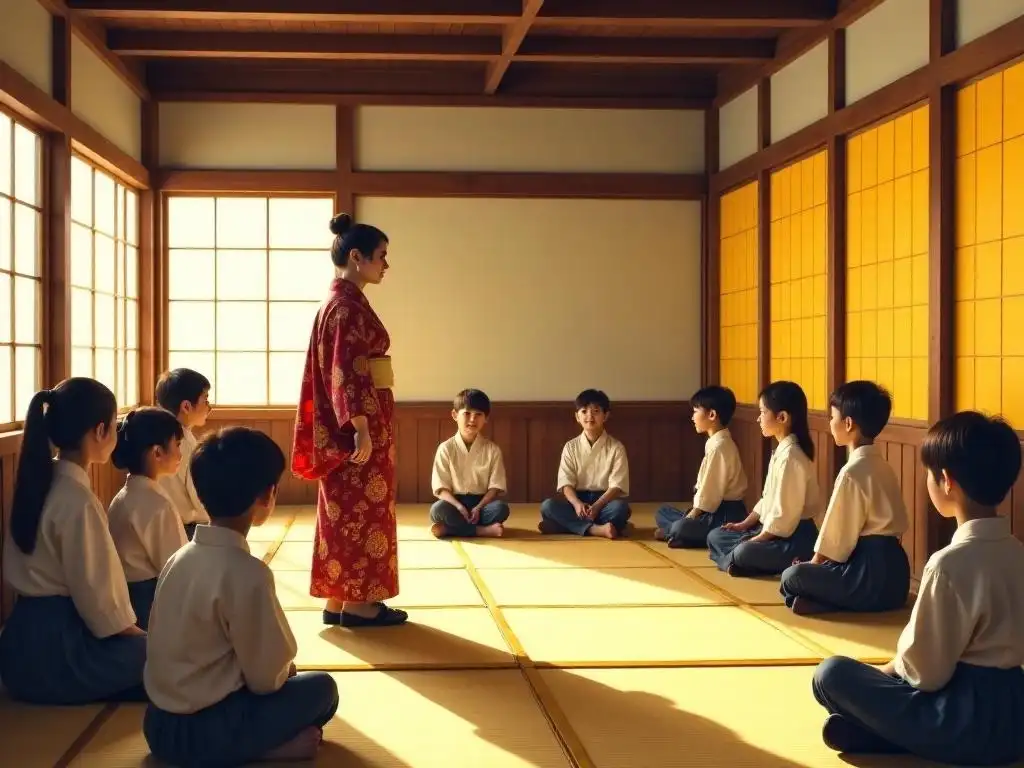
The transition from feudal education to modern learning in Japan was a gradual process that reflected broader societal changes. The end of the Tokugawa shogunate and the onset of the Meiji Restoration in 1868 marked a significant turning point, leading to profound educational reforms.
Changes in Educational Philosophy Post-Feudal Era
Following the collapse of the feudal system, the educational philosophy shifted towards a more egalitarian approach. The focus moved from a rigid class-based education to a system that aimed to provide universal access to education. This change was driven by the need to foster a skilled workforce capable of contributing to a rapidly modernizing nation.
The new educational framework emphasized scientific knowledge, practical skills, and critical thinking, breaking away from the heavy reliance on classical texts and moral teachings that had characterized feudal education. The introduction of Western educational models allowed for a more diverse curriculum that included subjects such as science, mathematics, and foreign languages.
The Meiji Restoration and Educational Reform
The Meiji Restoration catalyzed significant reforms in Japan’s educational system. In 1872, the government implemented the Education System Order, which established a national education system aimed at promoting literacy and technical skills across all social classes. This reform abolished the previous class-based educational structure, allowing access for all children regardless of their background.
The new educational model included compulsory education, which was revolutionary for its time. Schools were established throughout the country, and curricula were standardized, incorporating both traditional subjects and modern disciplines. This era also saw the introduction of Western educational philosophies and methodologies, which further transformed the landscape of Japanese education.
Lasting Influences of Feudal Education on Contemporary Japanese Schools
Despite the significant reforms of the Meiji era, the legacy of feudal education remains evident in modern Japanese schools. Certain elements of the feudal curriculum, particularly the emphasis on moral education, have persisted. Today, character education is a key component of school programs, reflecting the historical focus on ethics and community responsibility instilled during the feudal period.
Moreover, the stratification of education, although less pronounced, can still be observed in the varying quality of education and resources available in urban versus rural areas. The respect for teachers and the value placed on education, rooted in feudal ideals, continue to shape societal attitudes toward learning in Japan.
While modern Japanese education has evolved significantly from its feudal origins, the foundational principles of moral education and the importance of community remain integral to its structure, showcasing the enduring impact of feudal education in Japan.
Impact of Feudal Education on Modern Japanese Learning
The impact of feudal education on modern Japanese learning is profound and multifaceted. During the feudal era, education was largely reserved for the samurai class, with an emphasis on moral development, loyalty, and the skills necessary for governance and warfare. This educational framework has left a lasting imprint on contemporary educational practices and philosophies in Japan. Understanding this legacy helps to illuminate the values still prevalent in today's educational system, including discipline, respect for authority, and a strong sense of community.
Feudal education emphasized kanji (Chinese characters) and classical texts, which are still essential components of Japanese literacy today. The rigorous training methods used in feudal education, such as rote memorization and recitation, can be seen in current pedagogical approaches, particularly in language and mathematics. Moreover, the hierarchical structure of feudal educational institutions is echoed in modern schools, where respect for teachers and adherence to a structured curriculum remain central tenets of learning.
Preservation of Traditional Values in Current Education
One of the most significant legacies of feudal education in Japan is the preservation of traditional values that continue to shape modern educational practices. Values such as loyalty, respect, and perseverance were instilled in students during the feudal era and are still emphasized in today's classrooms. For example, the concept of gaman, meaning to endure and persevere through adversity, is a guiding principle taught to students, fostering resilience and a strong work ethic.
Moreover, the importance placed on group harmony and collective responsibility during the feudal period remains evident in contemporary educational settings. Students are often encouraged to work collaboratively and value group achievements over individual success. This focus on cooperation reflects a society that has historically prioritized social cohesion, a value rooted deeply in the feudal educational system.
Modern Educational Practices Rooted in Feudal Concepts
Modern educational practices in Japan often draw from feudal concepts, particularly in terms of discipline and respect for authority. The traditional teacher-student relationship, characterized by a deep respect for the teacher's knowledge and experience, is a direct inheritance from the feudal era. Teachers are seen not only as educators but also as moral guides, reflecting the historical role of samurai mentors who imparted wisdom and ethical teachings to their disciples.
Additionally, the structured nature of the school day, with its emphasis on routine and discipline, mirrors the rigorous training regimens of feudal education. Modern practices such as morning assemblies, where students bow to teachers and recite school pledges, are reminiscent of the ceremonies that took place in feudal schools, reinforcing a sense of order and respect.
Conclusion
Summary of Feudal Education's Influence on Modern Learning
The influence of feudal education on modern Japanese learning is significant and enduring. The values and practices established during this era have been woven into the fabric of contemporary education, shaping not only what is taught but how students interact with each other and their teachers. From the emphasis on traditional values to the structured approach to learning, the legacy of feudal education continues to resonate in Japan's educational landscape.
Final Thoughts on the Importance of Understanding Feudal Education in Japan
Understanding feudal education in Japan is crucial for comprehending the broader cultural and social dynamics at play in modern educational practices. As Japan continues to evolve in the global educational landscape, recognizing the historical roots of its learning system allows for a deeper appreciation of the unique challenges and advantages it faces. By exploring this legacy, educators and policymakers can better navigate the balance between tradition and innovation, ensuring that the essential values of feudal education continue to enrich the learning experiences of future generations.
- Introduction to Feudal Education in Japan
- Key Features of Feudal Education
- The Curriculum of Feudal Education
- Transition from Feudal Education to Modern Learning
- Impact of Feudal Education on Modern Japanese Learning
- Conclusion
- What was the primary focus of feudal education in Japan?
- How did the feudal education system influence modern Japanese learning?
- What were the key institutions of education during the feudal era?
- Who were the primary educators in feudal Japan?
- How did social class affect access to education in feudal Japan?
Frequently Asked Questions
What was the primary focus of feudal education in Japan?
Feudal education in Japan primarily aimed to instill Confucian values and martial skills in the samurai class, alongside basic literacy and practical knowledge for commoners.
How did the feudal education system influence modern Japanese learning?
The feudal education system laid the groundwork for structured learning and meritocratic principles that continue to shape Japan's educational framework today.
What were the key institutions of education during the feudal era?
Key institutions included temples and private academies (terakoya), which provided instruction in literature, philosophy, and practical skills to students of varying classes.
Who were the primary educators in feudal Japan?
In feudal Japan, educators included monks, scholars, and samurai, who often taught moral lessons and practical knowledge to their students.
Access to education in feudal Japan was largely determined by social class, with the samurai having the most opportunities, while commoners had limited access, primarily focusing on practical skills necessary for daily life.
Final Reflection: The Enduring Legacy of Feudal Education in Japan
The influence of feudal education in Japan is not merely a relic of the past; it continues to shape modern learning paradigms and societal values. As we delve into the complexities of Japan's educational landscape today, it becomes evident that the roots of feudal education have left an indelible mark on how knowledge is imparted and valued. The hierarchical structures and moral teachings that characterized this era resonate in contemporary educational practices, reminding us that history is not just a series of events but a living force that continues to mold our present.
Cultural and social dynamics have been profoundly influenced by the principles established during the feudal period. The emphasis on discipline, respect for authority, and the pursuit of knowledge as a means of social mobility can be traced back to this era. As we witness the ongoing evolution of educational systems in Japan, it is crucial to recognize how these historical foundations continue to inform our understanding of learning and personal development. Education is the most powerful weapon which you can use to change the world.
– Nelson Mandela. This quote encapsulates the transformative power of education, a legacy that finds its roots in the feudal era and extends into the aspirations of modern learners.
As we reflect on the lessons of feudal education, let us consider how we can apply these insights to our own lives and communities. Embrace the values of respect, diligence, and a commitment to lifelong learning. In a world that is constantly changing, the principles derived from our past can guide us toward a more enlightened future. Take a moment to ponder how the legacy of feudal education can inspire you to foster a deeper appreciation for knowledge and its role in shaping not only individual destinies but also the collective future of society.
Unlock the Secrets of Japan’s Educational Legacy!
Thank you for diving into the fascinating world of feudal education in Japan. By exploring its impact on modern learning, you've taken a crucial step toward understanding the roots of today's educational systems. Now, it's time to put your insights into action!
Here’s how you can deepen your exploration and share your newfound knowledge:
- Dive Deeper: Expand your understanding by reading books or watching documentaries about the educational practices of feudal Japan. You'll uncover layers of history that shape Japan's culture today.
- Share Your Thoughts: Engage with friends or participate in online communities to discuss your insights. Initiate a conversation about the ongoing influence of feudal education in contemporary learning environments.
- Visit Local Exhibitions: Look for museums or exhibits that focus on Japanese history in your area. Immerse yourself in the past to enhance your appreciation of the subject.
What aspects of feudal education do you believe still influence modern Japanese classrooms today? Share your thoughts below!