
The Impact of European Contact on Japan's Path to Unification

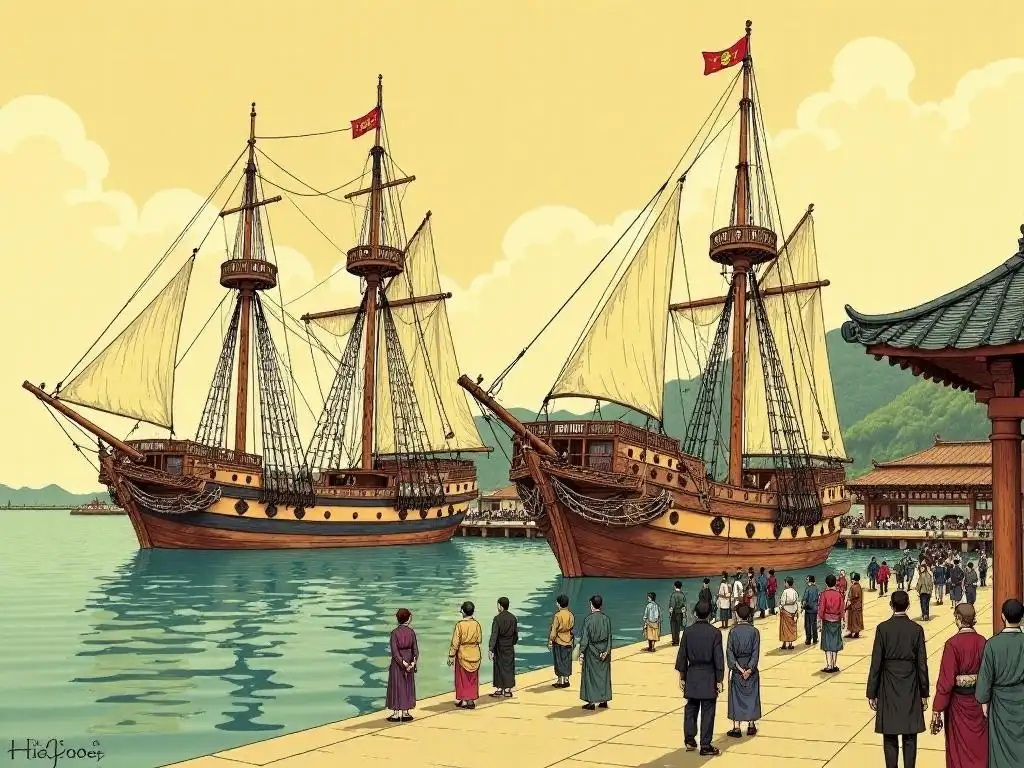
Welcome to Feudal Japan History, where we embark on a captivating journey through the intricate tapestry of Japan’s feudal era. Here, you will uncover the profound impact of European contact on Japan's path to unification—a pivotal moment that reshaped the nation’s political landscape. As you delve into our expert-driven articles, prepare to explore how foreign influences played a crucial role in molding Japan's identity and governance.
What unexpected alliances and conflicts emerged during this transformative period? Join us as we unravel the threads of history that connect these fascinating events, inviting you to discover the rich and complex narrative of Japan's unification.
Introduction to European Influence on Japan's Unification
The period of Japan's feudal era, marked by the rise and fall of powerful clans and the constant struggle for dominance, was profoundly affected by European contact beginning in the 16th century. This initial engagement with European powers did not merely alter Japan's economic landscape; it also played a crucial role in shaping the political narrative that ultimately led to Japan's unification. Understanding the European influence on Japan unification requires a detailed exploration of how trade, cultural exchanges, and political alliances interplayed during this transformative period in Japan's history.
Understanding the Context of European Contact with Japan
European contact with Japan was initiated primarily through trade and missionary activities. The arrival of Portuguese explorers in the 1540s heralded a new age of interaction, setting the stage for a complex relationship characterized by both cooperation and conflict. Initially, European merchants brought not only goods such as firearms and silk but also new ideas and technologies that would profoundly influence Japanese society.
Overview of Japan's Feudal Era and Political Landscape
To appreciate the impact of European contact, it is essential to understand the political landscape of feudal Japan. The era was characterized by a decentralized power structure dominated by regional warlords known as daimyōs. Each daimyō ruled over a specific territory, often engaging in violent conflicts with one another. This chaotic environment created both opportunities and challenges for European powers seeking to establish their presence in Japan.
The Nature of European Influence on Japan
The European influence on Japan's unification can be categorized into several key areas, each contributing to the eventual consolidation of power under a central authority.
Trade Relations: The Role of European Merchants
Trade relations were one of the primary conduits of European influence. European merchants, particularly the Portuguese and later the Dutch, introduced new trade goods and practices that changed the economic landscape of Japan. The demand for Japanese silver, in particular, allowed for greater economic integration within regions and between clans, laying the groundwork for political alliances.
Cultural Exchange: Ideas, Technology, and Religion
Cultural exchanges with Europe brought significant innovations to Japan. European firearms revolutionized warfare, providing daimyōs with new military advantages. Furthermore, the introduction of Western philosophies, scientific ideas, and even Christianity challenged traditional Japanese beliefs and practices. This cultural infusion not only influenced societal norms but also encouraged a more unified identity among the Japanese people as they navigated these changes.
Political Alliances: European Powers and Their Interests in Japan
European powers, motivated by their interests in trade and missionary work, sought to establish political alliances with Japanese leaders. These alliances often involved mutual benefits, such as military support in exchange for trade privileges. The competition among European powers for influence in Japan created a dynamic political environment that encouraged local leaders to reconsider their strategies for unification, often leading to strategic partnerships that would later facilitate the emergence of a centralized authority under the Tokugawa shogunate.
By examining these elements, we can gain a clearer understanding of how European contact significantly influenced Japan's path toward unification, ultimately reshaping the nation's historical trajectory.
The Consequences of European Contact on Japan's Path to Unification
The arrival of European traders and missionaries in the 16th century profoundly affected Japan's political landscape. This contact not only introduced new technologies and ideologies but also shifted the balance of power among the warring feudal lords. The European influence on Japan's unification process can be seen through various dimensions, including military innovations, changes in social structures, and the emergence of new alliances.
Shifts in Power Dynamics Among Japanese Feudal Lords
European contact catalyzed significant shifts in power dynamics among Japan's feudal lords, known as daimyōs. The introduction of firearms provided certain daimyōs with a competitive edge in battles, allowing them to expand their territories and consolidate power. For instance, Oda Nobunaga effectively utilized European firearms during his campaigns in the late 16th century, leading to pivotal victories that weakened rival factions.
Moreover, the arrival of European traders altered traditional alliances. Some daimyōs sought to establish relationships with European powers to gain access to advanced weaponry and trade goods, which further destabilized existing power structures. This shift led to a more fragmented feudal landscape, as alliances were formed and dissolved based on European influences and the promise of military strength.
The Introduction of Firearms and Warfare Techniques
The introduction of firearms, particularly muskets, revolutionized warfare in Japan. Initially brought by the Portuguese, these weapons changed the way battles were fought. The daimyōs who adopted these technologies gained significant advantages over their rivals.
Firearms allowed for greater lethality on the battlefield, leading to new tactics and formations. The famous battle of Nagashino in 1575 showcased the effectiveness of firearms when Oda Nobunaga's troops, equipped with matchlock rifles, decisively defeated Takeda Katsuyori's cavalry. This battle demonstrated not only the superiority of firearm technology but also the necessity for strategic adaptation in warfare.
As firearms became more integrated into Japanese military practices, they played a crucial role in the consolidation of power by key leaders, paving the way for the eventual unification under Tokugawa Ieyasu.
Impact on Japanese Society and Culture: Changes in Ideology
The European influence also permeated Japanese society and culture, leading to significant ideological shifts. The arrival of Christian missionaries, particularly the Jesuits, introduced new religious and philosophical ideas that challenged traditional beliefs. While Christianity did not gain widespread acceptance, it sparked interest in Western science, culture, and governance.
A notable consequence was the emergence of a more centralized ideology that valued trade and technology. The daimyōs who embraced European innovations often found themselves in a more favorable position, leading to a gradual shift in values toward modernization and central authority. This shift contributed to the growing support for unification efforts, as leaders recognized the need to adopt new methods to maintain power and stability in an ever-changing landscape.
Key Events Reflecting European Influence on Unification Efforts

The impact of European contact on Japan's path to unification can be traced through several key events that encapsulate the interaction between Japanese feudal factions and European powers. These events not only illustrate the transformative effects of trade and warfare but also highlight the complex relationships that developed during this period.
The Arrival of the Portuguese and Spanish: Early Encounters
The Portuguese were the first Europeans to arrive in Japan in 1543, marking the beginning of a new era of interaction. Their introduction of firearms and trade goods had an immediate impact on the Japanese economy and military practices. The Spanish followed closely behind, further solidifying European presence in Japan.
These early encounters set the stage for the exchange of not only goods but also ideas. The introduction of Christianity by missionaries during this time had lasting effects on Japan's cultural landscape, influencing various aspects of life and governance.
The Role of the Dutch in Japanese Trade and Politics
The Dutch Republic emerged as a significant player in Japan's foreign trade during the early 17th century, particularly after the expulsion of the Portuguese and Spanish. The Dutch established a trading post on the island of Dejima in Nagasaki, which became the sole conduit for European trade in Japan.
Through their commercial activities, the Dutch introduced new technologies and ideas while maintaining a pragmatic relationship with the Tokugawa shogunate. Their emphasis on trade over missionary work allowed them to gain favor with Japanese authorities, thus playing a crucial role in Japan's economic landscape and indirectly influencing political dynamics as Japan moved toward unification.
The Impact of Christianity on Japanese Political Structures
Christianity's introduction in Japan not only affected cultural practices but also had significant implications for political structures. The influx of Christian converts among the samurai class created new loyalties and rivalries, challenging traditional feudal allegiances.
The initial acceptance of Christianity by some daimyōs, such as the powerful Christian daimyō of Kyushu, demonstrated the potential for religious influence on political power. However, as the Tokugawa shogunate solidified its control, Christianity was later repressed, reflecting the tension between foreign influence and the desire for a unified, stable state. This repression ultimately led to the suppression of dissent, shaping Japan's political landscape as it moved toward a centralized authority under the shogunate.
The Response of Japanese Leaders to European Influence
The arrival of European powers in Japan during the 16th century prompted significant reactions from Japanese leaders, who were tasked with navigating the complex dynamics of foreign influence while maintaining their sovereignty. Initially, European traders and missionaries, particularly the Portuguese and Spanish, introduced new technologies, religious beliefs, and trade opportunities. The response varied among different factions within Japan, with some embracing these changes and others resisting them.
Feudal lords, or daimyō, were particularly sensitive to the shifting power dynamics. Some recognized the potential benefits of European firearms and maritime technology, which could enhance their military capabilities. Others viewed the influx of Christianity as a threat to their traditional beliefs and social structures. Consequently, the response from Japanese leaders was multifaceted, ranging from cautious engagement to outright hostility, as they sought to protect their power and cultural identity amidst this new wave of influence.
Strategies Employed by Feudal Lords to Adapt to European Changes
Feudal lords adopted various strategies to adapt to the changes brought about by European contact. One notable approach involved the procurement and integration of European military technology, specifically firearms. By acquiring matchlocks and cannons, daimyō could enhance their military strength, which proved vital in the ongoing conflicts of the Sengoku period. This adaptation allowed some lords to assert dominance over their rivals and consolidate power.
In addition to military innovations, some feudal lords embraced trade with European nations, particularly the Portuguese, who established lucrative exchange routes. By engaging in trade, these lords could gain access to not only military supplies but also luxury goods that were highly sought after in Japanese society. Furthermore, selective adoption of European agricultural techniques and tools helped improve crop yields and food security, further strengthening their domains.
Moreover, the interaction with European missionaries facilitated the exchange of ideas and cultural practices. Some daimyō, recognizing the potential of Christianity to unify disparate factions under a common faith, supported missionary activities. However, this strategy was met with mixed results, as it also led to increased tensions with the ruling class who adhered to Shinto and Buddhist traditions.
The Tokugawa Shogunate's Approach to European Relations
The Tokugawa Shogunate, which unified Japan in the early 17th century, adopted a markedly different approach to European relations compared to its predecessors. Initially, the shogunate engaged in trade with the Dutch and the Portuguese, recognizing the economic benefits of limited contact. However, as Christianity began to spread and foreign influence grew, the shogunate shifted towards a policy of restriction and control.
In 1635, the shogunate implemented the Sakoku (鎖国) policy, effectively closing Japan off from most foreign interactions. This policy aimed to eliminate the perceived threats posed by foreign religions and ideas, particularly those associated with Christianity. The shogunate allowed only the Dutch to trade at Nagasaki, effectively isolating Japan while still benefiting from some European goods and knowledge.
The Tokugawa leaders carefully navigated the balance between embracing certain European advancements and curtailing foreign influence that threatened their authority. This cautious engagement allowed the shogunate to maintain stability and control over Japan for over two centuries, setting the stage for future encounters with the West.
Isolationism: The Sakoku Policy and Its Implications
The Sakoku policy, enacted by the Tokugawa Shogunate, was a pivotal moment in Japan's history, marking a period of self-imposed isolation that lasted for over 200 years. This policy had profound implications for Japan’s political, economic, and cultural landscape. By restricting foreign trade and limiting interactions to a few designated ports, the shogunate sought to preserve Japanese culture and sovereignty from external influences.
While Sakoku effectively curtailed the spread of Christianity and the intrusion of foreign powers, it also had unintended consequences. The lack of foreign competition allowed domestic industries to develop independently, fostering a unique Japanese culture that blended traditional practices with limited European influences. However, this isolation also resulted in Japan falling behind in technological advancements, as developments in the West continued to accelerate.
The Sakoku period ended abruptly in the mid-19th century when Commodore Matthew Perry of the United States forced Japan to open its ports. This re-engagement with the world revealed the vulnerabilities created by centuries of isolation, ultimately propelling Japan towards modernization and a reevaluation of its national identity.
Assessing the Long-Term Impact of European Contact on Japan's Unification
The long-term impact of European contact on Japan's path to unification is a complex narrative that intertwines cultural exchanges, military developments, and political strategies. While initial interactions were marked by cooperation and conflict, the eventual response from Japanese leaders laid the groundwork for a unified state.
European influence played a crucial role in shaping Japan's national identity. The introduction of new ideas and technologies forced Japanese leaders to reconsider their strategies for governance and defense. As Japan approached the Meiji Restoration, this amalgamation of influences contributed to a new sense of nationalism that sought to modernize and strengthen the nation against foreign pressures.
How European Influence Shaped Japan’s National Identity
The influence of Europe during the feudal era significantly shaped Japan’s national identity, particularly through the introduction of Western concepts of governance, military organization, and economic systems. As Japanese leaders encountered European powers, they began to adopt certain aspects of Western culture, which contributed to the formation of a unique national identity that blended traditional values with modern ideas.
In the wake of European contact, there was a growing awareness of Japan's place in the world. The adoption of Western technologies and practices, alongside the rejection of foreign domination, fueled a nationalistic sentiment that emphasized pride in Japanese heritage. This duality is evident in the way Japan navigated its modernization efforts during the Meiji era, striving to become a formidable power on the global stage while preserving its cultural identity.
The Role of European Ideas in the Meiji Restoration
The Meiji Restoration of 1868 marked a significant turning point in Japan's history, driven in part by European influence. The restoration was characterized by sweeping reforms that aimed to modernize Japan's political, military, and economic systems. European ideas of governance, particularly the concepts of constitutionalism and centralized authority, were instrumental in shaping the new Meiji government.
Leaders of the Meiji Restoration recognized that to compete with Western powers, Japan needed to adopt Western technologies and administrative practices. This led to the establishment of a modern military, the introduction of a parliamentary system, and the promotion of industrialization. The reforms enacted during this period were not merely imitative; they were tailored to fit the unique needs and context of Japan, resulting in a distinctive blend of Western and Japanese elements.
The successful implementation of these ideas ultimately facilitated Japan’s emergence as a global power by the early 20th century, demonstrating how European contact had lasting implications for Japan’s trajectory towards unification and modernization.
Reflection on Japan's Modernization and Globalization
Japan's journey through modernization and globalization reflects the profound impact of European contact on its historical trajectory. The changes initiated during the Meiji Restoration propelled Japan into the modern age, transforming it into an industrialized nation that actively engaged with the global community.
As Japan embraced new technologies and ideas, it also faced the challenge of maintaining its cultural identity amidst rapid change. The interplay between tradition and modernity became a defining feature of Japan's modernization process. While the nation sought to adopt Western advancements, it concurrently endeavored to preserve its unique cultural heritage.
In contemporary times, Japan stands as a testament to the successful integration of foreign influences while retaining its distinct identity. The legacy of European contact is evident in various aspects of Japanese society, from its political systems to its cultural practices. This complex relationship with the West continues to shape Japan's role on the global stage, illustrating the enduring impact of historical interactions on its path to unification and beyond.
Conclusion: The Lasting Legacy of European Influence on Japan's Unification
The European contact during the 16th and 17th centuries played a pivotal role in shaping Japan's path toward unification. The arrival of Portuguese traders and Jesuit missionaries introduced not only new goods and technologies but also fresh ideas that challenged traditional Japanese norms and values. The introduction of firearms, for instance, revolutionized warfare, leading to a shift in power dynamics among the warring states. This technological advancement forced local daimyōs to adapt quickly to maintain their dominance, thus accelerating the need for unification to establish a centralized power that could effectively manage these new challenges.
Moreover, the European influence extended beyond military technology. The exchange of cultural and religious ideas, particularly through Christianity, created a complex interplay between foreign and indigenous beliefs. Some Japanese leaders saw the potential benefits of aligning with European powers to gain an advantage over rivals, further contributing to the political landscape that ultimately facilitated the unification under the Tokugawa shogunate. The legacy of this period is evident in the way Japan approached modernization in the 19th century, as it began to incorporate and adapt Western technologies and practices into its own society.
Summary of Key Points on European Impact on Japan's Path to Unification
- Introduction of Firearms: The arrival of European firearms drastically changed the nature of warfare in Japan, compelling daimyōs to rethink their military strategies and alliances. The rapid adoption of these technologies played a crucial role in the conflicts that led to unification.
- Cultural Exchange: Jesuit missionaries brought Christianity and Western ideas, which influenced Japanese society and governance. Some daimyōs embraced these new concepts, seeing them as a means to enhance their power and status.
- Economic Changes: European traders introduced new trade routes and goods, creating economic shifts that influenced local economies and power structures. The competition for trade and influence often translated into political alliances and conflicts.
- Political Alliances: The desire to leverage European support against rivals led to temporary alliances and shifts in loyalty among the daimyōs. These political maneuvers were instrumental in the eventual establishment of a unified state.
Final Thoughts on the Intersection of European and Japanese Histories
The intersection of European and Japanese histories during the feudal era serves as a fascinating study of how external influences can shape a nation’s trajectory. Japan's response to European contact was not merely reactive but rather a complex negotiation of cultural, technological, and political exchanges. This interaction laid the groundwork for the unification efforts that culminated in the establishment of the Tokugawa shogunate.
As Japan moved into the Edo period, the influences of this era continued to manifest in various aspects of society, from military organization to cultural practices. The lessons learned from European engagement ultimately prepared Japan for the challenges of modernization in the 19th century, showcasing how historical encounters can leave lasting legacies on national identity and governance. Understanding this period is crucial for comprehending the dynamics that shaped modern Japan and its place in the global context.
- Introduction to European Influence on Japan's Unification
- Understanding the Context of European Contact with Japan
- The Nature of European Influence on Japan
- The Consequences of European Contact on Japan's Path to Unification
- Key Events Reflecting European Influence on Unification Efforts
- The Response of Japanese Leaders to European Influence
- Assessing the Long-Term Impact of European Contact on Japan's Unification
- Conclusion: The Lasting Legacy of European Influence on Japan's Unification
- Summary of Key Points on European Impact on Japan's Path to Unification
- Final Thoughts on the Intersection of European and Japanese Histories
- What was the role of European contact in Japan's unification?
- How did trade with Europe affect Japan during the feudal era?
- Were there any cultural exchanges between Japan and Europe that impacted unification?
- What impact did Christianity have on Japan's social structure during its unification?
- Did the influence of European powers lead to any conflicts during Japan's unification?
Frequently Asked Questions
What was the role of European contact in Japan's unification?
European contact introduced new ideas and technologies that influenced Japan's political landscape, ultimately aiding its path toward unification in the late 16th century.
How did trade with Europe affect Japan during the feudal era?
Trade brought in wealth and resources, allowing local leaders to strengthen their positions and consolidate power, which was crucial for Japan's unification efforts.
Were there any cultural exchanges between Japan and Europe that impacted unification?
Yes, cultural exchanges introduced European philosophies and military strategies that reshaped Japanese governance and military tactics, facilitating the unification process.
Christianity challenged traditional social hierarchies and offered alternative views on governance, creating tensions that influenced the political dynamics of the unification period.
Did the influence of European powers lead to any conflicts during Japan's unification?
Yes, the influence of European powers often led to conflicts between traditional Japanese rulers and those who sought to adopt Western practices, complicating the unification process.
Final Reflection: The Lasting Echo of European Influence on Japan's Unification
The exploration of European influence on Japan's unification reveals a profound narrative that continues to resonate in today’s global landscape. As we reflect on how European contact shaped Japan's political and cultural evolution, it becomes clear that these historical interactions were not merely fleeting moments in time; they were pivotal catalysts that propelled Japan towards its eventual unification. The lessons learned from this era remind us that the threads of history are intricately woven into the fabric of our present.
The impact of European influence extends far beyond the pages of history books, shaping the cultural and social dynamics of modern Japan. The exchange of ideas, technologies, and philosophies during this period laid the groundwork for Japan's transformation into a formidable nation-state. As we observe the ongoing dialogue between tradition and modernity in Japan, we recognize the enduring legacy of these early interactions. History is not a burden on the memory but an illumination of the soul.
This quote encapsulates the essence of how historical encounters continue to inform our identities and aspirations.
As we conclude this exploration, I invite you to reflect on the lessons of European influence on Japan's unification in your own life. Consider how the interplay of diverse cultures can enrich our understanding and foster unity in our communities. Let us embrace the spirit of collaboration and learning from one another, acknowledging that our shared histories can guide us toward a more harmonious future. Your journey of reflection and action begins now—how will you contribute to the tapestry of cultural exchange in your own world?
Ignite Your Curiosity: Dive Deeper into Japan's Transformation!
Thank you for exploring the fascinating world of Japan's unification process and the profound impact of European contact! Your engagement with this topic opens doors to a richer understanding of Japan's history. Now, let’s take that curiosity further and turn it into action.
- Uncover more: Read about the influential leaders during Japan’s unification who skillfully navigated the complexities of foreign relations.
- Start a conversation: Share this article with friends or in online communities to engage others in Japan’s unique historical journey.
- Expand your knowledge: Visit nearby museums or browse virtual exhibitions that showcase artifacts and narratives from this pivotal era.
What aspect of Japan's unification do you find most intriguing, and how do you think European influence shaped its future? Let's discuss!