
Commodore Perry's Influence on Japanese Naval Development

Welcome to Feudal Japan History! Dive into the rich tapestry of Japan's feudal era as we unravel the intricate threads of historical, cultural, and societal evolution. In our featured article, "Commodore Perry's Influence on Japanese Naval Development," we explore how this pivotal figure reshaped Japan's naval landscape and foreign relations during a time of profound transformation. What drove Perry to Japan, and how did his presence alter the course of Japanese history? Prepare to embark on a journey through time that will ignite your curiosity and deepen your understanding of this fascinating chapter in Japan's past.
The arrival of Commodore Matthew Perry in Japan during the mid-19th century marked a pivotal moment in the nation's naval history, setting into motion a series of transformations that would ultimately reshape its maritime capabilities. This article delves into the intricate dynamics of Perry's influence on Japan's naval development, exploring the historical context of Japan's maritime traditions, the implications of foreign interaction, and the subsequent evolution of naval power that emerged from this encounter.
As we navigate through the complexities of Japan's feudal era, we will uncover how Perry's expedition not only opened Japan to the world but also acted as a catalyst for modernization within its naval forces, profoundly impacting its trajectory in the global arena.
Overview of Commodore Perry's Arrival in Japan
In 1853, Commodore Perry led a fleet of American warships into Tokyo Bay, famously known as the "Black Ships." This bold move was aimed at establishing diplomatic relations and ending Japan's isolationist policy, which had been in place for over two centuries. Perry's arrival was not merely a military endeavor; it was laden with strategic intent, seeking to open Japanese ports to American trade. The expedition, characterized by its display of naval power, acted as a stark reminder of Western technological advancements and the urgent need for Japan to reassess its own naval capabilities.
Significance of Naval Development in Japan's Feudal Era
The significance of naval development during Japan's feudal era cannot be overstated. As a nation comprised of numerous islands, Japan's maritime prowess was intrinsically linked to its economic and military strategies. The feudal system, dominated by the samurai class, relied heavily on effective naval operations for trade, defense, and territorial expansion.
Perry's arrival prompted a reevaluation of these naval strategies, igniting a sense of urgency within the leadership to modernize and adapt to the changing global landscape. This push for development would lead to significant advancements in shipbuilding, naval training, and overall maritime strategy, laying the groundwork for Japan's emergence as a formidable naval power.
Japan's Historical Naval Capabilities
Before Commodore Perry's arrival, Japan had a rich history of maritime activity, dating back to its early interactions with neighboring countries. The Japanese engaged in trade with China and Korea, utilizing various types of vessels, including the shinsen (fast ships) and sengokubune (warships). However, these capabilities were often limited to coastal waters and lacked the technological sophistication seen in Western navies. Despite this, Japan maintained a degree of naval autonomy and pride, with a culture deeply rooted in maritime activities.
The Role of the Samurai and Naval Warfare
The samurai, Japan's warrior class, played a crucial role in naval warfare during the feudal period. Their training and codes of honor were not limited to land battles; naval engagements were equally significant in asserting control over maritime territories. The samurai's influence extended to naval strategy and tactics, often leading to the construction of specialized warships and the establishment of naval bases. However, the samurai's focus on traditional warfare methods would soon be challenged by the more modern naval tactics introduced by foreign powers, including the United States.
Limitations of Japan's Naval Technology Prior to 1853
Despite Japan's historical naval activities, the technological limitations prior to Perry's arrival were evident. The ships utilized were often outdated and lacked the firepower and durability of their Western counterparts. Japan's isolationist policy had hindered access to advanced naval technologies, leaving the country at a disadvantage in terms of naval artillery and shipbuilding techniques. Perry's demonstration of steam-powered warships and advanced weaponry was a stark wake-up call, highlighting the urgent need for modernization within Japan's naval forces.
The arrival of Commodore Perry in Japan was not just a singular event but a catalyst for profound change in the nation's naval history. This exploration will further illuminate the intricate relationship between Perry's expedition and the ensuing transformation of Japan's naval capabilities, establishing a foundation for understanding the broader implications of foreign relations during this critical period.
Commodore Perry's Expedition to Japan
Commodore Matthew Perry's expedition to Japan in the mid-19th century marked a significant turning point in Japanese naval history. Sent by the United States Navy in 1853, Perry's mission was to establish diplomatic relations with Japan, which had been largely isolated from the outside world for over two centuries under the Tokugawa shogunate's sakoku policy. Perry's approach was characterized by a combination of diplomacy and show of force, utilizing his fleet of steam-powered warships, known colloquially as the "Black Ships," to impress upon the Japanese the technological advancements of Western nations.
Perry's arrival in Edo Bay (modern-day Tokyo) was unprecedented, as it confronted Japan with the reality of Western imperialism. His mission was not only to open Japan to American trade but also to secure better treatment for shipwrecked American sailors and to establish a coal station for American vessels. The expedition's impact would reverberate through Japanese society, prompting significant changes in military and naval policies.
The Objectives of Perry's Mission
The primary objectives of Perry's mission were multifaceted:
- Establish Diplomatic Relations: Perry aimed to initiate formal diplomatic dialogue between the United States and Japan, which had remained closed to foreign nations since the early 17th century.
- Open Trade: He sought to establish trade agreements that would allow American merchants access to Japanese ports, thereby expanding U.S. economic interests in the Pacific.
- Protect American Citizens: Another critical goal was to ensure the safety and rights of American sailors in Japanese waters, particularly in the event of shipwrecks or accidents.
- Introduce Western Technology: By showcasing American naval technology, Perry intended to demonstrate the advantages of engaging with Western powers, thereby encouraging Japan to modernize its own naval capabilities.
These objectives were rooted in the broader context of U.S. foreign policy during the period, which emphasized expansionism and the desire to secure new markets.
Key Events Leading to the Treaty of Kanagawa
Several key events unfolded during Perry's expedition that ultimately led to the signing of the Treaty of Kanagawa in 1854:
- Initial Encounter (1853): Perry's arrival in July 1853 created an immediate sensation, as his fleet showcased modern steam warships, contrasting starkly with Japan's traditional sailing vessels.
- Diplomatic Engagement: Following his initial visit, Perry returned in February 1854 with a larger fleet, demanding a response from the Japanese government. His insistence on a treaty highlighted the urgency of the situation.
- Threat of Force: Perry's display of naval power played a crucial role in persuading the shogunate of the necessity to negotiate. The Japanese leadership faced an uncomfortable choice: engage with Perry or risk military conflict.
- Signing of the Treaty: Eventually, on March 31, 1854, the Treaty of Kanagawa was signed, which allowed for limited trade with the United States and marked Japan's first formal engagement with a foreign power in over two centuries.
These events not only opened Japan to foreign influence but also set the stage for profound transformations within the country.
The Impact of Perry's "Black Ships" on Japanese Perception
Perry's "Black Ships" had a profound impact on Japanese perceptions of foreign powers and the need for modernization. Initially met with fear and fascination, these vessels represented the might of Western technology and military strength. The sight of steam-powered ships and advanced artillery led many Japanese officials and scholars to reassess their understanding of the world.
- Awakening to Modernity: The arrival of Perry's fleet acted as a catalyst for Japanese thinkers who began to advocate for modernization and the adoption of Western technologies in various fields, including military and naval practices.
- Fear of Colonization: Perry's expedition instilled a sense of urgency within the Japanese leadership as they recognized the potential threat posed by Western imperialism. The fear of being colonized pushed them to consider how to strengthen their own nation.
- Cultural Exchange: The interactions sparked by Perry's mission opened the door for cultural exchange, leading to a greater interest in Western sciences, education, and military strategies among Japanese elites.
This shift in perception was crucial in paving the way for Japan's eventual transformation into a modern nation-state.
Following Perry's expedition and the subsequent Treaty of Kanagawa, Japan underwent significant changes in its naval strategy, marking a departure from centuries of isolation.
Shift from Isolationism to Naval Modernization
The Treaty of Kanagawa signified a turning point in Japanese policy. The realization that isolationism could no longer protect Japan from foreign encroachment led to a strategic pivot towards modernization:
- Increased Investment in Naval Forces: The Japanese government recognized the need to develop a capable navy to protect its sovereignty and interests. This resulted in increased funding for naval training and shipbuilding.
- Emphasis on Education: The government sought to educate a new generation of naval officers and engineers, sending students abroad to learn about Western naval practices and technologies.
- Strategic Alliances: Japan began to explore alliances with Western powers, seeking knowledge and support in its quest for modernization.
This shift set the groundwork for a more proactive and assertive naval policy.
Influence of Western Naval Technologies
Western naval technologies had a profound influence on Japan's military modernization efforts:
- Adoption of Steam Power: The transition from sails to steam power was one of the most significant changes. Japan invested in the construction of steam-powered warships, fundamentally altering its naval capabilities.
- Modern Naval Warfare Tactics: Japanese naval strategy began to incorporate Western tactics, including the use of ironclad ships and advanced artillery, which were crucial in modern naval engagements.
- Shipbuilding Innovations: The development of shipyards and the adoption of new ship designs allowed Japan to build a modern fleet that could compete with Western powers.
This technological transformation was instrumental in positioning Japan as a formidable naval power in the Pacific.
The Formation of the Imperial Japanese Navy
The culmination of these changes was the establishment of the Imperial Japanese Navy (IJN), which became a cornerstone of Japan's military strategy:
- Formal Establishment: In 1868, the Meiji Restoration led to the formal establishment of the IJN, emphasizing a modernized military structure based on Western models.
- Expansion and Modernization: The IJN rapidly expanded, acquiring modern vessels and training personnel to operate them effectively, leading to significant naval victories in subsequent conflicts, such as the First Sino-Japanese War.
- Cultural and National Identity: The navy became a symbol of national pride and identity, fostering a sense of unity and purpose among the Japanese populace as they embraced their new role on the world stage.
The formation of the Imperial Japanese Navy not only represented a military evolution but also marked Japan's emergence as a modern nation capable of asserting its interests in international affairs.
The arrival of Commodore Matthew Perry in 1853 marked a significant turning point in Japan's naval history. His interactions with Japanese officials and the subsequent opening of Japan to Western influences catalyzed a series of reforms that transformed the Imperial Japanese Navy. Key figures emerged during this period, each contributing to the modernization of Japan's naval capabilities and the establishment of a formidable maritime presence.
Admiral Perry's Role and Reception in Japan
Commodore Perry is often hailed as a pivotal figure in Japanese naval history. His expedition to Japan was not just a show of force; it was a calculated diplomatic mission aimed at opening Japan to international trade. On July 8, 1853, Perry arrived in Edo Bay with a fleet of four warships, showcasing the might of the United States Navy.
Perry's arrival was met with a mix of curiosity and apprehension by the Japanese. The Tokugawa shogunate initially resisted foreign influence but ultimately recognized the necessity of engaging with the West. Perry's insistence on entering into a treaty led to the Convention of Kanagawa in 1854, which opened Japanese ports to American trade. His approach was marked by a blend of diplomacy and intimidation, effectively demonstrating the technological superiority of Western naval power. This confrontation not only highlighted Japan's need for naval reform but also initiated a broader movement towards modernization in various sectors.
Influential Japanese Leaders in Naval Reform
Following Perry's expedition, several influential Japanese leaders emerged, advocating for significant naval reforms. One of the most notable figures was Admiral Enomoto Takeaki, who played a crucial role in modernizing Japan's naval forces. Enomoto studied Western naval practices and sought to incorporate steam technology into the Japanese fleet. His efforts were instrumental in establishing a modern naval framework that could compete with Western powers.
Another significant leader was Katsu Kaishu, who recognized the importance of Western knowledge in naval operations. He worked tirelessly to reform the Japanese navy, promoting the adoption of Western shipbuilding techniques and military strategies. Katsu's focus on education and training for naval personnel laid the groundwork for the future expansion of Japan's maritime capabilities.
Collaborations with Western Naval Experts
In the wake of Perry's influence, Japan sought to enhance its naval capabilities by collaborating with Western naval experts. The government invited foreign advisors to assist in the development of a modern navy. Prominent figures such as British naval officer Captain Charles John Johnstone and French naval officer Jules de la Gravière provided invaluable guidance in ship design, naval tactics, and education.
These collaborations facilitated the transfer of knowledge and technology that was essential for Japan's naval modernization. The establishment of naval academies, modeled after Western institutions, allowed Japan to train a new generation of officers who were well-versed in contemporary naval warfare. This exchange of ideas and practices ultimately resulted in the formation of a powerful navy capable of asserting Japan's interests on the global stage.
The influence of Commodore Perry extended beyond diplomatic relations; it directly impacted various aspects of naval development in Japan. Several case studies illustrate how Perry's arrival catalyzed significant advancements in ship technology, naval training, and operational capabilities.
Introduction of Steam-Powered Vessels
One of the most critical developments in Japanese naval history following Perry's arrival was the introduction of steam-powered vessels. Prior to this, Japan relied on traditional sailing ships, which were limited in speed and maneuverability. The technological advancements demonstrated by Perry's steamships prompted Japanese leaders to invest in steam-powered vessels, revolutionizing naval warfare in the process.
By the late 1860s, Japan began constructing its own steamships, incorporating Western engineering principles. This shift not only enhanced Japan's naval mobility but also enabled quicker responses to potential threats, significantly altering the balance of power in East Asia.
Modernization of Shipbuilding Techniques
Commodore Perry's influence also led to the modernization of Japanese shipbuilding techniques. The exposure to Western shipbuilding practices encouraged Japanese artisans and builders to adopt new materials, designs, and construction methods.
The establishment of the Yokosuka Naval Arsenal in 1865 marked a significant milestone in this modernization process. This facility became the centerpiece of Japan's shipbuilding efforts, where domestic vessels were constructed using advanced techniques learned from Western experts. The integration of iron hulls and steam engines in ship design represented a departure from traditional methods, significantly improving the durability and combat effectiveness of Japanese vessels.
Expansion of Naval Training Programs
With the modernization of the fleet came the necessity for an educated and skilled naval workforce. In response to the growing demands of a modern navy, Japan expanded its naval training programs, influenced heavily by Western military education systems.
The creation of the Imperial Naval Academy in 1869 was a direct result of this educational reform. The academy aimed to produce well-trained officers who could effectively operate the new steam-powered ships and understand modern naval warfare strategies. As a result, Japan began to cultivate a professional and capable naval officer corps, which was crucial for the success of its naval ambitions in the following decades.
The influence of Commodore Perry on Japanese naval development was profound and multifaceted. His arrival initiated a wave of modernization that transformed Japan from a feudal society with limited naval capabilities into a formidable maritime power. The key figures, collaborations, and case studies emerging from this period underscore the lasting impact of Perry's mission on Japan's naval history.
Commodore Perry's Long-Term Impact on Japanese Maritime Strategy
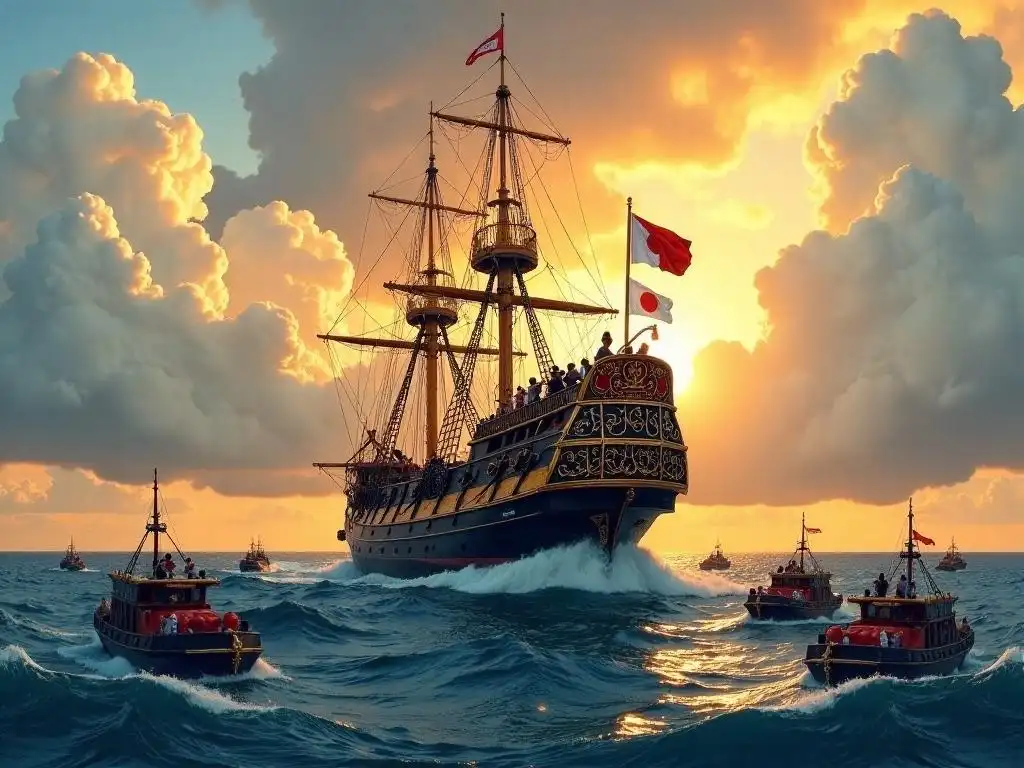
Commodore Matthew Perry's arrival in Japan in 1853 marked a significant turning point in the country's naval history, leading to profound changes in its maritime strategy. The forced opening of Japan to foreign trade and influence initiated a reevaluation of the nation's naval capabilities and objectives. Perry's expeditions highlighted the technological and tactical advantages of Western naval powers, prompting Japan to recognize the urgency of modernizing its fleet and naval doctrines to compete on the global stage.
The subsequent Meiji Restoration in 1868 catalyzed a series of reforms, particularly in military and naval affairs. Japan adopted Western technologies and organizational models, leading to the establishment of a modern navy. This transformation was not merely a reaction to foreign pressure; it represented a strategic pivot towards becoming a significant maritime power in its own right. The influence of Perry's actions reverberated throughout Japan's approach to maritime strategy, laying the groundwork for future naval developments.
The Evolution of Japan's Naval Doctrine
Following Commodore Perry's expeditions, Japan underwent a dramatic evolution in its naval doctrine. The initial focus was on the immediate need to protect against foreign threats, leading to the establishment of a modern navy with a strong emphasis on defense. However, as Japan assimilated Western naval strategies, its doctrine began to shift towards a more offensive posture.
By the late 19th century, Japan's naval doctrine was characterized by a blend of traditional strategies and modern tactics. The influence of British naval practices, particularly the emphasis on battleship supremacy and fleet engagements, became evident. This evolution was crucial during the First Sino-Japanese War (1894-1895) and the Russo-Japanese War (1904-1905), where Japan successfully demonstrated its naval prowess. The victories in these conflicts solidified Japan's emerging identity as a formidable maritime power, directly tracing back to the impetus provided by Perry's initial encounter.
Commodore Perry's Influence on Future Conflicts
Commodore Perry's influence extended beyond the immediate modernization of the Japanese navy; it set a precedent for Japan's engagement in future conflicts. The newfound naval capabilities enabled Japan to assert its interests in the region, leading to an increased presence in East Asia. The lessons learned from Western naval engagements were applied in subsequent conflicts, shaping Japan's military strategies and tactics.
The transformation of Japan's naval forces directly contributed to its imperial ambitions in the late 19th and early 20th centuries. The navy played a critical role in Japan's military campaigns during the First Sino-Japanese War and the Russo-Japanese War, where it not only showcased Japan's technological advancements but also established its reputation as a rising power on the world stage. Perry's influence, therefore, catalyzed a trajectory that led Japan into an era of military expansion and imperialism, fundamentally altering the balance of power in the region.
The Role of the Navy in Japan's Imperial Expansion
The Japanese navy became an essential instrument of state policy and imperial expansion following Commodore Perry's arrival. With a modernized fleet at its disposal, Japan was able to project power beyond its shores, facilitating territorial acquisitions and regional dominance. The navy was pivotal in securing Japan's interests in Korea and Taiwan, asserting control over strategically important maritime routes.
The navy's role was further solidified during the early 20th century as Japan sought to establish itself as a colonial power. The naval victories over China and Russia not only expanded Japan's territorial reach but also enhanced its status as a global maritime force. This era marked the transition of the Japanese navy from a defensive organization to an aggressive force that played a central role in the nation’s imperial ambitions, profoundly influenced by the initial challenges posed by Perry's arrival.
Commodore Perry's expedition to Japan catalyzed a transformation in the country's naval history, leaving a lasting legacy that shaped its maritime identity. The urgency to modernize and adapt to Western naval practices led to a comprehensive overhaul of Japan's naval forces, doctrines, and strategies. This pivotal moment not only influenced Japan's approach to naval warfare but also laid the foundation for its emergence as a significant imperial power in the 20th century.
Summary of Key Points on Commodore Perry's Influence
- Forced Opening: Perry's arrival prompted Japan to open its ports and engage with Western powers.
- Modernization: Japan initiated significant naval reforms, adopting Western technologies and strategies.
- Evolution of Naval Doctrine: The shift from defensive to offensive strategies marked Japan's naval evolution.
- Imperial Expansion: The navy became a crucial tool in Japan's imperialist ambitions, asserting control in East Asia.
Reflection on the Transformation of Japan's Naval Identity
The transformation of Japan's naval identity post-Perry was profound. From a nation isolated and technologically behind, Japan evolved into a powerful maritime state capable of competing with Western powers. This metamorphosis not only reshaped Japan's military landscape but also influenced its cultural and societal perceptions of naval power. Commodore Perry's legacy continues to resonate in Japan's ongoing maritime endeavors, symbolizing the beginning of a new era in naval history.
To deepen your understanding of Commodore Perry's impact on Japan's naval development, a variety of resources are available. These materials provide extensive insights into the historical context, the strategic implications of Perry’s expedition, and the subsequent transformation of Japan’s naval capabilities. Below are recommendations across different formats that cater to various preferences for learning.
Suggested Books and Articles for In-Depth Study
-
"The Last Samurai: The Life and Battles of Saigo Takamori" by Mark Ravina
This book provides a broader context of Japan's transition during the Meiji Restoration, highlighting how Perry's arrival influenced military reforms.
-
"Commodore Perry's Japan: The Birth of Japan's Modern Navy" by John W. Dower
Dower’s work focuses specifically on Perry’s expedition and its direct influence on Japan’s naval modernization, detailing the changes that took place in Japanese maritime policy.
-
"The United States and Japan: A History from the 1850s to the Present" by Gary D. Allinson
This comprehensive history examines the relationship between the two nations, offering insights into how Perry’s actions set the stage for future naval cooperation and competition.
-
"Japan's Emergence as a Modern State" by Peter Duus
Duus provides a thorough analysis of the political, social, and military changes in Japan, including the role of Western influences like Perry's mission.
-
Scholarly Articles
- “The Influence of Commodore Perry on Japan's Naval Development” (Journal of Asian Studies)
- “Opening Japan: Commodore Perry and the Transition to Modernity” (Modern Asian Studies)
These articles delve into the strategic ramifications of Perry's visit and the immediate and lasting impacts on Japanese naval strategy.
Notable Documentaries and Resources on the Topic
-
"Perry's Expedition to Japan" (PBS Documentary)
This documentary presents a visual history of Commodore Perry's journey, showcasing historical reenactments and expert interviews that explain the significance of his expedition.
-
"The Black Ships: Commodore Perry and the Opening of Japan" (National Geographic)
This resource offers a well-rounded view of Perry’s expedition and its implications for Japan, utilizing maps, illustrations, and expert commentary to enhance understanding.
-
Online Educational Platforms
- Khan Academy’s "Japan's Opening to the World"
This course includes video lectures and articles that cover the period of Commodore Perry’s arrival and its consequences for Japan.
-
"Commodore Perry and the Opening of Japan" (History Channel)
This series provides a concise overview of the events surrounding Perry’s journey, detailing how it fundamentally altered Japan’s trajectory.
These documentaries and resources can serve as valuable supplements to the written materials, offering a multi-faceted approach to understanding Commodore Perry's influence on Japanese naval history.
- Introduction to Commodore Perry and Japan's Naval History
- The Context of Japanese Naval Power Before Perry
- Commodore Perry's Expedition to Japan
- Changes in Japanese Naval Strategy Post-Perry
- Key Figures in Japanese Naval Development After Perry
- Case Studies of Naval Developments Influenced by Perry
- Commodore Perry's Long-Term Impact on Japanese Maritime Strategy
- Conclusion: Commodore Perry's Legacy in Japanese Naval History
- Further Reading on Commodore Perry and Japanese Naval History
Frequently Asked Questions
Commodore Perry is best known for his expedition to Japan in 1853, which marked the end of Japan's self-imposed isolation. His arrival prompted the country to modernize its naval capabilities.
How did Perry's expedition influence Japan's military?
Perry's expedition highlighted the need for naval modernization in Japan. In response, Japan initiated a series of reforms to develop a stronger navy, ultimately leading to its emergence as a maritime power.
What were the immediate effects of Perry's arrival on Japan?
The immediate effects included the signing of the Treaty of Kanagawa in 1854, which opened Japanese ports to American trade. This treaty marked a significant shift in Japan's foreign relations and naval strategy.
Did Perry influence Japan's cultural aspects?
Yes, Perry's arrival not only impacted military and political structures but also led to a cultural exchange. This period saw an influx of Western ideas and technology that influenced Japanese society.
How is Commodore Perry remembered in Japan today?
Perry is often viewed as a controversial figure; while he is credited with opening Japan to the world, his methods are considered aggressive. His legacy continues to provoke discussions on foreign influence in Japanese history.
Commodore Perry's expedition to Japan in 1853 marked a pivotal moment in global maritime history, as it catalyzed the transformation of Japan's naval capabilities and its emergence as a formidable power. Today, as nations grapple with maritime security and technological advancements, the lessons from Perry's influence resonate profoundly. The interplay between diplomacy and military strength remains as relevant now as it was over a century ago, reminding us that the tides of history are shaped by both conflict and cooperation.
The impact of Commodore Perry's arrival in Japan extends far beyond the immediate military advancements; it initiated a cultural and technological renaissance that altered the very fabric of Japanese society. The modernization of Japan's navy not only allowed it to defend its sovereignty but also positioned the nation as a key player on the world stage. In the midst of chaos, there is also opportunity.
This quote encapsulates the essence of Perry's mission and its aftermath, highlighting how moments of disruption can lead to profound growth and innovation.
As we reflect on the historical significance of Commodore Perry's influence, let us consider how we can apply these lessons to our own lives. Embrace change, seek knowledge, and remain open to new ideas, for it is through adaptation and learning that we can navigate our own turbulent waters.
The legacy of Perry's expedition invites us to ponder our role in shaping history—whether through our actions, our choices, or our willingness to engage with the world around us. Let us honor this legacy by fostering understanding and collaboration in our own communities, ensuring that we, too, can sail toward a brighter future.
Unveil the Legacy of Commodore Perry Today!
Thank you for diving into the fascinating journey of Commodore Perry and his impact on Japanese naval development! You've explored the pivotal moments that shaped history and initiated remarkable changes. Now, it's time to take action and deepen your understanding of this transformative era.
Here are a few ways you can further your exploration:
- Dive deeper into naval history: Read more about the evolution of Japan’s maritime forces following Perry’s arrival by exploring additional resources on our website.
- Join the conversation: Share this article with friends or on social media to spark discussions about the historical influences on modern naval strategy.
- Visit a museum or exhibit related to Commodore Perry or Japanese history to gain a tangible connection to the past.
What insights does Commodore Perry’s mission provide regarding the ripple effects of cultural exchange throughout history? We would love to hear your thoughts in the comments!