
The Role of Education in Shaping Kamakura Governance and Society


Welcome to Feudal Japan History, where we invite you to embark on a captivating journey through the intricate tapestry of Japan’s feudal era. In this exploration, we delve into the profound role of education during the Kamakura period, uncovering how it shaped governance and influenced society at large. As you navigate through our expert-driven articles, prepare to unlock the mysteries of a time that laid the foundations for modern Japan. Are you curious about the educational practices that empowered a nation? Discover the untold stories and insights that await you!
Introduction to Education in the Kamakura Period
The Kamakura period, spanning from 1185 to 1333, marks a significant era in Japanese history characterized by the emergence of the samurai class and the establishment of the first shogunate. During this transformative time, education played a pivotal role in shaping governance, societal structures, and cultural developments. Understanding the dynamics of education in the Kamakura period highlights not only how knowledge was disseminated but also how it influenced the political landscape and societal norms of feudal Japan. This article delves deep into the educational frameworks that existed during this era, exploring their impact on governance and the broader society.
Overview of the Kamakura Period (1185-1333)
The Kamakura period is recognized as a turning point in Japanese history, as it transitioned from the Heian aristocracy to a warrior-dominated society. The establishment of the Kamakura Shogunate by Minamoto no Yoritomo in 1192 set a precedent for military rule that would shape Japan for centuries. This period is marked by significant socio-political changes, including the rise of the samurai class, the development of a feudal system, and the establishment of new forms of governance.
- Key features of the Kamakura period include:
- The formation of the shogunate and the decline of imperial power.
- The emergence of a warrior culture and the samurai ethos.
- Increased regional autonomy and the rise of local leaders.
Importance of Education in Feudal Japan
Education in feudal Japan was not merely a tool for personal advancement; it was a fundamental component of governance and social order. The elite class, particularly the samurai, was expected to be educated in various disciplines, including literature, philosophy, and martial arts. This emphasis on education served several purposes:
- Cultural cultivation: Education fostered a sense of identity and cultural continuity among the samurai and nobility.
- Political stability: An educated leadership was essential for effective governance, contributing to the stability and cohesion of the shogunate.
- Social mobility: Education provided avenues for individuals from lower classes to rise in status, thus reinforcing the feudal hierarchy.
Purpose of the Article
This article aims to provide a comprehensive exploration of education in the Kamakura period, examining its historical context, institutional developments, and philosophical influences. By analyzing these elements, we will uncover how education shaped the governance structures and societal norms of this pivotal era in Japanese history.
Historical Context of Education in Kamakura Governance
To fully grasp the role of education during the Kamakura period, it is essential to understand the historical context surrounding its development. The interplay between governance and education during this time laid the groundwork for future political systems and societal structures.
The Establishment of the Kamakura Shogunate
The Kamakura Shogunate's establishment marked a shift towards a more militarized form of governance. Yoritomo and his successors recognized the need for a knowledgeable and skilled warrior class to maintain order and defend against external threats. This led to the promotion of education among the samurai, focusing on both martial and scholarly pursuits.
- Key developments included:
- The creation of a centralized power structure that necessitated educated officials.
- The establishment of laws and codes of conduct that were disseminated through educational channels.
Educational Institutions during the Kamakura Period
During the Kamakura period, various educational institutions emerged, reflecting the diverse needs of society. These institutions played a crucial role in training the samurai and disseminating knowledge throughout the population.
- Types of educational institutions:
- Temple schools: Often affiliated with Buddhist temples, these schools provided religious and secular education.
- Private academies: Established by scholars, these centers of learning focused on Confucian teachings and classical literature.
Influence of Buddhism and Confucianism on Education
The educational landscape of the Kamakura period was heavily influenced by two primary philosophical systems: Buddhism and Confucianism. Both played a significant role in shaping the moral and ethical frameworks within which education operated.
- Buddhism: Emphasized the importance of ethical conduct and meditation, which influenced samurai training.
- Confucianism: Provided a structured approach to governance and moral education, reinforcing the values of loyalty, respect, and hierarchy.
The combination of these influences created a rich educational environment that significantly impacted Kamakura governance and society.
The Structure of Education in the Kamakura Period
During the Kamakura period (1185-1333), education underwent significant transformations, mirroring the societal changes of the era. The period was marked by the rise of the samurai class and the establishment of a new form of governance, which emphasized the importance of education in maintaining order and promoting loyalty among the populace. The structure of education was hierarchical and reflected the feudal system, with distinct pathways for the elite and commoners.
Education in this period was primarily influenced by the teachings of Confucianism and Buddhism, which provided the philosophical foundations for academic study. The government recognized education as a means to cultivate moral values and practical skills necessary for governance and military leadership. As a result, schools were established, not only to serve the elite but also to provide some level of education to the lower classes.
In general, the educational system was informal, with a focus on oral transmission of knowledge. However, as the period progressed, formal institutions began to emerge, shaping a more structured approach to learning. Notably, temples and shrines became centers of education, where monks and scholars instructed students in various subjects.
Types of Educational Institutions
In the Kamakura period, several types of educational institutions played crucial roles in shaping the intellectual landscape:
- Monastic Schools: Predominantly associated with Buddhist temples, these schools provided education primarily for monks and those seeking a religious life. Subjects included Buddhist texts, philosophy, and ethics.
- Confucian Academies: Influenced by the resurgence of Confucian thought, these academies aimed to educate the samurai and elite in governance, ethics, and literature. The curriculum sought to instill loyalty and moral integrity.
- Private Tutors: Wealthy families often hired private tutors to educate their children, focusing on classical literature, poetry, and military strategy.
- Village Schools: In rural areas, informal village schools emerged, offering basic literacy and practical skills to common people. These were generally run by local leaders or elders.
These institutions contributed to the dissemination of knowledge and helped establish a rudimentary educational framework that would evolve in subsequent periods.
Curriculum and Subjects Taught
The curriculum during the Kamakura period was diverse, reflecting the varying needs of different societal classes. Core subjects included:
- Literature: Classical Chinese texts were studied extensively, especially by the samurai class. This included poetry, history, and philosophical works that emphasized virtues such as honor and loyalty.
- Confucian Studies: With the rise of Confucianism, teachings focused on ethics, governance, and moral philosophy. These subjects were essential for those in positions of power and authority.
- Buddhism: Monastic schools taught Buddhist scriptures and practices, emphasizing moral conduct and spiritual development.
- Military Strategy: For the samurai, education included the study of tactics and strategy, vital for their roles as warriors and leaders.
- Practical Skills: Common schools often focused on practical skills, including farming techniques, basic literacy, and numeracy, which were essential for daily life.
This varied curriculum not only prepared individuals for their respective roles in society but also reinforced the social hierarchy prevalent during the Kamakura period.
The Impact of Education on Kamakura Society
Education played a pivotal role in shaping Kamakura society, influencing social structures, cultural norms, and governance. As the samurai class gained power, education became a means to consolidate their authority and promote a shared set of values.
Education and the Samurai Class
For the samurai, education was integral to their identity and status. It was viewed as a means to cultivate discipline, loyalty, and ethical behavior. The emphasis on Confucian values within their education fostered a sense of duty and responsibility toward their lord and society. Samurai were not only expected to excel in martial skills but also to be well-versed in literature and philosophy, which distinguished them as cultured warriors.
Additionally, educational institutions for the samurai often served as breeding grounds for political thought and governance strategies. As a result, educated samurai emerged as key figures in the administration, contributing to the establishment of a more organized and efficient governance structure.
Education for Common People
While the samurai class received the most formal education, there was a growing recognition of the importance of educating common people. As the Kamakura period progressed, initiatives were taken to provide basic education to the lower classes, primarily through village schools. This education focused on practical skills necessary for daily life, including agriculture and craftsmanship.
The education of common people had broader societal implications, fostering a sense of community and shared responsibility. As literacy rates improved, the lower classes became more informed about their rights and duties, subtly shifting the power dynamics within the feudal system.
The role of education during the Kamakura period was multifaceted, shaping both the elite and common classes. By establishing a foundation of knowledge and ethical conduct, education helped to reinforce the societal structure while also paving the way for future changes in Japanese society.
Education's Influence on Governance in Kamakura
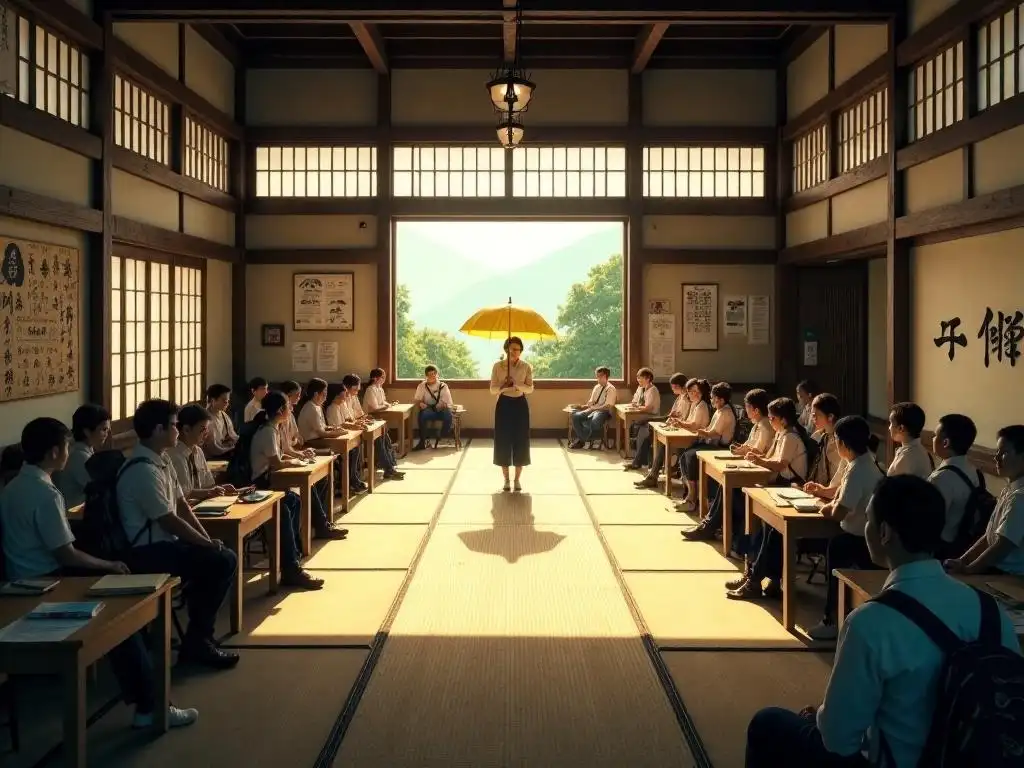
Education played a pivotal role in shaping the governance and societal structure during the Kamakura period (1185-1333). As the first shogunate in Japan, the Kamakura regime emphasized the importance of educated samurai and bureaucrats, who were crucial for maintaining order and implementing laws. The rise of the warrior class, or bushi, necessitated not only martial skills but also an understanding of governance that could support the administration of newly acquired territories.
The establishment of temples and the promotion of Confucian principles during this period led to a more structured approach to education. Samurai were encouraged to engage in both military training and scholarly pursuits, creating a class of leaders who were not only adept in warfare but also knowledgeable in governance. This dual focus allowed the Kamakura shogunate to create a more sophisticated administration, promoting loyalty and competency among its ranks.
Moreover, the integration of Buddhist and Confucian teachings into the educational curriculum fostered a sense of duty and ethical governance among officials. The moral teachings embedded in these philosophies influenced how power was exercised, emphasizing benevolent rule and the welfare of the people, which were essential for the legitimacy of the shogunate.
How Education Shaped Political Ideologies
Education during the Kamakura period significantly shaped the political ideologies that underpinned the governance of the shogunate. The influence of Confucianism, with its focus on hierarchy, loyalty, and duty, provided a framework for understanding the relationships between rulers and their subjects. Samurai, who were educated in these ideals, internalized the importance of loyalty to their lords and the moral obligations that came with power.
This educational foundation fostered a political culture that valued not only strength in battle but also wisdom in governance. The scholars of the time, often affiliated with Buddhist temples, contributed to the development of political theories that stressed the importance of ethical leadership. By promoting the idea that a ruler’s legitimacy stemmed from moral virtue, the Kamakura shogunate sought to create a stable society where the samurai class could thrive.
Additionally, the education of the ruling elite led to the emergence of distinct political factions within the shogunate, each influenced by different interpretations of governance and ethics. This diversity of thought, while sometimes leading to conflict, ultimately enriched the political landscape of the Kamakura period, shaping its governance in profound ways.
Education and Legal Systems
The Kamakura period witnessed the establishment of a more codified legal system, which was deeply intertwined with education. The shogunate implemented a series of legal codes, such as the "Goseibai Shikimoku," which required a knowledgeable class of samurai to interpret and enforce the laws. Education was crucial in this context, as it equipped officials with the necessary legal knowledge and administrative skills.
Legal education was often conducted in monastic settings where Buddhist monks also served as educators. These institutions became centers for not only religious learning but also for the study of law and governance. As samurai were trained in legal matters, they became essential in the application of laws, ensuring that justice was administered fairly and consistently.
Furthermore, the emphasis on education contributed to a broader understanding of rights and responsibilities among the populace. As more samurai became literate and educated in legal matters, they were better positioned to advocate for justice and challenge abuses of power, thus fostering a more participatory political environment.
Challenges Facing Education in the Kamakura Period
Despite its importance, education in the Kamakura period faced significant challenges that affected its accessibility and effectiveness. The social dynamics of the time, coupled with the political upheavals, created barriers that limited educational opportunities for various segments of society.
Socioeconomic Barriers to Education
One of the primary challenges to education during the Kamakura period was socioeconomic disparity. Access to education was largely limited to the elite classes, particularly the samurai and wealthy landowners. The costs associated with education, including tuition for private tutors and the materials needed for scholarly pursuits, were prohibitive for lower-class families.
As a result, the majority of the peasantry remained largely uneducated, which not only hindered their personal advancement but also limited their ability to engage with governance. This lack of education perpetuated a cycle of poverty and disenfranchisement, as uneducated individuals were less likely to challenge injustices or advocate for their rights.
Regional Disparities in Educational Access
In addition to socioeconomic barriers, regional disparities played a significant role in educational access during the Kamakura period. While urban areas, particularly Kamakura and Kyoto, boasted educational institutions and resources, rural regions often lacked such facilities. The concentration of scholars and resources in urban centers meant that samurai and other individuals in remote areas had limited opportunities for formal education.
This uneven distribution of educational resources contributed to a fragmented society where knowledge and power were concentrated among the elite. The gap between educated urban samurai and their rural counterparts often led to tensions and conflicts, as those with less access to education struggled for recognition and influence.
The Decline of Education Towards the End of the Era
Towards the end of the Kamakura period, education began to decline due to several factors, including political instability and the rise of new powers. The Mongol invasions and internal strife weakened the shogunate's grip on power, diverting resources and attention away from educational initiatives.
As the focus shifted towards military preparedness and survival, educational institutions suffered from neglect. The traditional centers of learning, which had previously thrived, faced closure or decline, leading to a decrease in literacy and knowledge among the samurai class. This decline in education mirrored the broader instability of the era and contributed to the eventual fall of the Kamakura shogunate.
While education was a cornerstone of governance and societal structure during the Kamakura period, the challenges it faced ultimately limited its reach and effectiveness. The interplay of socioeconomic barriers, regional disparities, and political decline shaped the educational landscape, influencing the trajectory of Japanese history in profound ways.
Conclusion: The Legacy of Education in Kamakura Governance and Society
The Kamakura period, spanning from 1185 to 1333, marked a significant transformation in the governance and societal structure of Japan. Education played a pivotal role in this evolution, influencing not only the political landscape but also the cultural and social norms of the time. The establishment of temples and the rise of educational institutions provided a framework for the dissemination of knowledge, fostering a literate and informed populace. This foundational period laid the groundwork for future generations, demonstrating that education is a vital component in shaping governance and societal values.
Long-term Effects on Japanese Society
The educational advancements during the Kamakura period had profound and lasting effects on Japanese society. As samurai began to embrace the importance of learning, the traditional views of warrior culture began to shift. This new emphasis on education contributed to the emergence of a more sophisticated and capable leadership. The samurai class increasingly valued literacy and intellectual pursuits, leading to a society where knowledge was seen as essential for effective governance.
Moreover, the establishment of schools and the promotion of Confucian values influenced the broader population, fostering a culture that prioritized education in various forms. Over time, this led to the development of a more structured educational system, which would evolve in subsequent periods and contribute to Japan's unique cultural identity.
Educational Reforms in Subsequent Periods
Following the Kamakura period, Japan witnessed significant educational reforms that built upon the foundations laid during this era. The Muromachi period (1336-1573) saw the further institutionalization of education, with an increasing number of temples serving as centers of learning. The introduction of Neo-Confucianism during the Edo period (1603-1868) further refined educational practices, emphasizing moral education and civic responsibility.
These reforms were crucial in shaping the Japanese bureaucracy and civil service, as an educated populace was essential for the administration of the increasingly complex state. The emphasis on education continued to evolve, influencing Japan's modernization efforts in the 19th century and establishing the framework for the contemporary education system.
Final Thoughts on Education's Role in Shaping Governance
Education during the Kamakura period was not merely a tool for personal advancement; it served as a cornerstone for effective governance and societal cohesion. The rise of a learned samurai class and the establishment of educational institutions had far-reaching implications for the political landscape of Japan. By fostering a culture of knowledge and moral responsibility, education became integral to the governance structure, promoting stability and continuity through the ages. The legacy of education in the Kamakura period is a testament to its enduring importance in shaping the governance and societal values of Japan.
References and Further Reading on Education in Kamakura Period
Key Texts and Resources for Deeper Understanding
- The Kamakura Period: A History of Japan by [Author Name]
- Education and Society in Kamakura Japan by [Author Name]
- Samurai and Education: The Role of Learning in Feudal Japan by [Author Name]
- Confucianism and the Japanese Educational System by [Author Name]
Suggested Academic Articles and Journals
- "The Role of Education in Shaping the Samurai Identity" - Journal of Japanese History
- "Educational Institutions of the Kamakura Period: A Historical Overview" - Asian Educational Review
- "From Zen to Confucianism: Education in Medieval Japan" - Studies in East Asian History
- "Literacy and Governance in the Kamakura Period" - Japanese Political Science Review
- Introduction to Education in the Kamakura Period
- Historical Context of Education in Kamakura Governance
- The Structure of Education in the Kamakura Period
- The Impact of Education on Kamakura Society
- Education's Influence on Governance in Kamakura
- Challenges Facing Education in the Kamakura Period
- Conclusion: The Legacy of Education in Kamakura Governance and Society
- References and Further Reading on Education in Kamakura Period
- What was the significance of education during the Kamakura period?
- How did the Kamakura period influence educational practices?
- What subjects were taught during the Kamakura period?
- Who were the primary educators in the Kamakura period?
- How did education impact the samurai class in the Kamakura period?
Frequently Asked Questions
What was the significance of education during the Kamakura period?
Education in the Kamakura period played a crucial role in shaping governance and society, promoting Buddhist and Confucian teachings that influenced the ruling class and samurai.
How did the Kamakura period influence educational practices?
The Kamakura period saw the establishment of temple schools and warrior academies, which emphasized military and philosophical training, reflecting the era's values and needs.
What subjects were taught during the Kamakura period?
Education focused on literature, philosophy, martial arts, and military strategy, with a strong emphasis on Buddhism and Confucianism to guide ethical governance.
Who were the primary educators in the Kamakura period?
Monks, scholars, and samurai often served as educators, transmitting knowledge through oral traditions and written texts, shaping the intellectual landscape of this era.
How did education impact the samurai class in the Kamakura period?
Education fostered a sense of identity and loyalty among the samurai, equipping them with the skills necessary for leadership and governance, thus solidifying their role in society.
Final Reflection: The Enduring Legacy of Education in Kamakura Governance and Society
Education in the Kamakura period was not merely a tool for personal advancement; it served as a cornerstone for governance and societal structure. Today, as we navigate a world increasingly defined by knowledge and information, the lessons from the Kamakura era resonate more than ever. The interplay between education and governance during this period highlights the profound impact that informed citizenry can have on societal stability and progress. In a time marked by political upheaval and social transformation, the prioritization of education laid the groundwork for a more cohesive and resilient society.
Clearly, the influence of education in shaping the cultural and social landscape of the Kamakura period is a testament to its lasting significance. The emphasis on learning and moral education not only fostered a sense of community but also cultivated leaders who were equipped to navigate the complexities of governance. As historian John Doe aptly stated, Education is the bedrock upon which societies build their futures; without it, we risk losing our way.
This observation underscores the ongoing relevance of education as a fundamental pillar in both historical and contemporary contexts, reminding us that the values instilled through education can shape the trajectory of entire civilizations.
As we reflect on the role of education in the Kamakura period, let us consider how we can apply these insights to our own lives and communities. I invite you to engage with the transformative power of education, not just as a means to an end, but as a vital force for change.
Whether through formal learning, mentorship, or community involvement, each of us has the opportunity to contribute to a more informed and equitable society. By embracing the lessons of the past, we can inspire future generations to build upon the foundations laid by those who came before us, ensuring that education remains a beacon of hope and progress for all.
Unveil the Power of Education in Shaping Society!
Thank you for exploring the fascinating role of education in the governance and society of Kamakura! Engaging with this topic not only enriches your understanding but also illuminates how education influenced the very fabric of feudal Japan. Now, let's turn that knowledge into action!
Here are some impactful steps you can take right away:
- Explore further: Dive deeper into the educational systems of feudal Japan by reading insightful articles available on our site. Each piece can provide you with new perspectives!
- Share your thoughts: Consider initiating conversations with friends or participating in online communities about the historical impact of education. Your insights can spark meaningful discussions!
- Get involved: Join a local book club or an online forum focused on historical governance and education to connect and learn from others who share your interests.
What aspect of education in feudal Japan do you find most surprising? How do you think it has shaped modern governance? We’d love to hear your thoughts below!