
Legal Frameworks: How Feudal Laws Governed Family Relationships


Welcome to Feudal Japan History, where we embark on a captivating journey through the intricate tapestry of Japan’s feudal era. Here, we delve into the legal frameworks that shaped family relationships, revealing how feudal laws intricately governed the dynamics of daily life and societal interactions. What secrets lie within these ancient regulations? Join us as we uncover the fascinating interplay of power, duty, and family ties, and discover how these influential laws continue to resonate in modern Japan. Prepare to explore the depths of history and culture that defined an era!
- Introduction to Feudal Laws and Family Relationships in Japan
- Historical Context of Feudal Laws in Japan
- Core Principles of Feudal Laws Governing Family Relationships
- Impact of Feudal Laws on Family Relationships
- Comparison of Feudal Laws Across Different Japanese Regions
- Major Changes in Family Relationships Post-Feudal Era
- Conclusion: The Legacy of Feudal Laws on Family Relationships in Japan
- References for Further Reading on Feudal Laws and Family Relationships in Japan
-
Frequently Asked Questions
- What were the main feudal laws in Japan regarding family relationships?
- How did family relationships influence social status in feudal Japan?
- What role did marriage play in feudal family dynamics?
- How did the samurai code affect family relationships?
- Were there any legal repercussions for violating feudal family laws?
- Final Reflection: The Enduring Legacy of Feudal Laws on Family Relationships in Japan
- Unveil the Impact of Feudal Laws on Modern Relationships!
Introduction to Feudal Laws and Family Relationships in Japan
During Japan's feudal era, which spanned from the late 12th century through the 19th century, a complex web of legal frameworks governed various aspects of life, including family relationships. These feudal laws, rooted in the values of loyalty, duty, and hierarchy, played a crucial role in shaping familial structures and dynamics.
Understanding the nuances of these laws offers invaluable insights into how families functioned within the rigid social strata of feudal Japan. This article aims to delve into the intricate relationship between feudal laws and family structures, exploring how these regulations influenced relationships, responsibilities, and societal roles, ultimately reflecting the broader cultural norms of the time.
Overview of Feudal Japan
Feudal Japan was characterized by a system where land and power were distributed among a hierarchy of lords, vassals, and serfs. At the top of this structure was the emperor, who held a largely symbolic position, while real power resided with the shoguns and daimyos. The samurai class, loyal warriors serving these lords, played a pivotal role in maintaining order and enforcing laws.
The feudal system was not merely a political arrangement; it was intricately tied to social and familial structures. The laws governing family relationships were influenced by Confucian ideals, which emphasized hierarchy and respect for authority. In this context, familial bonds were often tied to one's social status and obligations, establishing a framework that dictated not only personal relationships but also economic and political alliances.
Importance of Family Structures in Feudal Society
Family structures in feudal Japan were paramount to the stability of society. Families were seen as the basic units of social organization, where lineage, inheritance, and loyalty were of utmost importance. The legal frameworks governing these relationships ensured that family ties were maintained and respected, reinforcing the broader societal order.
- Patriarchal Authority: The family structure was predominantly patriarchal, with the eldest male acting as the head. His authority was both legal and moral, with laws supporting his decisions regarding family matters.
- Marriage Alliances: Marriages were often arranged to strengthen alliances between families and clans, serving political and economic purposes. This practice was governed by laws that outlined the rights and responsibilities of each party.
- Inheritance Laws: Feudal laws dictated inheritance patterns, typically favoring male heirs. This system ensured the continuation of family lineage and the retention of land and resources within the family.
Understanding these structures is essential to grasping the overall dynamics of feudal Japan, as family relationships not only shaped individual lives but also influenced the greater political landscape.
Purpose of the Article
The purpose of this article is to provide an in-depth exploration of how feudal laws governed family relationships in Japan. By examining historical documents, legal codes, and cultural practices, we aim to uncover the intricacies of family dynamics within the feudal system.
This analysis will cover:
- The specific laws that influenced family relationships.
- The implications of these laws on daily life and societal structures.
- Case studies demonstrating the impact of feudal laws on family relationships.
Through this comprehensive examination, readers will gain a deeper understanding of how feudal laws shaped the familial landscape of Japan, reflecting the broader themes of loyalty, duty, and societal hierarchy that defined this historical period.
Historical Context of Feudal Laws in Japan

Origins of Feudalism in Japan
Feudalism in Japan emerged during the late 12th century, primarily as a response to the power struggles and instability following the Genpei War (1180-1185). This conflict marked the transition from a centralized imperial authority to a decentralized system where local lords, or daimyō, gained significant influence over their territories. The shogunate system, established by Minamoto no Yoritomo, became the backbone of this feudal structure, with samurai serving as warriors to protect the interests of their lords.
The societal framework was built on mutual obligations: the daimyō provided land and protection to the samurai, while the samurai offered loyalty and military service. This relationship was codified in a complex set of feudal laws that governed not only land ownership and military duties but also family relationships and roles within the household. The importance of lineage and family ties became paramount, as the samurai class sought to maintain and elevate their status through strategic marriages and alliances.
Evolution of Family Laws During the Feudal Era
As feudalism solidified in Japan, family laws evolved to reflect the hierarchical nature of society. The family unit, particularly the samurai household, became a microcosm of the broader feudal structure. Key aspects of family laws included:
- Patriarchal Authority: The head of the household (usually the eldest male) held significant power over family members, including decisions about marriages and inheritance. This structure reinforced the social order, as familial loyalty aligned with loyalty to the lord.
- Marriage Arrangements: Marriages were often political tools used to forge alliances between families. The practice of omiai (arranged marriage) was common, and the choice of a spouse was frequently dictated by social standing and the desire to strengthen family ties.
- Inheritance Laws: Inheritance was primarily patrilineal, meaning that property and titles were passed down through the male line. This practice ensured that family wealth and status remained within the lineage, further entrenching the power dynamics of feudal society.
Over time, local customs melded with the overarching feudal laws, resulting in variations across regions. The Muromachi period (1336-1573) saw an increased emphasis on written records, which helped standardize family laws and solidify the legal framework governing relationships.
Key Figures Influencing Feudal Laws on Family Relationships
Several influential figures played pivotal roles in shaping the feudal laws governing family relationships in Japan. Notable among them are:
- Yoritomo Minamoto: As the first shōgun of the Kamakura period, Yoritomo established the foundational principles of feudal governance, including those related to family loyalty and obligations. His policies laid the groundwork for the samurai code of conduct, which emphasized familial duty.
- Ashikaga Takauji: The founder of the Ashikaga shogunate, Takauji's regime introduced significant changes in family laws, particularly regarding the rights of women. While patriarchal norms persisted, there were instances where women could inherit property, especially if there were no male heirs.
- Confucian Scholars: The influence of Confucianism during the Edo period (1603-1868) reinforced patriarchal norms and the importance of family hierarchy. Scholars like Itō Jinsai and Arai Hakuseki promoted ideas that elevated the family as a social unit, further embedding the concept of loyalty to family within the legal frameworks of feudal Japan.
The interplay between these figures and their contributions to legal frameworks reveals a complex tapestry of feudal laws and family relationships, characterized by the tension between tradition and evolving societal norms. Understanding this historical context provides insights into the intricate dynamics of family structures in feudal Japan.
Core Principles of Feudal Laws Governing Family Relationships

The legal frameworks governing family relationships in feudal Japan were deeply rooted in the socio-political structures of the time. Central to these frameworks was the concept of hierarchy, which emphasized the importance of status and authority within family units. The feudal laws not only dictated individual rights and responsibilities but also reinforced the prevailing social order.
In feudal Japan, patriarchy was a defining characteristic of family structures. The male head of the household, typically the father or eldest son, wielded significant authority over family members. This authority was not merely familial; it was integrated into the larger feudal hierarchy.
- Head of the Household: The patriarch was responsible for making all major decisions, including financial matters, marriage arrangements, and the education of children. His decisions were often guided by the principles of honor and duty, reflecting the broader societal values of loyalty and respect.
- Role of Women: Women, while crucial to the family unit, often had limited rights. Their primary roles included managing the household and raising children. Marriages were arranged, and women's status was largely determined by their relationship to male family members. This system fostered a culture where women were expected to be obedient and supportive, adhering to the family's honor and reputation.
- Children's Roles: Sons were especially valued as continuators of the family lineage. Their upbringing was centered around preparing them to inherit the family name and responsibilities. Daughters, on the other hand, were often married off to secure political alliances or strengthen family ties, further emphasizing the patriarchal nature of the society.
Marriage Practices Under Feudal Laws
Marriage during the feudal era was primarily a strategic arrangement rather than a romantic union. The feudal laws governing marriage were designed to ensure the stability of family lineage and the consolidation of power among clans.
- Arranged Marriages: Most marriages were arranged by parents, often without the input of the bride and groom. These unions were meant to enhance social standing, secure alliances, and ensure the continuation of family bloodlines.
- Dowries and Bride Price: Financial transactions often accompanied marriages, such as dowries provided by the bride's family or bride prices paid to the bride's family. These practices highlighted the economic aspects of marriage, where alliances were formed not only for familial bonds but also for economic security.
- Polygamy and Concubinage: In some cases, powerful men practiced polygamy, taking multiple wives or concubines to expand their lineage or secure political alliances. While primary wives were expected to bear legitimate heirs, secondary wives could provide additional offspring, although they held a lower status within the household.
Inheritance Laws and Family Lineage
Inheritance laws in feudal Japan were crucial in determining the distribution of property and the continuation of family lineage. These laws were closely tied to the patriarchal structure of society.
- Primogeniture: The principle of primogeniture often governed inheritance, where the eldest son inherited the majority of the family's estate. This practice aimed to keep family assets intact and maintain the family's status within the feudal hierarchy.
- Female Inheritance: Women typically had limited rights to inherit property. In some instances, daughters could inherit only if there were no male heirs. However, upon marriage, any inheritance would usually transfer to the husband's family, further reinforcing male dominance in property ownership.
- Adoption Practices: In situations where a family lacked a male heir, adoption became a common practice. Families would adopt a male child, often from a lower-status family, to ensure the continuation of the family name and lineage. This practice also reflected the importance of maintaining family honor and social standing.
The feudal laws governing family relationships in Japan were characterized by strict patriarchal authority, strategic marriage practices, and specific inheritance laws that shaped the societal structure. These core principles not only governed individual family dynamics but also reinforced the broader feudal system that defined daily life in Japan during this era.
Roles of Women in Feudal Family Dynamics
In feudal Japan, the roles of women were intricately woven into the fabric of family dynamics, shaped largely by the prevailing social and legal structures. Women's positions varied significantly depending on their class, but common threads existed across different strata of society.
Traditional Expectations and Responsibilities
Women in feudal Japan were primarily seen as caretakers of the household, responsible for managing domestic affairs. Their roles included:
- Child-rearing: Women were expected to nurture and educate children, instilling values and cultural norms.
- Household management: They oversaw daily tasks, including cooking, textile production, and maintaining the family home.
- Social networking: Women often facilitated relationships between families through marriages, alliances, and social gatherings, thereby reinforcing familial ties.
Legal Status and Rights
The legal frameworks governing family relationships in feudal Japan placed women in a subordinate position. However, certain rights were afforded to them, albeit limited. Key aspects included:
- Property Rights: Women could inherit property, particularly in cases where there were no male heirs. This right was more pronounced among the samurai class.
- Marriage Contracts: Marriages were often arranged, and contracts were drawn to solidify alliances. Women had little say in these arrangements, yet they could negotiate certain terms regarding dowries and property.
Influence within the Family
Despite their subordinate status, women wielded considerable influence within the household, especially in the samurai class. They were often the keepers of family traditions and values, playing a vital role in maintaining the lineage. This included:
- Cultural Preservation: Women were responsible for passing down cultural practices and rituals, which were crucial for the family’s identity and societal standing.
- Advisory Roles: In some cases, women acted as advisors to their husbands, particularly when they managed estates or engaged in political matters. Their insights were valuable in managing household affairs and maintaining family honor.
Variations Across Classes
The roles of women differed significantly between social classes:
- Peasant Women: Generally worked alongside men in agricultural settings, contributing to both labor and economic survival. Their roles were more physically demanding but also crucial for the family's sustenance.
- Samurai Women: Often had more education and were trained in arts and culture. They could hold significant influence within their families and were expected to embody the virtues of loyalty and honor.
Conclusion
While women in feudal Japan operated within a framework that emphasized their subordination, they played vital roles in family dynamics. Their contributions extended beyond mere domestic duties, as they were crucial in preserving family heritage, managing household affairs, and shaping future generations. Understanding these roles provides a deeper insight into the complexities of feudal family structures and the societal norms that governed them.
Impact of Feudal Laws on Family Relationships
The feudal laws in Japan had a profound impact on family relationships, intertwining social status and familial duties within the rigid framework of the time. These laws not only dictated the rights and responsibilities of individuals but also shaped the very structure of family life. Understanding this impact requires a closer examination of the social hierarchies, clan alliances, and notable case studies that exemplify how these feudal laws governed the dynamics of family relationships.
In feudal Japan, social hierarchies were clearly delineated, with the samurai class at the top, followed by farmers, artisans, and merchants. The status of a family directly influenced its power and influence within society. Families of higher status were afforded certain privileges, such as access to land, resources, and political connections, which reinforced their position within the hierarchy.
- Samurai Families: These families operated under a strict code of conduct, known as Bushido, which emphasized loyalty, honor, and duty. Within these families, relationships were governed by expectations that often superseded personal desires. For example:
- Marriages were often arranged to strengthen alliances.
- Children were expected to uphold the family name and honor.
- Peasant Families: In contrast, peasant families had limited rights and were often bound to their lords. They faced various obligations, such as:
- Providing labor for their landlords.
- Paying taxes in the form of crops or labor.
The feudal laws mandated strict adherence to these roles, which directly impacted family structures and relationships. For instance, a peasant's obligation to their lord could dictate family decisions, such as the timing of marriages or the number of children, as these factors influenced labor availability.
The Role of Clan Alliances in Family Relationships
Clan alliances were central to the formation and stability of family relationships in feudal Japan. These alliances were often established through marriages, which served to cement bonds between families and clans, enhancing their social and political power.
- Marriage as a Political Tool: Marriages were strategically arranged to:
- Strengthen alliances with other clans.
- Secure military support or economic resources.
For example, the Minamoto and Taira clans engaged in numerous alliances through marriage, which influenced the power dynamics of the late Heian period and the subsequent rise of the Kamakura shogunate.
- Inheritance and Succession: Clan laws also dictated inheritance rules, which were crucial for maintaining family status. Typically, the eldest son would inherit the family estate, leaving younger siblings to seek their fortunes elsewhere. This practice:
- Created rivalries among siblings.
- Led to the establishment of branch families, which could pursue their own alliances.
The importance of clan alliances meant that personal desires often took a backseat to familial duty, shaping the social fabric of feudal Japan.
Case Studies of Notable Families Under Feudal Laws
Several notable families exemplify how feudal laws influenced family relationships in Japan. Here are a few significant case studies:
- The Tokugawa Family: As the ruling shogunate from 1603 to 1868, the Tokugawa family adhered to strict feudal laws that emphasized hierarchy and loyalty. Their family structure included:
- Multiple branches, each responsible for different domains.
- Arranged marriages to secure alliances with powerful daimyos, ensuring political stability.
- The Fujiwara Clan: This powerful family dominated the Heian period through strategic marriages into the imperial family. Their relationships were characterized by:
- A focus on political maneuvering over romantic love.
- The use of women as tools for establishing influence, as daughters were often married off to emperors or heirs.
- The Oda Clan: Led by Oda Nobunaga, this clan's rise was marked by strategic alliances and military prowess. Nobunaga’s relationships with other families were often dictated by:
- Military necessity, leading to marriages that enhanced his power.
- A focus on loyalty, where betrayal could lead to severe consequences for entire families.
These case studies illustrate the intricate ways feudal laws shaped family dynamics, reinforcing the idea that family relationships were deeply embedded within the socio-political landscape of feudal Japan. The legacy of these laws continues to influence modern Japanese family structures, reflecting a historical depth that is crucial for understanding contemporary relationships.
Comparison of Feudal Laws Across Different Japanese Regions
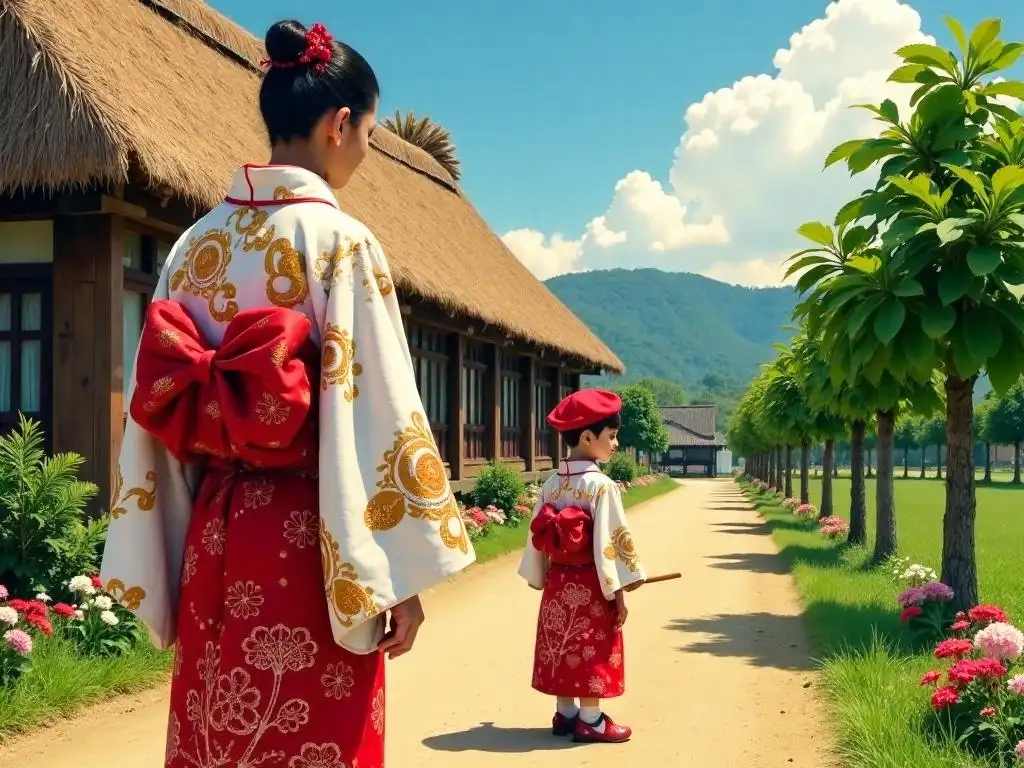
Regional Variations in Family Laws
During the feudal era in Japan, family laws were not uniformly applied across the country. Instead, they varied significantly from one region to another, reflecting the unique customs, economic conditions, and social structures of each area. These regional variations were influenced by the local ruling clans, which established their own interpretations of feudal laws, thus creating a patchwork of family legal systems.
For example, in the Kanto region, where the Kamakura shogunate held sway, laws pertaining to inheritance often prioritized male descendants, ensuring that family property remained within the patriarchal lineage. Conversely, in the Kansai region, particularly in the areas under the influence of the Ashikaga shogunate, there was a notable acceptance of matrilineal inheritance in certain clans, allowing women to inherit property under specific circumstances. This divergence illustrates how local governance and customs shaped the legal frameworks governing family relationships.
In addition to inheritance laws, marriage practices also demonstrated regional differences. In areas like Kyushu, marriages were often arranged with an emphasis on alliances between clans, whereas in regions such as Shikoku, there was a stronger tradition of love matches, which sometimes led to informal unions that challenged the more rigidly structured feudal laws.
Influence of Local Customs on Family Relationships
Local customs played a pivotal role in shaping family relationships during Japan's feudal era. These customs, deeply intertwined with the cultural and social fabric of each region, often dictated the practical application of feudal laws concerning family. For instance, in northern regions, where agricultural practices were predominant, family structures tended to be more collaborative, with extended families living together. This communal living arrangement necessitated a legal framework that emphasized cooperation and shared responsibilities, diverging from the more individualistic approaches seen in urban centers.
The concept of ie (household) was particularly significant in feudal Japan, functioning not only as a family unit but also as a legal entity. In regions where the ie system was predominant, family members were bound by strict duties and obligations, which were reinforced by local customs. For instance, in some areas, the eldest son was expected to care for his parents and inherit the family estate, reflecting a deep-rooted tradition of filial piety. However, in other regions, local customs allowed for more egalitarian practices, where siblings shared responsibilities and inheritance more equally.
Additionally, the role of women in family relationships was also shaped by local customs. In many regions, women were seen as custodians of family lineage, with their roles defined by cultural expectations rather than strictly by feudal laws. This led to a complex interplay between legal mandates and social norms, often resulting in women wielding significant influence in household matters, regardless of their legal status.
How Regional Differences Shaped Family Structures
The regional differences in feudal laws and local customs had profound implications for family structures throughout Japan. Variations in inheritance practices, marriage customs, and the status of women led to distinct family dynamics, which were often reflective of the socio-economic conditions of each region.
In regions with strong patriarchal systems, families typically operated under strict hierarchical structures, with the male head of the household holding significant authority over family decisions, property, and lineage. This reinforced a rigid family hierarchy, where obedience to the elder was paramount. Conversely, in areas where matrilineal customs were more accepted, women often enjoyed greater autonomy, leading to more balanced family structures where decision-making was shared.
The impact of these regional differences extended beyond individual families, influencing broader societal structures as well. For instance, regions that embraced more egalitarian family systems tended to foster communities that valued cooperation and collective welfare, while areas with rigid patriarchal structures often experienced social stratification and conflicts over resources.
Ultimately, the comparison of feudal laws governing family relationships across different Japanese regions reveals a complex tapestry of legal and cultural influences. Understanding these variations provides valuable insights into the evolution of family structures in feudal Japan and their lasting legacy on contemporary Japanese society.
Major Changes in Family Relationships Post-Feudal Era

The transition from feudal laws to modern legal frameworks significantly transformed family relationships in Japan. As the feudal era waned, the rigid structures of family roles and responsibilities dictated by samurai codes and local lords began to dissolve, paving the way for more flexible and egalitarian family dynamics.
Transition from Feudalism to Modern Japan
The end of the feudal period in the late 19th century, marked by the Meiji Restoration in 1868, was a catalyst for sweeping changes in Japan's societal structure. The abolition of the caste system and the introduction of civil law in the Meiji Constitution laid the groundwork for modern family law.
- End of Feudal Hierarchies: Under feudal laws, family relationships were heavily influenced by social status, with strict hierarchies dictating the roles of parents and children. The transition saw the erosion of these hierarchies, allowing for a more egalitarian approach to family dynamics.
- Legal Reforms: The introduction of the Civil Code in 1898 established legal standards for marriage, divorce, and inheritance, replacing the feudal laws that previously governed these aspects. This shift aimed to standardize family relationships across Japan, focusing on individual rights rather than feudal obligations.
Thus, the transition from feudalism to modern Japan not only changed the legal landscape but also fundamentally altered how families interacted and functioned within society.
Lasting Effects of Feudal Laws on Contemporary Family Structures
Despite the significant changes brought by the Meiji Restoration and subsequent reforms, remnants of feudal laws continue to influence contemporary family structures in Japan.
- Patriarchal Norms: While modern laws promote gender equality, traditional patriarchal norms originating from feudal times still persist in many households. The expectation that men are primary breadwinners and women are caregivers can be traced back to the samurai class's influence on family roles.
- Inheritance Practices: Feudal laws established lineage-based inheritance, favoring male heirs. Although modern laws allow for egalitarian inheritance, cultural practices still often favor sons over daughters, reflecting long-standing biases rooted in feudal traditions.
- Family Names and Lineage: The practice of adopting family names has evolved, but the significance placed on lineage and family names remains strong. Many families still emphasize the importance of preserving the family name, which can be traced back to feudal customs.
These lasting effects illustrate how deeply entrenched feudal values can shape contemporary practices and beliefs about family relationships in Japan.
Reflection on Family Dynamics in Modern Japanese Society
In modern Japanese society, family dynamics are marked by both continuity and change. The impact of historical feudal laws is evident, yet contemporary influences are reshaping family interactions.
- Changing Roles: The increasing participation of women in the workforce has led to a reevaluation of traditional family roles. Dual-income households are becoming more common, challenging the historical norms dictated by feudal laws. However, the transition is still fraught with challenges, as societal expectations often conflict with modern realities.
- Diverse Family Structures: The definition of family has broadened, with rising acceptance of single-parent families, same-sex partnerships, and childless couples. This shift reflects a significant cultural evolution away from the rigid family structures of the feudal era.
- Cultural Tensions: Despite advancements, there are ongoing tensions between traditional values and modern lifestyles. Many families grapple with the expectations of elder generations, who may still hold onto feudal-era beliefs about family hierarchy and duty.
While the transition from feudal laws to modern frameworks has brought about significant changes in family relationships, the echoes of Japan's feudal past continue to resonate in contemporary society, creating a complex interplay between tradition and modernity.
Conclusion: The Legacy of Feudal Laws on Family Relationships in Japan

Summary of Key Points
The legal frameworks governing family relationships in feudal Japan were complex and multifaceted, shaped by a blend of Confucian ideals and local customs. Key aspects included:
- Patriarchy: Family structures were predominantly patriarchal, with the father's authority being paramount. This was reflected in inheritance laws and decision-making processes.
- Marriage Contracts: Marriages were often arranged through contracts that solidified alliances between families, emphasizing the importance of social status and economic stability over personal choice.
- Role of Women: While women were expected to adhere to strict societal roles, they could wield influence within the household, particularly in managing family affairs and education.
- Legal Status of Children: Legally, children were viewed as extensions of their parents, with rights and responsibilities dictated by their family status and lineage.
These elements formed the backbone of social organization and family dynamics during the feudal period, leaving a lasting impact on contemporary Japanese society.
Reflections on the Historical Significance of Family Structures in Feudal Japan
The family structures established under feudal laws served not only as a means of social organization but also as a reflection of the broader cultural values of the era. The emphasis on hierarchy, loyalty, and duty within families mirrored the samurai code of conduct, underlining the interconnectedness of societal norms and family dynamics.
Moreover, feudal laws contributed to the stability of Japanese society during turbulent periods. By enforcing clear roles and responsibilities, these laws helped mitigate conflicts and ensured the continuity of family lineage, which was vital for land ownership and social status.
The historical significance of these family structures extends beyond mere governance; they encapsulate the values and priorities of a society that esteemed kinship and collective identity over individual aspirations. Understanding these frameworks allows us to appreciate the intricate tapestry of relationships that characterized feudal Japan.
Final Thoughts on the Influence of Feudal Laws on Modern Family Relationships
The influence of feudal laws on family relationships in Japan continues to resonate in contemporary society. While modern legal frameworks have evolved to promote gender equality and individual rights, the historical precedence of patriarchal authority and familial loyalty still echoes in the cultural consciousness.
Today, many Japanese families retain traditional values that prioritize family cohesion and collective decision-making, often reflecting the hierarchical structures of feudal times. This legacy manifests in various aspects of daily life, from the importance placed on family gatherings to the enduring customs surrounding marriage and inheritance.
As Japan navigates the complexities of modernity, the remnants of feudal laws offer valuable insights into the enduring nature of family relationships, illustrating how history shapes present social dynamics. The evolution of these relationships invites ongoing reflection on how past legal frameworks continue to influence contemporary family structures in Japan.
References for Further Reading on Feudal Laws and Family Relationships in Japan
Suggested Books and Articles
-
"The World of the Shining Prince: Court Life in Ancient Japan" by Ivan Morris
This book provides an intricate look at the court life during the Heian period, offering insights into the family structures and the legal frameworks that governed relationships. Morris explores how these dynamics laid the groundwork for later feudal laws.
-
"Samurai, Warfare and the State in Early Medieval Japan" by Karl F. Friday
Friday examines the evolution of samurai culture and its impact on feudal law, particularly focusing on the familial obligations of samurai warriors and their relationships with their lords and families.
-
"Feudalism in Japan: A Historical Perspective" by John W. Hall
This comprehensive analysis of Japanese feudalism includes a detailed examination of how feudal laws shaped family relationships within the context of loyalty, property, and inheritance.
-
"Women and the Family in Medieval Japan" by T. Fujitani
Fujitani's work delves into the role of women in feudal Japan and how legal stipulations affected family dynamics, particularly regarding marriage and inheritance rights.
Academic Journals and Research Papers
-
"The Role of Law in Family Relationships in Medieval Japan"
This research paper discusses the intersection of law and family in feudal Japan, highlighting specific legal codes and their implications for family structures. The author analyzes case studies to illustrate the practical application of these laws.
-
"Inheritance Practices in Feudal Japan: A Legal Perspective"
An analytical piece that investigates the inheritance laws and their effects on family relationships, offering a detailed look at how these laws influenced family hierarchies and power dynamics.
-
"Family, Clan, and Society: The Legacy of Feudal Law in Japan"
This article examines the broader societal impacts of feudal laws on family structures, discussing how clan affiliations and legal obligations shaped personal relationships.
Online Resources for Exploring Feudal Japan's Family Structures
-
The National Diet Library of Japan
An extensive database that features historical documents and texts related to feudal laws and family relationships in Japan. This resource is invaluable for researchers and anyone interested in primary sources.
-
Japanese Historical Society
A platform offering articles, essays, and discussions on various aspects of Japanese history, including feudal laws and family dynamics. This site encourages scholarly contributions and provides access to a community of historians.
-
Feudal Japan: A Resource for Study
This dedicated website presents curated content, including timelines, infographics, and summaries of legal frameworks affecting family relationships in feudal Japan. It serves as a useful educational tool for students and enthusiasts alike.
By delving into these resources, readers can gain a deeper understanding of how feudal laws influenced family relationships in Japan, providing a comprehensive view of the intricate ties between legal frameworks and societal structures during this era.
Frequently Asked Questions
What were the main feudal laws in Japan regarding family relationships?
Feudal laws in Japan were primarily based on patriarchy, where family hierarchy dictated responsibilities and inheritance rights. These laws reinforced the authority of male heads of families and often determined the social status of family members.
In feudal Japan, family relationships significantly impacted one's social standing. Being part of a noble family could grant privileges, while commoners faced restrictions based on their family lineage and connections.
What role did marriage play in feudal family dynamics?
Marriage was often used as a strategic tool to strengthen political alliances and consolidate power among families. The choice of a spouse was typically influenced by economic considerations rather than personal affection.
How did the samurai code affect family relationships?
The samurai code, or Bushido, emphasized loyalty and honor, which extended to family relationships. Samurai were expected to uphold their family name and values, often prioritizing their duties to family over personal desires.
Were there any legal repercussions for violating feudal family laws?
Yes, violations of feudal family laws could lead to severe consequences, including disinheritance, loss of social status, or even punishments imposed by local lords. Maintaining family honor was crucial in feudal society.
Final Reflection: The Enduring Legacy of Feudal Laws on Family Relationships in Japan
The intricate tapestry of feudal laws in Japan continues to shape our understanding of family relationships today. As we explore the historical context of these legal frameworks, we uncover how they not only governed familial ties but also laid the groundwork for contemporary societal norms. The echoes of these ancient regulations remind us that our current familial structures are deeply rooted in a complex past, revealing that the influence of feudal laws is far from a relic of history.
The impact of feudal laws on family relationships transcends time, resonating through the cultural and social fabric of modern Japan. These laws dictated not only the roles and responsibilities within families but also the broader societal expectations that persist today. As we reflect on this legacy, it becomes evident that understanding these historical frameworks allows us to appreciate the evolution of family dynamics. History is not a burden on the memory but an illumination of the soul.
This quote encapsulates the essence of how we can learn from the past to navigate our present and future.
As you consider the lessons from feudal laws and their influence on family relationships, I invite you to reflect on your own familial connections. How can the understanding of historical frameworks inspire you to foster deeper, more meaningful relationships within your family? Embrace the opportunity to learn from the past, allowing it to guide your actions and interactions today. By acknowledging the roots of our family dynamics, we can cultivate a more harmonious and understanding environment for future generations.
Unveil the Impact of Feudal Laws on Modern Relationships!
Thank you for taking the time to explore how feudal laws intricately governed family dynamics in historical Japan. By delving into this topic, you've uncovered valuable insights into the foundations of family structures that have shaped modern relationships today. Now, let’s channel that knowledge into meaningful action!
Here’s how you can deepen your understanding and share your findings with others:
- Dive deeper into history: Research specific feudal laws that significantly influenced family roles and responsibilities. You can find additional resources on our website that offer related articles and insights.
- Join our community: Engage with us in the comments below or connect with us on social media! Participating in discussions can introduce new perspectives and enhance your understanding.
- Educate others: Consider organizing a discussion group or writing a blog post about your findings. Sharing your insights on the influence of feudal laws on family relationships can benefit others.
What do you think is the most surprising way feudal laws have shaped family dynamics in modern society? We invite you to share your thoughts below!