
Feudal Japan’s Naval Warfare: Weapons and Tactics of the Samurai Fleet

Welcome to Feudal Japan History, where we embark on a captivating journey through the intricate tapestry of Japan's feudal era. Delve into the fascinating world of Samurai naval warfare tactics as we explore how these legendary warriors adapted their strategies on the high seas. What drove the samurai to conquer not only the land but also the waters? Join us as we unravel the secrets of their naval prowess, unveiling the weapons and tactics that defined a pivotal chapter in military history. Your adventure begins here—don't miss the chance to discover the untold stories behind the samurai fleet!
- Introduction to Samurai Naval Warfare Tactics
- Historical Context of Samurai Naval Warfare
- Weapons Used in Samurai Naval Warfare
- Tactical Approaches in Samurai Naval Warfare
- Notable Samurai Naval Battles
- Cultural Implications of Naval Warfare
- Evolution of Samurai Naval Warfare Tactics
- Conclusion: The Enduring Legacy of Samurai Naval Warfare Tactics
- References and Further Reading
-
Frequently Asked Questions
- What were the primary weapons used by the Samurai in naval warfare?
- How did the Samurai adapt their tactics for naval battles?
- What role did naval warfare play in feudal Japan?
- Were there specific naval battles that showcased Samurai tactics?
- How did naval warfare influence the overall feudal system in Japan?
- Final Reflection: The Enduring Legacy of Samurai Naval Warfare Tactics
- Dive Deeper into the World of Samurai Naval Warfare!
The feudal era of Japan was characterized by a complex tapestry of warfare, power struggles, and cultural evolution. Among the myriad aspects of this tumultuous period, naval warfare emerges as a crucial element, showcasing the strategic ingenuity and martial prowess of the samurai.
This article delves into the intricate world of samurai naval warfare tactics, unraveling the sophisticated methods and tools that defined the naval engagements of the era. By examining the historical context, the significance of naval confrontations, and the weaponry employed, we aim to provide a comprehensive understanding of how the samurai adapted their land-based combat strategies to the maritime domain.
Overview of Feudal Japan’s Military Landscape
Feudal Japan, spanning from the late 12th century to the early 17th century, was marked by the rise of powerful clans and the samurai class, who served as their military elite. The military landscape of this era was predominantly characterized by:
- Clan-Based Conflicts: Various clans vied for power and territory, leading to numerous battles, both on land and at sea.
- Strategic Alliances: Clans often formed temporary alliances to confront common enemies, demonstrating a fluid political environment.
- Emergence of Naval Forces: As trade and territorial disputes expanded, naval forces became essential for protecting coastal areas and securing trade routes.
The samurai adapted their warfare tactics to incorporate naval strategies, leveraging their skills in combat, discipline, and leadership to navigate the challenges of maritime warfare.
Naval warfare held profound significance in samurai culture, intertwining military practice with the socio-political structure of feudal Japan. Key aspects include:
- Defense of Territory: The coastlines of Japan were vital for trade and communication; thus, maintaining naval supremacy was crucial for the protection of these resources.
- Cultural Identity: The samurai's role as naval warriors contributed to their image as honorable fighters, further cementing their status within Japanese society.
- Tactical Adaptation: The evolution of naval tactics reflected the adaptability of the samurai, who were known for their strategic innovations in response to the changing dynamics of warfare.
By exploring these facets of samurai naval warfare, we gain insight into the broader implications of their tactics and the enduring legacy of this formidable warrior class in the annals of Japanese history.
The samurai class, initially formed to serve the feudal lords of Japan, evolved significantly throughout the Heian period (794-1185). With the establishment of the Kamakura shogunate in 1185, the samurai became prominent players not only on land but also at sea. This marked the beginning of organized naval forces among the samurai, as they recognized the strategic importance of maritime strength in their conflicts and territorial expansions.
- Early Naval Engagements: Prior to the Kamakura period, naval warfare was rudimentary, characterized by small skirmishes and coastal raids. However, as samurai clans sought to control trade routes and coastal territories, they began to formalize their naval operations. The Minamoto and Taira clans were among the first to deploy organized fleets. The Genpei War (1180-1185) showcased the rising naval capabilities, as both clans utilized ships to transport troops and engage in naval battles.
- Development of Naval Tactics: The samurai adapted their land tactics for use on water. The use of bushi (warrior) ships, often equipped with catapults and archers, allowed for effective offensive and defensive maneuvers. Notably, the Taira clan utilized larger vessels called atakebune, which were heavily armed and designed to carry more soldiers into battle.
Several significant conflicts throughout Japan's feudal era spotlighted the importance of naval warfare tactics employed by samurai fleets.
- The Genpei War (1180-1185): This conflict between the Minamoto and Taira clans was pivotal in establishing naval warfare as a crucial component of samurai strategy. Notably, the Battle of Dan-no-ura in 1185 involved a decisive naval engagement that led to the downfall of the Taira clan. Utilizing superior tactics and stronger ships, the Minamoto secured victory, demonstrating how naval dominance could shift the balance of power.
- Mongol Invasions (1274 and 1281): The attempted invasions by Kublai Khan's forces showcased the evolution of samurai naval warfare. The samurai, facing a larger and more technologically advanced fleet, utilized guerrilla tactics and home-ground advantage. The famed kamikaze or "divine winds," typhoons that disrupted the Mongol fleets, also played a crucial role. The samurai’s adaptability and understanding of their maritime environment were instrumental in repelling these invasions.
- The Onin War (1467-1477): Although primarily a land conflict, the Onin War saw the rise of regional warlords (daimyō) who began to utilize their naval power along the coast for supply lines and troop movements. This period marked a shift in focus toward naval logistics, showcasing the samurai's growing recognition of the importance of naval support in warfare.
Japan's geographical features significantly influenced the development of samurai naval warfare tactics and strategies.
- Archipelago Dynamics: As an island nation, Japan's numerous islands and coastal waters created a unique maritime environment. The samurai took advantage of this geography by developing hit-and-run tactics, employing small, fast vessels to conduct coastal raids. This strategy allowed them to strike swiftly and retreat before enemy forces could effectively respond.
- Current and Weather Patterns: Knowledge of local weather and ocean currents became essential for effective naval operations. Samurai fleets often planned their engagements around seasonal winds and tides, optimizing their attack strategies. The Kamikaze during the Mongol invasions exemplified the importance of environmental elements in shaping naval warfare outcomes.
- Strategic Ports and Trade Routes: Control of key ports and trade routes was critical for the samurai, as it provided vital resources and economic power. The establishment of naval bases allowed for better supply lines and troop deployments, reinforcing their maritime capabilities. Notable ports such as Hakata became focal points for naval operations, where strategic planning and troop mobilization were executed.
The evolution of samurai naval warfare tactics was deeply interwoven with historical conflicts, geographical advantages, and the rise of the samurai as a formidable naval force. Their adaptability and innovation in naval strategies not only shaped their military successes but also left a lasting impact on Japan's maritime history.
During the feudal era in Japan, naval warfare became a critical component of military strategy, especially as conflicts intensified among rival clans. The samurai, traditionally known for their prowess on land, adapted their weaponry for naval engagements. This adaptation was crucial for enhancing their combat effectiveness at sea, where traditional fighting styles had to be modified to suit the unique challenges of maritime combat.
The primary weapons used by samurai in naval warfare included the katana, yari, and various forms of artillery. Each weapon was tailored to address the conditions of naval battles, such as limited space on ships, the need for quick maneuverability, and the necessity to engage enemies from a distance. With these adaptations, the samurai fleet was able to maintain its martial prowess even in the fluid and shifting environment of the ocean.
The Katana: From Land to Sea
The katana, the quintessential symbol of the samurai, was not only a weapon of choice on land but also found its place on the decks of ships. Its design, characterized by a curved, single-edged blade, made it effective for close-quarter combat.
- Combat Efficiency: In naval battles, the katana allowed for swift and decisive strikes against opponents. The confined spaces of ships meant that combat often occurred at close range, where the katana's length and balance could be fully utilized.
- Versatility: Samurai adapted their techniques to include one-handed usage of the katana, allowing them to maintain balance while maneuvering on the deck. This adaptability was crucial during boarding actions, where maintaining mobility was essential.
- Symbolic Significance: Beyond its practical uses, the katana represented the samurai's honor and status. Even in naval combat, the aesthetic and ceremonial aspects of wielding a katana remained significant, reinforcing the warrior's identity amidst the chaos of battle.
The yari, or spear, was another pivotal weapon in the arsenal of samurai naval forces. Its long reach provided distinct advantages in the confined quarters of ships.
- Range and Reach: The yari allowed samurai to engage enemies from a distance, providing a strategic advantage in naval encounters. This was especially useful when confronting enemy vessels, as it enabled warriors to strike without risking immediate retaliation.
- Boarding Techniques: During boarding maneuvers, the yari was instrumental in fending off attackers. Samurai utilized thrusting techniques to defend their ships as enemy combatants attempted to board, making the spear an essential tool for maintaining control over the vessel.
- Formations and Strategies: The use of yari in formations allowed for coordinated attacks, maximizing the impact of their strikes. Samurai could create a wall of spears, making it difficult for enemies to breach their defenses during naval skirmishes.
As naval warfare evolved, samurai began to incorporate artillery into their strategies, marking a significant shift in combat tactics. The introduction of cannons and fire arrows played a critical role in naval engagements.
-
Cannons: The adoption of cannons in the late feudal period allowed samurai to strike enemy vessels from a distance. These artillery pieces could cause significant damage to opponent ships before close-quarters combat even began.
Type of Cannon Range Impact Coastal Cannons Medium Effective against ships Ship-mounted Cannons Short Devastating in close combat -
Fire Arrows: Another innovative tactic involved the use of fire arrows, which were ignited before being launched at enemy vessels. This method was particularly effective for setting ablaze wooden ships, causing panic and disarray among enemy ranks.
-
Combination Tactics: The synergy between traditional weapons like the katana and yari with artillery tactics allowed samurai fleets to dominate naval battles. By employing a mix of close-combat techniques and ranged artillery fire, they could adapt to changing battle conditions and overcome their adversaries efficiently.
The evolution of samurai naval warfare tactics showcases the ingenuity and adaptability of the samurai. By effectively utilizing their traditional weaponry alongside new artillery methods, they were able to maintain their dominance in the waters surrounding feudal Japan.
The samurai fleet, integral to Japan’s feudal naval warfare, utilized a variety of unique weapons that were specifically designed for the maritime environment. These weapons were not only effective in battle but also showcased the craftsmanship and strategic thinking of the samurai. Below, we explore some of the most notable naval weapons employed by the samurai.
1. Tachi and Katana
The tachi and katana, though primarily recognized as land weapons, were also utilized on ships. These iconic swords were crafted for quick draw and slashing, making them effective in close combat situations on the decks of vessels. Their design allowed for versatile use, whether for boarding enemy ships or defending against attackers. The balance and sharpness of these swords made them formidable weapons when engaged in naval skirmishes.
2. Naginata
The naginata, a polearm with a curved blade, was particularly useful in naval battles. Its extended reach allowed samurai to fend off enemies from a distance, especially during boarding actions. The weapon's versatility enabled it to be used for slashing at opponents while providing a defensive barrier against incoming attacks. The naginata's effectiveness on the water was enhanced by the stability that the pole provided, allowing for powerful strikes without losing balance.
3. Yari
The yari, or spear, was another crucial weapon for samurai naval warfare. Its long reach made it ideal for both offense and defense during ship-to-ship combat. Samurai could use the yari to keep enemies at bay or to thrust at opponents boarding their vessels. The ability to wield the yari effectively from the deck of a ship made it a staple in the samurai arsenal, allowing for both strategic and tactical advantages during naval engagements.
4. Fire Arrows and Fire Ships
In addition to traditional weaponry, samurai fleets also employed fire arrows and fire ships. Fire arrows were specially designed with flammable materials that could be ignited and shot at enemy ships, causing chaos and destruction. Fire ships, on the other hand, were vessels loaded with combustibles that were intentionally set ablaze and sent toward enemy fleets. This tactic aimed to create panic and disrupt enemy formations, showcasing the samurai's strategic ingenuity in naval warfare.
5. Catapults and Ballistae
Although less common, some samurai ships were equipped with catapults and ballistae for long-range attacks. These siege engines allowed for the launching of projectiles, such as stones or incendiary devices, over considerable distances. Their use in naval engagements marked a significant evolution in samurai warfare tactics, as they enabled the fleet to strike at enemies before they could close in for hand-to-hand combat.
6. Tactical Use of Shields
While not weapons in the traditional sense, shields played an essential role in naval warfare. Samurai used large, sturdy shields to protect themselves from arrows and other projectiles during battles. Their tactical deployment allowed samurai to maintain formation while minimizing casualties, creating a more cohesive fighting force during naval engagements.
Conclusion
The unique naval weapons of the samurai fleet were a testament to their adaptability and tactical acumen. By blending traditional land combat techniques with innovative maritime strategies, the samurai created a formidable naval presence that played a crucial role in Japan's feudal conflicts. These weapons, from the iconic swords to the ingenious use of fire, highlight the complex nature of samurai naval warfare tactics and their impact on Japan's military history.
The effectiveness of samurai naval warfare tactics relied heavily on the formation and strategic deployment of their fleets. Unlike the land battles for which samurai are more commonly known, naval engagements required a unique approach that integrated maritime geography, ship design, and combat strategy.
The Line of Battle: Samurai Fleets in Formation
The line of battle was a key tactical formation used by samurai fleets. This strategy involved aligning ships in a single line or semi-circle, maximizing their broadside fire capabilities.
- Key Features:
- Ships were arranged to allow for effective firing angles.
- Commanders often signaled maneuvers through flags or drum beats to maintain cohesion during battle.
- This formation allowed for concentrated fire against enemy vessels while minimizing the risk to individual ships.
A notable example of this tactic can be seen during the Battle of Kōan (1274), where the Mongol fleet faced the Japanese samurai forces. The Japanese employed a line of battle to counter the larger and more numerous Mongol ships effectively.
Flanking and Surprise Attacks on Enemy Vessels
Another critical aspect of samurai naval warfare was the use of flanking maneuvers and surprise attacks. Samurai commanders understood that catching the enemy off guard could lead to significant advantages.
- Execution of Flanking Maneuvers:
- Smaller, faster vessels were often deployed to encircle or flank larger ships, making them vulnerable.
- Coordinated attacks from multiple angles created confusion and panic among enemy ranks.
- Surprise Tactics:
- Stealth and speed were vital; samurai fleets would sometimes launch surprise nighttime raids, exploiting the element of surprise.
- Small boats, manned by elite samurai warriors, would quietly approach enemy vessels to board and capture them.
These tactics were not only effective in the context of naval engagements but also showcased the adaptability and strategic genius of samurai leaders.
In addition to formations and tactical maneuvers, navigation and intelligence played crucial roles in the success of samurai naval warfare. Mastery of the seas was essential for effective engagement and the protection of coastal territories.
- Navigational Techniques:
- Samurai navigators relied on the stars, ocean currents, and wind patterns to guide their fleets.
- Knowledge of local geography allowed samurai commanders to utilize natural harbors and avoid treacherous waters.
- Intelligence Gathering:
- Information about enemy movements was gathered through scouts and spies, ensuring that commanders could plan their strategies effectively.
- The use of signal fires and messengers helped relay critical information across distances, enabling coordinated responses to enemy actions.
The combination of tactical formations, surprise maneuvers, and adept navigation was fundamental to the success of samurai naval warfare tactics. Their ability to adapt and respond to the fluid dynamics of naval battles contributed significantly to their effectiveness as warriors on the sea.
The evolution of samurai naval warfare is deeply rooted in the established land combat strategies of the samurai. As Japan transitioned from a predominantly agrarian society to one with more complex maritime engagements, the need arose to adapt existing land tactics to suit naval conditions. This adaptation was crucial for the samurai, who were primarily trained for combat on land.
-
Formation and Cohesion
Samurai warriors were accustomed to fighting in specific formations that maximized their strengths as individuals and as a unit. On the water, these formations had to be modified to account for the movement of ships and the instability of the ocean. The use of a "kumo" or "cloud" formation, for instance, mirrored traditional land tactics by allowing groups of ships to coordinate their movements effectively, encircling the enemy, much like a traditional infantry maneuver.
-
Weaponry Adaptation
The transition from land to sea also saw changes in weaponry. While the katana remained a symbol of the samurai, the need for more effective naval weapons led to the development of specialized tools such as the "tachi" (long sword) and various polearms adapted for shipboard use. Additionally, the introduction of projectile weapons, such as bows and later firearms, transformed naval engagement tactics, allowing samurai to strike from a distance before closing in for hand-to-hand combat.
-
Combat Tactics
The samurai's combat tactics, which emphasized honor and personal valor, were adapted for naval engagements by incorporating surprise attacks and ambush strategies. The ability to utilize small boats for rapid strikes against larger vessels became a hallmark of samurai naval tactics, allowing for the element of surprise. This tactic echoed the land-based ambush strategies employed during skirmishes and battles.
-
Leadership and Command Structure
The hierarchical structure of samurai leadership was also crucial in naval warfare. Commanders who had experience in land battles translated their strategies into naval contexts, maintaining discipline and order among the crew. This leadership was vital in coordinating complex maneuvers, especially during large-scale battles involving multiple vessels.
-
Psychological Warfare
The samurai were adept at psychological warfare on land, using fear and reputation as tools to intimidate opponents. This approach was similarly effective at sea, where the sight of a well-organized samurai fleet could instill fear in enemy crews. The use of banners and war cries during naval engagements served to bolster morale among samurai while demoralizing foes.
Overall, the adaptation of land tactics to naval combat was a significant factor in the effectiveness of samurai warfare at sea. By leveraging their established combat skills and strategies, the samurai were able to create a formidable naval presence that was both innovative and reflective of their martial heritage.
The Battle of Dan-no-ura, fought in 1185, stands as one of the most significant naval confrontations in Japanese history, marking a pivotal moment in the Genpei War between the Taira and Minamoto clans. This battle showcased the evolution of samurai naval warfare tactics, highlighting both strategic maneuvering and the effective use of weaponry.
During this confrontation, the Minamoto clan, led by Minamoto no Yoshitsune, deployed a fleet that ingeniously utilized the geography of the Shimonoseki Strait. Their tactics involved swift attacks and strategic retreats, allowing them to outmaneuver the larger Taira fleet. The engagement was characterized by intense close-quarters combat, where the samurai demonstrated their proficiency with bows, swords, and the use of ships as platforms for warfare.
The outcome of Dan-no-ura was decisive. The Taira, despite their numerical superiority and traditional naval prowess, were defeated, ultimately leading to their downfall and the establishment of Minamoto control over Japan. This battle not only altered the balance of power but also transformed naval warfare, prompting future samurai fleets to adopt more sophisticated tactics in subsequent engagements.
The Influence of the Mongol Invasions on Samurai Tactics
The Mongol invasions of Japan in the late 13th century, particularly the attempted invasions in 1274 and 1281, had a profound impact on the development of samurai naval warfare tactics. The Mongols brought with them innovative military strategies and technologies, which challenged the samurai's traditional approaches to combat.
To counter the Mongol threat, the samurai adapted their naval strategies, focusing on coordination and the use of larger, more versatile vessels. The samurai learned from the Mongol tactics of rapid troop transport and surprise assaults, leading to improvements in their fleet organization and shipbuilding techniques.
Moreover, the infamous kamikaze, or "divine winds," played a crucial role during these invasions, as typhoons decimated the Mongol fleet. This event solidified the samurai's belief in their divine protection and resilience, reinforcing their tactics of defending the homeland against foreign invaders. The experiences drawn from these invasions influenced Japanese naval warfare for generations, emphasizing the importance of strategic planning and environmental awareness in combat.
Case Study: The Battle of Hakata Bay
The Battle of Hakata Bay, fought in 1281, serves as a compelling case study in samurai naval warfare tactics. This battle was part of the second Mongol invasion and involved a massive fleet of over 4,000 ships carrying Mongol and Korean forces. The samurai, under the command of the Kamakura shogunate, faced a daunting challenge.
In preparation for the battle, the samurai fortified Hakata Bay, utilizing coastal defenses and creating a network of watchtowers to monitor enemy movements. When the Mongol fleet arrived, the samurai employed a combination of hit-and-run tactics and ambush strategies, leveraging their knowledge of the local waters to create confusion among the invaders.
The samurai's skills in archery and hand-to-hand combat were crucial, as they launched surprise attacks on the Mongol ships, targeting crew members and disrupting their formations. Additionally, the samurai showcased their ability to adapt by employing fire ships, igniting vessels loaded with flammable materials and sending them toward Mongol ships to create chaos.
Ultimately, the samurai's combination of strategic planning, local knowledge, and combat skills led to a decisive victory. The failure of the Mongols to establish a foothold in Japan not only reinforced the samurai's reputation but also shaped the future of naval engagements in Japan, emphasizing the importance of tactical flexibility and environmental adaptability in warfare.
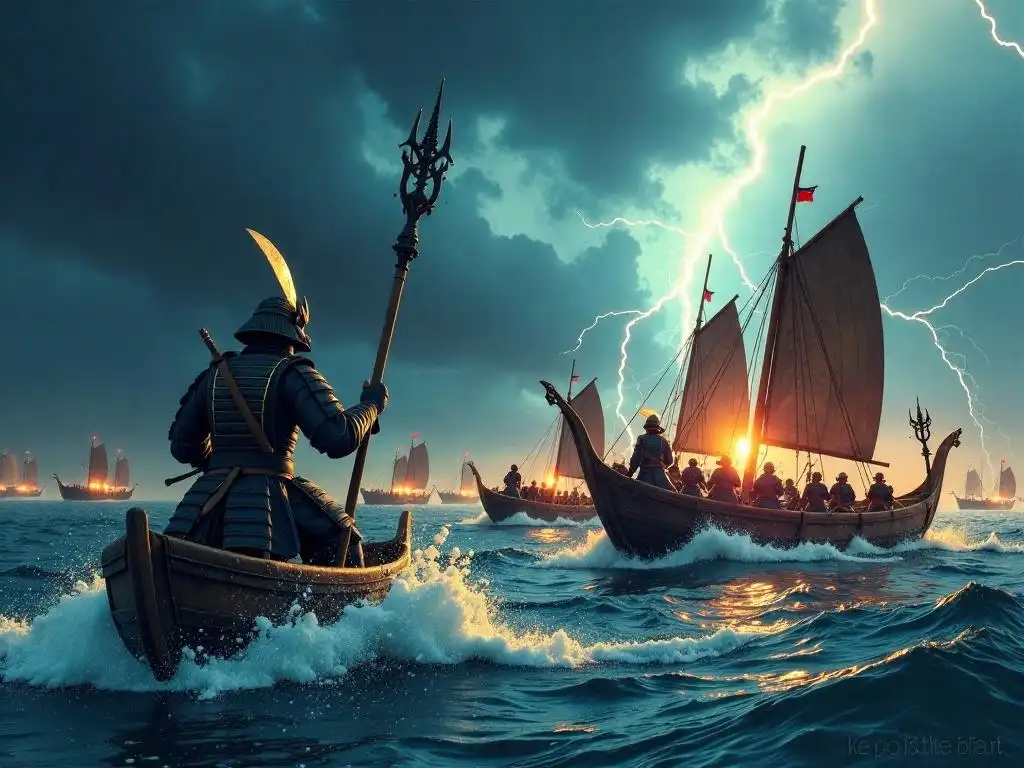
The Samurai code, known as Bushido, fundamentally shaped not only the conduct of samurai on land but also their approach to naval warfare. This code emphasized virtues such as honor, loyalty, and courage, which were deeply ingrained in the samurai psyche and dictated their behavior in all aspects of life, including warfare at sea.
- Honor in Naval Battles:
- Samurai viewed naval engagements as an extension of their martial duties. Engaging in battle on water was not merely a strategic necessity; it was a matter of honor. Losing a naval battle could tarnish a samurai's reputation, leading to a loss of status and respect.
- Following the principles of Bushido, samurai were expected to face their enemies courageously, even when the odds were against them. This often meant that they would rather perish than retreat, a mentality that influenced the aggressive tactics employed during naval confrontations.
- Loyalty and Unity:
- The samurai's loyalty to their lord (daimyō) was paramount. This loyalty was often tested in naval warfare, where the success of naval campaigns could determine the fate of entire clans. It was common for samurai to express their devotion through acts of bravery in naval battles, reinforcing their loyalty through action.
- Loyalty also extended to the crew members of their ships. Samurai were known to forge strong bonds with their sailors, ensuring that their ships were well-maintained and their crews motivated.
- Cultural Rituals and Naval Warfare:
- Naval battles were often imbued with cultural rituals, such as prayers to the sea gods for safe passage and victory. Ceremony played a significant role in preparing for battles, reflecting the samurai's respectful relationship with nature, which was a core aspect of their spiritual beliefs.
- The rituals served not only as a means to seek divine favor but also as a way to instill a sense of purpose and unity among the crew, reinforcing the collective identity necessary for successful naval operations.
Naval warfare during the feudal era had profound implications on Japanese society and its economy, shaping both the political landscape and the daily lives of its people.
- Political Power and Control:
- Control of the seas became a significant aspect of territorial dominance. Clans that successfully built and maintained powerful fleets could project their influence across coastal regions, leading to shifts in power dynamics among rival daimyō.
- Naval victories often translated into increased resources and territory. For instance, the Wokou pirates, who engaged in naval raids, exploited weaknesses in coastal defenses, leading to the establishment of new trade routes and economic opportunities for their patrons.
- Economic Development:
- The demand for ships and naval supplies led to the growth of various industries, including shipbuilding, weapon manufacturing, and fishing. Local economies flourished as communities engaged in these trades, resulting in a more interconnected feudal society.
- Coastal towns became bustling centers of commerce due to their strategic importance in naval warfare. The increased production of naval vessels and equipment spurred economic activity and drew artisans and laborers to these regions.
- Social Stratification:
- Naval warfare contributed to the emergence of a distinct social hierarchy. Successful naval leaders often gained greater prestige and resources, leading to a widening gap between the elite samurai class and the common people.
- The sailors and lower-ranking warriors who participated in naval campaigns were often rewarded for their service, but their status remained subordinate to that of the samurai. This dynamic reinforced class distinctions within feudal society, as the valor of naval battles was primarily attributed to the samurai.
The interplay between naval warfare and the samurai code not only influenced the conduct of battles but also shaped the broader societal and economic structures of feudal Japan. The legacy of these influences continues to be recognized in Japan’s maritime history and cultural heritage.
Changes in Tactics from the Heian to the Edo Period
The evolution of samurai naval warfare tactics can be traced through distinct periods, each marked by significant changes in strategy, technology, and naval organization.
Heian Period (794-1185)
During the Heian period, naval engagements were relatively rudimentary, characterized by small-scale skirmishes. The primary focus was on transporting troops and goods rather than engaging in formal naval battles. The samurai, however, began to recognize the importance of naval power, especially with the rise of piracy along the coasts.
- Key Tactical Features:
- Rowed Vessels: The predominant ships were long, narrow vessels powered by oars, known as atakebune. These ships allowed for quick maneuvers in coastal waters.
- Boarding Tactics: Combat often involved boarding enemy ships, with warriors relying on surprise and brute strength to overpower opponents.
- Use of Fire: The introduction of fire arrows and incendiary devices became a crucial tactic to disrupt enemy vessels.
Kamakura Period (1185-1333)
The Kamakura period saw the emergence of organized naval forces, particularly with the rise of the Kamakura shogunate. The samurai began to develop more sophisticated tactics that integrated naval operations into their military strategies.
- Key Tactical Features:
- Formation Tactics: Fleets began to employ formations to enhance their combat effectiveness, similar to land warfare strategies.
- Increased Ship Size: The construction of larger ships capable of carrying more troops and supplies became prevalent.
- Naval Campaigns: Notable battles, such as the Mongol invasions in 1274 and 1281, highlighted the importance of naval tactics. The samurai utilized typhoons, famously known as kamikaze, to their advantage, showcasing a blend of natural phenomena with strategic planning.
Muromachi Period (1336-1573)
The Muromachi period introduced even more complex naval warfare tactics, as regional daimyos recognized the significance of controlling sea routes for trade and military advantage.
- Key Tactical Features:
- Diverse Ship Types: The introduction of various ship types, including sengokubune (warships), allowed for specialized roles within fleets.
- Combined Arms Approach: Naval battles increasingly involved coordination with land forces, leading to innovative tactics that combined archery from ships with land attacks.
- Piracy and Control: The samurai also engaged in piracy, which necessitated the development of counter-piracy tactics and defensive formations.
Edo Period (1603-1868)
The Edo period marked a time of relative peace, which allowed samurai naval tactics to evolve more towards policing and defense rather than open warfare.
- Key Tactical Features:
- Stabilization of Sea Routes: The Tokugawa shogunate focused on maintaining stability and security along trade routes, leading to the establishment of a naval police force.
- Technological Advances: The introduction of Western naval technology began to influence shipbuilding and tactics, although traditional methods remained prevalent.
- Strategic Defense: The tactics shifted towards coastal defense and patrolling, with a focus on deterring potential threats rather than engaging in large-scale naval battles.
The legacy of samurai naval strategies has had a lasting impact on modern Japanese naval warfare, reflecting the evolution of tactics and the cultural significance of the samurai spirit.
Influence on Modern Naval Doctrine
Modern Japanese naval doctrine continues to draw upon historical samurai tactics, particularly in the emphasis on discipline, strategic planning, and adaptability. The principles of flexibility and the effective use of available resources that were central to samurai naval warfare are evident in contemporary naval operations.
- Key Elements:
- Strategic Partnerships: Much like samurai alliances, modern Japanese naval forces often engage in cooperative exercises with allied nations to enhance combat readiness.
- Technology Integration: The integration of advanced technology into naval operations mirrors the historical adaptation of new tactics and ship designs.
- Coastal Defense: The focus on protecting territorial waters remains a priority, reflecting the samurai's commitment to safeguarding their domain.
Cultural Symbolism
The samurai's approach to naval warfare is not just a military legacy but also a cultural one. The concepts of honor, loyalty, and bravery that defined the samurai code of conduct, known as bushido, are still celebrated in modern Japanese society.
- Symbolic Practices:
- Ceremonial Recognition: Modern naval forces honor their historical roots through ceremonies that celebrate the valor and tactics of their samurai predecessors.
- Education and Training: Naval academies incorporate lessons from historical battles and tactics into their training programs, emphasizing the importance of strategic thinking and leadership.
The samurai naval warfare tactics evolved significantly from the Heian to the Edo period, and their legacy continues to influence modern Japanese naval strategies. The principles established during these historical periods reflect a deep understanding of naval power and its critical role in shaping Japan's military history.
Summary of Key Points
The exploration of Samurai naval warfare tactics reveals a complex interplay of strategy, technology, and cultural influences that defined maritime conflicts in feudal Japan. Key points include:
- Innovative Ship Designs: The development of specialized vessels, such as the atakebune, allowed samurai fleets to engage effectively in both offensive and defensive naval operations.
- Tactical Maneuvers: Samurai naval commanders employed various tactics, including flanking attacks and boarding actions, to exploit the weaknesses of enemy fleets.
- Weaponry: The arsenal of the samurai navy comprised a variety of weapons, including:
- Bows for long-range engagement.
- Spears and naginata for close combat.
- Fire-based weaponry, such as incendiary arrows and fire ships, to disrupt enemy formations.
- Cultural Significance: Naval warfare was not merely a military endeavor; it was deeply embedded in the samurai code of honor and duty, influencing both public perception and the samurai's social standing.
Understanding Samurai naval warfare tactics within the broader historical context of feudal Japan is crucial for several reasons:
- Military Evolution: Analyzing these tactics provides insight into the evolution of military strategies in Japan, reflecting changes in political power dynamics and technological advancements over time.
- Cultural Insights: The intersection of warfare and samurai culture illustrates how martial practices shaped societal norms and values, fostering a unique identity that persists in Japanese culture today.
- Lessons in Strategy: The tactics employed by samurai can inform contemporary military studies, as they highlight the importance of adaptability, leadership, and resourcefulness in warfare.
- Preservation of History: By studying this aspect of feudal Japan, historians can preserve the narratives of those who fought at sea, ensuring that their contributions are recognized and remembered.
The legacy of samurai naval warfare tactics endures not only in military history but also in the cultural memory of Japan, offering valuable lessons for both scholars and enthusiasts alike.
References and Further Reading
-
"Samurai Warfare: The Techniques and Tactics of the Samurai" by Michael J. O'Driscoll
This book offers a comprehensive analysis of the military strategies utilized by the samurai, including their naval tactics. The author delves into the specific weaponry and formations that were characteristic of samurai naval engagements.
-
"The Art of War in Japan: A Samurai Perspective" by Tetsuya Yamato
An exploration of military philosophy in Japan, this work emphasizes the strategic mindset of samurai leaders, particularly in naval contexts. The author discusses the historical evolution of naval warfare tactics and their application during feudal conflicts.
-
"Naval Warfare in Ancient Japan" by Kenji Takeda
This detailed account focuses on the development of naval fleets in Japan, the types of vessels used, and the tactical innovations that emerged during the feudal period. Takeda’s insights into specific battles highlight the effectiveness of samurai naval warfare.
-
"Warriors of the Sea: The Samurai and Their Naval Battles" by Hiroshi Kato
This article examines pivotal naval battles fought by samurai, providing a narrative that illustrates their combat strategies and the significance of naval power in feudal Japan.
-
"The Samurai and the Sea: Maritime Warfare in Medieval Japan" by Shunji Watanabe
A scholarly piece that investigates the role of the samurai in maritime conflicts, detailing the evolution of naval tactics and the impact of geographical factors on warfare strategies.
Online Resources for Deeper Exploration into Feudal Japan Military History
-
The Samurai Archives
A comprehensive online database dedicated to samurai history, featuring articles, forums, and resources on various aspects of samurai culture, including naval warfare tactics.
-
The Japan Times: Historical Articles
This site offers a selection of historical articles that dive into Japan’s military history. Specific pieces cover naval warfare and the strategies employed by samurai fleets.
-
National Diet Library of Japan
The library's digital collections include historical documents and texts that provide insights into the military practices of feudal Japan, including samurai naval warfare.
-
Samurai History Forum
An interactive platform where enthusiasts and historians exchange information and discuss various topics related to samurai history, including naval tactics. Users can access a wealth of information and primary sources.
-
YouTube Channels on Japanese History
Various channels provide documentaries and discussions focused on feudal Japan’s military history. Look for content specifically addressing naval strategies and samurai combat.
These resources will help deepen your understanding of samurai naval warfare tactics and the broader context of military history in feudal Japan.
Frequently Asked Questions
The primary weapons included bow and arrows, swords, and spears. These tools were essential for combat on ships and during boarding actions.
Samurai adapted their tactics by utilizing agile ships and employing hit-and-run strategies. They focused on mobility and surprise to outmaneuver larger enemy vessels.
Naval warfare was crucial for trade protection, territorial expansion, and political power. It helped maintain control over trade routes and fishing grounds.
Yes, battles such as the Battle of Kōan and the Battle of Fukuda highlighted the strategic prowess and tactical innovations of Samurai naval forces during feudal Japan.
Naval warfare influenced the feudal system by enhancing the power of daimyōs who controlled fleets. This led to increased wealth, territorial disputes, and the rise of naval clans in the feudal hierarchy.
Feudal Japan's naval warfare tactics remain profoundly relevant today, as they illustrate the intricate balance of strategy, technology, and culture that shaped historical conflicts. The samurai fleet's innovative approaches to naval combat not only highlight the martial prowess of the samurai but also reflect the broader socio-political dynamics of their time. As we navigate our own complex global landscape, understanding these historical tactics can offer valuable insights into modern strategic thinking and conflict resolution.
The influence of samurai naval warfare tactics extends beyond the battlefield, permeating cultural narratives and shaping national identity. The stories of bravery, honor, and tactical ingenuity associated with the samurai resonate deeply within Japanese culture and continue to inspire contemporary discussions about leadership and resilience. As noted by historian John W. Hall, The samurai ethos is not merely a relic of the past; it is a living tradition that informs the values and actions of modern Japan.
This ongoing legacy invites us to reflect on how historical narratives can inform our present and future.
As you ponder the lessons of samurai naval warfare, consider how these principles of strategy, adaptability, and honor can be applied in your own life. Embrace the challenge of navigating your own 'waters' with the same spirit of innovation and resilience that defined the samurai fleet. Reflect on your personal and professional battles, and let the wisdom of the past guide you toward a future where you can forge your own path with courage and conviction.
Thank you for exploring the fascinating realm of Feudal Japan’s naval warfare with us! You’ve gained insight into the weapons and tactics that defined an era, and now it’s time to take your newfound knowledge even further.
Here are a few engaging actions you can take next:
- Explore more: Delve into detailed accounts of significant battles fought by the samurai navy. Visit our archives for in-depth analyses of these historic events.
- Join the conversation: Share your thoughts or questions about samurai naval tactics in the comments below—let's learn together and enrich our understanding!
- Connect with history enthusiasts: Consider joining a local historical reenactment group or participating in online forums to engage with others who share your passion for Feudal Japan.
What aspect of samurai naval warfare intrigues you the most, and how would you like to apply that knowledge today?