
The Role of Merchants in Japan’s Naval Military Strategies


Welcome to Feudal Japan History, where we embark on a captivating journey through the intricate tapestry of Japan's feudal era. Here, we delve into the remarkable role of merchants—often overshadowed in tales of samurai and shoguns—who played a pivotal part in shaping Japan’s naval military strategies.
As you explore our expert-driven articles, prepare to uncover the untold stories and cultural nuances that reveal how commerce influenced military might in a time of conflict and change. Dive deeper into this fascinating intersection of trade and warfare, and discover how the tides of history were swayed not just by swords, but by the savvy of those who navigated the seas of commerce.
- Introduction to Merchants in Japan's Feudal Era
- The Role of Merchants in Naval Military Strategies
- Economic Foundations of Naval Power
- Merchants as Informants and Advisors
- The Impact of Merchant Alliances on Naval Warfare
- Merchants and Naval Technology
- The Decline of Merchant Influence in Naval Affairs
- Conclusion: The Legacy of Merchants in Japan's Naval Military Strategies
-
Frequently Asked Questions
- What was the primary role of merchants in Japan's feudal era?
- How did merchants contribute to naval military strategies?
- Were merchants considered high-status individuals in feudal Japan?
- How did the role of merchants evolve during the feudal era?
- What impact did merchants have on Japanese culture during the feudal era?
- Final Reflection: The Enduring Legacy of Merchants in Japan's Feudal Era
- Uncover New Perspectives on Japan’s Naval Strategy!
Introduction to Merchants in Japan's Feudal Era
The role of merchants in Japan's feudal era is often overshadowed by the prominence of samurai and the political machinations of the ruling shogunates. However, these merchants were not merely passive participants in the economic landscape; they were instrumental in shaping naval military strategies that would have lasting impacts on Japan’s history.
As the country transitioned through various feudal periods, from the Kamakura to the Edo period, the influence of trade and commerce emerged as a critical element in supporting military endeavors and enhancing naval capabilities. This article delves into the intricate relationship between merchants and military strategies, examining how commerce, shipbuilding, and resource allocation played pivotal roles in Japan's naval history.
Overview of Japan's Feudal Era
Japan's feudal era, spanning from the late 12th century to the mid-19th century, was characterized by a decentralized political structure dominated by powerful clans and warlords. During this time, the samurai class emerged as the ruling military elite, leading to a society that prioritized loyalty, honor, and martial prowess. However, beneath the surface of this warrior-dominated hierarchy, the merchant class began to carve out its niche, developing economically and socially.
- Key Periods:
- Kamakura Period (1185-1333): Marked by the establishment of the Kamakura shogunate, this era saw the rise of feudalism and the samurai code.
- Muromachi Period (1336-1573): A time of political instability and civil war, known as the Sengoku (Warring States) period, where regional lords vied for power.
- Edo Period (1603-1868): A relatively peaceful era under the Tokugawa shogunate, which fostered economic growth and the flourishing of merchant classes.
Merchants flourished particularly during the Edo period, as the shogunate implemented policies that encouraged trade and commerce. With the growth of cities and urban centers, merchants became key players in the economy, facilitating not only the exchange of goods but also the movement of resources essential for naval operations.
Importance of Trade and Commerce in Feudal Japan
Trade and commerce were vital to the economic framework of feudal Japan, influencing both domestic and foreign relations. The growth of merchant activities had several critical implications for naval military strategies:
- Resource Acquisition: Merchants played a significant role in securing essential materials for shipbuilding and naval supplies. This included:
- Timber: Sourced from Japan's abundant forests, crucial for constructing warships.
- Iron and Metal Goods: Necessary for weaponry and ship fittings.
- Financial Support: The wealth generated through trade allowed merchants to provide financial backing for military campaigns, including:
- Funding Expeditions: Merchants often invested in naval expeditions, ensuring that fleets were well-equipped for voyages.
- Logistical Support: Providing supplies and provisions for troops, enhancing their operational effectiveness.
- Cultural Exchange: As merchants engaged in trade with foreign nations, they facilitated the exchange of ideas and technology that improved naval warfare, such as:
- Adoption of New Naval Techniques: Influence from Chinese and Portuguese maritime practices enriched Japan's own naval strategies.
The intricate relationship between merchants and Japan's feudal military strategies highlights the multifaceted nature of this historical period. Understanding the contributions of merchants provides a more comprehensive view of the naval power dynamics that shaped Japan's feudal era, emphasizing their crucial role in both economic and military spheres.
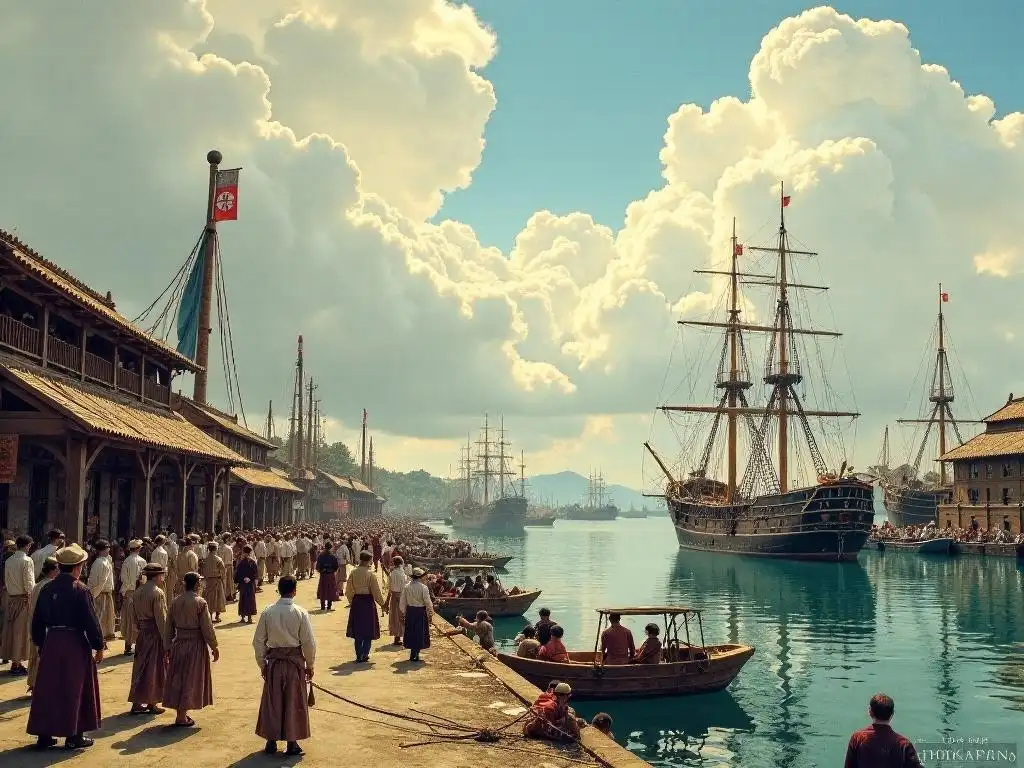
Definition of Merchants in Japan's Feudal Era
In Japan's feudal era (approximately 1185 to 1868), merchants played a crucial role in the economy, society, and even military strategies, despite their lower social status compared to samurai and nobility. Merchants were primarily engaged in trade, both domestic and international, exchanging goods such as rice, textiles, metals, and luxury items like silk and porcelain. Their operations were not limited to land but extended to maritime trade, where they engaged in coastal and regional exchanges.
The merchant class, known as chōnin, emerged predominantly during the Edo period (1603-1868), when peace stabilized trade activities. However, their contributions to naval military strategies began earlier, as merchant ships were often requisitioned or employed by feudal lords for military purposes. This duality of roles—traders and military supporters—allowed merchants to wield significant influence, as their ships, crews, and knowledge of maritime routes became vital for logistical support in naval campaigns.
The influence of merchants in naval warfare can be traced back to the Kamakura period (1185-1333) when the need for naval power became apparent due to threats from the Mongol invasions (1274 and 1281). The Japanese military, notably the samurai, recognized that a robust naval presence was essential for national defense. During this period, merchants contributed to naval strategies by providing ships and supplies, often under duress or as part of feudal obligations.
As Japan transitioned into the Muromachi period (1336-1573), the rise of powerful daimyōs (feudal lords) led to increased competition for resources and territorial expansion. Merchants became indispensable by supplying naval vessels, which were crucial for transporting troops and engaging in trade with other regions, including Korea and China. Their expertise in maritime navigation and trade routes allowed them to facilitate the movement of goods and military resources, making them key players in naval logistics.
The Sengoku period (1467-1603), characterized by continuous civil wars, saw a further entrenchment of merchants in military affairs. Merchants often financed naval expeditions and provided vital intelligence on sea routes and enemy movements. For example, the famous daimyō Toyotomi Hideyoshi relied on merchants to support his ambitious campaigns against Korea, using their ships for troop deployment and supply lines.
Merchants in Japan's feudal era were more than mere traders; they were integral to naval military strategies. Their contributions enabled feudal lords to expand and maintain their power through effective maritime operations, demonstrating that economic forces significantly influenced Japan's military history.
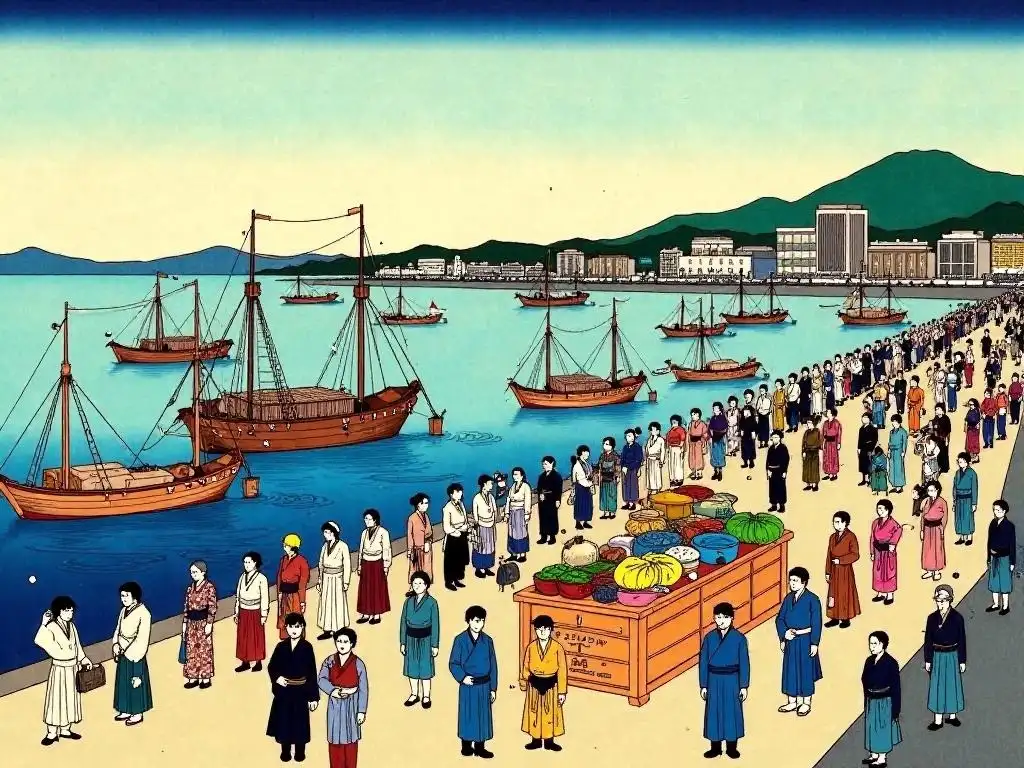
During Japan's feudal era, the relationship between trade and naval strength was deeply intertwined. The growth of maritime trade routes not only facilitated economic prosperity but also reinforced Japan's military capabilities. Merchants in Japan's feudal era played a pivotal role in establishing this connection by engaging in commerce and influencing naval strategies.
-
Trade Routes and Naval Logistics
The establishment of trade routes across the Inland Sea and to the Asian mainland stimulated the need for a robust naval presence. Key ports such as Hakata and Nagasaki became critical hubs for the exchange of goods, including silk, ceramics, and rice. This flourishing trade required naval logistics to protect merchant vessels from piracy and foreign incursions, leading to increased naval activity and the development of specialized ships.
-
Economic Incentives for Naval Power
The economic incentives provided by trade directly influenced the feudal lords (daimyō) to invest in naval power. As merchants accumulated wealth, they often formed alliances with local lords who recognized the benefits of safeguarding trade interests. In return for protection, merchants funded naval expeditions, ensuring that both their economic pursuits and the military objectives of the daimyō were aligned.
-
Technological Advancements
The competitive nature of maritime trade also fostered technological advancements in shipbuilding and navigational techniques. Innovations such as the sankin-kōtai system, which required daimyō to maintain a presence in Edo (modern-day Tokyo), necessitated efficient naval transportation. This led to the development of faster and more maneuverable vessels, enhancing Japan's naval capabilities in both trade and warfare.
The financial contributions of merchants were crucial in the execution of naval expeditions during Japan's feudal era. Their involvement not only shaped the outcomes of various military campaigns but also highlighted the symbiotic relationship between commerce and military strength.
-
Investment in Naval Resources
Merchants often invested directly in naval resources, including ships, supplies, and armaments. By pooling their resources, they could finance larger expeditions that individual daimyō might struggle to support. For instance, during the Imjin War (1592-1598), merchants from the Chūgoku region contributed significantly to the naval efforts against invading forces, ensuring a steady supply of provisions and troops.
-
Risk Mitigation Strategies
To secure their investments, merchants developed risk mitigation strategies that included forming guilds and partnerships. These alliances were not only focused on trade but also on military endeavors. By collaborating with daimyō, they ensured that their ships were protected and that their investments would yield returns, thereby creating a vested interest in the success of naval operations.
-
Influence on Military Strategy
The financial clout of merchants allowed them to wield significant influence over military strategies. As major stakeholders in naval expeditions, they could dictate terms of engagement and prioritize routes that maximized trade benefits. This relationship often resulted in military strategies that favored protecting trade interests over purely territorial conquests, showcasing how merchants in Japan's feudal era shaped naval warfare.
The economic foundations of naval power during Japan's feudal era were significantly shaped by the active participation of merchants. Their financial contributions and strategic partnerships not only bolstered naval capabilities but also intertwined the fates of trade and military success in the region.
Merchants as Informants and Advisors
During Japan's feudal era, the role of merchants transcended mere trade; they became pivotal informants and advisors within the military landscape, especially in naval strategies. Their extensive networks and knowledge of regional dynamics positioned them as crucial players in shaping military decisions. With their robust connections across various territories, merchants were privy to valuable information about local resources, enemy movements, and potential alliances.
Merchants often operated in coastal regions, which made them key witnesses to naval activities. They amassed intelligence on shipping routes, the types of vessels in use, and the naval capabilities of rival clans. This information was vital for feudal lords and military leaders who needed to make informed strategic decisions. In many cases, merchants acted as intermediaries, facilitating communication between military commanders and local populations, thereby enhancing the flow of crucial information.
Information Networks Established by Merchants
Merchants in Japan’s feudal era established extensive information networks that were essential for naval warfare. These networks were often based on trade routes, which extended both domestically and internationally. Through their travels and interactions, merchants gathered intelligence that could influence military strategies.
- Trade Routes as Intelligence Hubs:
- Merchants utilized established trade routes to exchange not only goods but also information.
- They often reported on the movements of enemy fleets or the readiness of local populations to support military campaigns.
- Cultural Exchange and Intelligence Gathering:
- The interactions between merchants and foreign traders introduced new ideas and technologies that could be beneficial for naval warfare.
- For example, the introduction of Western naval technologies in the late feudal era was partly facilitated by merchants who engaged with European traders.
- Local Knowledge and Resource Identification:
- Merchants had intimate knowledge of local resources, including shipbuilding materials and skilled craftsmen, which were crucial for naval construction and maintenance.
- Their understanding of local politics and social dynamics enabled them to identify potential allies and inform military leaders about local sentiments.
This intricate web of information allowed feudal lords to make strategic decisions that could turn the tide in naval confrontations, emphasizing the significant role merchants played beyond commerce.
Several notable instances highlight the influence of merchants on naval strategies during Japan's feudal period. These case studies serve as testament to their critical role in shaping military outcomes.
- The Battle of Kōan (1582):
- During this battle, merchants provided vital intelligence regarding the movements of opposing forces. Their reports about enemy ship configurations and troop deployments allowed the defending forces to prepare effectively, leading to a successful defense.
- The Wokou Pirates:
- The emergence of the Wokou, or Japanese pirates, in the 16th century created significant challenges for coastal trade. Merchants collaborated with local lords to form naval coalitions aimed at countering these pirates. Their knowledge of the pirates’ operations and routes was instrumental in devising successful ambush strategies.
- The Importation of Western Naval Technology:
- In the late 16th century, Japanese merchants engaged with Portuguese traders, facilitating the introduction of firearms and advanced ship designs. This access to new technologies allowed Japanese naval forces to enhance their capabilities and tactics, thereby altering naval warfare dynamics.
Through these case studies, it becomes evident that merchants were not only passive observers but active participants in the naval military strategies of feudal Japan. Their unique insights and resources significantly influenced the decisions of military leaders, showcasing the interconnectedness of commerce and warfare in this historical context.
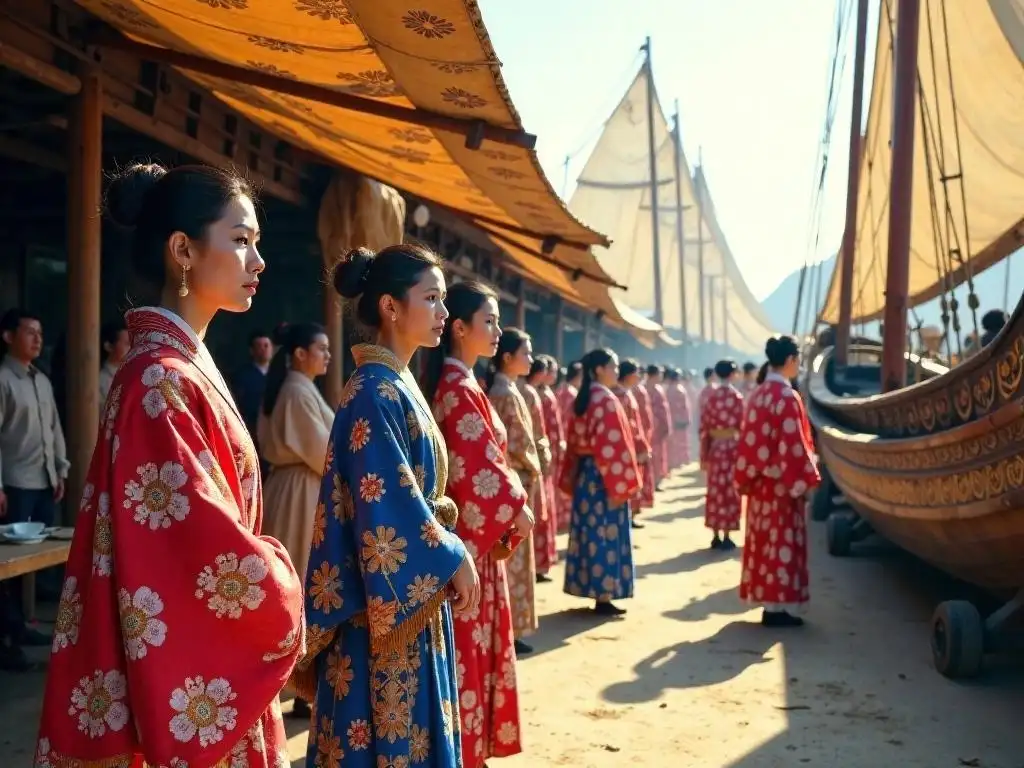
In Japan’s feudal era, the role of merchants extended far beyond mere trade; they became pivotal players in the naval military strategies that shaped the nation’s history. Their ability to form strategic alliances with samurai and warlords significantly influenced naval warfare outcomes.
Merchants provided essential resources, intelligence, and logistical support to naval operations. These alliances were mutually beneficial; samurai needed the merchants' wealth and networks, while merchants relied on samurai protection and military prowess to secure their trade routes. The collaboration between these two groups fostered a unique dynamic, allowing for the establishment of powerful maritime forces that could both defend and expand trade interests.
Strategic Partnerships Between Merchants and Samurai
The partnerships between merchants and samurai were characterized by several strategic elements that enhanced naval capabilities:
- Financial Support:
- Merchants invested in the construction and maintenance of ships, which were critical for naval expeditions. This financial backing allowed for the expansion of fleets, enabling samurai to project power across coastal waters.
- Resource Provisioning:
- Merchants ensured a steady supply of essential goods, including food, weapons, and materials, which were vital for sustaining naval campaigns. This provisioning was often organized through complex trade networks that spanned various regions of Japan.
- Intelligence Gathering:
- Merchants were instrumental in gathering intelligence regarding enemy movements and naval strategies. Their extensive trade routes provided them with unique insights, allowing samurai to plan their military actions more effectively.
- Logistical Coordination:
- The organization of naval logistics was often managed by merchant networks. They coordinated the transport of troops and supplies, ensuring that military operations were well-supported and efficient.
This interdependence between merchants and samurai illustrates how commercial interests intertwined with military strategies, fundamentally altering the landscape of naval warfare in feudal Japan.
Throughout Japan’s feudal era, numerous instances highlight the successful alliances between merchants and samurai that significantly influenced naval conflicts:
- The Battle of Dan-no-ura (1185):
- This pivotal battle during the Genpei War saw the alliance of several merchant families who provided ships and supplies to the Taira clan. Their logistical support played a crucial role in sustaining the Taira forces, although ultimately, the Minamoto clan emerged victorious. This battle underscored the importance of merchant involvement in maritime warfare.
- The Wokou Raids (16th Century):
- The Wokou, or "Japanese pirates," were often merchants who engaged in piracy along the coasts of China and Korea. Many of these merchants had connections to samurai who provided military backing. Their raids exemplified how merchant interests could influence naval strategies, as they not only disrupted foreign trade but also enriched their Japanese allies.
- The Sengoku Period (1467-1603):
- During this tumultuous time, various daimyos formed alliances with local merchant guilds to enhance their naval capabilities. Notable figures like Toyotomi Hideyoshi leveraged merchant support to build powerful fleets that enabled his campaigns against rival clans and foreign powers. The merchant’s role in funding and supplying these naval forces was crucial for Hideyoshi’s military successes.
- The Shimabara Rebellion (1637-1638):
- In this rebellion, merchants played a significant role by providing resources and ships to the rebels. Their support demonstrated how merchant alliances could impact significant military movements and rebellions, particularly when aligned with samurai factions.
These examples illustrate not only the strategic importance of merchant alliances in naval warfare but also how these partnerships helped shape the political and military landscape of feudal Japan. The interplay between commerce and military power remains a defining aspect of this era, showcasing the multifaceted role of merchants in Japan's feudal era.
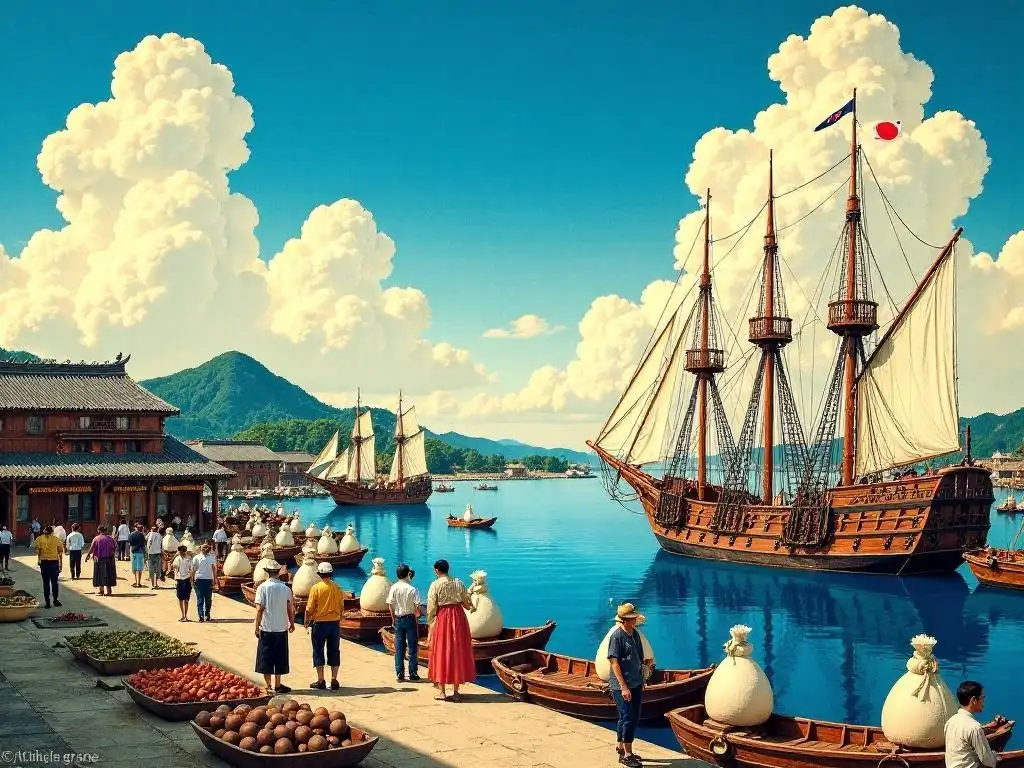
Innovations Driven by Merchant Needs
During Japan's feudal era, merchants played a crucial role in shaping naval technology, largely driven by their economic interests and the demands of trade. As maritime trade flourished, particularly in the 16th century, merchants began to influence the development of ships and naval technologies that were not only efficient for transporting goods but also capable of defending against piracy and rival factions.
- Economic Imperatives: The need to protect trade routes and ensure the safe passage of goods led merchants to invest in naval innovations. For instance, the introduction of larger cargo ships, known as "sengokubune," allowed for increased capacity and stability during long voyages. This innovation was directly related to the merchants' need to maximize profits by transporting larger quantities of goods.
- Weaponry and Defense: As competition intensified, merchants began to advocate for better armed ships. The incorporation of cannons into merchant vessels transformed the way naval engagements were conducted. The "atakebune," a type of ship that combined cargo capacity with artillery, exemplifies this shift. These vessels were not only used for trade but also played a role in naval confrontations, reflecting the dual purpose of commercial and military interests.
- Navigation Advancements: Merchants also pushed for improvements in navigation techniques and tools. The development of more precise maps, alongside the use of navigational instruments such as the compass and astrolabe, enhanced the ability to conduct long-distance trade. Enhanced navigation reduced the risks associated with maritime ventures, further encouraging trade expansion and the growth of merchant fleets.
The Role of Merchants in Shipbuilding and Design
The influence of merchants extended to shipbuilding and design, where their demands significantly altered the landscape of naval architecture during Japan's feudal era. This was an essential aspect of maritime trade, as the design of ships directly affected their performance, cargo capacity, and adaptability to different maritime conditions.
- Design Specifications: Merchants were instrumental in specifying the design features of vessels. Their feedback on hull shapes, sail configurations, and construction materials informed shipbuilders about the requirements for speed and durability. For example, the adoption of "karimata" sails, which allowed for better maneuverability and speed, was largely a merchant-driven innovation aimed at improving trade efficiency.
- Collaboration with Artisans: The collaboration between merchants and skilled artisans was vital. Merchants often commissioned shipbuilders to create vessels tailored to their specific needs, resulting in a diverse range of ship types. This partnership not only enhanced shipbuilding techniques but also fostered a culture of innovation among craftsmen, who began to experiment with various materials such as iron and wood to create more resilient ships.
- Impact on Regional Trade: The advancements in shipbuilding driven by merchant needs had profound implications for regional trade dynamics. Improved ships facilitated the expansion of trade networks, connecting distant markets and allowing for the exchange of goods such as textiles, metals, and foodstuffs. The proliferation of merchant fleets also led to increased competition, which in turn spurred further innovations in naval construction and technology.
The role of merchants in Japan's feudal era was pivotal in driving innovations in naval technology and ship design, ultimately transforming both maritime trade and military strategies. Their influence not only enhanced the efficiency of trade but also contributed to the broader evolution of naval warfare in the region.
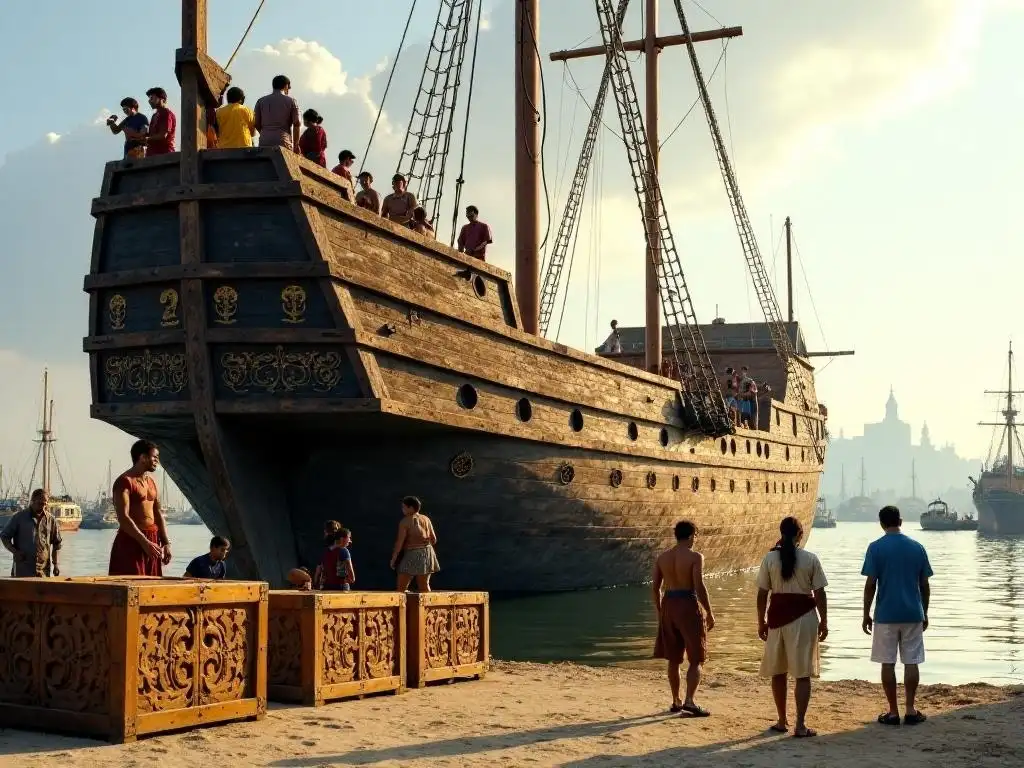
The decline of merchant influence in naval affairs during Japan's feudal era can be attributed to a complex interplay of socio-political factors, economic shifts, and changing military needs. While merchants played a crucial role in the development and sustenance of naval power, particularly during the rise of the shogunates, their significance gradually waned as the feudal system evolved.
Factors Leading to Diminished Merchant Power
The decline of merchants in Japan's feudal era can be traced to several key factors:
- Centralization of Power
- The unification of Japan under powerful shogunates, particularly during the Tokugawa period, led to the centralization of authority. This shift diminished the autonomy that merchants enjoyed. As the shogunate solidified its control, merchants found themselves increasingly regulated, limiting their ability to influence naval decisions.
- Military Innovations
- As military strategies evolved, there was a growing reliance on specialized samurai warriors and professional navies. The introduction of new technologies, such as firearms and larger warships, required significant investment and expertise that merchants were often not equipped to provide. The focus shifted from commerce to military might, sidelining merchant interests.
- Trade Limitations
- The Tokugawa shogunate implemented strict trade policies, including the Sakoku edicts, which isolated Japan from foreign influences. This isolation not only curtailed international trade but also reduced the merchants' role in naval logistics, as they were no longer able to facilitate trade routes that supported naval operations.
- Rise of Samurai Authority
- With the samurai class gaining prominence and authority, the societal structure shifted to prioritize military over commercial interests. The samurai's emphasis on honor and martial prowess often overshadowed the merchants' contributions, leading to a diminished role in naval affairs.
- Economic Changes
- The economic landscape of Japan began to shift during the late feudal period with the rise of agriculture and land-based wealth. As agrarian economies strengthened, the focus moved away from maritime commerce, further reducing the merchants' influence on naval strategy.
The transition from the feudal era into the modern period marked a significant change in Japan's naval strategies. With the decline of merchant influence, several notable transformations occurred:
- Professionalization of the Navy
- Post-feudal Japan saw the establishment of a more formalized navy, characterized by trained naval officers and specialized crews. This shift was crucial in developing a modern naval force capable of engaging in international conflicts.
- Government Control over Trade and Naval Operations
- The Meiji Restoration in 1868 shifted control over naval operations entirely to the government, further sidelining merchants. The state began to oversee trade routes and naval logistics, integrating them into a broader national strategy.
- Increased Investment in Naval Technology
- The modernization drive led to significant state investments in naval technology, including steam power and ironclad vessels. This focus on technological advancement necessitated expertise that was often found within military circles rather than the merchant class.
- Global Naval Engagements
- Japan's transition into an imperial power brought about an expansion of naval engagements on a global scale. The focus shifted to military objectives, such as territorial expansion and colonial pursuits, marking a departure from the trade-centric naval strategies of the feudal era.
- Emergence of a National Identity
- The emphasis on a unified national identity during the Meiji period fostered a sense of patriotism that further marginalized the merchant class. The navy became a symbol of national pride and military strength, aligning closely with government interests rather than those of individual merchants.
The decline of merchant influence in Japan's naval military strategies was shaped by a combination of political, economic, and social transformations. The transition into a modern naval power not only reshaped Japan's military landscape but also redefined the role of commerce in the context of national security and global engagement.
The role of merchants in Japan's feudal era, particularly in the context of naval military strategies, is a crucial aspect of understanding the broader implications of trade, economics, and warfare during this period. Merchants were not merely passive participants in the economy; they actively influenced naval strategies through their wealth, resources, and networks. Their contributions were instrumental in not only sustaining the military efforts but also in shaping the very nature of naval engagements.
Reflection on the Historical Significance of Merchants
During Japan's feudal era, particularly from the 12th to the 19th centuries, merchants became increasingly vital to the functioning of the state and military. The rise of powerful merchant classes allowed for the financing of naval expeditions and the procurement of advanced weaponry. Notably, the Sengoku period (1467-1603) saw merchants like the Kōtō and Sō merchants facilitating trade with foreign powers, which directly impacted naval capabilities and strategies.
- Economic Influence: Merchants not only provided funding for naval operations but also influenced the selection of routes and trade agreements with other nations. Their knowledge of maritime trade routes was invaluable for planning military campaigns.
- Resource Acquisition: The ability of merchants to acquire resources such as timber for shipbuilding, iron for weaponry, and food supplies for troops was critical. This direct involvement ensured that naval forces were well-equipped and supplied.
- Intelligence Networks: Merchants often acted as informants, gathering intelligence about enemy movements and strategic locations while traveling. Their networks extended beyond Japan, connecting them to international markets and naval powers, which enriched the information available to Japanese feudal lords.
The historical significance of merchants in Japan’s feudal naval strategies highlights how intertwined trade and military endeavors were during this time. Their influence was felt not only in the provision of resources but also in the strategic decisions that shaped naval engagements.
The legacy of merchants in Japan’s feudal naval strategies can still be observed in modern naval practices and strategies. As Japan transitioned from a feudal society to a modern state during the Meiji Restoration, the foundational role of commerce and trade continued to inform naval strategies.
- Economic Considerations: Modern Japanese naval strategies continue to emphasize the importance of economic stability and trade routes. The historical reliance on merchant networks has evolved into contemporary concerns about securing maritime trade against potential threats.
- Integration of Civilian and Military: The historical collaboration between merchants and military leaders has led to a model where civilian industries support naval operations. This integration is evident in Japan's modern defense strategies, where commercial shipping and naval defense are often aligned.
- Strategic Alliances: Just as merchants in the feudal era fostered relationships with foreign powers, modern Japan engages in strategic alliances that bolster its naval capabilities. The emphasis on diplomacy and trade partnerships remains a cornerstone of Japan’s approach to naval strategy.
The role of merchants in Japan's feudal era was not just ancillary to military efforts but was integral to shaping naval strategies that have had lasting impacts. Understanding this relationship provides insight into the evolution of Japan's naval military strategies and highlights the importance of economic factors in military planning. The legacy of these merchant-driven dynamics continues to resonate within the framework of modern naval operations in Japan.
Frequently Asked Questions
What was the primary role of merchants in Japan's feudal era?
Merchants played a crucial role in the economy during Japan's feudal era, facilitating trade and commerce which supported local economies and the military efforts of feudal lords.
Merchants were essential in supplying resources and provisions for naval expeditions, ensuring that fleets had the necessary materials and finances to launch military campaigns effectively.
Were merchants considered high-status individuals in feudal Japan?
Generally, merchants held a lower social status compared to samurai and farmers, but their wealth and influence allowed some to gain political power and prestige over time.
How did the role of merchants evolve during the feudal era?
The role of merchants evolved significantly, especially during periods of peace, as they began to take on more economic influence and became vital to the growing market economy.
What impact did merchants have on Japanese culture during the feudal era?
Merchants influenced cultural exchanges by introducing new goods and ideas, contributing to the development of art and entertainment that shaped Japanese culture during the feudal period.
Final Reflection: The Enduring Legacy of Merchants in Japan's Feudal Era
The intricate relationship between merchants and Japan's naval military strategies underscores a pivotal aspect of the feudal era that remains relevant today. As we explore the historical significance of these merchants, we uncover how their influence shaped not only trade but also the very fabric of military power and national identity. The role of merchants in Japan's feudal era is a testament to the interconnectedness of commerce and warfare, a dynamic that continues to resonate in our globalized world.
The impact of these merchants extends far beyond their economic contributions; they were instrumental in fostering cultural exchanges and alliances that shaped Japan's maritime prowess. Their ability to navigate both the seas and the complexities of feudal politics illustrates the profound influence of commerce on societal structures. Commerce is the great civilizer.
This quote encapsulates the essence of how trade and merchant activities have historically paved the way for cultural and technological advancements, a legacy that still informs our understanding of international relations today.
As we reflect on the lessons from the past, let us consider how the spirit of innovation and adaptability demonstrated by these merchants can inspire us in our own lives. I invite you to think about the role you play in your community and how your actions can contribute to a larger narrative of collaboration and growth. Whether through fostering connections, supporting local economies, or engaging in cultural exchanges, we all have the potential to be modern-day merchants, shaping the future in meaningful ways.
Thank you for exploring the fascinating interplay between merchants and military strategies in Feudal Japan! Your interest highlights the crucial role commerce played in shaping naval power during this period. Now, let's take that knowledge further and dive deeper into this captivating subject!
Here are some exciting actions you can take right now:
- Join our community discussion forum to share your insights and learn from fellow history enthusiasts.
- Explore further by delving into our related articles about the trade routes and their significant impact on military technology in Feudal Japan.
- Challenge yourself by researching and comparing Japan's naval strategies with those of other nations during the same era!
What are your thoughts on how merchant influence shaped the outcomes of naval conflicts in Feudal Japan? We invite you to share your ideas below!