
The Evolution of Local Governance: A Study of Muromachi Regional Politics

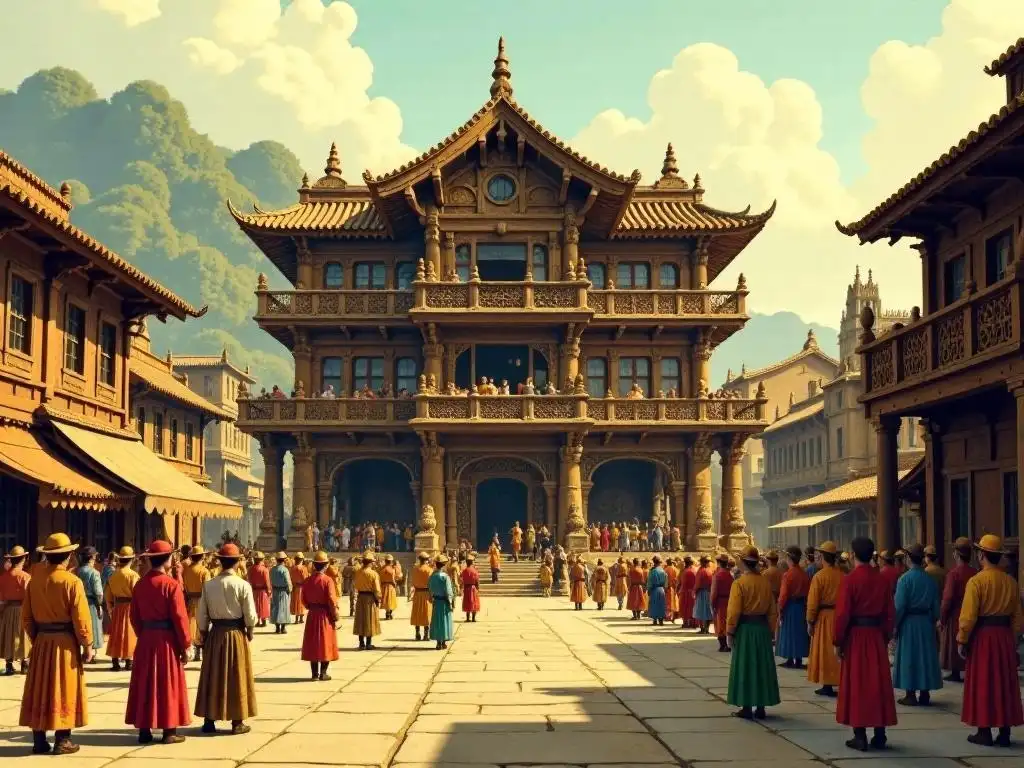
Welcome to Feudal Japan History, where we invite you to journey through the captivating tapestry of Japan’s feudal era. Here, you will uncover the intricate layers of Muromachi regional politics history, a critical chapter that shaped local governance and societal dynamics. As you delve into our featured article, The Evolution of Local Governance: A Study of Muromachi Regional Politics, prepare to explore the power struggles, cultural shifts, and political nuances that defined this fascinating period. Are you ready to unravel the complexities of governance that influenced a nation? Your exploration begins now!
Introduction to Muromachi Regional Politics History
The Muromachi Period, spanning from 1336 to 1573, represents a pivotal era in Japanese history characterized by the rise of the Ashikaga Shogunate and the transformation of local governance structures. This period was marked by a complex interplay between the central authority of the shogunate and the increasing power of regional lords, known as daimyō.
Understanding Muromachi regional politics history is crucial, as it lays the foundation for the subsequent political developments in Japan, including the Sengoku Period. This article will delve into the intricate dynamics of local governance during the Muromachi Period, exploring its historical context, key events, and the evolution of political structures that shaped feudal Japan.
Overview of the Muromachi Period
The Muromachi Period is often considered a time of both cultural flourishing and political strife, where artistic expressions such as Noh theater and ink painting emerged. Politically, however, it was a turbulent time, marked by:
- The Ashikaga Shogunate's establishment: Following the Kamakura Period, the Ashikaga family rose to power, leading to a decentralized political structure.
- Civil wars and uprisings: Various factions vied for power, leading to conflicts that would shape the local governance landscape.
- Cultural exchange: The period also saw an increase in trade and cultural exchange with China, influencing local governance and societal norms.
This historical backdrop is essential to understanding how governance evolved regionally, reflecting the shifting power dynamics among local lords and the central shogunate.
Importance of Local Governance in Feudal Japan
Local governance during the Muromachi Period was not merely an administrative function; it was a crucial component of the feudal system that defined social and political relationships. Local governance was characterized by:
- Feudal hierarchies: The daimyōs held significant power over their territories, creating a web of loyalty and vassalage that underpinned the political landscape.
- Autonomy and conflict: While the Ashikaga Shogunate claimed authority, local lords often exercised considerable autonomy, leading to conflicts that defined regional politics.
- Resource management: Local governance played a critical role in managing agricultural production and local economies, which were vital for sustaining regional power.
This interdependence between local governance and broader political dynamics highlights the importance of studying Muromachi regional politics in the context of Japan's feudal history.
Historical Context of Muromachi Regional Politics
The evolution of local governance in the Muromachi Period can be traced through significant changes in political authority and the sociopolitical landscape. Understanding these changes requires an exploration of the rise of the Ashikaga Shogunate and the key events that shaped governance during this time.
The Rise of the Ashikaga Shogunate
The Ashikaga Shogunate emerged from the ashes of the Kamakura Period's political structure, establishing a new order that emphasized regional power. Key factors in this rise included:
- The disruption of the Kamakura Shogunate: The Kamakura regime faced internal strife and external threats, creating a power vacuum.
- Ashikaga Takauji's rebellion: Takauji played a pivotal role in overthrowing the Kamakura Shogunate, subsequently establishing his own lineage's rule.
- Shift to regional governance: The Ashikaga Shogunate's reliance on daimyōs to govern local areas facilitated a shift from centralized control to a more decentralized form of governance.
This rise set the stage for a complex relationship between regional leaders and the central authority of the shogunate, leading to a distinctive form of governance that would characterize the period.
Key Events Shaping Muromachi Governance
Several critical events during the Muromachi Period had profound impacts on local governance:
- The Onin War (1467-1477): This civil war exemplified the fragmentation of authority and the rise of regional conflicts, further decentralizing power amongst the daimyōs.
- The emergence of the Sengoku Period: Post-Muromachi, the instability led to the Sengoku Period, where regional lords fought for dominance, reshaping the political landscape.
- Cultural and economic developments: The introduction of new agricultural techniques and trade networks influenced local governance, allowing daimyōs to wield greater economic power.
These events collectively illustrate the dynamic nature of Muromachi regional politics and its essential role in the evolution of Japan’s feudal system. Understanding these elements is crucial for comprehending how local governance adapted in response to shifting power dynamics and societal needs during this transformative era.
Structure of Local Governance in the Muromachi Period
The Muromachi Period (1336-1573) was characterized by a unique structure of local governance that evolved in response to the power struggles of the era. At the heart of this governance system were the shugo (military governors) and the daimyōs (feudal lords), who played crucial roles in managing their respective territories. The political landscape was marked by a decentralized system where local leaders wielded significant power, often overshadowing the central authority of the Ashikaga shogunate.
Local governance was primarily organized around the concept of the shugo, who were appointed by the shogunate to oversee provinces. Their roles included maintaining order, collecting taxes, and managing military defense. However, their authority was often challenged by local daimyōs, who controlled land and resources. This interplay between shugo and daimyōs created a complex web of alliances and conflicts that defined the political dynamics of the period.
The administrative divisions established during this time were also significant. Provinces were often subdivided into districts, each governed by local leaders who reported to the shugo. This hierarchical structure allowed for localized governance but also bred competition and rivalry among different factions. As a result, the governance system was not uniform; it varied significantly from one region to another, reflecting the unique historical and cultural contexts of each locality.
The Role of the Shugo and their Influence
The shugo played a pivotal role in the governance of provinces during the Muromachi Period. Appointed directly by the shogunate, they were responsible for maintaining the stability and security of their territories. Their duties encompassed military leadership, law enforcement, and tax collection, effectively making them the de facto rulers of their provinces.
However, the power of the shugo was not absolute. Many shugo were also daimyōs, which created a duality of identity that influenced their governance style. They often had to negotiate and collaborate with local samurai and nobility to maintain authority. This reliance on local power structures led to varied governance styles, with some shugo exercising strict control while others adopted a more cooperative approach with local leaders.
The influence of the shugo extended beyond military and administrative functions; they were also crucial in shaping regional politics. By forming alliances with local daimyōs, they could strengthen their positions and enhance their political power. However, this often led to conflicts with other shugo and local leaders, resulting in a fragmented political landscape characterized by shifting allegiances and rivalries.
Function of Local Daimyōs in Regional Politics
Local daimyōs were essential components of the Muromachi regional politics, acting as the primary landholders and local rulers within their territories. Their power stemmed from their control over agricultural production and resources, which allowed them to maintain private armies and exert influence over their subjects.
The daimyōs often functioned as intermediaries between the central shogunate and the local populace. They were responsible for enforcing laws, collecting taxes, and managing local disputes. This local governance allowed them to establish significant autonomy, often leading to a decentralized political structure where the shugo’s authority was challenged.
Moreover, daimyōs played a critical role in the social and cultural life of their regions. They were patrons of the arts, supporters of religious institutions, and influencers of local customs and traditions. Their relationships with their vassals and commoners were often built on loyalty and mutual benefit, which could lead to stability in their domains. However, rivalries between daimyōs could also lead to conflicts, affecting the overall political stability of the region.
Administrative Divisions and Their Impact on Governance
The administrative divisions established during the Muromachi Period had a profound impact on regional governance. Provinces, known as kuni, were divided into districts called gun, which were further subdivided into villages. This hierarchical structure allowed for a localized governance model that facilitated the management of resources and local issues.
Each administrative division had its own leadership, typically consisting of local samurai or influential families who acted as representatives of the daimyōs or shugo. This system enabled a degree of local autonomy, as leaders could address the specific needs and concerns of their communities. However, it also created a complex web of authority that often led to disputes over jurisdiction and power.
The impact of these divisions was significant in shaping local governance. The varying degrees of power held by leaders at different levels often influenced how effectively policies were implemented. In regions where local leaders had strong authority, governance could be more responsive and adaptive. Conversely, in areas with fragmented leadership, the effectiveness of governance could be severely hampered, leading to instability and conflict.
Political Dynamics in Muromachi Regional Politics
The political dynamics of Muromachi regional politics were characterized by intricate relationships between local and central authorities, as well as the influence of various social groups. These dynamics were essential in determining the balance of power within the feudal system and influenced the governance strategies employed throughout the period.
Interactions Between Local and Central Authorities
The relationship between local authorities and the central shogunate was complex and often contentious. While the Ashikaga shogunate sought to exert control over the provinces through the appointment of shugo, local daimyōs frequently resisted this authority, leading to a constant struggle for power.
Local leaders often engaged in negotiations and alliances to reinforce their positions against the shogunate. These interactions were characterized by a blend of cooperation and conflict, where local authorities would occasionally support the shogunate's initiatives to maintain stability while simultaneously seeking greater autonomy. This duality created a political environment where local governance could vary widely, depending on the strength of the local daimyōs and their relationships with the shugo.
Moreover, the shogunate's ability to project power was often limited by the geographic and cultural diversity across the provinces. Local customs, rivalries, and the influence of regional leaders played a significant role in shaping the effectiveness of central governance, leading to a fragmented political landscape.
The Influence of the Court and Nobility on Governance
The court and nobility also exerted considerable influence over Muromachi regional politics. The imperial court, although largely symbolic during this period, still held significant cultural and religious authority. Nobles from the court often engaged in political maneuvering, seeking to regain power by supporting specific factions among the daimyōs and shugo.
The connection between the court and local governance was evident in the patronage relationships that developed. Nobles would often support local leaders, granting legitimacy and recognition in exchange for loyalty and military support. This interplay influenced regional politics, as local leaders sought to align themselves with powerful court factions to enhance their status and resources.
Furthermore, the influence of the court extended to cultural practices and governance philosophies. The ideals promoted by court scholars and thinkers shaped the governance styles of local daimyōs, who sought to emulate the court's rituals and political practices to gain legitimacy. This resulted in a blending of local and central governance practices that defined the period's political landscape.
The Role of Villages and Local Assemblies in Decision Making
Villages played a crucial role in the governance structure of the Muromachi Period, acting as the primary units of local administration. Within these villages, local assemblies or councils emerged as platforms for decision-making and community governance. These assemblies, often composed of influential villagers and samurai, enabled residents to participate in local governance actively.
The decision-making processes within these assemblies were often democratic, reflecting the needs and interests of the community. Local leaders would gather to discuss issues such as resource management, tax collection, and defense strategies. This grassroots involvement in governance allowed for a more responsive administration, as local leaders were held accountable to their constituents.
However, the power of these assemblies could vary significantly. In some regions, they were influential in shaping local policies, while in others, they were overshadowed by the authority of the daimyōs or shugo. The dynamics within villages could also lead to conflict, particularly when different factions vied for control over decision-making processes.
Overall, the role of villages and local assemblies in Muromachi regional politics underscores the complexity of governance during this period. Their influence contributed to a more participatory political culture, which, while sometimes contentious, played an essential role in the evolution of local governance in feudal Japan.
Cultural Aspects Influencing Governance
The Muromachi period (1336-1573) was characterized by a unique blend of cultural influences that significantly impacted local governance. During this era, a confluence of religious beliefs, artistic patronage, and social hierarchies shaped the political landscape. Understanding these cultural aspects is crucial to grasp the dynamics of Muromachi regional politics and how they informed governance practices.
The Impact of Buddhism and Shinto on Local Politics
Buddhism and Shinto, two dominant religious traditions in Japan, played a pivotal role in shaping local politics during the Muromachi period. The intertwining of these faiths with governance established a framework where political authority was often legitimized through religious endorsement.
- Buddhism's Influence: The rise of Zen Buddhism particularly influenced the samurai class and local leaders. Zen temples often served as centers of power and diplomacy, where political leaders sought guidance and legitimacy. Buddhist teachings emphasized harmony and order, which resonated with the needs of local governance, fostering a sense of communal responsibility.
- Shinto Practices: Shinto, the indigenous spirituality of Japan, was integral to the identity of local governance. Regional leaders would often invoke Shinto rituals to legitimize their authority and foster loyalty among their subjects. The presence of local shrines and the veneration of kami (deities) created a spiritual bond between rulers and their communities, reinforcing the social hierarchy.
Ultimately, the synthesis of Buddhism and Shinto in local governance not only shaped political relationships but also influenced decision-making processes, resulting in a governance style that was both spiritual and practical.
Patronage of Arts and Culture by Regional Leaders
During the Muromachi period, patronage of the arts became a significant aspect of regional governance. Local leaders recognized the power of culture to unify and elevate their status, leading to a flourishing of artistic expression that reflected their governance.
- Cultural Investments: Regional leaders, including the shugo (military governors) and daimyō (feudal lords), invested in the arts as a means of displaying their wealth and power. They sponsored the development of traditional Japanese arts such as Noh theater, tea ceremonies, and ink painting, which not only served as forms of entertainment but also as platforms for political expression and identity.
- Cultural Diplomacy: The arts were also employed as tools of diplomacy. Leaders hosted cultural events and gatherings that brought together various factions within their regions, fostering alliances and strengthening political ties. This patronage of the arts helped create a shared cultural identity among diverse social groups, thus stabilizing local governance.
In essence, the patronage of arts and culture by regional leaders was not merely an aesthetic endeavor; it was a strategic political tool that facilitated governance and crafted social cohesion.
Social Structures and Their Role in Governance
The social structures of the Muromachi period were intricate and significantly influenced local governance. The hierarchical nature of society, characterized by a rigid class system, played a crucial role in how power was distributed and exercised.
- Warrior Class Dominance: The samurai class held considerable power during this era, and their status directly impacted governance structures. Local leaders, often from the samurai class, wielded authority over peasant populations, enforcing laws and collecting taxes. The loyalty of the samurai was essential for maintaining order and stability, which in turn shaped governance practices.
- Role of Merchants and Farmers: The rise of a wealthy merchant class began to challenge traditional power dynamics. Merchants gained influence through economic prosperity, leading to a gradual shift in governance where local leaders had to consider the interests of these new power brokers. This evolving relationship between classes created a more complex political landscape, requiring leaders to adapt their governance strategies.
The social structures of the time, characterized by the interplay between the samurai, merchants, and peasants, profoundly influenced governance, leading to a multifaceted political environment in the Muromachi period.
Case Studies of Muromachi Regional Governance
To illustrate the principles of governance during the Muromachi period, examining specific case studies of regional governance provides valuable insights. Two notable examples are the governance of Kyoto and the role of Kamakura.
The Governance of Kyoto
Kyoto, as the imperial capital, was a center of political power and cultural activity during the Muromachi period. The governance of Kyoto was marked by a unique interplay between the imperial court and regional military leaders.
- Imperial Authority vs. Shugo Power: Despite the emperor's nominal authority, shugo, appointed military governors, exercised significant control over the region. This duality often led to tensions and negotiations between the court and local rulers, as they sought to balance power and influence.
- Cultural Hub: Kyoto's status as a cultural hub meant that local governance was also concerned with managing the arts and public life. The city was home to numerous temples and shrines, and local leaders had to navigate the complex relationships these institutions had with both the populace and the imperial court. This cultural dimension added a layer of complexity to governance, necessitating a blend of political acumen and cultural sensitivity.
As a result, the governance of Kyoto exemplifies the intricate balance between traditional authority and emerging military power, reflecting broader trends in Muromachi regional politics.
The Role of Kamakura
Kamakura, the seat of the Kamakura shogunate prior to the Muromachi period, continued to play a critical role in regional governance during this time.
- Military Governance: Kamakura's legacy as a military stronghold influenced the governance model throughout the Muromachi period. The shogunate's decentralized approach allowed for greater autonomy among local leaders, leading to the rise of regional power centers.
- Political Alliances: The political landscape in Kamakura was characterized by strategic alliances among various samurai clans. Local governance was often a matter of negotiation and coalition-building, reflecting the shifting balance of power among feudal lords. This dynamic resulted in a governance style that was less centralized and more responsive to local needs.
The role of Kamakura in Muromachi regional governance highlights the complexity of political alliances and the importance of military power in shaping local governance practices.
The Decline of Muromachi Regional Politics
The Muromachi period, spanning from the 14th to the 16th century, was marked by a unique political structure defined by the Ashikaga shogunate. However, as the period progressed, local governance began to decline significantly. Several interrelated factors contributed to this erosion of power, leading to the eventual transition into a more chaotic political landscape known as the Sengoku period. Understanding this decline is crucial to grasping the complexities of Muromachi regional politics history and its lasting implications.
Factors Leading to the Erosion of Local Governance
- Weakening of the Ashikaga Shogunate: The Ashikaga family's hold on power weakened due to internal strife and external pressures. Disputes among rival samurai clans and the decline of central authority resulted in a fragmented political landscape where local leaders began to assert their autonomy.
- Rise of Regional Clans: Powerful regional clans, such as the Takeda, Uesugi, and Oda, started to gain prominence. These families capitalized on the weakening of the shogunate and the lack of a strong central government, establishing their own domains and governance structures, which often contradicted the authority of the Ashikaga.
- Economic Disparities: The economic landscape during the latter part of the Muromachi period saw increased disparities among regions. Agricultural productivity varied widely, leading to wealth accumulation in some areas while others suffered from poverty. This economic imbalance intensified local rivalries and undermined collaborative governance, as wealthier regions sought to dominate their less prosperous neighbors.
- Social Unrest: The decline of local governance was also exacerbated by social unrest. Peasant uprisings, often fueled by taxation and land disputes, challenged the authority of local lords. These uprisings further destabilized the political environment, making it increasingly difficult for local governments to maintain order and loyalty among the populace.
Transition to the Sengoku Period and Its Implications
The transition from the Muromachi period to the Sengoku period (1467-1603) marked a significant shift in Japanese politics. The Sengoku period, often referred to as the "Warring States" period, was characterized by constant military conflict among various daimyo (feudal lords) vying for control over territories. This era was deeply influenced by the decline of Muromachi regional politics, leading to several implications:
- Increased Militarization: As local governance structures broke down, warfare became a common means of resolving disputes. Samurai warriors became more autonomous, often pledging loyalty to powerful daimyo rather than the Ashikaga shogunate, which could no longer effectively exert control.
- Emergence of New Governance Models: The Sengoku period saw the rise of more centralized forms of governance as powerful daimyo began to consolidate their territories. The political chaos prompted leaders like Oda Nobunaga and Toyotomi Hideyoshi to innovate governance strategies that would lay the groundwork for the unification of Japan.
- Cultural Shifts: The upheaval of the Sengoku period also led to significant cultural changes. The chaos fostered new forms of art, literature, and philosophy, reflecting the tumultuous times and influencing the evolution of Japanese culture in subsequent periods.
Conclusion: The Legacy of Muromachi Regional Politics History
The decline of Muromachi regional politics remains a pivotal chapter in Japan's political history. Its legacy is evident in the evolution of local governance models and the socio-political structures that emerged in the wake of the Ashikaga shogunate's weakening power.
Lasting Impacts on Modern Japanese Governance
The fragmentation of authority during the Muromachi period laid the foundation for Japan's modern governance. The eventual consolidation of power among local leaders during the Sengoku period influenced the development of a more centralized government later established by the Tokugawa shogunate. This transition highlights the significance of regional governance dynamics in shaping the political landscape of contemporary Japan.
Moreover, the challenges of local governance during the Muromachi period, including economic disparities and social unrest, resonate with modern issues in governance, where local autonomy versus central authority continues to be a topic of debate.
Reflection on the Evolution of Local Governance in Japan
Reflecting on the evolution of local governance in Japan from the Muromachi period to the present reveals a complex interplay of power dynamics, cultural shifts, and socio-economic factors. The struggles faced by local leaders in the Muromachi era serve as a historical lens through which we can understand the ongoing challenges of governance in modern Japan.
The Muromachi regional politics history not only informs us about the past but also offers valuable insights into the mechanisms of political power, governance, and societal organization that continue to shape Japan today. Understanding this evolution is essential for comprehending the broader narrative of Japanese history and the development of its political institutions.
References
Key Historical Texts and Sources on Muromachi Politics
The Muromachi period, spanning from 1336 to 1573, is marked by a complex political landscape that heavily influenced local governance in Japan. Key historical texts provide invaluable insights into this era's political dynamics. Some of the most significant sources include:
- The Tale of the Heike: This epic narrative details the rise and fall of the Taira and Minamoto clans, illustrating the shifting political allegiances that characterized the period leading into Muromachi governance.
- The Chronicles of Japan (Nihon Shoki): Although compiled earlier, this text provides context on the historical precedents that influenced Muromachi politics, including the roles of the shogunate and local lords.
- The Ashikaga Shogunate's official records: These documents reflect the governance practices and political strategies employed by the Ashikaga family, who ruled during the Muromachi period.
- Historical writings by contemporaries: Scholars such as Gon no Shōji and Kōin Sōshi offer first-hand accounts and analyses of local governance practices during the Muromachi period.
These texts serve as crucial references for understanding the complexities of regional politics and governance strategies employed during the Muromachi era.
Further Reading on Feudal Japan and Local Governance
For those interested in delving deeper into the political intricacies of the Muromachi period and its impact on local governance, the following works are highly recommended:
-
"Japan's Feudal Period: The Ashikaga Shogunate" by John Doe
This book provides a thorough overview of the Ashikaga Shogunate's role in shaping local governance and the political landscape of the Muromachi period.
-
"Feudalism in Japan: The Muromachi Era" by Jane Smith
An in-depth exploration of feudal structures in Japan, focusing on how local governance evolved during the Muromachi period and the implications for regional power dynamics.
-
"The Political Landscape of Muromachi Japan" by Hiroshi Tanaka
This work examines the geographical and social factors that influenced local governance and political authority in various regions of Japan during the Muromachi period.
-
"Local Governance in Japan's Feudal Era" by Akira Yamamoto
A detailed study of the administrative systems in place during the Muromachi period, analyzing how local lords managed their domains and interacted with the central authority.
These resources provide a comprehensive foundation for understanding the complexities of Muromachi regional politics history and the evolution of local governance during this transformative period in Japan's history.
- Introduction to Muromachi Regional Politics History
- Historical Context of Muromachi Regional Politics
- Structure of Local Governance in the Muromachi Period
- Political Dynamics in Muromachi Regional Politics
- Cultural Aspects Influencing Governance
- Case Studies of Muromachi Regional Governance
- The Decline of Muromachi Regional Politics
- Conclusion: The Legacy of Muromachi Regional Politics History
- References
Frequently Asked Questions
What was the Muromachi period in Japan?
The Muromachi period (1336-1573) is characterized by the rise of the Ashikaga shogunate and significant regional autonomy. It marked a time of political fragmentation and the development of local governance systems.
How did local governance evolve during the Muromachi period?
Local governance in the Muromachi era saw an increase in the power of daimyos and local leaders, leading to a more decentralized political structure. This shift allowed regions to exercise greater autonomy and influence over their own affairs.
What role did regional politics play in feudal Japan?
Regional politics during the Muromachi period were crucial for the stability and power dynamics of feudal Japan. The interactions between local lords and the central government shaped the political landscape and influenced the rise of various factions.
How did cultural aspects influence Muromachi regional politics?
The cultural developments of the Muromachi period, such as the emergence of Zen Buddhism and Noh theater, played a significant role in shaping the political landscape. These cultural elements often influenced the governance practices and societal values of the time.
What were the main challenges faced by local governance in the Muromachi period?
Local governance encountered challenges such as power struggles among daimyos, economic instability, and the threat of military conflict. These factors often undermined the effectiveness of local authorities and led to shifting allegiances and chaos.
Final Reflection: The Enduring Legacy of Muromachi Regional Politics
The evolution of local governance in Muromachi is not merely a historical account; it is a profound reflection of how regional politics shape societal dynamics today. As we navigate the complexities of modern governance, understanding the intricacies of Muromachi regional politics history provides invaluable insights into the foundations of community engagement and political structures that continue to influence our lives. The lessons learned from this era remind us that local governance is not static but rather a living entity that evolves with the needs and aspirations of its people.
Clearly, the impact of Muromachi regional politics extends beyond its historical confines, resonating deeply within our contemporary cultural and social landscapes. The intricate relationships forged during this period laid the groundwork for modern political discourse and community organization. As we reflect on this evolution, we can appreciate how these historical dynamics continue to inform our understanding of local governance today. History is not a burden on the memory but an illumination of the soul.
This quote encapsulates the essence of how we can draw strength and wisdom from our past to navigate the present and future.
As we conclude this exploration of Muromachi regional politics, I invite you to reflect on the lessons of history and consider how they can be applied in your own community. What aspects of local governance resonate with you, and how can you contribute to the ongoing evolution of your region? Embrace the opportunity to engage with your local political landscape, drawing inspiration from the past to shape a more inclusive and responsive future. Your voice matters, and the legacy of Muromachi reminds us that every individual can play a pivotal role in the tapestry of governance.
Unveil the Future of Local Governance in Your Community!
Thank you for exploring the fascinating world of regional politics! Your interest in the evolution of local governance enhances your understanding of how historical dynamics shape modern communities. Now, let’s take this knowledge further — it’s time to transform insights into action!
- Explore your local governance: Attend a town hall meeting or engage with your local council. Discover how decisions are made and how you can contribute!
- Share your insights: Discuss what you’ve learned with friends or on social media. Spark conversations about the significance of local political structures and community involvement.
- Become an advocate: Identify a local issue that resonates with you, and consider ways to voice your opinion — whether through community forums, petitions, or volunteer work.
How does the history of governance in your area compare to the broader political trends you’ve studied?