
The Role of Art and Culture in Muromachi Political Propaganda

Welcome to Feudal Japan History, where we embark on a captivating journey through the intricate tapestry of Japan's feudal era. Here, we delve deep into the rich historical, cultural, and societal aspects that shaped this fascinating period. Our featured article, "The Role of Art and Culture in Muromachi Political Propaganda," unveils how artistry was wielded as a powerful tool in the political arena, influencing perceptions and shaping narratives.
Are you ready to uncover the hidden layers of Muromachi political propaganda art? Join us as we explore the intersections of creativity and governance, igniting your curiosity to discover more about this pivotal chapter in history.
The Muromachi period, spanning from 1336 to 1573, was a transformative era in Japan's history marked by significant political, social, and cultural developments. This period witnessed the rise of the Ashikaga shogunate, which not only shaped the governance structure but also leveraged art and culture as powerful tools for political propaganda.
Understanding the role of art and culture during this time is essential to grasp how they were utilized to influence public perception, legitimize authority, and foster a sense of unity among the populace. This article delves into the intricate relationship between Muromachi political propaganda and the artistic expression of the era, exploring key definitions and the importance of these elements in governance.
Introduction to Muromachi Political Propaganda Art
Art during the Muromachi period was not merely a form of aesthetic expression; it served as a vehicle for political messaging and propaganda. The shogunate and its supporters harnessed various artistic mediums—including painting, calligraphy, and theater—to convey their ideals, reinforce their rule, and shape the identity of the state.
Definition of Political Propaganda in the Muromachi Period
Political propaganda in the Muromachi period can be defined as the strategic use of art and cultural expressions to promote specific political agendas, ideals, and narratives. This form of propaganda was particularly important as the Ashikaga shogunate sought to establish legitimacy in a time of political fragmentation and conflict. Through the visual and performing arts, leaders communicated their power, values, and the perceived divine right to rule, often intertwining their authority with the cultural identity of Japan.
Importance of Art and Culture in Governance
Art and culture played a pivotal role in governance during the Muromachi period by:
- Legitimizing Power: Artistic representations often depicted shogunal authority, presenting leaders as divinely chosen rulers.
- Shaping Identity: Cultural expressions helped foster a shared sense of identity among the populace, uniting them under the shogunate's vision.
- Influencing Public Perception: Art was used to sway public opinion and reinforce the political message of the ruling elite.
Historical Context of the Muromachi Period
To fully understand the role of art and culture in Muromachi political propaganda, it is essential to explore the historical backdrop of the era.
Overview of the Muromachi Era (1336-1573)
The Muromachi era emerged after the Kamakura period, characterized by the rise of the Ashikaga shogunate. It was a time marked by:
- Political Instability: The era was fraught with conflict, including the Nanboku-chō Wars, which saw the struggle between rival imperial courts.
- Cultural Flourishing: Despite the turmoil, this period experienced significant cultural developments, particularly in painting, literature, and theater.
Key Political Figures Influencing Art and Culture
Several influential figures played a crucial role in the intersection of politics and art during the Muromachi period:
- Ashikaga Takauji: The founder of the Ashikaga shogunate, who utilized art to establish his legitimacy.
- Ashikaga Yoshimitsu: A prominent shogun known for his patronage of the arts, which flourished under his rule.
The Intersection of Politics and Art in Feudal Japan
The convergence of politics and art was not merely incidental but rather a deliberate strategy employed by the ruling elite. Artistic works often contained political messages, serving to both inform and manipulate public sentiment. The legacy of this intertwining relationship continues to influence the understanding of Japanese history and politics today, illustrating how art can serve as a formidable tool for governance and social cohesion.
By examining these aspects, we gain insight into how Muromachi political propaganda art not only reflected the sociopolitical landscape of the time but also actively shaped it, leaving a lasting impact on Japan's historical narrative.
Forms of Art Used in Muromachi Political Propaganda
The Muromachi period (1336–1573) was marked by a distinctive cultural evolution that significantly influenced political propaganda. Art during this era became a powerful vehicle for conveying political messages, shaping public perception, and reinforcing the authority of various ruling factions. The forms of art prevalent in Muromachi political propaganda included painting, literature, and performing arts, each contributing uniquely to the political landscape of the time.
Painting and Visual Arts
Painting emerged as a dominant form of expression during the Muromachi period, particularly through the development of the Nihonga style, which emphasized traditional Japanese aesthetics. Artists often employed ink wash techniques to create landscapes, portraits, and religious imagery that served dual purposes: aesthetic enjoyment and political messaging.
One significant aspect was the use of screens (byōbu) adorned with elaborate images that depicted historical events or allegorical figures, subtly promoting the ruling powers. For example, the "Tale of the Heike" was depicted in a series of paintings that narrated the rise and fall of the Taira clan, indirectly reinforcing the legitimacy of the Ashikaga shogunate by showcasing the consequences of political rivalries.
Moreover, the zen influence on art led to minimalist aesthetics that emphasized harmony and tranquility, reflecting the ideals of samurai culture. Such artworks were often commissioned by the elite to promote their image and values, making them integral to the political narrative of the time.
Literature and Poetry
Literature during the Muromachi period flourished, with Noh theater and poetry becoming significant modes of political discourse. Noh plays often conveyed moral lessons and historical narratives, subtly aligning the audience's sentiments with the ruling class's ideologies. The themes of loyalty, honor, and sacrifice were prevalent, glorifying the samurai ethos and reinforcing social hierarchies.
Poetry, particularly renga (linked-verse poetry), served to foster communal identity and express shared sentiments about political events. Poets would often craft verses that addressed the socio-political climate, using metaphor and symbolism to critique or praise the ruling authorities. These literary forms were not merely for entertainment; they acted as a means of political engagement, allowing the intellectual elite to navigate and influence public opinion.
Performing Arts
The performing arts, especially Noh and Kyogen, played a crucial role in disseminating political propaganda. Noh, with its slow, stylized movements and deep philosophical themes, was often used to portray historical figures and events that aligned with the ruling class's narratives. For instance, performances would depict the virtues of loyalty to one's lord, reinforcing feudal loyalty among the samurai and common people alike.
Kyogen, a more comedic form of theater, provided a counterpoint to Noh, often incorporating social commentary and poking fun at the elite. While entertaining, these performances also subtly reflected the political realities of the time, making them accessible to a broader audience. Through humor and satire, Kyogen could challenge authority, albeit in a manner that was palatable to the ruling powers.
Themes and Messages Conveyed Through Art
The art produced during the Muromachi period was replete with themes and messages that resonated deeply within the socio-political context of the time. These themes served as tools for propaganda, shaping the identity and beliefs of the populace while consolidating the power of the ruling elite.
Nationalism and Identity in Muromachi Art
Nationalism began to emerge as a significant theme in Muromachi art, reflecting a burgeoning sense of Japanese identity. Artists drew upon historical narratives and cultural symbols to foster a collective identity that transcended regional differences. Works that depicted famous battles, legendary heroes, and sacred landscapes encouraged a sense of unity among the Japanese people, promoting loyalty to the nation over local allegiances.
This artistic nationalism was not merely about glorifying past victories; it also served to legitimize the ruling powers by connecting them to revered historical figures and events. The portrayal of samurai as heroic figures in paintings and performances instilled pride in the warrior class, reinforcing their central role in society and politics.
The Depiction of Power and Authority
Art in the Muromachi period frequently depicted themes of power and authority, emphasizing the legitimacy of the ruling class. Images of samurai in full armor, victorious in battle, or seated in noble postures were commonly used to convey strength and control. These artworks often served as visual propaganda, asserting the dominance of the Ashikaga shogunate and other ruling factions.
Additionally, the use of political symbols, such as the chrysanthemum, which represented imperial authority, further reinforced the connection between art and political power. The careful curation of public art, including monumental displays and religious iconography, ensured that the ruling class remained central to the cultural narrative, perpetuating their status in the eyes of the populace.
Religious and Spiritual Elements in Political Propaganda
Religion played a pivotal role in Muromachi political propaganda, with spiritual themes woven into various forms of art. The influence of Zen Buddhism was particularly notable, as its principles of simplicity and introspection resonated with the samurai class's values.
Artworks often depicted Buddhist deities and symbols, reinforcing the idea that political leaders were divinely sanctioned. This connection between spirituality and authority served to legitimize the ruling powers, suggesting that their governance was in alignment with higher moral and spiritual laws.
Additionally, festivals and religious ceremonies were often accompanied by performances and visual displays that celebrated the ruling class while invoking divine favor, further intertwining politics with religion in the cultural fabric of Muromachi Japan. Through these artistic expressions, the ruling elite were not only portrayed as temporal leaders but also as guardians of spiritual and moral order.
Case Studies of Muromachi Political Propaganda Art
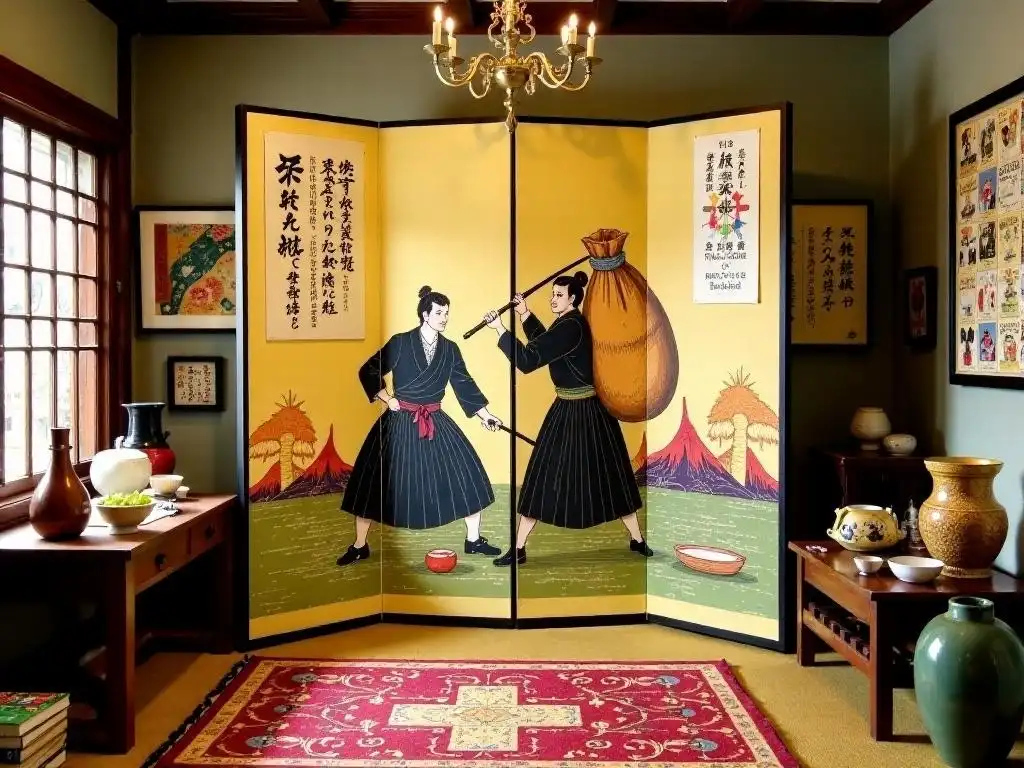
The Muromachi period (1336-1573) is renowned for its unique blend of art and politics, where cultural expressions were intricately woven into the fabric of political propaganda. This section delves into specific case studies showcasing how art served as a vehicle for political messaging during this time, revealing the intricate relationship between governance and cultural production.
Examination of a Prominent Artwork
One of the most notable examples of Muromachi political propaganda art is the Tōdaiji Daibutsuden (Great Buddha Hall) frescoes. Commissioned by the Ashikaga shogunate, these artworks were not merely decorative; they were designed to convey the power and benevolence of the ruling elite. The frescoes depicted scenes from Buddhist teachings, emphasizing the shogunate's role as a protector of the faith and the stability it brought to the realm.
These images were strategically placed in public spaces, ensuring that they were viewed by a broad audience, including both commoners and nobility. The vibrant colors and intricate details of the frescoes served to captivate viewers, reinforcing the message of the shogunate's divine right to rule and its commitment to the spiritual welfare of the populace.
Analysis of Political Messages in Specific Cultural Works
Another significant cultural artifact from the Muromachi period is the Noh theater, particularly plays that were commissioned by samurai patrons. For instance, the play Yamamba showcases the themes of loyalty and the supernatural, often reflecting the political struggles of the time. The character of Yamamba, a mountain witch, serves as a metaphor for the unpredictability of political power, while also embodying the wisdom and strength of the samurai class.
The political messages embedded within these performances were subtle yet powerful. They emphasized the valor and righteousness of the ruling class while simultaneously critiquing the rival factions. The use of allegory in Noh not only entertained but also educated audiences on the socio-political context of the era, making it a potent form of propaganda.
Impact of Propaganda Art on Public Sentiment
The impact of propaganda art during the Muromachi period was profound, shaping public sentiment and influencing perceptions of authority. The integration of art into the political landscape cultivated a sense of loyalty and belonging among the populace. For example, the Fūrin Kazan (Wind, Forest, Fire, and Mountain) banner, associated with the famous warlord Takeda Shingen, became an emblem of his power and military prowess.
This banner was not just a symbol on the battlefield; it resonated with the common people, who viewed it as a representation of their hopes for strong leadership and protection. The widespread recognition of such imagery fostered a collective identity, illustrating how propaganda art could galvanize public support and instill a sense of unity during tumultuous times.
The Effectiveness of Art in Shaping Political Narratives
Art during the Muromachi period was not only a reflection of cultural aesthetics but also a powerful tool for shaping political narratives. The effectiveness of propaganda art can be observed through various case studies that highlight its role in influencing public perception and attitudes toward governance.
Case Studies on Public Reception of Propaganda
One notable case is the reception of the Kinkaku-ji (Golden Pavilion), which was originally built as a retirement villa for Ashikaga Yoshimitsu, the third shōgun of the Ashikaga shogunate. The structure, adorned with gold leaf, was designed to symbolize the wealth and power of the shogunate. Public reception of the pavilion was overwhelmingly positive, as it became a site of pilgrimage and admiration.
Visitors were not only captivated by its beauty but also by the message it conveyed: that the shogunate was a formidable power capable of great achievements. This public admiration contributed to the shogunate’s legitimacy and demonstrated the ability of architectural art to serve as political propaganda.
Long-term Influence on Japanese Culture and Politics
The long-term influence of Muromachi political propaganda art is evident in its lasting impact on Japanese culture and governance. The themes and techniques developed during this era continued to resonate in subsequent periods, particularly in the Edo period. The ideals of loyalty, valor, and the divine right to rule found in Muromachi art can be traced through later cultural expressions, including ukiyo-e woodblock prints and kabuki theater.
Moreover, the legacy of Muromachi propaganda art laid the groundwork for the use of visual culture in political discourse, demonstrating the enduring relationship between art and power in Japan. This historical perspective underscores the significance of art in not only reflecting but also shaping societal values and political ideologies, a dynamic that continues to be relevant in contemporary Japan.
Conclusion
The Muromachi period, spanning from the 14th to the 16th centuries, was a time of significant political upheaval and cultural evolution in Japan. During this era, art and culture emerged as powerful tools for political propaganda, shaping public perception and consolidating power among the ruling elite. The interplay between governance and artistic expression not only influenced the political landscape but also left an indelible mark on Japanese cultural heritage.
Summary of the Role of Art and Culture in Muromachi Political Propaganda
Art and culture in the Muromachi period served as a strategic vehicle for conveying political messages and ideals. The ruling shogunate utilized various art forms, including Noh theater, ink paintings, and ceramics, to project authority and legitimacy.
- Noh Theater: This dramatic art form was often used to depict historical narratives that glorified the samurai class and their virtues, reinforcing the status quo and the shogunate's divine right to rule.
- Ink Paintings: Artists like Sesshū Tōyō created works that embodied the philosophical ideals of Zen Buddhism, which resonated with the ruling class and echoed their aspirations for peace and order during a tumultuous period.
- Ceramics and Decorative Arts: The proliferation of tea ceremonies and the aesthetic of wabi-sabi in ceramics mirrored the values of simplicity and humility, appealing to the samurai's sense of honor and discipline.
Through these artistic expressions, the political leaders of the Muromachi era were able to shape public sentiment and reinforce their authority, often blurring the lines between art and propaganda.
The Legacy of Muromachi Political Propaganda Art in Contemporary Japan
The legacy of Muromachi political propaganda art continues to resonate in contemporary Japan. Modern artists and cultural institutions draw inspiration from the rich artistic traditions established during this period.
- Influence on Modern Art: Contemporary Japanese artists often incorporate elements from Muromachi art into their works, creating a dialogue between the past and present. This fusion of styles reflects ongoing themes of identity and cultural heritage.
- Cultural Festivals and Exhibitions: Numerous exhibitions and festivals celebrate Muromachi art forms, promoting public interest and understanding of this historical period. These events serve as platforms for education and appreciation, ensuring that the lessons of the past remain relevant today.
In addition, the philosophical underpinnings found in Muromachi art, such as the principles of Zen, continue to influence modern Japanese aesthetics and cultural practices.
Further Reading and Resources
Recommended Books on Muromachi Political History
-
"The Muromachi Period" by John D. Pierson
This book provides an in-depth analysis of the political dynamics and cultural developments during the Muromachi period, offering insights into how art influenced governance.
-
"Art and Power in the Muromachi Period" by Miho K. Nishida
Nishida's work explores the relationship between art and political authority, examining various art forms used as propaganda tools.
-
"The World of the Muromachi Samurai" by John E. Woods
This book highlights the samurai's role in shaping political and cultural landscapes during the Muromachi era.
Online Resources for Exploring Muromachi Art and Culture
-
The National Museum of Modern Art, Tokyo:
Offers a wealth of online exhibitions and resources focused on Japanese art history, including sections dedicated to the Muromachi period.
-
The Kyoto National Museum:
Features a range of digital collections showcasing Muromachi art, from ceramics to paintings, with detailed descriptions and historical context.
-
Japan Arts Council:
Provides educational materials and articles that delve into various aspects of Japanese art and culture, including the Muromachi era's influence on contemporary practices.
These resources can further enhance your understanding of the intricate relationship between art, culture, and political propaganda during the Muromachi period.
- Introduction to Muromachi Political Propaganda Art
- Historical Context of the Muromachi Period
- Forms of Art Used in Muromachi Political Propaganda
- Themes and Messages Conveyed Through Art
- Case Studies of Muromachi Political Propaganda Art
- The Effectiveness of Art in Shaping Political Narratives
- Conclusion
- Further Reading and Resources
Frequently Asked Questions
What is Muromachi political propaganda art?
Muromachi political propaganda art refers to artworks created during the Muromachi period (1336-1573) that aimed to influence public opinion and support for political leaders or factions through symbolism and imagery.
How did art influence politics during the Muromachi period?
Art played a crucial role in shaping political narratives and public perception, as visual representations of power and authority were used to legitimize rulers and convey political messages effectively.
What are some key characteristics of Muromachi propaganda art?
Key characteristics of this art form include symbolic motifs, the use of natural landscapes, and religious themes that reflect the political climate, helping to connect the ruling class with the spiritual and cultural identity of the people.
Who were the main artists involved in Muromachi political propaganda?
Notable artists included Sesshū Tōyō and Mizuno Toshikata, whose works often carried political significance and contributed to the broader cultural narrative of the era through their unique styles and themes.
How did the societal context influence Muromachi art?
The societal context, including the rise of the samurai class and political instability, heavily influenced Muromachi art, as artists sought to reflect and negotiate the complexities of power dynamics and cultural identity through their creations.
Final Reflection: The Enduring Legacy of Muromachi Political Propaganda Art
The intricate relationship between art and politics during the Muromachi period is more relevant today than ever, as we witness how visual culture continues to shape public perception and influence political narratives. The art of this era was not merely decorative; it served as a powerful tool for propaganda, reflecting the complexities of governance and societal values. As we navigate our contemporary world, the lessons from Muromachi political propaganda art remind us of the profound impact that creative expression can have on shaping ideologies and mobilizing communities.
The influence of Muromachi political propaganda art extends far beyond its historical context, resonating within our cultural and social landscapes today. This period's artistic endeavors highlight how visual storytelling can forge connections and convey messages that transcend language and time. As we engage with art in our own lives, we are reminded of the words of artist Ai Weiwei: Art is not an end in itself, but a means of addressing humanity.
This perspective invites us to consider how the art we create and consume today can serve as a reflection of our values, aspirations, and the political climates we inhabit.
As you reflect on the insights gleaned from the exploration of Muromachi political propaganda art, I encourage you to consider your own relationship with art and its potential to influence change. What narratives do you wish to amplify through your creative expressions? Let the legacy of the Muromachi period inspire you to harness the power of art as a vehicle for dialogue, reflection, and action. Embrace the opportunity to contribute to the ongoing conversation about culture and politics, recognizing that your voice, like those of the artists of the past, has the power to shape the future.
Unveil the Power of Art in History!
Thank you for immersing yourself in the fascinating intersection of art, culture, and political propaganda during the Muromachi period. We hope you've gained valuable insights into how these elements shaped societal narratives and influenced governance! Now, it's time to channel that knowledge into action.
Here's how you can dive deeper and make an impact:
- Explore a local museum or gallery that features cultural artifacts from feudal Japan. Experience history through art!
- Start a discussion in your social circles or on social media about the role of art in political movements. What are your thoughts?
- Share this article with friends or fellow history enthusiasts. Fostering conversations about how art influences societal change can ignite powerful ideas!
What role do you think contemporary art plays in shaping political views today?