
The Battle of TobaFushimi: The Catalyst for the Meiji Restoration

Welcome to Feudal Japan History, where we embark on a captivating journey through one of the most transformative periods in Japanese history. In this exploration, we delve into the Toba Fushimi battle significance, a pivotal moment that served as the catalyst for the Meiji Restoration. What led to this clash of forces, and how did it reshape the very fabric of Japan?
Prepare to uncover the intricate details of military strategies, cultural shifts, and the societal impacts that followed. Join us as we unlock the secrets of the feudal era and invite you to explore the layers of history that define modern Japan!
The Battle of Toba-Fushimi, fought in January 1868, stands as a pivotal moment in Japan's transition from feudalism to modernity, heralding the dawn of the Meiji Restoration. This military conflict was not just a clash of arms but a fierce struggle for power that ultimately reshaped the trajectory of Japanese history.
As the Tokugawa shogunate faced increasing pressure from pro-imperial forces, the battle became a catalyst for significant political, social, and cultural changes within the nation. Understanding the Toba Fushimi battle significance requires delving deep into the historical context, the key players involved, and the lasting implications that emerged from this confrontation.
In this article, we will explore:
- The background of the Toba-Fushimi battle
- The key players and factions involved
- The course of the battle itself
- The aftermath and its implications for Japan's future
By analyzing these components, we aim to provide a comprehensive understanding of how the Battle of Toba-Fushimi not only influenced the Meiji Restoration but also set the stage for Japan's emergence as a modern state. Let us embark on this detailed exploration of a defining moment in Japan’s military history.
- Introduction to the Toba-Fushimi Battle
- Historical Context of the Meiji Restoration
- The Toba-Fushimi Battle: Key Events
- Outcomes of the Toba-Fushimi Battle
- Analysis of the Toba-Fushimi Battle Significance
- Key Figures in the Toba-Fushimi Battle
- Comparisons to Other Key Battles of the Era
- Conclusion
- Further Reading and Resources
-
Frequently Asked Questions
- What was the Battle of Toba Fushimi?
- Why is the Battle of Toba Fushimi considered a catalyst for the Meiji Restoration?
- How did the outcomes of the Battle of Toba Fushimi affect Japanese society?
- What were the main forces involved in the Battle of Toba Fushimi?
- How is the Battle of Toba Fushimi remembered in modern Japan?
- Final Reflection: The Enduring Significance of the Toba Fushimi Battle
- Uncover the Legacy of Toba Fushimi!
Introduction to the Toba-Fushimi Battle
The Toba-Fushimi Battle, fought from January 30 to February 2, 1868, is often heralded as a pivotal conflict that marked the beginning of the end for the Tokugawa shogunate and set the stage for the Meiji Restoration. This battle, occurring in the backdrop of Japan's turbulent socio-political landscape, ignited a series of events that drastically transformed the nation. Understanding the battle's context, the forces involved, and its aftermath is essential for grasping its significance in Japanese history.
Overview of the Toba-Fushimi battle
The Toba-Fushimi Battle was a confrontation between the Imperial forces, supporting the emperor, and the Tokugawa shogunate's troops in the vicinity of Kyoto. This engagement is characterized by several key elements:
- Combatants: The Imperial forces comprised soldiers loyal to Emperor Meiji, while the Tokugawa shogunate was represented by its military troops. The Imperial side was bolstered by the Satsuma and Chōshū domains, who played crucial roles in the fight.
- Location: The battle took place in Toba and Fushimi, areas located near Kyoto, which was then the imperial capital. The strategic importance of this location cannot be overstated, as it was a gateway to the heart of Japan’s governance.
- Forces and Tactics: The Imperial forces, although relatively smaller in numbers, utilized superior tactics and coordination, which was a significant factor in their success. The Tokugawa forces, on the other hand, were hampered by internal divisions and lacked the cohesive strategy that characterized the Imperial side.
- Outcome: The battle concluded with a decisive victory for the Imperial forces, resulting in the retreat of Tokugawa troops. This defeat not only weakened the shogunate's military position but also emboldened the Imperial faction, leading to a series of subsequent victories.
Importance of the Toba Fushimi battle significance in Japanese history
The significance of the Toba Fushimi battle in Japanese history extends far beyond the immediate military outcomes. Here are several crucial aspects that underline its historical importance:
- Catalyst for Change: The battle symbolized a turning point in Japanese history, acting as a catalyst for the Meiji Restoration. The defeat of the Tokugawa forces set off a chain reaction that ultimately led to the restoration of imperial power.
- End of the Tokugawa Shogunate: The loss at Toba-Fushimi marked the beginning of the end for the Tokugawa shogunate, which had ruled Japan for over 250 years. This battle undermined the shogunate's credibility and military strength, paving the way for its eventual dissolution.
- Unification of Imperial Forces: The battle fostered a sense of unity among the disparate domains supporting the emperor. It solidified alliances between the Satsuma and Chōshū domains, which were instrumental in the successful overthrow of the shogunate.
- Modernization and Reform: Following the battle and the subsequent Meiji Restoration, Japan embarked on a path of modernization and reform. The new government initiated significant changes in military, economic, and educational spheres, aligning Japan with Western powers.
- Cultural Shift: The victory at Toba-Fushimi also signaled a cultural shift, moving away from feudalistic practices towards a more centralized and modern state. This shift was crucial in shaping Japan's identity in the years to come.
The Toba Fushimi battle is not merely a military engagement but a critical event that reshaped Japan's future, making its significance a vital area of study for those interested in the military history of the feudal era.
Historical Context of the Meiji Restoration
Preceding events leading to the Toba-Fushimi battle
The Toba-Fushimi battle, fought in January 1868, was not an isolated incident in Japan's history; rather, it was the culmination of a series of significant events that shaped the socio-political landscape of the nation. The backdrop to this conflict was characterized by mounting dissatisfaction with the Tokugawa shogunate, which had ruled Japan for over 250 years.
Key events leading up to the battle included:
- Arrival of Commodore Perry (1853-1854): The arrival of American naval officer Matthew Perry marked the end of Japan's isolationist policies. Perry's expedition forced the shogunate to sign the Treaty of Kanagawa, which opened Japan to foreign trade and influence, igniting a national debate over modernization and foreign relations.
- The Sonnō jōi Movement: This slogan, meaning "Revere the Emperor, Expel the Barbarians," encapsulated the growing sentiment among many samurai and intellectuals advocating for the restoration of imperial rule while resisting foreign influence. This movement gained traction, particularly among the Satsuma and Chōshū domains.
- The Boshin War (1868-1869): Preceding the Toba-Fushimi battle, tensions escalated into armed conflict, with factions forming around either the shogunate or the imperial court. The Boshin War was essentially a civil war that underscored the sharp divide between pro-imperial and pro-shogunate forces.
These events created an atmosphere ripe for conflict, ultimately leading to the confrontation at Toba-Fushimi.
Political landscape of Japan in the mid-19th century
The mid-19th century in Japan was marked by profound political turmoil and transformation. The Tokugawa shogunate, despite its long-standing dominance, faced mounting challenges from various factions seeking to restore imperial power. This tumultuous environment included:
- Decline of the Tokugawa Shogunate: The shogunate's inability to effectively manage the pressures of modernization and foreign encroachment led to widespread disillusionment. Internal strife and economic difficulties weakened its authority.
- Rise of the Han (Domain) Power: Powerful domains like Satsuma and Chōshū began to assert their influence, rallying support for the imperial cause. Their military strength and resources were pivotal in the struggle against the shogunate.
- Emergence of New Ideologies: The political landscape was further complicated by the emergence of new ideologies advocating for a centralized government, economic reforms, and the adoption of Western technologies. These ideas resonated particularly with younger samurai and intellectuals who sought to modernize Japan.
- Formation of Alliances: Various factions formed crucial alliances, such as the Satsuma-Chōshū alliance, which united to challenge the Tokugawa rule. This coalition was instrumental in mobilizing forces for the eventual confrontation at Toba-Fushimi.
In this complex political landscape, the Toba-Fushimi battle served as a pivotal moment, setting the stage for the eventual Meiji Restoration.
Key players in the Meiji Restoration movement
The Meiji Restoration was driven by an array of influential figures, each playing a significant role in the events leading to and following the Toba-Fushimi battle. Some of the key players included:
- Emperor Meiji: Ascending to the throne in 1867, Emperor Meiji became a symbol of national unity and modernization. His support for the restoration movement galvanized many who sought to restore imperial authority.
- Saigō Takamori: A prominent samurai from Satsuma, Saigō was a key military leader in the Boshin War. His strategic acumen and charisma made him a crucial figure in the pro-imperial forces, particularly during the battle of Toba-Fushimi.
- Kido Takayoshi: Another influential leader from the Chōshū domain, Kido played a pivotal role in shaping the political strategies of the restoration movement. He was instrumental in fostering alliances and articulating the vision for a modern Japan.
- Tōyama Mitsuru: An ideologue and vocal advocate for the restoration of imperial rule, Tōyama's writings and speeches inspired many samurai and commoners alike to rally around the imperial cause.
- Tokugawa Yoshinobu: The last shōgun of the Tokugawa period, Yoshinobu faced immense pressure from both reformers and traditionalists. His attempts to consolidate power ultimately led to the clash at Toba-Fushimi, marking the beginning of the end for the shogunate.
Together, these key players and their actions significantly shaped the course of Japan's transition from feudal rule to a centralized, modern nation-state, with the Toba-Fushimi battle acting as a critical catalyst in this transformative period.
The Toba-Fushimi Battle: Key Events
The Battle of Toba-Fushimi, fought in January 1868, was a pivotal moment in Japanese history that set the stage for the Meiji Restoration. This conflict marked the first major military engagement in the Boshin War, which ultimately led to the end of the Tokugawa shogunate and the restoration of imperial rule. The battle unfolded in the context of growing tensions between pro-imperial forces and the ruling Tokugawa shogunate, with each faction vying for control over Japan's future.
Timeline of the Toba-Fushimi battle
The timeline of the Toba-Fushimi battle illustrates the rapid sequence of events leading to this critical confrontation:
- January 1868: Prelude to Conflict
- The pro-imperial forces, largely composed of samurai from the Satsuma and Choshu domains, began mobilizing against the Tokugawa government.
- January 27, 1868: Initial Skirmishes
- Tensions escalated as skirmishes broke out near Toba and Fushimi, where pro-imperial troops attempted to secure strategic positions.
- January 29, 1868: Full-Scale Battle
- The full battle commenced as the imperial army, numbering around 15,000 troops, confronted a Tokugawa force of approximately 10,000 soldiers.
- January 30, 1868: Decisive Engagement
- The battle saw intense fighting, with both sides employing artillery and cavalry. The Tokugawa forces were ultimately outmaneuvered and outmatched, leading to their retreat.
- February 1868: Aftermath
- The defeat of the Tokugawa forces at Toba-Fushimi gave the pro-imperial factions a significant morale boost and solidified their momentum in the ensuing Boshin War.
Major factions involved in the conflict
The Toba-Fushimi battle featured two primary factions, each representing starkly different visions for Japan's future:
- Pro-Imperial Forces:
- Satsuma Domain: Led by Saigo Takamori, this powerful southern domain played a crucial role in mobilizing troops and resources against the shogunate.
- Choshu Domain: Under the leadership of Takasugi Shinsaku, Choshu's contributions included innovative military tactics and strong ideological support for the emperor.
- Imperial Loyalists: This coalition included various samurai and commoners who sought to restore the emperor's authority and dismantle the feudal structure.
- Tokugawa Shogunate:
- Shogunate Forces: Comprising loyal samurai from various domains, the Tokugawa army was led by experienced commanders such as Katsu Kaishu, who aimed to maintain the status quo and suppress the uprising.
- Allied Domains: Some domains initially sided with the shogunate due to historical loyalties, but many would later switch allegiances as the tide of war turned.
Tactical strategies employed during the battle
The tactical strategies employed during the Battle of Toba-Fushimi highlighted the contrasting approaches of the two factions:
- Pro-Imperial Strategies:
- Cavalry Charges: The pro-imperial forces utilized swift cavalry movements to outmaneuver Tokugawa units, allowing them to take offensive positions quickly.
- Artillery Deployment: The effective placement of artillery on strategic hills provided the imperial forces with a significant range advantage, enabling them to bombard the Tokugawa lines.
- Coordination Among Allies: The Satsuma and Choshu domains coordinated their attacks, capitalizing on their combined strengths and creating a unified front against the shogunate.
- Tokugawa Strategies:
- Defensive Positioning: The Tokugawa forces initially attempted to hold their ground in fortified positions, relying on traditional samurai tactics.
- Use of Firearms: Despite having a well-trained army, Tokugawa forces were hampered by slower maneuvers and less effective coordination, which ultimately led to their downfall.
- Resistance to Change: The Tokugawa leadership struggled to adapt to the modern warfare techniques employed by their opponents, reflecting a broader reluctance to embrace change within the shogunate.
The Toba-Fushimi battle not only showcased military strategies but also represented a significant ideological clash between two visions for Japan's future. The outcome of this battle played a crucial role in shaping the course of Japanese history, setting the stage for the rapid modernization and transformation that would follow during the Meiji Restoration.
Outcomes of the Toba-Fushimi Battle
Immediate aftermath of the battle
The Toba-Fushimi battle, fought on January 27 and 28, 1868, marked a turning point in Japanese history, leading to the collapse of the Tokugawa shogunate and the rise of the imperial government. In the immediate aftermath, the victory of the imperial forces, composed primarily of the Satsuma and Chōshū domains, had significant consequences:
- Shift in Political Power: The defeat of the shogunate's forces signified a substantial shift in political power towards the imperial faction. This victory galvanized support for the emperor, fostering a sense of national unity against the Tokugawa regime.
- Military Implications: The battle highlighted the effectiveness of the modernized military strategies employed by the imperial forces, showcasing a blend of traditional samurai tactics with Western military innovations. This was crucial in inspiring other domains to consider reforming their military forces.
- Territorial Gains: Following the battle, the imperial army quickly advanced towards Kyoto and Edo (modern-day Tokyo), leading to the capture of key territories and further diminishing Tokugawa influence. This territorial expansion was instrumental in consolidating power for the imperial faction.
The role of the Toba-Fushimi battle in shaping the Meiji Restoration
The Toba-Fushimi battle served as a catalyst for the Meiji Restoration, a period characterized by rapid modernization and Westernization in Japan. Its role can be analyzed through several key aspects:
- Mobilization of Support: The battle galvanized various domains and samurai, who rallied around the emperor, leading to widespread support for the imperial cause. This mobilization was critical in uniting disparate factions against the Tokugawa shogunate.
- Symbol of Change: The victory at Toba-Fushimi became a symbol of change, representing the end of feudalism and the beginning of a new era. It instilled hope and motivation among those who sought a modern Japan, free from the constraints of feudal governance.
- Inspiration for Reform: The battle underscored the necessity for reform within the military and government. The imperial forces' success prompted leaders to push for the Ishin no Ketsudan (Decision of the Restoration), leading to sweeping changes in governance, education, and military organization.
Long-term implications for Japanese society and governance
The consequences of the Toba-Fushimi battle reverberated throughout Japanese society and governance, laying the groundwork for the modern nation-state:
- End of Feudal Structures: The battle effectively dismantled the feudal system that had dominated Japan for centuries. As the Tokugawa shogunate fell, reforms were implemented to abolish the han (feudal domains) system, transitioning towards a centralized government.
- Establishment of the Meiji Constitution: The political changes initiated by the Restoration eventually led to the promulgation of the Meiji Constitution in 1889. This document established a parliamentary system and laid the foundation for modern governance in Japan.
- Cultural Shifts: The victory and subsequent reforms influenced cultural perspectives, promoting a sense of nationalism and identity. The embrace of Western ideas and practices transformed various aspects of Japanese life, from education to industry.
- Economic Modernization: The post-battle period initiated significant economic changes. Investment in infrastructure and industrialization took off, leading to Japan's emergence as a global power by the early 20th century.
The Toba-Fushimi battle not only represented a crucial military engagement but also sparked a series of profound transformations that shaped the trajectory of Japan’s modernization during the Meiji Restoration. Its significance lies in its capacity to unify disparate factions, inspire reform, and set the stage for a new era in Japanese history.
Analysis of the Toba-Fushimi Battle Significance
Military significance of the Toba-Fushimi battle
The Battle of Toba-Fushimi, fought from January 30 to February 1, 1868, served as a pivotal moment in the transition of Japan from a feudal society to a modern nation-state. This confrontation marked the beginning of the Boshin War, a civil war between the Tokugawa shogunate and forces seeking to restore imperial rule. The battle showcased several military significance aspects:
- Strategic Location:
- The battle took place near Kyoto, a city of immense political and cultural importance. Controlling Kyoto meant influencing the emperor and the seat of power, which was crucial for both factions.
- The positioning of the Imperial army allowed them to leverage the terrain effectively, utilizing their knowledge of local geography to gain an advantage over the Tokugawa forces.
- Modern Warfare Techniques:
- The use of firearms and artillery by the Imperial forces demonstrated a shift from traditional samurai combat to more modern military tactics. The Imperial army's integration of Western-style military strategies was evident, marking a departure from the samurai-centric warfare of the past.
- This battle highlighted the effectiveness of organized infantry formations and artillery in achieving military objectives, setting a precedent for future conflicts.
- Impact on Military Alliances:
- The outcome of the battle led to the consolidation of anti-Tokugawa factions. The victory encouraged various domains and clans to join the Imperial cause, demonstrating the battle's ability to reshape military alliances in Japan.
- The defeat of the shogunate forces weakened their position, leading to the eventual dissolution of the Tokugawa shogunate and the establishment of the Meiji government.
Cultural impact on Japan’s transition from feudalism
The cultural ramifications of the Toba-Fushimi battle were profound, as it signified a shift in Japanese identity and societal values. Several key factors illustrate its cultural impact:
- End of Samurai Dominance:
- The battle marked the beginning of the decline of the samurai class's traditional power and influence. As the Imperial army emerged victorious, it signified a move toward a society where merit and modern military capabilities began to overshadow hereditary status.
- National Identity Formation:
- The conflict fostered a sense of nationalism among the Japanese people. The idea of a unified nation fighting against a common enemy, the Tokugawa shogunate, began to crystallize, leading to a new cultural narrative centered around the emperor and the concept of a modern Japan.
- Cultural Renaissance:
- The victory of the Imperial forces ignited a cultural renaissance, encouraging the adoption of Western philosophies, technologies, and governance models. This shift initiated a period of rapid modernization that would redefine Japanese society, leading to significant changes in education, industry, and art.
The Toba-Fushimi battle as a turning point in Japanese military history
The Toba-Fushimi battle is widely recognized as a turning point in Japanese military history for several key reasons:
- Shift from Feudal Warfare to National Army:
- The battle exemplified the transition from feudal armies composed of samurai to a more organized, national military force. This development was crucial in establishing a modern military framework that would support Japan's ambitions in the late 19th and early 20th centuries.
- Lessons in Modernization:
- The conflict illuminated the necessity for Japan to modernize its military practices. Observations from this battle led to significant reforms in military training, strategies, and technologies, aligning Japan more closely with Western military standards.
- Foundation for Future Conflicts:
- The tactics and strategies developed and employed during the Toba-Fushimi battle laid the groundwork for subsequent military engagements, including the Satsuma Rebellion and conflicts with foreign powers. The lessons learned from this battle contributed to Japan's military successes in later years, such as the First Sino-Japanese War and the Russo-Japanese War.
The Toba-Fushimi battle was not merely a military engagement; it was a catalyst for significant cultural transformation and a foundational event in the evolution of military practices in Japan. Its significance extends beyond the battlefield, influencing Japan's trajectory toward modernization and national identity.
Key Figures in the Toba-Fushimi Battle
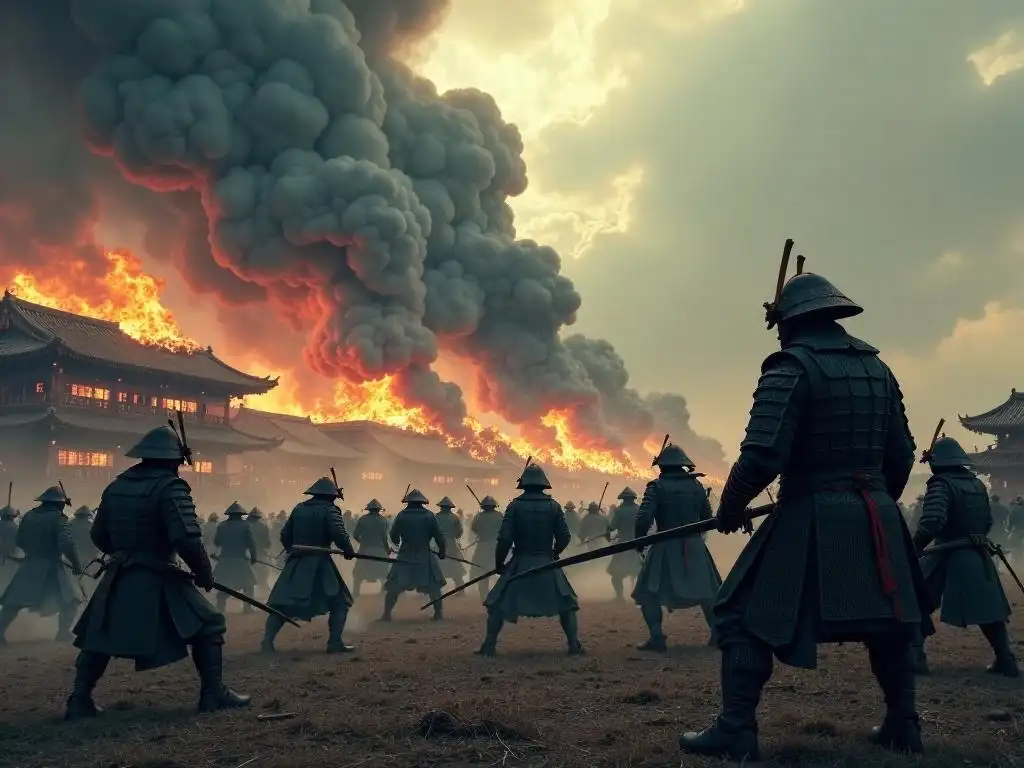
The Toba-Fushimi Battle, fought in January 1868, was pivotal not only in the context of the Boshin War but also as a catalyst for the subsequent Meiji Restoration. The conflict saw several key figures emerge, each playing crucial roles that would shape Japan's transition from a feudal society to a modern state.
Prominent leaders and their contributions
- Tokugawa Yoshinobu
- Position: The last shogun of the Tokugawa shogunate.
- Contribution: Yoshinobu sought to retain power in the face of growing discontent and the rise of pro-imperial factions. His initial decision to move the capital to Kyoto was a strategic maneuver to place himself closer to the emperor and the pro-imperial forces. However, his forces faced significant challenges at Toba-Fushimi, leading to a retreat that marked the decline of the Tokugawa shogunate.
- Saigo Takamori
- Position: A prominent samurai and leader of the Satsuma Domain.
- Contribution: Takamori was a key figure among the pro-imperial forces, advocating for the overthrow of the shogunate. His strategic command and the mobilization of troops from Satsuma were instrumental in the victory at Toba-Fushimi. Takamori's leadership not only exemplified the samurai spirit but also emphasized the need for a unified Japan under imperial rule.
- Kido Takayoshi
- Position: A leader of the Choshu Domain and one of the architects of the Meiji Restoration.
- Contribution: Kido played a crucial role in the political machinations leading up to the battle, working closely with other leaders to unite forces against the Tokugawa. His diplomatic skills were vital in securing support from various domains, and his vision for a modern Japan influenced the direction of the Restoration.
- Fukuzawa Yukichi
- Position: An influential intellectual and educator.
- Contribution: While not a military leader, Fukuzawa's writings and ideas helped shape public opinion in favor of the Restoration. His advocacy for Western education and modern governance provided a philosophical foundation that justified the need for change, aligning with the military efforts at Toba-Fushimi.
The significance of their roles in the Meiji Restoration
The significance of the leaders involved in the Toba-Fushimi Battle extends beyond the immediate military outcomes. Their actions and decisions were instrumental in shaping the future of Japan during the Meiji Restoration.
- Decline of Feudalism: The defeat of the Tokugawa forces signaled the collapse of the feudal system that had dominated Japan for centuries. This shift allowed for the emergence of a centralized government under the emperor, leading to rapid modernization.
- Unity of the Imperial Forces: The collaboration between various domains, such as Satsuma and Choshu, set a precedent for the coalition-building that would characterize the Restoration era. The leaders' ability to work together, despite their differing backgrounds, demonstrated a unified vision for Japan's future.
- Cultural Transformation: Figures like Fukuzawa Yukichi had a profound impact on the cultural landscape of Japan. His ideas on education and Westernization fostered a generation of leaders who would further the modernization efforts initiated during the Restoration.
- Legacy and Inspiration: The leadership displayed during the Toba-Fushimi Battle inspired future generations. The military and political strategies employed by these figures became models for later reforms, helping to establish a strong national identity and a commitment to modernization.
The Toba-Fushimi Battle was not merely a military confrontation; it was a critical juncture that saw the convergence of influential leaders whose contributions would resonate throughout Japan's transition into the modern era. Their significance lies not only in their immediate actions but also in the lasting impact they had on the course of Japanese history.
Comparisons to Other Key Battles of the Era
Toba-Fushimi vs. Other Battles in the Boshin War
The Battle of Toba-Fushimi, fought in January 1868, marked a crucial turning point in the Boshin War, which pitted imperial loyalists against the Tokugawa shogunate. To grasp the Toba Fushimi battle significance, it is essential to compare it with other notable engagements of the war, such as the Battle of Kurume and the Battle of Hakodate.
Strategic Importance
- Toba-Fushimi: This battle was significant for its strategic outcome, as the imperial forces secured a vital route to Kyoto, allowing them to capitalize on their momentum.
- Kurume: In contrast, the Battle of Kurume involved a more localized conflict with less broader implications for the war. Although a victory for imperial forces, it did not possess the same strategic depth as Toba-Fushimi.
- Hakodate: The Battle of Hakodate, occurring later in the war, represented a desperate stand by Tokugawa loyalists. Its outcome was pivotal but came too late to alter the tide of the war.
Tactical Approaches
- Toba-Fushimi: The battle showcased innovative tactics employed by the imperial forces, such as the use of modern artillery and cavalry, which contrasted sharply with the traditional strategies of the Tokugawa forces.
- Other Battles: Battles like Kurume relied heavily on conventional warfare, lacking the strategic flexibility that characterized Toba-Fushimi.
Lessons Learned from the Toba-Fushimi Battle Compared to Other Conflicts
The Toba-Fushimi battle significance extends beyond its immediate outcomes; it offers critical lessons that can be applied to other conflicts of the era and beyond.
Importance of Adaptation
- The Battle of Toba-Fushimi demonstrated the necessity for military forces to adapt to changing technologies and strategies. The successful integration of Western military practices by the imperial forces highlighted the importance of modernization.
- In contrast, battles such as Kurume showed the consequences of rigid adherence to traditional tactics, leading to missed opportunities and eventual losses.
Leadership and Morale
- The leadership displayed during the Toba-Fushimi battle by figures like Saigo Takamori was instrumental in uniting disparate factions within the imperial army. This cohesiveness was critical in securing victory.
- Other battles, such as the Battle of Hakodate, illustrated the impact of fractured leadership and low morale, which ultimately contributed to the defeat of Tokugawa loyalists.
Political Implications
- The aftermath of Toba-Fushimi solidified the imperial cause and galvanized support for the Meiji Restoration. It set a precedent for the political ramifications of military victories during the Boshin War.
- Comparatively, earlier battles did not carry the same weight in shaping the future political landscape, highlighting how military engagements can transcend the battlefield to influence national direction.
Overall, the Battle of Toba-Fushimi stands out not only as a decisive military engagement but also as a catalyst for broader changes in Japan. Its lessons in adaptation, leadership, and political consequences provide valuable insights into the nature of warfare during this transformative period.
Conclusion
Reflection on the Toba Fushimi battle significance in contemporary Japan
The Toba Fushimi battle, fought in January 1868, marked a pivotal moment in Japan's transition from feudalism to modernization. Its significance extends beyond military strategy and outcomes; it laid the groundwork for the emergence of contemporary Japan. This battle represented the clash of the Tokugawa shogunate's traditional power against the forces advocating for imperial restoration, symbolizing a broader societal shift.
In today's Japan, the legacy of the Toba Fushimi battle resonates in various aspects of national identity and governance. The principles of democracy and the centralized government that emerged post-battle are integral to Japan's political landscape. The battle serves as a reminder of the importance of adaptability and reform in the face of change, which continues to influence Japanese society's approach to modernization and international relations.
Moreover, the battle's remembrance in historical narratives and educational curricula fosters a sense of unity and pride among Japanese citizens. The valor of those who fought, along with the transformative results of the conflict, are commemorated in various ways, including ceremonies and historical reenactments, which reinforce national identity and collective memory.
The legacy of the Toba-Fushimi battle in the context of feudal Japan history
The legacy of the Toba-Fushimi battle is profound, particularly when viewed through the lens of feudal Japan's history. This battle signified the end of a long-standing feudal system that had dominated Japan for centuries. The defeat of the Tokugawa shogunate not only dismantled their power but also catalyzed the redistribution of authority, leading to the establishment of a modern nation-state.
Key Aspects of the Toba-Fushimi Battle's Legacy:
- Transition from Feudalism to Modernization: The battle was instrumental in prompting the Meiji Restoration, which initiated sweeping political, economic, and social reforms. These changes dismantled the rigid class structures of feudal Japan, paving the way for a more equitable society.
- Cultural Shifts: The conflict highlighted the tension between tradition and progress. It ushered in an era where Western influences began to permeate Japanese culture, leading to significant advancements in technology and industry. The cultural amalgamation can still be observed in contemporary Japanese art, architecture, and societal norms.
- Militarization and National Identity: The Toba-Fushimi battle is often viewed as a defining moment in the evolution of Japan's military identity. It laid the foundation for a more modern military structure, which would play crucial roles in Japan's subsequent conflicts and its assertion on the global stage.
The Toba-Fushimi battle is not merely a historical event; it serves as a crucial touchstone in understanding the broader narrative of Japan's transition from feudalism to a modern society. The implications of this battle reverberate through Japan’s political, cultural, and social frameworks, making it a significant point of reference in the study of feudal Japan history.
Further Reading and Resources
Suggested books and articles on the Toba-Fushimi battle
To deepen your understanding of the significance of the Toba-Fushimi battle, several key texts provide comprehensive analyses and insights:
- "The Last Samurai: The Life and Battles of Saigo Takamori" by Mark Ravina
- This book delves into the life of Saigo Takamori, a crucial figure in the Toba-Fushimi battle and the subsequent Meiji Restoration. Ravina explores the socio-political climate of the time, highlighting Takamori's pivotal role in the conflict.
- "Samurai, Warfare and the State in Early Medieval Japan" by Karl F. Friday
- Although this book covers a broader time frame, it offers essential context on the evolution of samurai warfare leading up to the 19th century, including the events surrounding the Toba-Fushimi battle.
- "The Meiji Restoration: A New History" by N. H. D. H. G. Houghton
- This work provides an in-depth look at the Meiji Restoration, discussing how the Toba-Fushimi battle served as a turning point. The author analyzes both the immediate and long-term effects of the battle on Japanese society.
- "Japan's Last Samurai: The Life and Times of Saigo Takamori" by John W. Dower
- Dower's exploration of Saigo Takamori offers a detailed narrative of the Toba-Fushimi battle, emphasizing its significance in the larger context of Japanese history and the struggle between the Tokugawa shogunate and pro-imperial forces.
- "The Battle of Toba-Fushimi: A Prelude to the Meiji Restoration" (Journal Article)
- Accessible through academic databases, this article provides a thorough analysis of the military tactics employed during the battle and its repercussions on the political landscape of Japan.
Recommended documentaries and educational tools on the Meiji Restoration
For visual and interactive learners, several documentaries and educational resources effectively capture the essence of the Meiji Restoration and the Toba-Fushimi battle:
- "The Samurai: The Last Warrior" (Documentary)
- This documentary explores the transformation of Japan during the Meiji era, including the Toba-Fushimi battle's role in the decline of the samurai class. It incorporates interviews with historians and reenactments to bring the historical events to life.
- "Meiji Revolution: The Birth of Modern Japan" (Educational Film Series)
- A series of short films that delve into the key events of the Meiji Restoration, highlighting the causes and consequences of the Toba-Fushimi battle. This resource is ideal for educators and students alike.
- "Japan's Meiji Era: The Making of a Modern Nation" (Online Course)
- Offered by several educational platforms, this course covers the Meiji Restoration's historical context, including the significance of the Toba-Fushimi battle. It features lectures from experts in Japanese history and interactive quizzes to enhance learning.
- "Anime and History: The Meiji Era" (Interactive Website)
- This site combines educational content with engaging visuals, providing a unique perspective on the Meiji Restoration. It includes timelines, character profiles, and scenarios based on historical events, making it an engaging tool for learners of all ages.
These resources will not only enhance your knowledge of the Toba-Fushimi battle but also provide a broader understanding of its significance within the context of Japan's transition into the modern era.
Frequently Asked Questions
What was the Battle of Toba Fushimi?
The Battle of Toba Fushimi was a significant conflict that occurred in 1868 between forces loyal to the Tokugawa shogunate and those supporting the imperial court, marking a key moment in Japan's transition to the Meiji era.
Why is the Battle of Toba Fushimi considered a catalyst for the Meiji Restoration?
This battle is seen as a catalyst for the Meiji Restoration because it symbolized the decline of the Tokugawa shogunate and galvanized support for the imperial forces, leading to the eventual restoration of imperial rule.
How did the outcomes of the Battle of Toba Fushimi affect Japanese society?
The outcomes led to a shift in political power, dismantling the feudal system and paving the way for modernization and industrialization, which profoundly transformed Japanese society.
What were the main forces involved in the Battle of Toba Fushimi?
The battle primarily involved imperial loyalists, who supported the emperor, and Tokugawa forces, who defended the shogunate, highlighting the intense rivalry between traditional and modernizing factions in Japan.
How is the Battle of Toba Fushimi remembered in modern Japan?
Today, the Battle of Toba Fushimi is commemorated as a pivotal event in Japan's historical narrative, representing the struggle for modernization and the end of the feudal era, influencing cultural identity.
Final Reflection: The Enduring Significance of the Toba Fushimi Battle
The Toba Fushimi battle significance resonates profoundly in today's world, illustrating how pivotal moments in history can shape the trajectory of nations and cultures. As we reflect on the events that unfolded during this critical clash, we recognize that the battle was not merely a conflict; it was a catalyst that ignited the flames of change, leading to the transformative Meiji Restoration. This historical turning point serves as a reminder of how the struggles for power and identity can redefine the course of a nation.
Culturally and socially, the Toba Fushimi battle has left an indelible mark on Japan's identity and its path toward modernization. The echoes of this battle can be seen in the way contemporary Japan balances tradition with innovation, a delicate dance that continues to define its global presence. As historian John Dower aptly noted, The past is never dead. It's not even past.
This sentiment encapsulates the ongoing influence of the Toba Fushimi battle, reminding us that the legacies of our histories shape our present and future.
As we conclude this exploration of the Toba Fushimi battle, I invite you to reflect on the lessons it imparts about resilience, transformation, and the power of collective action. Consider how the struggles of the past can inspire you in your own life, urging you to embrace change and pursue your aspirations with courage. Let the significance of this battle encourage you to engage with your own history and the histories of those around you, fostering a deeper understanding of the forces that shape our world today.
Uncover the Legacy of Toba Fushimi!
Thank you for diving into the fascinating story of the Battle of Toba Fushimi and its pivotal role in the Meiji Restoration. Your interest in this transformative event in Japan's history not only deepens your understanding but also connects you with the larger narrative of change and progress.
Now, let’s take your engagement further! Here’s how you can continue exploring this rich history:
- Join our Community: Connect with other enthusiasts by joining our Feudal Japan History forum to discuss insights, share thoughts, and broaden your understanding.
- Dive Deeper: Explore more articles about the Meiji Restoration and identify key figures who influenced this era. Begin with our featured articles linked below!
- Spread the Knowledge: Share this article with friends or on social media to inspire others to learn about this critical moment in history.
How has the Battle of Toba Fushimi impacted your view of Japan's journey toward modernization? Let's discuss in the comments!