
Political History
Explore Political History through Japan’s feudal transformation, from the rise of the samurai and the Genpei War to powerful shogunate structures, daimyo domains, and the unification of Japan. Discover how leadership, warfare, alliances, and governance shaped the Kamakura, Muromachi, and Tokugawa eras. ⚔️🏯 Our expert-driven articles provide in-depth historical insight into the political systems, influential rulers, and enduring power struggles that defined Feudal Japan.
 Unification of Japan
 Tokugawa Shogunate
 Daimyo and their Domains
 The Genpei War
 Rise of the Samurai Class
 Shogunate Structures
 Governance during Kamakura Period
 Governance during Muromachi Period
Political History of Feudal Japan explores the institutions, conflicts, leaders, and power structures that shaped Japan from the rise of the samurai through the Tokugawa era. This category examines how military governments, imperial authority, warrior families, daimyo domains, and local administrations transformed Japanese politics over centuries.
Discover how the Kamakura shogunate established a new model of warrior rule, how the Muromachi period balanced central authority with powerful regional lords, and how the Genpei War helped create the foundations of samurai government. Our expert-driven articles also explain the rise of the samurai class, the organization of shogunate structures, the political strategies of daimyo, and the unification campaigns that culminated in the Tokugawa shogunate.
Whether you are researching Japanese feudal government, samurai politics, medieval Japan, or the development of centralized authority, this collection provides clear historical context and detailed analysis. Explore the rivalries, laws, alliances, institutions, and military reforms that defined political history in feudal Japan.
🏯 Governance during Muromachi Period
Learn how the Ashikaga shogunate governed Japan during the Muromachi period and how its authority differed from earlier military governments. Articles in this section examine the role of the shogun, the imperial court, provincial officials, religious institutions, and influential warrior families.
Readers can expect detailed coverage of decentralized governance, regional autonomy, the shugo system, and the growing influence of powerful daimyo. Discover how political fragmentation, economic change, and civil conflict shaped Muromachi Japan and contributed to the Sengoku period.
⚔️ Governance during Kamakura Period
Explore the political institutions created by Minamoto no Yoritomo and expanded by the Kamakura shogunate. This subcategory explains how the bakufu governed through military administrators, vassal relationships, land rights, and legal institutions while the imperial court remained an important source of legitimacy.
Articles cover the shogunate’s administrative structure, the roles of the shugo and jitō, the Hōjō regency, and the political consequences of the Mongol invasions. Readers will gain insight into how Kamakura governance established a lasting model for samurai rule in Japan.
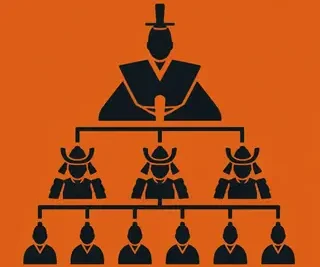
🛡️ Shogunate Structures
Discover how Japan’s shogunates were organized and how military governments exercised authority across the country. This section examines the relationship between the shogun, warrior vassals, provincial officials, courts, councils, and the imperial institution.
Expect clear explanations of bakufu administration, feudal obligations, succession, land management, law enforcement, and political legitimacy. These articles compare the Kamakura, Ashikaga, and Tokugawa systems to show how Japanese military government evolved over time.
🌸 Rise of the Samurai Class
Trace the emergence of the samurai from provincial warrior families to Japan’s dominant political and military elite. This section explores how landholding, service, armed conflict, and loyalty networks enabled the warrior class to gain influence over courts and local communities.
Readers will learn about samurai identity, vassalage, hereditary status, military service, and the changing relationship between warriors and aristocrats. The articles also explain how the samurai class developed into a governing elite during Japan’s medieval and early modern periods.
🔥 The Genpei War
Examine the Genpei War, the decisive conflict between the Taira and Minamoto clans that reshaped Japanese political history. Articles cover the causes of the war, major battles, prominent leaders, shifting alliances, and the eventual victory of Minamoto no Yoritomo.
This section explains why the conflict was a turning point in the rise of samurai government. Readers can explore how the war weakened aristocratic political dominance and created the conditions for the establishment of the Kamakura shogunate.
🏰 Daimyo and their Domains
Learn how daimyo governed territories, managed agricultural production, maintained castles, and organized military forces. This subcategory examines the political and economic foundations of regional lordship from the Muromachi and Sengoku periods through the Tokugawa era.
Expect insights into domain administration, vassal networks, taxation, castle towns, diplomacy, and competition among warrior lords. These articles show how daimyo power shaped local society while contributing to both political fragmentation and national unification.
🗾 Tokugawa Shogunate
Explore the political system established by Tokugawa Ieyasu after the unification of Japan. This section examines the shogunate’s centralized authority, domain governance, social hierarchy, legal codes, and methods for controlling daimyo and maintaining peace.
Readers will discover how alternate attendance, marriage regulations, castle restrictions, financial oversight, and the division between bakufu and han supported Tokugawa stability. Articles also consider the strengths and limitations of Tokugawa political control before its eventual decline.
👑 Unification of Japan
Follow the campaigns and political strategies that brought Japan out of the Sengoku period. This section focuses on Oda Nobunaga, Toyotomi Hideyoshi, and Tokugawa Ieyasu, whose military innovations, alliances, reforms, and administrative policies transformed the country.
Learn how Japanese unification depended on castle warfare, land surveys, hostage policies, social controls, diplomacy, and the reorganization of warrior society. These articles explain how the unification process laid the foundations for the long-lasting Tokugawa shogunate.
❓ Frequently Asked Questions About Political History
What was political life like in feudal Japan?
Political life in feudal Japan was shaped by relationships between the imperial court, shoguns, samurai, daimyo, religious institutions, and local officials. Authority shifted over time, with military governments often exercising practical control while the emperor retained cultural and symbolic importance.
What was the role of the shogun?
The shogun was Japan’s leading military ruler and generally controlled national administration through a bakufu, or military government. The shogun managed warrior alliances, appointed officials, enforced laws, and coordinated with or regulated regional lords.
How did the samurai gain political power?
The samurai gained political power through military service, landholding, clan alliances, and their ability to protect estates and enforce authority. Major conflicts such as the Genpei War helped warrior leaders replace court aristocrats as Japan’s dominant political force.
What was the difference between a shogunate and a daimyo domain?
A shogunate was the central military government led by the shogun, while a daimyo domain was a regional territory governed by a powerful lord. Under the Tokugawa system, daimyo retained local authority but were subject to regulations and oversight from the shogunate.
Why is the unification of Japan historically important?
The unification of Japan ended much of the warfare of the Sengoku period and created the political conditions for Tokugawa peace. It centralized authority, reorganized land and social relations, and established institutions that shaped Japanese history for more than two centuries.