Women in Power: The Influence of Female Figures in Muromachi Governance
🌸 The Muromachi era witnessed remarkable Female Leaders, who not only shaped governance but also influenced cultural and societal dynamics. This article…
Read article
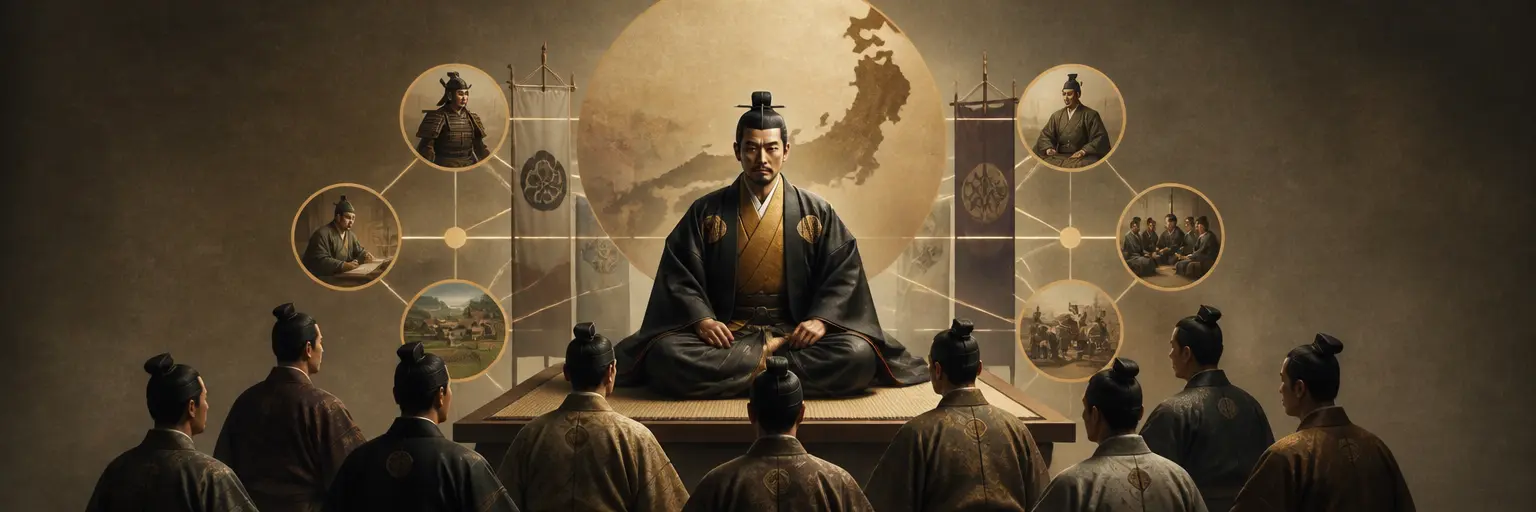
Explore Muromachi-period governance and discover how the Ashikaga shogunate, regional warlords, religious institutions, and local communities shaped Japan’s political history. 🏯 Learn about decentralized rule, shugo daimyo, council-based administration, diplomacy, and the evolving balance of power that defined feudal Japan from the 14th to 16th centuries. Gain expert insight into the institutions, conflicts, and leadership strategies that transformed medieval Japanese government. 📜

🌸 The Muromachi era witnessed remarkable Female Leaders, who not only shaped governance but also influenced cultural and societal dynamics. This article…
Read article
The Samurai Code, known as Bushido, profoundly shaped governance during the Muromachi period. This article delves into how Bushido's principles influenced political…
Read article
The Onin War significantly reshaped Muromachi politics, leading to the decentralization of power and the rise of regional warlords. This conflict not…
Read article
The Muromachi period legal system was characterized by a unique blend of traditional customs and emerging legal practices, shaping societal order and…
Read article
Discover the complexities of Muromachi period governance insights, as this article delves into how the political frameworks of Japan's feudal era influenced…
Read article
In the intricate tapestry of Muromachi politics, the power struggle between shogunal authority and local governance reveals the complexities of feudal Japan.…
Read article
The Muromachi Period governance influence shaped Japan's political landscape, introducing decentralized power structures and cultural developments that resonate in modern governance. This…
Read article
The intricate relationship between military power and political authority defines samurai governance in feudal Japan. This article delves into how samurai shaped…
Read article
The Muromachi period vassal relationships reveal the complexities of loyalty and power dynamics in feudal Japan, illustrating how shifting allegiances shaped political…
Read article
The Muromachi era imperial court power played a crucial role in balancing feudal authority and cultural influence, shaping Japan's political landscape. This…
Read article
🎨 The Muromachi period saw art and culture intricately woven into political propaganda, shaping public perception and reinforcing power dynamics. This exploration…
Read article
The Muromachi era cultural renaissance sparked profound artistic and intellectual advancements, reshaping Japan's societal landscape. This flourishing of creativity not only influenced…
Read articleExplore the political history of governance during the Muromachi Period, a transformative era in feudal Japan that lasted from 1336 to 1573. This subcategory examines how the Ashikaga shogunate, provincial military governors, powerful regional lords, religious institutions, and local communities shaped Japan’s political system. Through expert-driven articles, Feudal Japan History explains the development of the Muromachi bakufu, the authority of the shogun, the influence of the 守護 (shugo), and the rise of the Sengoku daimyō. Readers can expect reliable historical analysis of medieval Japanese government, political institutions, administrative practices, diplomacy, warfare, and the gradual decentralization of power.
Learn how Ashikaga Takauji established the Muromachi shogunate after the fall of the Kenmu Restoration and the division between the Northern and Southern Courts. Articles in this section explore the structure of the Muromachi bakufu, the role of the shogun, and the ways Ashikaga leaders attempted to govern a politically fragmented Japan.
Readers will discover how the shogunate differed from the Kamakura government and how its authority depended on alliances with military families, court nobles, temples, and provincial officials. Topics may include the Kanrei, the council system, shogunal succession, political rivalries, and the challenges of maintaining centralized authority during the fourteenth and fifteenth centuries.
This section examines the political importance of the shugo, or military governors, who served as key representatives of the Muromachi shogunate in Japan’s provinces. Originally responsible for policing and military duties, many shugo gradually expanded their influence over taxation, land administration, judicial matters, and local political relationships.
Discover how shugo daimyo transformed provincial governance by combining official authority with private military power. Articles explain the growth of regional administrations, the relationship between shugo and local warriors, and the emergence of powerful families such as the Hosokawa, Yamana, Ōuchi, and Imagawa.
Governance during the Muromachi Period involved an intricate relationship between the military government and the imperial court. This section explores the Northern and Southern Courts, the reunification of the imperial line, and the continuing ceremonial and cultural significance of the emperor in medieval Japanese politics.
Readers will gain insight into how imperial legitimacy, court titles, religious rites, and aristocratic institutions interacted with shogunal rule. The articles also examine how the Ashikaga shoguns used court appointments and political symbolism to strengthen their authority while allowing the imperial court to retain an important role in Japan’s political culture.
Medieval Japanese government relied heavily on landholding systems, agricultural production, and tax collection. This section explores shōen estates, provincial lands, estate managers, temple holdings, and the changing obligations of peasants, local warriors, and military officials under Muromachi rule.
Learn how disputes over land rights and taxation shaped political relationships throughout feudal Japan. Articles explain the importance of legal documents, estate boundaries, local enforcement, and the increasing independence of regional leaders. These developments reveal why governance became more decentralized and why local authority often mattered more than orders issued by the shogunate.
The Ōnin War of 1467–1477 was a major turning point in Muromachi political history. This section examines the succession dispute, factional rivalries, and conflicts among leading warrior families that weakened the Ashikaga shogunate and devastated Kyoto.
Readers can explore how the war accelerated the collapse of centralized governance and contributed to the rise of the Sengoku period. The aftermath allowed regional daimyō to govern with greater independence, build castle towns, reorganize military forces, and create their own systems of administration beyond the effective control of the Muromachi bakufu.
This section focuses on the rise of the Sengoku daimyō, ambitious regional warlords who developed independent governments during the later Muromachi Period. Their authority rested on military strength, strategic alliances, land surveys, legal codes, castle networks, and direct relationships with retainers and village communities.
Discover how regional rulers such as the Takeda, Uesugi, Hōjō, Mōri, and Date families challenged traditional political structures. Articles explore country laws, hostage practices, military organization, economic policies, and the administrative reforms that helped daimyō consolidate control over their territories.
Religious institutions played a major role in Muromachi governance. This section examines the political and economic influence of major Buddhist temples, Shinto shrines, monastic networks, and warrior monks. Religious organizations often controlled land, collected revenues, negotiated with military leaders, and maintained their own armed forces.
Readers will learn about institutions such as Enryaku-ji, Kōfuku-ji, and Hongan-ji, as well as the political importance of the Ikkō-ikki. These articles explain how religious communities could support, challenge, or replace secular authorities and how faith became closely connected with local governance and social organization.
Muromachi governance was also shaped by international diplomacy and overseas commerce. This section explores relations with Ming China, the Korean Peninsula, the Ryukyu Kingdom, and regional maritime networks. The Ashikaga shogunate used diplomatic missions, tribute trade, and commercial partnerships to strengthen its prestige and access to valuable goods.
Learn how foreign trade influenced political authority, port cities, taxation, and elite culture. Topics include the 勘合 trade system, Japanese missions to Ming China, wakō activity, maritime merchants, and the role of international commerce in the economic and political development of medieval Japan.
The Muromachi shogunate was the military government established by Ashikaga Takauji in 1336. It governed Japan until 1573, when Ashikaga Yoshiaki was removed from Kyoto. The shogunate relied on regional military governors and alliances rather than exercising complete centralized control.
Political power was shared among the Ashikaga shogun, shugo governors, powerful warrior families, provincial daimyō, temples, court nobles, and local communities. Although the shogun was the formal military ruler, practical authority varied greatly by region and period.
Shugo were military governors appointed to oversee provinces. Their responsibilities included policing, military mobilization, and maintaining order. Over time, many shugo expanded their authority and became powerful regional lords known as shugo daimyō.
The Ōnin War severely weakened the Ashikaga shogunate, destroyed much of Kyoto, and intensified conflict among regional warrior families. Its aftermath contributed to the decentralization of political power and the rise of independent Sengoku daimyō.
Muromachi governance was crucial because it connected medieval military rule with the political fragmentation of the Sengoku period. Studying this era helps explain the development of regional states, castle towns, warrior administration, religious politics, and the later reunification of Japan under leaders such as Oda Nobunaga, Toyotomi Hideyoshi, and Tokugawa Ieyasu.