
The Role of Education in Fostering National Identity During Japan's Unification

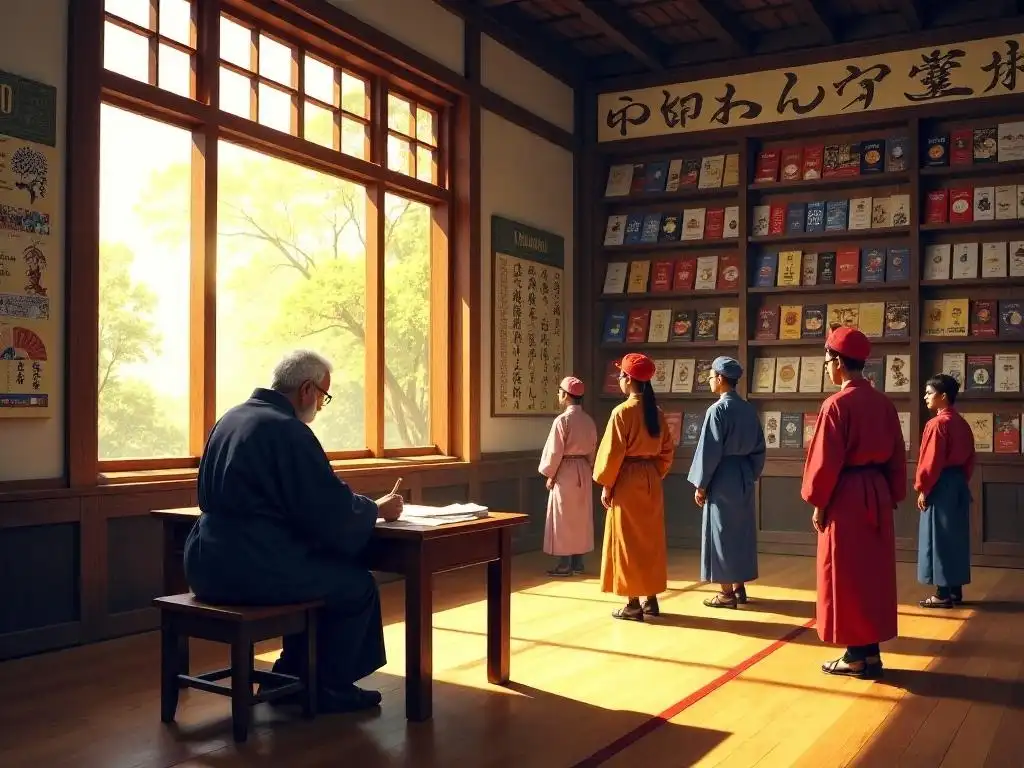
Welcome to Feudal Japan History, where we invite you to embark on an intriguing journey through the rich tapestry of Japan’s feudal era. Here, you will uncover how education played a pivotal role in shaping national identity during the tumultuous times of Japan's unification. Our in-depth articles delve into the intricate connections between learning, culture, and society, revealing insights that will not only fascinate but also expand your understanding of this remarkable period. Are you ready to discover how the foundations of modern Japan were laid through the corridors of education? Let's dive deeper into this captivating narrative together!
Introduction to Education and National Identity in Japan
The unification of Japan during the late 16th and early 17th centuries marked a pivotal transition in the country's socio-political landscape, fundamentally reshaping not only its governance but also its cultural and educational frameworks. As the nation moved towards a more centralized power under the Tokugawa shogunate, education emerged as a crucial instrument in fostering a cohesive national identity among its diverse populace.
This article delves into the intricate relationship between education and national identity during this transformative period, shedding light on how educational practices and philosophies were instrumental in solidifying a unified Japanese identity amid a backdrop of regional diversity and historical fragmentation. By examining various aspects of education in this era, we will uncover the significant contributions it made to the emergence of a national consciousness that would define Japan for centuries to come.
Overview of Japan's Unification Period
The unification of Japan was not an instantaneous event but rather a gradual process that unfolded over several decades, culminating in the establishment of the Tokugawa shogunate in 1603. This period witnessed the end of the Sengoku, or Warring States, era, a time characterized by constant military conflict and political fragmentation. Key figures such as Oda Nobunaga and Toyotomi Hideyoshi played vital roles in this unification process, employing both military prowess and strategic alliances to consolidate power.
In this context, education began to take on a new significance. As the Tokugawa shogunate sought to stabilize and control the newly unified nation, it recognized the necessity of cultivating loyalty and a shared identity among its citizens. This led to the establishment of various educational institutions and curricula designed to promote Confucian values, loyalty to the state, and a common cultural heritage.
Importance of Education in Shaping National Identity
Education served as a powerful tool in the formation of a national identity during Japan's unification. By instilling a sense of shared culture, history, and values, educational initiatives played a critical role in unifying a diverse population. Key aspects of this educational influence included:
- Standardization of Language: The promotion of a common language helped to bridge regional differences and foster communication among the populace.
- Civic Education: Schools emphasized the importance of civic duty and loyalty to the shogunate, reinforcing the idea of a collective national identity.
- Cultural Heritage: Education systems incorporated traditional Japanese arts, literature, and history, helping to cultivate a sense of pride and belonging among the people.
Through these mechanisms, education not only contributed to individual knowledge but also to the collective consciousness that defined Japanese national identity during this pivotal era.
Historical Context of Education in Feudal Japan
To fully understand the role of education in fostering national identity, it is essential to explore the historical context in which it developed during the feudal period.
Educational Systems Before Unification
Prior to the unification of Japan, educational practices varied widely across regions. In many areas, education was informal and often limited to the samurai class. However, there were localized systems of learning that included temple schools (terakoya) and the rise of private academies. These institutions primarily focused on reading, writing, and the study of classical Chinese texts.
Influence of Confucianism on Japanese Education
Confucianism played a significant role in shaping Japanese education during the unification period. Imported from China, Confucian ideals emphasized moral integrity, social harmony, and the importance of education as a means of self-cultivation. The Tokugawa shogunate adopted Confucian principles to legitimize its rule and promote social order. Consequently, Confucian texts became central to educational curricula, influencing not only the content but also the values imparted to students.
Role of Samurai in Education and National Identity
The samurai class, traditionally seen as warriors, also became key figures in the realm of education during the unification of Japan. As educators and administrators, samurai were instrumental in disseminating Confucian ideals and promoting literacy among the populace. Their dual role as both military leaders and educators helped to reinforce a sense of loyalty and duty among the people, further solidifying the emerging national identity. Through their influence in education, the samurai contributed to the establishment of a unified cultural narrative that resonated with the ideals of honor, loyalty, and service to the state.
The role of education in fostering national identity during Japan's unification cannot be understated. It was a dynamic force that intertwined with the political, cultural, and social fabric of the era, shaping a sense of belonging and commitment to the newly unified nation.
The Evolution of Educational Practices During Unification
The unification of Japan in the late 19th century marked a significant turning point in the country's educational landscape. As the political structure shifted from feudal domains to a centralized government, the need for a cohesive national identity became paramount. Education played a crucial role in this process, evolving from localized and often elitist systems to more standardized practices aimed at fostering a unified Japanese identity.
During this period, the emphasis on education was not merely to impart knowledge but to cultivate a sense of belonging and loyalty to the nation. The Meiji Restoration (1868) catalyzed these changes, ushering in reforms that integrated Western educational philosophies while retaining essential Japanese cultural elements. The transformation included a shift from classical Confucian curricula, which focused on moral and philosophical teachings, to a more pragmatic approach that included science, technology, and civic education.
This evolution was critical not only for individual development but also for instilling a collective national consciousness. As Japan sought to compete with Western powers, the education system became a tool for instilling patriotism and preparing citizens to contribute to the nation's modernization and industrialization efforts.
Changes in Curriculum and Teaching Methods
With the advent of the Meiji era, the curriculum underwent significant changes to align with the government's vision for a modernized Japan. Traditional subjects such as Confucian studies were gradually supplanted by new subjects like mathematics, science, and geography, reflecting the demands of a rapidly industrializing society.
Teaching methods also evolved from rote memorization to more interactive and analytical approaches. Educators began to emphasize critical thinking, encouraging students to engage with material rather than passively receive information. This shift included the introduction of foreign languages, especially English, as Japan recognized the importance of international communication in a globalized world.
Moreover, the government implemented a national curriculum to standardize education across regions, ensuring that all children, regardless of their social status, received a similar foundational education. This standardization was crucial for promoting a shared national identity, as children learned about Japanese history, culture, and values in a consistent manner.
Establishment of Formal Educational Institutions
The establishment of formal educational institutions was a cornerstone of Japan's educational reforms during the unification period. The government instituted a network of elementary schools, middle schools, and universities aimed at providing structured education to the populace.
In 1872, the Education System Order was promulgated, establishing compulsory education for children aged six to fourteen. This law was revolutionary, as it marked the first time education was mandated by the state, reflecting a commitment to fostering a literate and informed citizenry.
Many schools were modeled after Western institutions, introducing not only a new educational framework but also a cultural shift. These schools became centers of learning that promoted civic responsibility and national pride. Additionally, the creation of universities like Tokyo Imperial University in 1877 played a critical role in training future leaders who would contribute to Japan's modernization.
Impact of Western Education on Japanese Identity
The influence of Western education on Japanese identity during the unification process cannot be overstated. As Japan opened its doors to the West, it encountered new ideas and practices that significantly shaped its educational landscape.
Western educational models introduced concepts of individualism, scientific inquiry, and democratic values, which were integrated into Japan's traditional ethos. This blending of ideas fostered a unique Japanese identity that embraced modernization while maintaining cultural integrity.
Moreover, Western education facilitated Japan's emergence as a global power. The emphasis on technical skills and scientific knowledge allowed Japan to rapidly industrialize, contributing to a burgeoning national pride. The success of Japanese students in Western institutions further reinforced the belief that Japan could stand shoulder to shoulder with Western powers, fostering a sense of unity and national identity.
Key Figures in Educational Reform
Several key figures played pivotal roles in shaping Japan's educational reforms during the unification period. Their contributions helped to establish a new educational framework that prioritized national identity and civic responsibility.
Contributions of Prominent Educators
Prominent educators such as Fukuzawa Yukichi and Mori Arinori were instrumental in advocating for educational reform. Fukuzawa, a leading intellectual of the Meiji era, emphasized the need for modern education to empower individuals and promote national development. He founded Keio University, which became a model for higher education in Japan, advocating for a curriculum that balanced Western knowledge with Japanese cultural heritage.
Mori Arinori, another influential figure, served as Japan's first Minister of Education. He championed the establishment of a national education system, emphasizing the need for universal access to education. His efforts were crucial in implementing compulsory education and promoting the idea that education was a fundamental right for all citizens.
These educators not only contributed to the development of educational policies but also inspired a generation of students to embrace the ideals of modernization and nationalism.
Government Initiatives to Promote Education
The Japanese government recognized the importance of education in fostering national identity and implemented various initiatives to promote it. One of the most significant efforts was the establishment of the Ministry of Education in 1871, which was tasked with overseeing the development and implementation of educational policies.
Through this ministry, the government introduced a series of reforms aimed at expanding access to education, including the construction of schools in rural areas and the hiring of trained teachers. Additionally, the government promoted educational campaigns that encouraged families to send their children to school, emphasizing the benefits of education for both individual advancement and national prosperity.
These initiatives were crucial in creating an educated populace that could contribute to Japan's modernization efforts and foster a sense of national unity.
Case Studies of Local Educational Movements
Local educational movements during Japan's unification period also played a significant role in shaping national identity. For instance, the "Kyoiku ni Kansuru Shisaku" (Policies on Education) movement sought to promote grassroots educational initiatives that aligned with national goals.
In many regions, community leaders established schools that focused on local culture and history while incorporating the national curriculum. These schools served as vital centers for fostering a sense of community and shared identity among students.
Additionally, the "Shokugyo Gakko" (Vocational Schools) movement aimed to provide practical education tailored to the needs of local economies. By equipping students with vocational skills, these schools contributed to the development of a workforce that was both skilled and committed to the nation's progress.
These local movements underscored the importance of education in building a cohesive national identity, demonstrating that while the central government played a crucial role, grassroots efforts were equally significant in shaping the educational landscape of modern Japan.
The Interconnection Between Education and National Identity
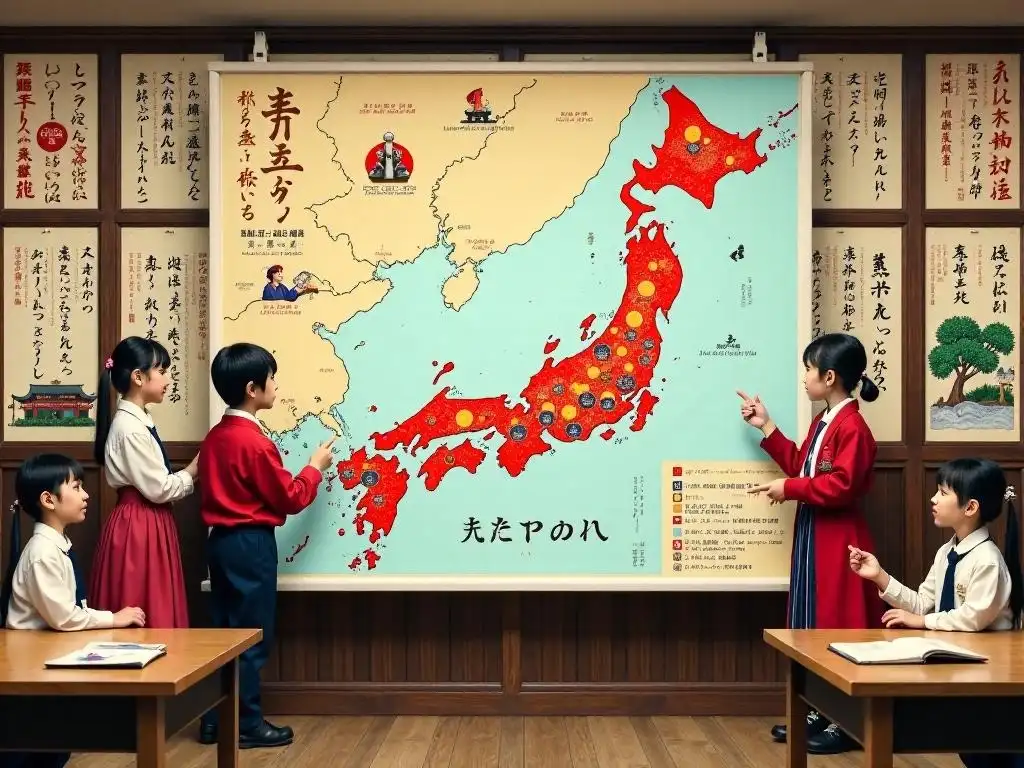
Education played a pivotal role in shaping national identity during Japan's unification process, particularly from the late 19th to early 20th centuries. As Japan transitioned from a feudal society to a more centralized nation-state, the need for a cohesive national identity became increasingly critical. Education served as a tool for promoting shared values, cultural heritage, and a collective national consciousness among the diverse regions and peoples of Japan.
The curriculum in schools was designed to instill a sense of pride in Japanese history, culture, and language, thereby creating a unified identity that transcended local affiliations. The emphasis on patriotic education not only fostered loyalty to the emperor but also encouraged students to view themselves as part of a greater national community. This interconnection between education and national identity laid the groundwork for Japan's emergence as a modern power on the global stage.
How Education Fostered a Sense of Unity
During the unification of Japan, education systems were reformed to promote national unity. The establishment of a standardized curriculum across schools helped eliminate regional disparities and fostered a common understanding of Japan's history and cultural values. The introduction of subjects focusing on the nation’s achievements and the Emperor's role in promoting peace and prosperity played a significant part in shaping students' perceptions of their national identity.
Moreover, educational institutions became spaces where students from various backgrounds interacted, allowing them to share experiences and perspectives. This interaction was essential in breaking down local biases and promoting a sense of belonging to a unified nation. The focus on moral education, often rooted in Confucian values, emphasized loyalty, duty, and respect for authority, further reinforcing the concept of a collective national identity.
The Role of Language and Literature in National Identity
Language and literature were crucial components in the development of national identity during Japan's unification. The promotion of the Japanese language in schools helped standardize communication and foster a sense of belonging among the populace. Textbooks were carefully crafted to highlight historical narratives that aligned with nationalist sentiments, introducing students to significant events and figures that defined the nation.
Literature served as a powerful medium for expressing and shaping national identity. Authors and poets began to explore themes of patriotism and cultural pride in their works, resonating with the collective emotions of the Japanese people. The writings of figures such as Natsume Sōseki and Mori Ōgai not only reflected the evolving national consciousness but also inspired readers to embrace their identity as Japanese citizens. This literary renaissance played a significant role in unifying the nation around shared cultural narratives.
Cultural Education and Its Impact on Collective Memory
Cultural education was instrumental in fostering a collective memory that reinforced national identity during Japan's unification. Traditional arts, crafts, and rituals were integrated into the educational curriculum, emphasizing the importance of cultural heritage. By educating the youth about Japan's rich history and diverse cultural practices, the government aimed to cultivate a sense of pride and belonging.
Events such as national festivals and local traditions were also promoted in schools, encouraging students to participate and appreciate their cultural roots. This approach not only helped preserve traditional practices but also connected students to a broader national narrative. As a result, the collective memory of a shared past became a cornerstone of national identity, uniting people across various regions and backgrounds.
Challenges Faced in Promoting a Unified National Identity
Despite the significant strides made in fostering national identity through education, several challenges arose during Japan's unification. These challenges often stemmed from regional disparities, cultural resistance, and the struggle to balance traditional values with the demands of modern education.
Regional Disparities in Access to Education
One of the key challenges in promoting a unified national identity through education was the regional disparities in access to educational resources. While urban areas often had well-funded schools with qualified teachers, rural regions faced significant obstacles, including a lack of infrastructure and educational materials. This inequality meant that not all students received the same quality of education, which hampered efforts to create a cohesive national identity.
Additionally, the differences in local dialects and customs further complicated the educational landscape. Students from various regions often struggled to connect with a standardized national curriculum, leading to feelings of alienation and disconnection from the broader national narrative. This disparity highlighted the need for targeted educational reforms to ensure that all Japanese citizens could participate in the nation-building process.
Resistance to Educational Reforms
Resistance to educational reforms also posed a significant challenge to fostering a unified national identity. Many local leaders and communities were skeptical of the central government's initiatives, fearing that these reforms would undermine regional traditions and values. This resistance was particularly pronounced in areas where local customs and dialects were deeply embedded in the community's identity.
Furthermore, some segments of society viewed the push for a standardized national education as an imposition of state ideology. This tension between local autonomy and national integration created friction that hindered the implementation of educational policies aimed at fostering a unified national identity. Overcoming this resistance required careful negotiation and the inclusion of local perspectives in the educational reform process.
Balancing Traditional Values with Modern Education
As Japan sought to modernize its education system, balancing traditional values with the demands of contemporary education presented another challenge. The rapid changes brought about by modernization often clashed with long-standing cultural practices, leading to concerns about the erosion of Japan's unique identity.
Educators faced the daunting task of incorporating modern subjects and methodologies while maintaining respect for traditional teachings. This balancing act was essential to ensure that students received a well-rounded education that honored their heritage while preparing them for a modernizing world. The struggle to find this equilibrium was a crucial aspect of Japan's educational reforms and played a significant role in shaping the nation's identity during its unification.
Conclusion
The role of education in fostering national identity during Japan's unification cannot be overstated. As the country transitioned from a fragmented collection of feudal states into a cohesive nation-state, education became a pivotal tool for instilling a sense of shared identity and purpose among its citizens. Through the establishment of a centralized education system, the Meiji Restoration laid the groundwork for a unified Japanese identity that transcended local feudal allegiances. This transformation was not merely about imparting knowledge; it involved cultivating a collective ethos that emphasized loyalty, patriotism, and a commitment to the nation's future.
Summary of Education's Role in Shaping National Identity
Education served multiple functions in shaping national identity during this critical period in Japan’s history. Firstly, it standardized the curriculum across the nation, ensuring that all students, regardless of their region, learned the same history, language, and values. This uniformity helped to dissolve regional differences and foster a sense of belonging to a larger national community.
Secondly, educational institutions became sites for the promotion of nationalistic ideologies. The incorporation of subjects such as ethics and civic duty into the curriculum aimed to instill a sense of pride in Japanese culture and history. The celebration of national heroes and historical events within the educational framework further reinforced the idea of a unified identity.
Finally, education acted as a means of social mobility, allowing individuals from various backgrounds to participate in the nation-building process. By providing access to knowledge and skills, the educational reforms enabled a broader segment of the population to contribute to the economic and political development of the country, thereby reinforcing their connection to the national identity.
Implications for Modern Japan and Its Education System
The historical role of education in shaping national identity during the unification of Japan has lasting implications for contemporary Japanese society. Today, Japan's education system continues to reflect elements of these early reforms, emphasizing a national curriculum that promotes not only academic excellence but also cultural heritage and citizenship.
However, this focus on a unified national identity can also present challenges. In an increasingly globalized world, the tension between fostering a strong national identity and embracing diversity is a pertinent issue. Modern Japanese education must navigate the complexities of national pride while also accommodating the multicultural realities of contemporary society.
Moreover, the historical context of education as a state tool for promoting nationalism raises questions about the balance of historical narratives taught in schools. The portrayal of Japan's past, including its imperialistic actions, is a subject of debate and can significantly influence the formation of national identity in future generations.
Future Directions for Research on Education and National Identity in Japan
Future research on education and national identity in Japan should explore several key areas to deepen our understanding of this complex relationship. First, scholars should investigate the evolving curriculum trends and how they reflect contemporary societal values and issues. Analyzing changes in educational policies can provide insights into how Japan reconciles its historical narratives with present-day realities.
Additionally, comparative studies with other nations that have undergone similar processes of unification and national identity formation could yield valuable lessons. Understanding diverse approaches to education and identity can help inform Japan's strategies in addressing its unique challenges.
Finally, exploring the role of technology and digital learning in shaping national identity offers an exciting avenue for future research. As educational platforms increasingly incorporate global perspectives, investigating how these changes impact students' understanding of their national identity will be crucial in adapting Japan's education system to meet the needs of a dynamic and interconnected world.
Education remains a fundamental pillar not only in shaping national identity but also in navigating the complexities of modern society. The ongoing study of this relationship will ensure that Japan can continue to foster a cohesive identity while embracing the diversity of its people.
- Introduction to Education and National Identity in Japan
- Overview of Japan's Unification Period
- Importance of Education in Shaping National Identity
- Historical Context of Education in Feudal Japan
- The Evolution of Educational Practices During Unification
- Key Figures in Educational Reform
- The Interconnection Between Education and National Identity
- Challenges Faced in Promoting a Unified National Identity
- Conclusion
- What was the primary role of education during Japan's unification?
- How did the feudal system impact educational practices in Japan?
- What subjects were emphasized in education during Japan's unification?
- How did education contribute to the rise of nationalism in Japan?
- What legacy did the educational reforms of the unification period leave?
Frequently Asked Questions
What was the primary role of education during Japan's unification?
Education played a crucial role in promoting a cohesive national identity by instilling shared values and historical narratives among citizens.
How did the feudal system impact educational practices in Japan?
The feudal system created a hierarchical structure that influenced access to education, with samurai and elite classes often receiving formal training, while lower classes had limited opportunities.
What subjects were emphasized in education during Japan's unification?
Curriculums focused on Confucian values, literature, and military strategy, which helped in shaping a common cultural foundation and reinforcing loyalty to the state.
How did education contribute to the rise of nationalism in Japan?
Through a standardized education system, citizens were educated about their heritage and cultural identity, fostering a sense of unity and purpose that was essential for nationalistic sentiments.
What legacy did the educational reforms of the unification period leave?
The reforms established a framework for modern education in Japan, which continued to evolve and solidify the concept of national identity well into the contemporary era.
Final Reflection: The Transformative Power of Education in Shaping National Identity
Education has always been a cornerstone in the development of national identity, particularly in the context of Japan's unification. As we explore the historical significance of educational reforms during this pivotal period, it becomes clear that the role of education extends far beyond mere knowledge acquisition; it is a powerful tool for instilling a sense of belonging and shared purpose among citizens. The lessons learned from Japan's past resonate strongly today, reminding us that education can either unite or divide, depending on how it is wielded.
The influence of education on national identity is evident not only in historical contexts but also in contemporary society. As we witness the ongoing evolution of educational systems worldwide, it is crucial to recognize how these systems can shape cultural narratives and collective memories. The words of philosopher John Dewey resonate here: Education is not preparation for life; education is life itself.
This perspective underscores the idea that education is a living, breathing entity that continuously molds our identities and societal values, urging us to reflect on how we can harness its potential for unity and understanding.
As we look to the future, I invite you to consider your own role in this ongoing narrative. How can you contribute to fostering a sense of national identity through education in your community? Whether through mentorship, advocacy for inclusive curricula, or simply engaging in discussions about cultural heritage, each of us has the power to influence the narrative. Let us embrace the lessons from Japan's unification and strive to create educational environments that celebrate diversity, promote empathy, and cultivate a shared sense of identity that transcends borders.
Embrace Your Heritage – Take Action Today!
Thank you for exploring the intricate relationship between education and national identity during Japan's unification. You have uncovered valuable insights about how knowledge shapes culture and fosters unity. Now, it’s time to transform that understanding into meaningful action!
Here are a few impactful steps you can take:
- Engage with Local History: Visit a museum or participate in a workshop that focuses on Japanese history. Discover firsthand how education has played a vital role in the formation of national identity.
- Share Your Insights: Discuss the influence of education in nurturing national identity with friends or on social media. Help raise awareness about this essential aspect of history.
- Explore Educational Resources: Look for books, documentaries, or online courses that provide a deeper understanding of Japan’s unification and its historical significance.
How do you envision modern education continuing to shape national identities in today’s diverse societies?