🏯 Family Structures in Feudal Japan
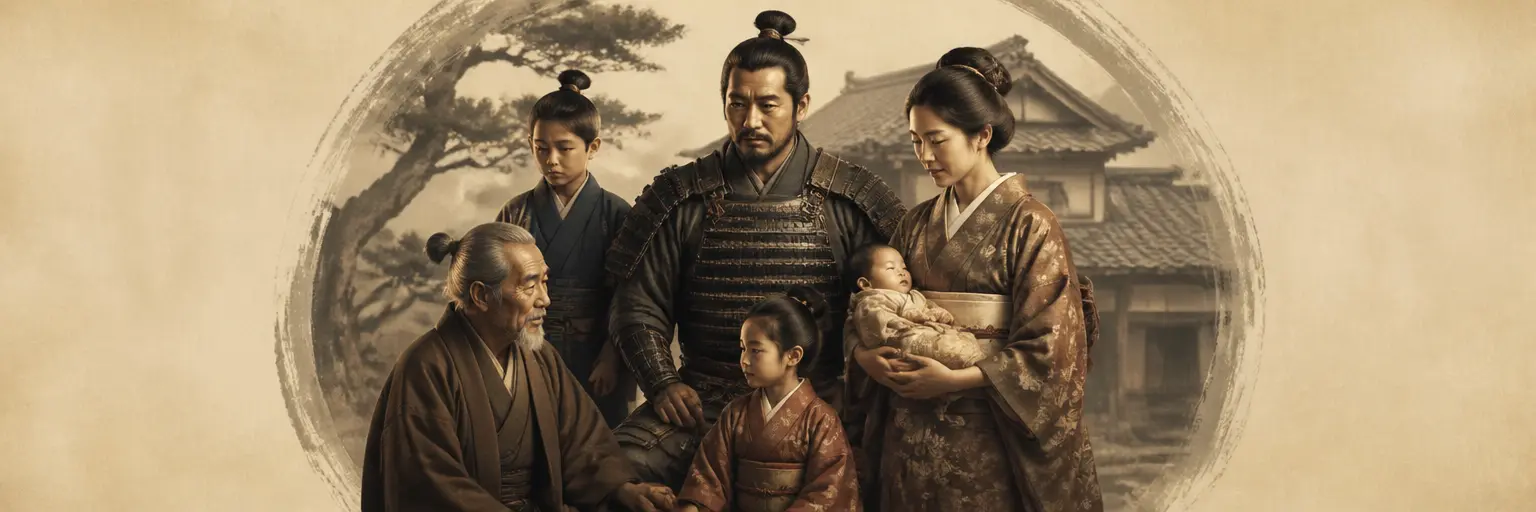
Explore how family structures in feudal Japan shaped daily life, social identity, inheritance, marriage, gender roles, and political relationships. This subcategory examines the organization of households during Japan’s feudal era, from samurai clans and aristocratic lineages to peasant families, merchant households, and religious communities. Discover how the ie system, ancestor worship, adoption, arranged marriage, and hereditary status influenced individuals and communities across the Kamakura, Muromachi, Sengoku, and Edo periods.
👪 The Ie System and Household Organization
Learn how the ie, or traditional Japanese household system, functioned as the central unit of social, economic, and political life. Articles explore the importance of family continuity, household authority, seniority, domestic responsibilities, and the role of the head of the household in managing property, labor, and family decisions.
Readers can expect detailed explanations of how households extended beyond parents and children to include servants, adopted heirs, relatives, and dependents. These family histories reveal why maintaining the household name and lineage was often considered more important than individual identity in feudal Japanese society.
⚔️ Samurai Families and Warrior Lineages
Discover how samurai families organized themselves through clan loyalty, hereditary service, military obligations, and political alliances. This section examines warrior households, castle-town communities, vassal relationships, and the ways in which family connections strengthened the power of daimyo and regional lords.
Articles also explore the education of samurai children, inheritance of swords and estates, household succession, and the responsibilities of warrior women. Samurai family life was shaped by both discipline and strategy, with marriage and adoption frequently used to preserve alliances, secure heirs, and protect clan interests.
💍 Marriage, Alliances, and Family Politics
Understand how marriage operated as a social and political institution in feudal Japan. Rather than being based solely on personal affection, many marriages connected samurai houses, aristocratic families, temples, villages, and merchant networks. These unions could secure land, strengthen alliances, settle disputes, or improve social standing.
This section explains arranged marriage, betrothal customs, dowries, divorce, concubinage, and the roles of matchmakers and family elders. Readers will gain insight into how marriage alliances influenced Japanese history and how women often served as important links between powerful households.
👩 Women, Mothers, and Daughters in the Household
Explore the diverse roles of women within feudal Japanese families, including mothers, wives, daughters, widows, household managers, and political intermediaries. Women frequently supervised domestic economies, managed servants, arranged marriages, preserved family relationships, and represented their households during periods of conflict or absence.
Although women operated within a strongly patriarchal society, their experiences differed according to class, region, period, and family status. Articles address women in samurai families, peasant households, aristocratic residences, and merchant homes while examining inheritance, literacy, religious practice, and the limits and opportunities available to women.
👶 Children, Education, and Inheritance
Learn how children were raised and prepared for their future roles within feudal Japanese society. Sons and daughters received different expectations based on family status, occupation, and social class, while education could include martial training, domestic skills, religious instruction, literacy, etiquette, or commercial knowledge.
Inheritance was not always based on biological birth. Adoption played a major role in preserving family lines, especially when a household lacked a suitable male heir. This section explains adoption in feudal Japan, succession customs, inheritance disputes, and the importance of training children to continue the family’s social and economic position.
🌾 Peasant, Merchant, and Urban Households
Discover how family structures differed among farming villages, merchant houses, artisans, and urban residents. In rural communities, households often worked collectively to cultivate land, pay taxes, maintain irrigation systems, and meet labor obligations. Family survival depended on cooperation among multiple generations.
Merchant families developed their own traditions of apprenticeship, business succession, adoption, and arranged marriage. Readers will learn how merchant households in Edo Japan protected commercial knowledge, expanded trading networks, and preserved business names through carefully planned family strategies.
⛩️ Religion, Ancestors, and Family Identity
Examine the role of Buddhism, Shinto, and ancestor worship in shaping family identity. Household religious practices included memorial services, funerary rites, temple registration, ancestral tablets, and seasonal observances. These traditions connected living family members with deceased relatives and reinforced continuity across generations.
Articles explain how temples and shrines interacted with households, how religious affiliation could affect community membership, and why ancestor veneration in Japan remained central to family life. Religious customs also influenced naming, burial, inheritance, and the remembrance of family founders.
📜 Family Records, Genealogy, and Historical Sources
Learn how historians reconstruct family life through genealogies, household registers, marriage documents, temple records, wills, diaries, legal texts, village archives, and samurai family histories. These sources provide valuable evidence about names, occupations, social status, property, relationships, and household succession.
This section also considers the limitations of historical records. Official documents often emphasize male heads of households and elite families, while the lives of women, children, servants, and poorer communities may be less visible. By comparing different sources, readers can develop a more accurate understanding of family history in feudal Japan.
❓ Frequently Asked Questions About Family Structures
What was the ie system in feudal Japan?
The ie system was a household-based structure that emphasized family continuity, authority, property, and social identity. The household could include relatives, adopted heirs, servants, and dependents, and its survival was often considered more important than the interests of a single individual.
Did samurai families always pass inheritance to biological sons?
No. Samurai families frequently used adoption to secure a capable heir, preserve a family name, or strengthen political alliances. An adopted son could inherit property, titles, military responsibilities, and leadership of the household.
What role did women have in feudal Japanese families?
Women managed households, raised children, arranged marriages, supervised servants, maintained family correspondence, and sometimes administered estates. Their authority varied according to social class and historical period, but women were essential to the economic and political survival of many households.
Were marriages in feudal Japan arranged?
Many marriages were arranged or negotiated by family members, matchmakers, guardians, or political allies. Marriage could establish social connections, resolve disputes, transfer property, or unite samurai, aristocratic, peasant, and merchant families.
How did religion influence family life in feudal Japan?
Buddhist and Shinto practices shaped funerals, ancestor worship, household rituals, temple affiliations, and seasonal observances. Religious traditions helped preserve family memory and connected households with their ancestors, local communities, temples, and shrines.