
The Influence of Chinese Maritime Techniques on Japanese Warfare

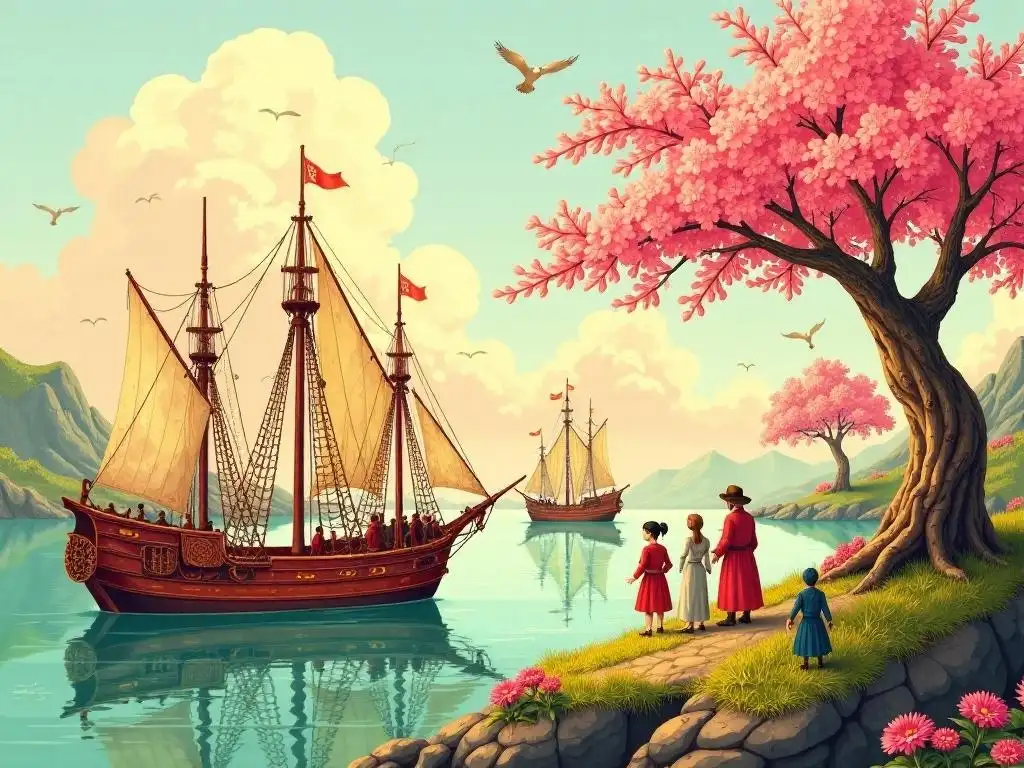
Welcome to Feudal Japan History! Dive into the captivating world of Japan's feudal era, where rich traditions and powerful strategies shaped a nation. In our featured article, “The Influence of Chinese Maritime Techniques on Japanese Warfare,” we unravel the intriguing connections between Chinese innovations and their profound impact on Japan's military evolution. Prepare to journey through time as we explore how these maritime techniques not only transformed warfare but also left an indelible mark on Japan's cultural landscape. Are you ready to uncover the secrets that lie beneath the waves? Continue reading to embark on this fascinating exploration!
In the realm of military history, the interplay between cultures often yields significant advancements in warfare strategies and techniques. One of the most notable influences on Japanese warfare during the feudal era was the introduction and adaptation of Chinese maritime techniques. As Japan faced the need to expand its naval capabilities, the lessons learned from China’s rich maritime heritage played a crucial role in shaping Japanese naval practices. This article delves into the various Chinese maritime techniques that influenced Japanese warfare, exploring their origins, historical contexts, and the transformative impact they had on Japan’s military strategies.
Introduction to Chinese Maritime Techniques
The maritime innovations developed in China had profound implications not only for trade but also for military operations. From shipbuilding techniques to navigational methods, these advancements were instrumental in establishing China as a formidable maritime power. Understanding these techniques provides insight into how they were integrated into Japanese warfare, leading to enhanced naval capabilities.
Overview of Chinese Maritime Innovations
Chinese maritime techniques encompassed a range of innovations that revolutionized naval travel and warfare. Key developments included:
- Advanced Shipbuilding: The Chinese were pioneers in the construction of large, seafaring vessels, such as the treasure ships of the Ming Dynasty, which were capable of carrying substantial cargo and troops.
- Navigational Instruments: The use of compasses and other navigational aids allowed for more precise maritime travel, essential for both trade and military expeditions.
- Military Tactics: The Chinese developed sophisticated naval strategies that included formations and the use of fire ships, which would later influence Japanese tactics.
Historical Context: Maritime Trade and Warfare in China
China’s maritime history dates back thousands of years, with significant trade routes established long before Japan’s feudal period. Notably, during the Tang (618-907) and Song (960-1279) dynasties, maritime trade flourished, leading to increased interactions with neighboring regions, including Japan. These interactions not only facilitated trade but also exposed Japan to advanced military techniques utilized by the Chinese navy.
The Spread of Chinese Maritime Techniques to Japan
The exchange of maritime knowledge between China and Japan was gradual, yet impactful. As Japan sought to fortify its defenses and expand its territorial waters, it looked to China’s established maritime practices for guidance.
Early Contacts Between China and Japan
The early contacts between China and Japan can be traced back to the 5th century, with significant exchanges occurring during the Asuka and Nara periods. These interactions were marked by:
- Cultural Exchange: The introduction of Confucianism and Buddhism, which influenced not only societal structures but also military philosophy.
- Trade Missions: Diplomatic missions and trade expeditions brought Japanese emissaries into contact with Chinese naval techniques, leading to the adoption of various methodologies.
Key Maritime Techniques Adopted by Japanese Warfare
As a result of these early contacts, several Chinese maritime techniques were integrated into Japanese warfare:
- Ship Design: The adaptation of the Chinese junk design allowed for better maneuverability and cargo capacity in Japanese vessels.
- Naval Tactics: The implementation of coordinated naval formations drawn from Chinese military strategies enhanced the effectiveness of Japanese fleets.
- Use of Gunpowder: The introduction of gunpowder, initially developed in China, transformed naval engagements, leading to more powerful and destructive maritime confrontations.
Through these adaptations, Japan was able to establish itself as a formidable naval power during the feudal era, significantly influenced by the maritime techniques developed in China.
The introduction of Chinese maritime techniques profoundly influenced Japanese naval warfare, particularly from the 7th century onward. The Japanese adopted various Chinese innovations in shipbuilding, navigation, and military tactics, which enhanced their combat effectiveness on the water. This exchange was not merely one-sided; it fostered a unique blend of practices that evolved into distinct Japanese maritime traditions.
As Japan sought to expand its influence and defend its territory, the incorporation of Chinese techniques played a critical role in shaping its naval strategies. The influence of these methods can be seen in the types of vessels built, the training of sailors, and the overall structure of naval warfare in Japan. Chinese advancements allowed for greater mobility, improved fleet organization, and the ability to conduct more sophisticated maritime operations.
Transformation of Japanese Naval Capabilities
Chinese maritime techniques ushered in a transformative era for Japanese naval capabilities. Prior to this influence, Japanese vessels were relatively simple and limited in function. The Chinese introduced larger, more robust ships capable of carrying heavier loads and more troops. Notable innovations included the development of the "junke," a ship design characterized by its flat bottom and high sides, which provided stability in rough seas and allowed for greater cargo capacity.
The adaptation of these designs enabled Japan to enhance its naval logistics, facilitating long-distance trade and military expeditions. Furthermore, the incorporation of advanced rigging systems and sails improved speed and maneuverability, making Japanese naval forces more effective against adversaries. The transformation was not just in ship design; it also extended to naval tactics, where coordinated fleet movements and formations became integral to Japanese naval engagements.
Case Studies of Key Naval Conflicts
To illustrate the impact of Chinese maritime techniques on Japanese warfare, several key naval conflicts stand out:
- The Battle of Dan-no-ura (1185): This pivotal conflict during the Genpei War showcased the effectiveness of Japanese naval tactics influenced by Chinese strategies. The use of coordinated attacks and the deployment of larger ships played a crucial role in the Minamoto clan's victory over the Taira.
- The Mongol Invasions (1274 and 1281): During these invasions, Japan faced a formidable naval threat. The Japanese navy utilized tactics gleaned from Chinese maritime warfare, such as the use of fire ships and strategic positioning to counteract the superior numbers of the Mongolian fleet. The eventual success in repelling these invasions was partly due to Japan's improved naval capabilities.
- The Battle of Hakata Bay (1281): This battle further exemplified the influence of Chinese naval techniques. The Japanese forces effectively employed their knowledge of maritime warfare to exploit the Mongol fleet's weaknesses, leading to a decisive victory that solidified Japan's naval prowess.
Cultural Exchange and Knowledge Transfer

The cultural exchange between China and Japan significantly impacted the development of naval warfare. This relationship facilitated the transfer of not only maritime techniques but also broader military knowledge. The influx of Chinese scholars and texts into Japan enriched the understanding of naval strategies, tactics, and technologies, leading to a more sophisticated maritime culture.
Influence on Japanese Shipbuilding Practices
The influence of Chinese shipbuilding practices on Japan is evident in the evolution of vessel design and construction techniques. Japanese shipbuilders began to incorporate specific elements from Chinese designs, including the use of watertight compartments and more durable materials. This led to the creation of larger and more resilient vessels, suitable for both trade and military operations.
Moreover, the adoption of Chinese craftsmanship techniques improved the overall quality of ship construction in Japan. As a result, naval capabilities expanded, allowing for better resource management and more effective deployment of forces during conflicts. This shift not only enhanced maritime warfare but also contributed to the growth of commerce and trade across Japan's coastal regions.
The Role of Chinese Texts and Scholars in Japanese Naval Development
Chinese texts played a pivotal role in shaping Japanese naval development. Key military treatises, such as the "Six Secret Teachings" and "The Art of War," provided invaluable insights into strategy, tactics, and the organization of naval forces. Japanese scholars, eager to learn from their Chinese counterparts, translated and studied these texts, integrating their principles into Japanese military doctrine.
Additionally, Chinese scholars who traveled to Japan brought with them a wealth of knowledge regarding naval warfare. Their expertise helped Japan refine its maritime strategies and techniques, fostering a culture of innovation that propelled Japanese naval forces to new heights. This intellectual exchange not only strengthened Japan's military capabilities but also established a lasting legacy of maritime scholarship that continued to influence naval warfare in subsequent centuries.
The naval warfare of feudal Japan was greatly influenced by various Chinese maritime techniques, particularly during periods of trade and conflict. Comparing the two systems reveals both shared practices and distinct adaptations that reflect the unique cultural and environmental contexts of each nation.
Similarities in Techniques and Strategies
Both Chinese and Japanese naval warfare incorporated similar techniques that emphasized agility and speed. One of the most significant similarities was the use of smaller, maneuverable ships, which allowed for quick naval engagements and the ability to navigate coastal waters effectively. Both cultures also employed the art of boarding enemy vessels, often leading to hand-to-hand combat.
Additionally, the significance of naval logistics and supply chains was recognized by both Chinese and Japanese commanders. The practice of using signaling methods to coordinate fleet movements and the role of intelligence in naval strategy were crucial aspects in both traditions. Furthermore, the deployment of archers and crossbowmen on ships became a common tactic, illustrating how both maritime forces valued ranged combat.
Differences in Implementation and Adaptation
While there were similarities, the implementation of these techniques varied significantly between the two nations. Chinese naval warfare was characterized by a more centralized command structure, often dictated by the imperial court. This allowed for large-scale operations but also meant that naval forces could be vulnerable to political shifts. In contrast, Japanese naval operations were typically decentralized, with local daimyos commanding their fleets, allowing for more flexible and rapid responses to threats.
Another notable difference lay in ship design. Chinese junks were engineered for both trade and warfare, featuring a flat-bottomed hull that allowed for stability in shallow waters. Japanese vessels, such as the atakebune, were designed primarily for combat, prioritizing speed and ramming capabilities. This divergence in ship design reflected the different strategic objectives and environmental conditions faced by each nation.
Conclusion
The influence of Chinese maritime techniques on Japanese warfare is a testament to the interconnectedness of historical cultures. While the Japanese adapted and modified these techniques to suit their own warfare needs, the foundational elements of Chinese naval practices are evident in their strategies and tactics.
The Lasting Legacy of Chinese Maritime Techniques in Japanese Warfare
The legacy of Chinese maritime techniques continues to resonate in Japanese naval history. The principles of maneuverability, quick strike tactics, and the importance of logistics have influenced Japan's naval strategies throughout its history, even extending into modern times. The synthesis of these techniques contributed to the development of a distinct Japanese naval identity that combined the strengths of both cultures.
Future Research Directions on Maritime Influences in Feudal Japan
Further research into the maritime exchanges between China and Japan could illuminate additional aspects of how these influences shaped naval warfare. Areas of inquiry may include:
- Cultural Exchanges: Investigating the impact of cultural exchanges on shipbuilding techniques and naval tactics.
- Technology Transfer: Analyzing the specific technologies adopted from China and their adaptation in Japanese contexts.
- Comparative Maritime Strategies: Exploring how the maritime strategies evolved in response to geopolitical changes in East Asia.
By delving deeper into these topics, historians can gain a more nuanced understanding of the complexities surrounding maritime warfare in feudal Japan and its roots in Chinese maritime practices.
- Introduction to Chinese Maritime Techniques
- The Spread of Chinese Maritime Techniques to Japan
- Impact of Chinese Maritime Techniques on Japanese Naval Warfare
- Cultural Exchange and Knowledge Transfer
- Comparative Analysis of Chinese and Japanese Naval Warfare
- Conclusion
- What were the Chinese maritime techniques that influenced Japanese warfare?
- How did Chinese influence shape Japanese military strategies during feudal times?
- What role did trade play in the exchange of maritime techniques?
- Were there any specific battles where Chinese maritime techniques were pivotal?
- How did cultural exchanges contribute to the adaptation of these techniques?
Frequently Asked Questions
What were the Chinese maritime techniques that influenced Japanese warfare?
Chinese maritime techniques included advanced shipbuilding, navigation skills, and military tactics that were adopted by the Japanese to enhance their naval capabilities.
How did Chinese influence shape Japanese military strategies during feudal times?
The influence of Chinese strategies allowed Japanese forces to improve their naval warfare tactics, leading to more effective maritime operations and expanded territorial control.
What role did trade play in the exchange of maritime techniques?
Trade between China and Japan facilitated the transfer of knowledge and technology, allowing Japan to adopt superior maritime practices that proved essential in warfare.
Were there any specific battles where Chinese maritime techniques were pivotal?
Yes, during key conflicts such as the Genpei War, the adoption of Chinese maritime techniques allowed Japanese forces to execute successful naval operations against their enemies.
How did cultural exchanges contribute to the adaptation of these techniques?
Cultural exchanges led to a blend of Chinese and Japanese practices, fostering innovations in ship design and naval tactics that were crucial for Japan's military evolution during the feudal era.
Final Reflection: The Enduring Legacy of Chinese Maritime Techniques in Japanese Warfare
The intricate relationship between Chinese maritime techniques and Japanese warfare is not just a historical footnote; it is a testament to the profound impact that cultural exchange can have on military strategy and national identity. Today, as nations navigate the complexities of global trade and maritime security, understanding this historical interplay is crucial. The lessons learned from the past remind us that innovation often arises from collaboration and adaptation, shaping the very fabric of societies.
The influence of Chinese maritime techniques on Japanese warfare has left an indelible mark on both cultures, fostering a legacy that continues to resonate in contemporary military practices and strategies. The synthesis of these techniques not only transformed naval warfare in Japan but also contributed to the broader narrative of regional power dynamics. As historian John W. Dower aptly stated, The past is not a dead weight; it is a living force that shapes our present and future.
This ongoing influence underscores the importance of recognizing and appreciating the interconnectedness of cultures throughout history.
As we reflect on the significance of these maritime techniques, I invite you to consider how the principles of adaptation and collaboration can be applied in your own life. Embrace the lessons of history as a guide for navigating the complexities of modern challenges.
Whether in personal endeavors or professional pursuits, let the spirit of innovation and cultural exchange inspire you to forge new paths and build bridges across differences. The legacy of Chinese maritime techniques in Japanese warfare is not just a story of the past; it is a call to action for all of us to learn, adapt, and grow together in an ever-evolving world.
Unveil the Secrets of Maritime Warfare!
Thank you for exploring the fascinating influence of Chinese maritime techniques on Japanese warfare! Your interest in this rich historical narrative highlights the interconnectedness of cultures and strategies. Now, let's translate that knowledge into action and encourage deeper exploration.
Here's how you can engage further:
- Dive Deeper: Investigate a specific maritime battle that was shaped by these techniques and share your insights with fellow history enthusiasts.
- Join the Discussion: Engage with our community by leaving a comment below about what intrigued you the most from this article.
- Spread the Knowledge: Share this article with friends or on social media to introduce them to the captivating history of maritime strategies!
What aspects of these maritime influences do you believe had the most significant impact on the evolution of Japanese warfare tactics? Let’s discuss it in the comments!