Naval Warfare and the Unification of Japan: A Historical Perspective
⚓ Naval warfare in feudal Japan played a crucial role in unifying the nation, shaping political alliances and cultural dynamics. This historical…
Read article
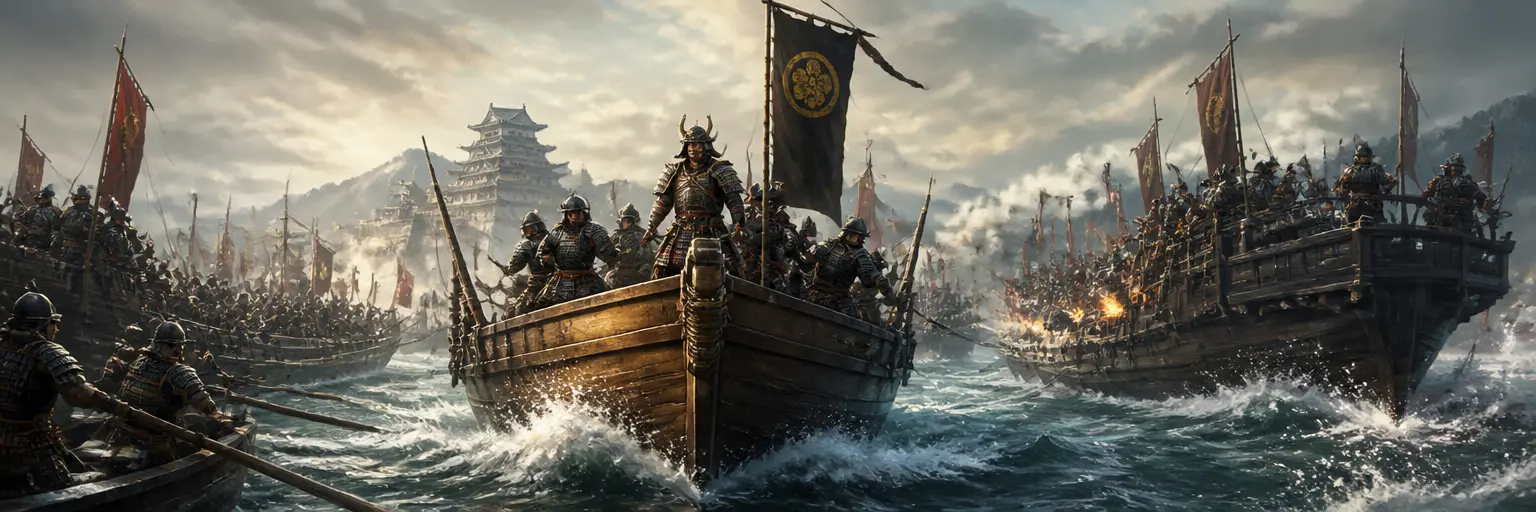
Explore Naval Warfare in Feudal Japan ⚓—a fascinating look at maritime strategy, samurai fleets, coastal defenses, naval battles, and the vital role of the sea in Japan’s military history. Discover how clans used ships, waterways, and tactical innovation to protect territory, support campaigns, and shape power across the Japanese archipelago.
⚓ Naval warfare in feudal Japan played a crucial role in unifying the nation, shaping political alliances and cultural dynamics. This historical…
Read article
🌊 Religion in Japanese naval history played a pivotal role in shaping maritime culture, influencing the motivations of sailors and the strategies…
Read article
🌊 Discover the intricate Feudal Japan naval battle strategies that defined maritime warfare during an era of political turmoil. This article delves…
Read article
🌊 The decline of naval warfare in Japan marked a pivotal shift in feudal dynamics, as emerging technologies and strategies transformed maritime…
Read article
The Battle of Dannoura significance lies in its pivotal role in shaping Japan's feudal naval warfare, marking a decisive conflict that influenced…
Read article
🌊 Delve into the intriguing world of Japan's feudal era naval forces, uncovering the lesser-known fleets that played vital roles in shaping…
Read article
🌏 Geography's impact on feudal Japan shaped naval conflicts significantly, influencing battle strategies and trade routes. The archipelago's unique landscape created both…
Read article
🌟 The Samurai Code emphasizes honor and ethics in battles, shaping the conduct of warriors during Japan's feudal era. This article delves…
Read article
🌊 In Japan's feudal era, female naval leaders in Japan played pivotal roles, often overshadowed by their male counterparts. This article unveils…
Read article
🌊 The integration of Chinese maritime techniques in Japanese warfare revolutionized naval strategies during the feudal era, enhancing battle tactics and trade…
Read article
🚢 Delve into the captivating journey of Japanese war vessels history, tracing the evolution of shipbuilding techniques during Japan's feudal era. This…
Read article
⚓ Dive into the thrilling world of Japan's feudal naval battles, where legendary clans clashed on the seas. Explore the strategies, cultural…
Read articleExplore the history of Naval Warfare in feudal Japan, from coastal defense and pirate fleets to maritime trade, river crossings, and the famous Mongol invasions. This subcategory examines how samurai clans, regional warlords, merchants, and naval specialists used the seas and waterways of Japan during the Kamakura, Muromachi, Sengoku, and early Edo periods. Discover the ships, weapons, tactics, commanders, and strategic decisions that shaped Japanese military history across the Pacific, the Seto Inland Sea, Kyushu, and Korea.
Learn how feudal Japanese commanders developed naval strategies suited to Japan’s complex coastline, island geography, narrow straits, and inland waterways. Articles explore the role of daimyo fleets, coastal fortifications, shipbuilding centers, and maritime intelligence in campaigns throughout the medieval and early modern periods.
Readers can expect detailed explanations of fleet organization, naval logistics, landing operations, blockades, and amphibious warfare. These resources show how control of ports and sea routes could strengthen a clan’s economy while limiting an enemy’s movement, communication, and access to vital supplies.
Discover the vessels used in Japanese naval warfare, including transport ships, coastal craft, oared warboats, merchant vessels adapted for battle, and the large atakebune associated with the Sengoku period. Articles examine ship construction, propulsion, armor, decks, defensive features, and the practical challenges of fighting at sea.
This section also explores the development of maritime weapons, such as bows, firearms, grappling equipment, incendiary devices, and ship-mounted artillery. By studying naval technology in context, readers can understand how Japanese fleets combined traditional samurai combat with changing military innovations.
Investigate the naval conflicts of the Sengoku era, when powerful warlords competed for control of ports, islands, fishing grounds, and strategic sea lanes. Coverage includes famous maritime clans, regional naval families, and the contests that shaped power in the Seto Inland Sea and other important coastal regions.
Expect analysis of major engagements, including boarding actions, coastal raids, fleet ambushes, and battles influenced by firearms. These articles explain how commanders used tides, currents, geography, weather, and local maritime knowledge to gain an advantage over rival daimyo.
Learn about the Murakami Suigun and other Japanese maritime warrior groups that operated as naval powers, regional authorities, guides, and sea-based military organizations. Their influence extended across the Inland Sea, where they controlled passages, protected shipping, and negotiated with competing political forces.
This section places maritime clans within the broader history of feudal Japan. Readers will discover how naval families balanced warfare, trade, toll collection, diplomacy, and local governance while adapting to the rise of centralized warlords and more heavily armed fleets.
Examine the naval dimension of the Mongol invasions of Japan in 1274 and 1281. Articles explore the Yuan and Goryeo fleets, Japanese defensive preparations, coastal walls, samurai tactics, landing zones, and the environmental conditions that influenced the outcome of both invasions.
Readers can also study how the invasions changed Japanese military thinking and political organization. The campaigns encouraged new approaches to coastal defense, mobilization, fortification, and surveillance while leaving a lasting impact on Japanese historical memory through the idea of divine winds, or kamikaze.
Explore the impact of firearms and foreign military technology on Japanese naval combat after the arrival of Portuguese traders in the sixteenth century. This section explains how matchlock guns, cannon, incendiary weapons, and fortified vessels influenced fighting at sea.
Rather than treating technology as a simple replacement for older methods, these articles show how firearms were integrated with boarding tactics, archery, grappling, and close-quarters samurai combat. Readers will gain a clearer understanding of the practical limits and advantages of naval innovation in the Sengoku period.
Feudal Japanese naval warfare was closely connected to commerce, fishing, piracy, and diplomacy. Learn how wakō pirates, merchants, port communities, and coastal families influenced political power across East Asia, including interactions with Korea, China, and the Ryukyu Kingdom.
These articles reveal how naval conflict affected everyday life, taxation, trade routes, migration, and regional economies. They also explain why many maritime groups occupied an ambiguous position, acting as pirates in one context, private military forces in another, and legitimate trading communities when political conditions changed.
Naval warfare in feudal Japan involved ship-to-ship combat, boarding actions, archery, firearms, coastal raids, troop transport, and control of ports and waterways. Battles were often shaped by tides, weather, currents, and local maritime knowledge.
The Murakami Suigun were powerful maritime warrior families based around the Seto Inland Sea. They controlled important sea routes, guided ships, protected or challenged trade, and served as military allies or opponents of major daimyo.
Yes. Samurai participated in naval expeditions, amphibious assaults, shipboard archery, boarding combat, and coastal defense. Many campaigns required warriors to operate on ships and coordinate land and sea operations.
The Mongol invasions exposed weaknesses in Japan’s coastal defenses and encouraged the construction of defensive walls, improved mobilization, and greater attention to maritime security. They also became a defining episode in Japanese military and political history.
Japanese fleets used a variety of vessels, including transport ships, merchant ships, oared warboats, coastal craft, and larger fortified vessels such as the atakebune. Ship design varied according to regional conditions, military purpose, and available resources.