The Rise of Prose: How Novels Transformed Japanese Literature
📚 The impact of novels on Japanese literature marked a pivotal shift during the feudal era, blending rich cultural narratives with evolving…
Read article
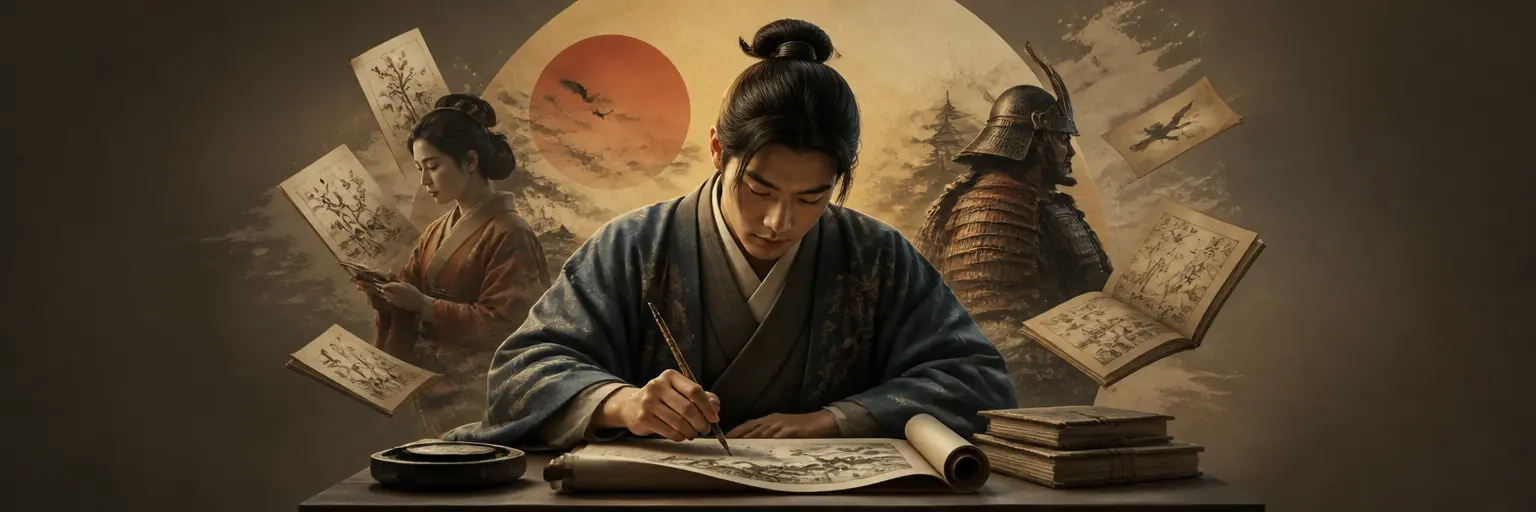
Explore the captivating literature of feudal Japan 📜—from samurai epics and Buddhist teachings to poetry, war chronicles, and courtly tales. Discover how writers captured the era’s values, conflicts, spirituality, and social traditions through timeless works that illuminate Japanese cultural history. Perfect for readers, students, and history enthusiasts seeking deeper insight into feudal Japan’s literary heritage.
📚 The impact of novels on Japanese literature marked a pivotal shift during the feudal era, blending rich cultural narratives with evolving…
Read article
✨ Japanese calligraphy, shaped by historical influences from ancient China to the samurai era, reflects the cultural evolution of Japan. This art…
Read article
📚 Feudal Japan literary festivals served as vibrant hubs for artistic expression and cultural exchange, showcasing the era's rich storytelling traditions, poetry,…
Read article
🌸 In exploring samurai poetry rituals history, we uncover how verse served as a profound medium for expressing honor, loyalty, and the…
Read article
🌸 Delve into the world of Haiku poetry in feudal Japan, where samurai expressed profound emotions and nature's beauty through concise verses.…
Read article
🌏 Japanese feudal literature adaptations serve as vital conduits for cultural exchange, allowing modern readers to connect with the complexities of Japan’s…
Read article
📚 Literary criticism in feudal Japan played a pivotal role in shaping societal values and cultural norms, influencing the perception of art…
Read article
📚 Literature in samurai culture played a pivotal role in shaping the values and ethics of Japan’s feudal era. It offered insights…
Read article
🌿 Delve into the intricate world of Japanese garden symbolism analysis, where each stone, plant, and water feature reflects deep cultural narratives…
Read article
😄 In feudal Japanese satirical literature, humor served as a powerful tool for social critique, allowing writers to navigate the rigid class…
Read article
🌟 Japanese folktales and their cultural significance illuminate the values and beliefs of feudal society, serving as vital narratives that preserve history…
Read article
📚 Literature serves as a vital medium for Japanese folklore preservation, intertwining ancient myths with modern narratives. This exploration reveals how storytelling…
Read articleExplore the rich world of Literature of Feudal Japan through the major works, authors, genres, and cultural traditions that shaped Japanese society from the Kamakura period through the Muromachi, Sengoku, and Edo eras. This subcategory examines samurai chronicles, Buddhist writings, courtly diaries, war tales, poetry, theater, and popular fiction, revealing how Japanese writers preserved history, expressed spiritual beliefs, and portrayed life under the feudal system. Readers can discover how literature reflected the values of honor, loyalty, impermanence, social hierarchy, warfare, religion, and artistic refinement in medieval and early modern Japan.
Discover the historical narratives and epic war tales that document the rise of warrior governments and the conflicts that transformed feudal Japan. Articles may explore influential texts such as the Heike Monogatari, the Azuma Kagami, and other military chronicles describing the Genpei War, samurai alliances, castle warfare, and the political struggles of powerful clans.
These works combine historical memory with dramatic storytelling, presenting famous warriors, tragic battles, moral decisions, and Buddhist reflections on the impermanence of power. Expect detailed explanations of how samurai literature shaped perceptions of loyalty, courage, defeat, leadership, and the cultural identity of Japan’s warrior class.
Examine the literary traditions inherited from the imperial court, including diaries, memoirs, romances, poetry collections, and refined prose. This section explores how aristocratic writers portrayed court ceremonies, relationships, seasonal beauty, emotional conflict, etiquette, and the changing balance between Kyoto’s aristocracy and the growing samurai class.
Readers can learn about the continuing influence of classical works such as The Tale of Genji, as well as the diaries and writings of noblewomen and court intellectuals. These texts provide valuable insight into Heian cultural traditions, Japanese aesthetics, gender roles, literary language, and courtly life before and during the feudal age.
Explore the role of Buddhism in shaping the intellectual and spiritual culture of feudal Japan. Articles cover Zen writings, Pure Land teachings, Nichiren texts, temple records, sermons, biographies of monks, and philosophical works that influenced samurai conduct, artistic practice, education, and everyday life.
Many Japanese literary works emphasize impermanence, discipline, meditation, compassion, and detachment from worldly power. This subcategory explains how Buddhist literature interpreted war, death, social change, and personal suffering while contributing to the development of tea culture, ink painting, garden design, poetry, and martial ethics.
Learn how poetry became one of the most influential forms of expression in feudal Japan. This section examines waka, linked verse, haiku, and other poetic traditions, with attention to seasonal imagery, nature, emotion, spirituality, and the Japanese concept of mono no aware, or sensitivity to the transience of life.
Readers can explore the work of renowned poets such as Matsuo Bashō, while also discovering the broader development of poetic communities, literary schools, and patronage networks. Expect accessible explanations of Japanese poetic forms, Zen influence, travel writing, seasonal symbolism, and the cultural history of haiku.
Discover how written literature and live performance interacted in feudal Japan through Noh theater, Kyōgen, puppet theater, and the later development of Kabuki. Articles examine legendary characters, historical episodes, supernatural encounters, moral conflicts, costumes, music, and the literary structure of traditional Japanese drama.
These performances connected elite and popular culture, adapting religious stories, warrior legends, romantic tragedies, and historical events for the stage. Learn how Japanese theater literature preserved cultural memory and reflected changing attitudes toward status, gender, entertainment, morality, and urban life during the Muromachi and Edo periods.
Explore the expansion of commercial publishing and popular reading during the Edo period. This section covers illustrated books, urban fiction, travel narratives, humorous stories, moral tales, warrior novels, and the works of writers such as Ihara Saikaku and Ueda Akinari.
Readers will discover how increased literacy, printing technology, lending libraries, and urban growth made literature available to wider audiences. Expect insights into Edo-period culture, merchant society, samurai identity, city life, popular entertainment, publishing history, and the changing relationship between literature and social class.
Literature of Feudal Japan includes written and performed works created or preserved during the era of warrior rule, especially from the Kamakura period through the Edo period. It includes war chronicles, Buddhist texts, poetry, diaries, theater, historical records, romances, and popular fiction.
The Tale of the Heike, or Heike Monogatari, is among the most famous Japanese war tales. It recounts the conflict between the Taira and Minamoto clans and explores Buddhist ideas of impermanence, honor, ambition, loyalty, and the tragic nature of political power.
Buddhism influenced Japanese literature by introducing themes such as impermanence, reincarnation, meditation, compassion, spiritual discipline, and detachment. Buddhist monks also preserved manuscripts, wrote commentaries, developed temple education, and helped spread literary and philosophical traditions throughout Japan.
Important poetic forms included waka, renga, haiku, and linked verse. These traditions emphasized seasonal references, concise expression, nature, emotional subtlety, and spiritual awareness. Poetry was practiced by aristocrats, samurai, monks, merchants, and professional literary communities.
These works provide essential evidence about Japanese cultural history, samurai society, religion, warfare, gender, social hierarchy, aesthetics, and everyday life. They also continue to influence modern novels, films, anime, theater, poetry, historical scholarship, and global interpretations of Japan’s feudal past.